@monteromiguel@limbsalvagedr@academicaorta Exactly. Months of wound care before sending them to the ER for “vascular evaluation” after the foot is no longer salvageable.
@farkomd I haven’t used any new GE units. Between the Siemens and Philips azurion I like the azurion a lot. Great imaging and easy to use, intuitive controls and fully customizable settings that are easy to use when you don’t have a dedicated radiology staff to run the machine
@farkomd If you’re going with stenting- I average only about 3 -10 mls of total contrast on tcar, tops.
Plus if that patient in the tweet had tolerated a cta I’m sure a few more ml’s of contrast wasn’t going to hurt.
For everyone doing CEA and CAS, this CMS National Coverage Determination (NCD 20.7) is an important topic, and you should consider weighing in.
This proposal:
-Will expand CMS coverage to patients previously only eligible for tf-CAS in a clinical trial.
-Will expand coverage to standard surgical risk individuals
-Will remove facility standards and approval requirements
-Provides no requirement for registry participation or reporting of outcomes
A few important points to consider before we open the proverbial flood gates for tf-CAS:
-Currently, there is no level 1 evidence that supports the use of tf-CAS over CEA or TCAR or medical management in standard surgical risk patients as this would allow.
-The preponderance of existing literature demonstrates a higher 30-day stroke risk of tf-CAS over CEA (nice relatively recent review here: https://t.co/wSDHlhS9Yo)
-There is an ongoing NIH funded clinical trial (CREST-2; https://t.co/mEE4J8pppl) that would provide Level 1 evidence towards this question. Why are we making this decision before this multi-million dollar trial is complete?
-This proposal provides no requirement of ongoing monitoring of outcomes.
-There is a significant learning curve for CAS (https://t.co/4oIKhVksl2 among others), highlighting the importance of proper credentialing and following outcomes (especially for low-volume operators)
-Ultimately, there is a significant risk of increased stroke in CMS beneficiaries with this change, with no method to capture the additional potential harm to our Medicare beneficiaries. At the very least, registry participation and reporting (as has been done very successfully with TCAR) should be required so that we can follow outcomes and change course in the future, if necessary.
-We are currently learning lessons related to unfettered use of percutaneous procedures in outpatient settings. This seems to be begging for a repeat of that history, only in the world of CAS: https://t.co/mYoFp5eued
https://t.co/GhtJEzDqcR
Submit your comments to CMS here:
https://t.co/5Yayx5xa0c
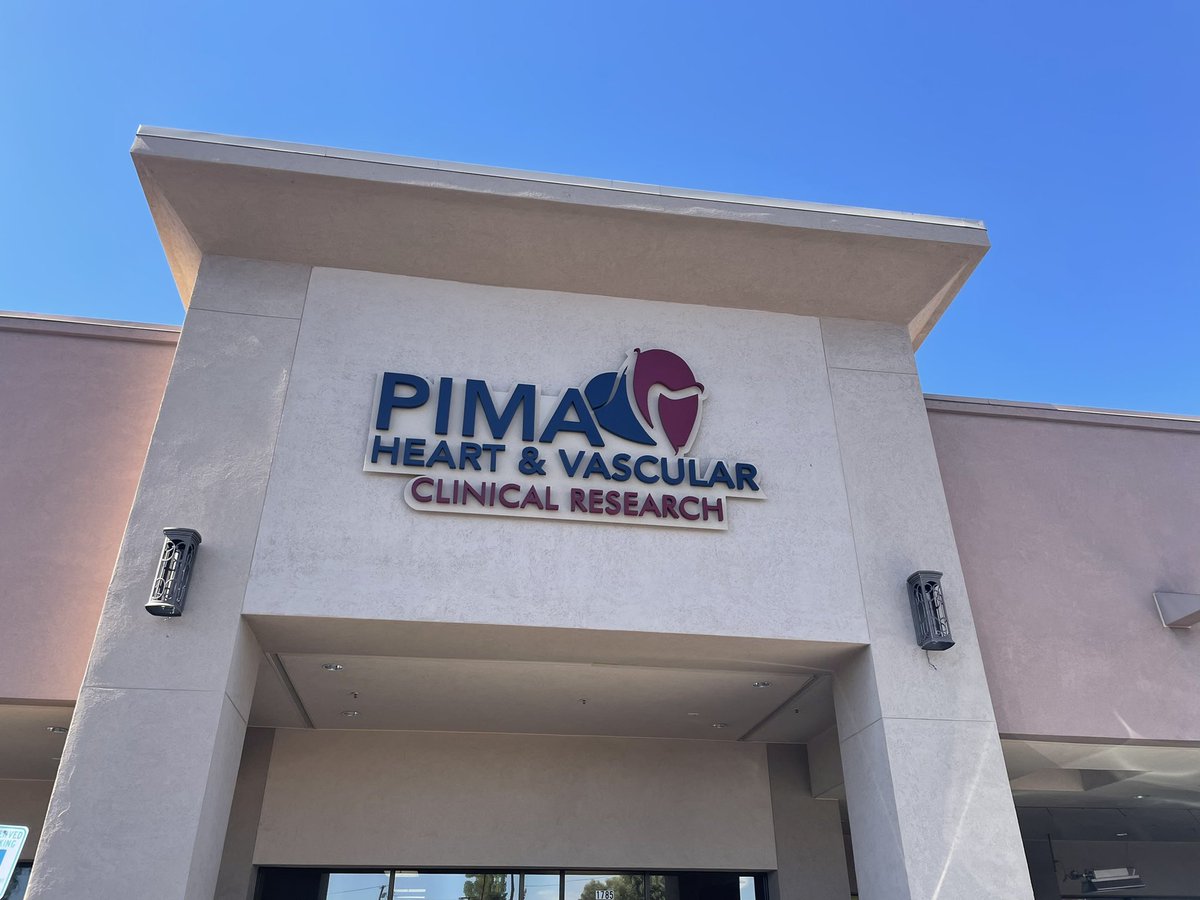
Very proud of our growing clinical research program now housed in its own center at Prince and Campbell here in Tucson
https://t.co/eU7ZmRzQQT
@TweetPimaHeart@joevascular@BaldermanMD
“We don’t just follow the standards, we help set them”