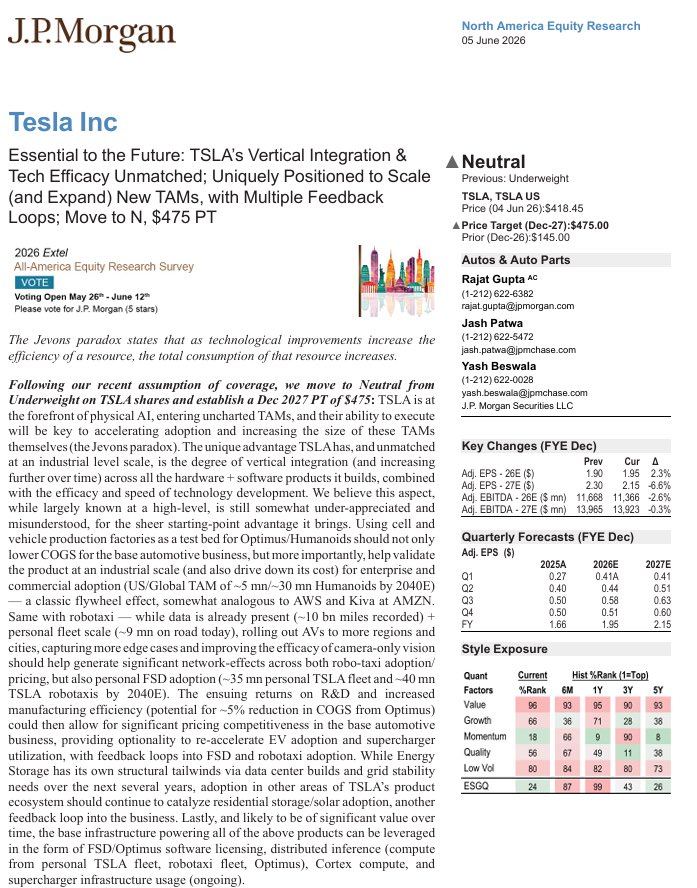
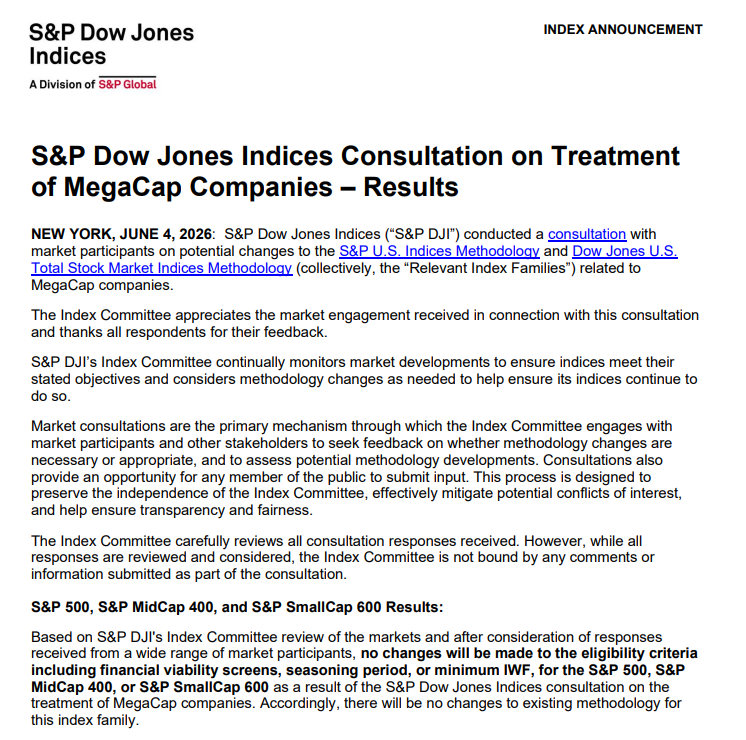
Trump is reportedly considering taking stakes in AI companies and having discussions with CEOs in the coming week
Genuinely think that this is the wrong path to head down, especially if we want American leadership in AI
> incumbents become entrenched into the system, destroying competition and incentives for founders to build new businesses
> the government ends up owning companies with huge amounts of data on us, that can easily be exploited under the wrong leadership or times of conflict
Now, don’t get me wrong. This is probably incredible for your stock portfolio if you are already an equity holder in incumbents
But I would rather our government not play capital allocation as a stock picker
WSJ: "Fears of rising interest rates collided with worries about artificial-intelligence spending on Wall Street Friday, bringing an abrupt and painful end to weeks of gains and sending the Nasdaq composite to its worst day in more than a year....
The losses intensified after a robust jobs report raised new worries that the Federal Reserve may need to raise interest rates later this year to fight inflation."
#economy #markets #stocks @WSJ
Value Investing = Watching your value stocks do nothing during a massive bull market in ponzis, only to see those same value stocks go down in a correction the same as said ponzis 🥹
source: Shrubipedia
IPO Supply vs. Demand for @SpaceX
Supply / lockup schedule -
Potential 9% unlock on the second trading day after 2Q26 earnings. That is roughly 2x the IPO float.
Demand / index buying schedule -
T+5: passive/index buying could equal ~7–10% of the float.
Total T+5 to T+15: passive/index demand could equal ~17–25% of the float.
Analysis (done by AI) -
Day 0–15: Thin float + passive buyers + price-insensitive demand likely create a sharp supply-demand squeeze.
Day 15–70: Air pocket. Index buying is mostly done.
Day 70–180: Digestion phase. More shares unlock, but a higher float may also force additional index buying.
Day 366: The 51% unlock is the biggest overhang. Actual selling could be much smaller if Musk does not sell.
Upside kicker: S&P 500 inclusion. If SpaceX becomes eligible after the float expands, S&P inclusion could create a second wave of passive buying.
Needed to pull out an important part of the interview.
AI is often justified by comparing it to Amazon Web Services' ($57bn) or Uber's ($32bn) losses, when its costs/losses are hundreds of billions of dollars worse.
There'll also be little useful infrastructure left behind.
This is the most sober and sobering analysis of AI investing that I have seen. The cannibalizing the passive flows in idices has been buzzing in my head for weeks now...
https://t.co/DNHnWSUUsr
Crazy but true chart of the day:
The S&P 493 is outperforming both the S&P 500 and the Mag 7 this year
And the Mag 7 is underperforming the S&P 500
(via Exhibit A)
I can’t believe the guy running a crypto treasury company is telling everyone he thinks that exact crypto is going up in price. Truly a shocking twist.
I don’t think we have ever seen a capital race of this scale before. We have multiple trillion dollar companies spending like the world will end tomorrow if they don’t win this race
They don’t even know what the ROI might look like. They have no idea whether this is even a winner take all market, or not. They just know that they must spend. There is no alternative but to spend
They will obliterate every last dollar of free cash flow. They will take on whatever amount of debt is needed. They will stop every last cent of stock buybacks and dilute their shareholders to oblivion
It is all hands on deck to see who can build super intelligence the fastest. Cost discipline will get thrown out of the question. The amount of dollars that will flow around the economy just from these companies alone are mind boggling
In the process, many new trillion dollar companies are being created. Many new millionaires minted. Many fortunes being exchanged
Truly amazing to watch
Not one, not two, but three S&P 500 sectors are testing either Dot-Com or GFC extremes. Relative to the rest of the market, Healthcare is back to March 2000 specifically. Consumer Staples = Dec. 1999. The S&P 500 Financials sector just broke March 6, 2009.
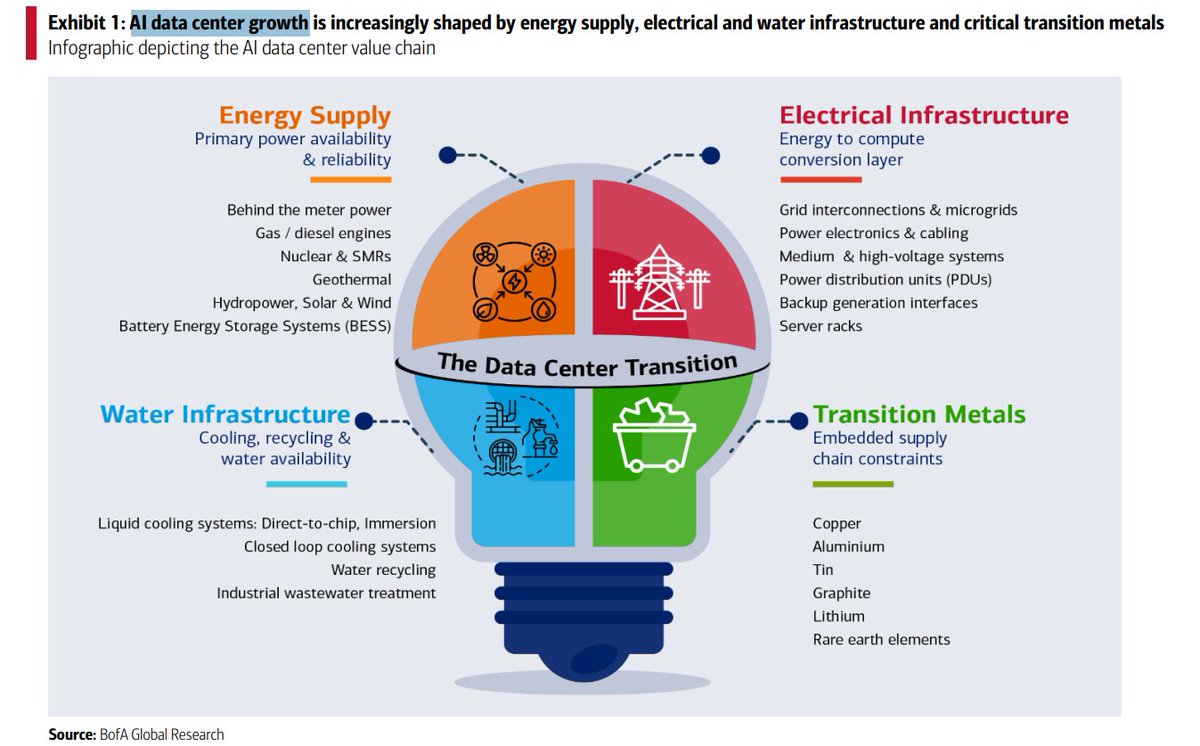
BofAI: Data center construction creates a resource shock
AI data center growth is increasingly shaped by energy supply, electrical and water infrastructure, and critical transition metals
With Technology approaching 40% of S&P 500 market cap, many sectors have felt the squeeze: Consumer Staples and Utilities are at record-low weights in the index, Health Care has its lowest weight since 1994, and Financials is at its lowest weight since 2009.