2026/5/27
Sixth-generation fighter, over 4,000 engineers risk being moved to other projects
https://t.co/I0OW2mdbvS
英国の動向から資金調達不能による供出金不足のリスクは薄れつつあるとして、関��国/組織や競合開発先の動向に触れながら今後のシナリオを分析した記事
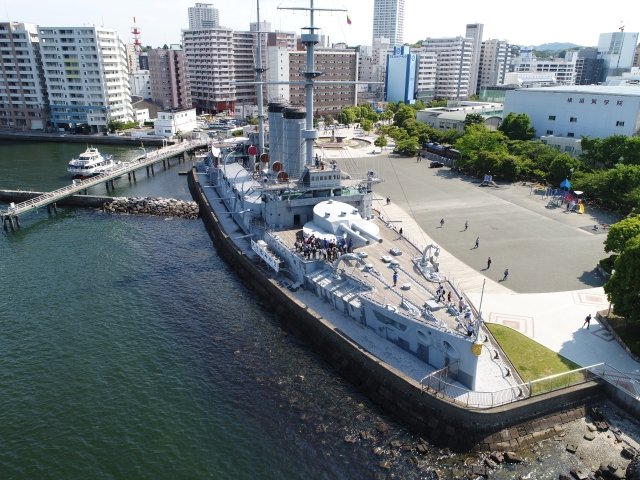
Preserved as a memorial ship in Yokosuka in the 1920s, the Imperial Japanese Navy Mikasa is the last surviving pre-dreadnought battleship. Because the Mikasa had served as the flagship of Admiral Tōgō in his victory over the Russian fleet during the Russo-Japanese War, the Soviets wanted the ship destroyed after Japan surrendered in 1945 but were thwarted by Admiral Nimitz. Heavily damaged by air raids during the war, the battleship was used as a dance hall named "Club Mikasa" by occupation forces for several years until being fully restored by a campaign supported by Nimitz.
#WarshipWednesday
Preserved as a memorial ship in Yokosuka in the 1920s, the Imperial Japanese Navy Mikasa is the last surviving pre-dreadnought battleship. Because the Mikasa had served as the flagship of Admiral Tōgō in his victory over the Russian fleet during the Russo-Japanese War, the Soviets wanted the ship destroyed after Japan surrendered in 1945 but were thwarted by Admiral Nimitz. Heavily damaged by air raids during the war, the battleship was used as a dance hall named "Club Mikasa" by occupation forces for several years until being fully restored by a campaign supported by Nimitz.
#WarshipWednesday
121 years ago today, the longest, most cursed voyage in naval history ended in 45 minutes of hell.
In October 1904, Tsar Nicholas II ordered his Baltic Fleet to sail to the Pacific and crush Japan. The problem: Britain controlled the Suez Canal and refused them passage. So 38 Russian warships went the long way. Around Africa. 18,000 nautical miles.
They were so paranoid about Japanese torpedo boats that they opened fire on British fishing trawlers in the North Sea, killing innocent fishermen and nearly starting a war. They ran out of coal so often that crews loaded it onto every flat surface, including officers' beds. Sailors went mad. Boilers cracked. The hulls grew so much tropical seaweed they could barely make 9 knots.
Seven months later, they limped into the Tsushima Strait. Waiting for them was Admiral Togo Heihachiro and the Japanese Combined Fleet, fresh, fast, and trained for exactly this moment.
Togo did something insane. With the Russian fleet bearing down on him, he ordered his entire battle line to turn 180 degrees in sequence, right in front of the enemy guns. For 15 minutes each Japanese ship was a sitting target. Russian shells fell short. Russian gunners, exhausted and undertrained, missed.
Then Togo crossed the T.
In one afternoon, the Japanese sank four Russian battleships. By the next morning, it was over. Russia lost 4,380 dead, 5,917 captured, and both admirals. Japan lost three torpedo boats and 117 men.
It was the first time in 700 years an Asian power had crushed a European one. The Romanov dynasty never recovered. Twelve years later, the Tsar was dead in a basement.
On 19 March 2026, Japanese Prime Minister Takaichi Sanae and United States President Donald Trump met in Washington DC and agreed three documents on critical minerals: the US–Japan Action Plan for Critical Minerals Supply Chain Resilience, the Memorandum of Cooperation Regarding Deep-Sea Mineral Resource Development and the Joint Fact Sheet for Japan–US Critical Minerals Project Cooperation.
These deals confirmed the strong strategic relationship between Tokyo and Washington. The agreements also put Takaichi’s administration in a strong position to maintain American strategic engagement in the Indo-Pacific and strengthen Tokyo’s own interests in critical minerals.
Ahead of the IISS Shangri-La Dialogue 2026, read the latest analysis from Takahiro Kamisuna: https://t.co/3h3rvVDzZK
IISS Shangri-La Dialogue
29–31 May 2026
#IISS_SLD26
https://t.co/aj642880tE
Tokyo has officially crossed the Rubicon in the modern information war. In a decisive 187-to-58 vote, Japan’s upper house officially passed the landmark National Intelligence Council Establishment Bill, unleashing a powerful new centralized intelligence apparatus engineered to ruthlessly crush foreign espionage, state-sponsored cyber warfare, and AI-driven disinformation campaigns.
Championed by Prime Minister Sanae Takaichi, this legislative triumph permanently abolishes Japan’s fragmented postwar intelligence structures and cements a high-level National Intelligence Bureau by July. Operating with equal authority to the National Security Secretariat, the new bureau will be steered directly by a prime minister-led council to aggressively harmonize defense, economic, and technological counter-espionage under a single umbrella.
This historic pivot signals an unapologetic offensive against the escalating threat environment surrounding Taiwan and the East China Sea. Tokyo is already aggressively drafting its first-ever National Intelligence Strategy for year-end release, with explicit blueprints to launch a full-scale foreign intelligence agency by 2027 and enact sweeping anti-espionage laws. Despite pushback from domestic critics who fear privacy overreach, Takaichi is sending an unmistakable warning to Beijing and Moscow: the days of exploiting Japan's fractured security defenses are officially over.
#Japan #NationalSecurity #Espionage #CounterIntelligence #TechWar #IndoPacific #Geopolitics #InformationWar
We are officially entering the era of the robotic wingman. The USAF has just concluded the first forward operating base tests of Anduril Industries' YFQ-44A "Fury" drone at Edwards AFB. The single biggest win of the FOB test? Every single Fury sortie was generated and executed by regular frontline airmen, not Anduril engineers or elite test pilots. It's a big step towards IOC. 1/2
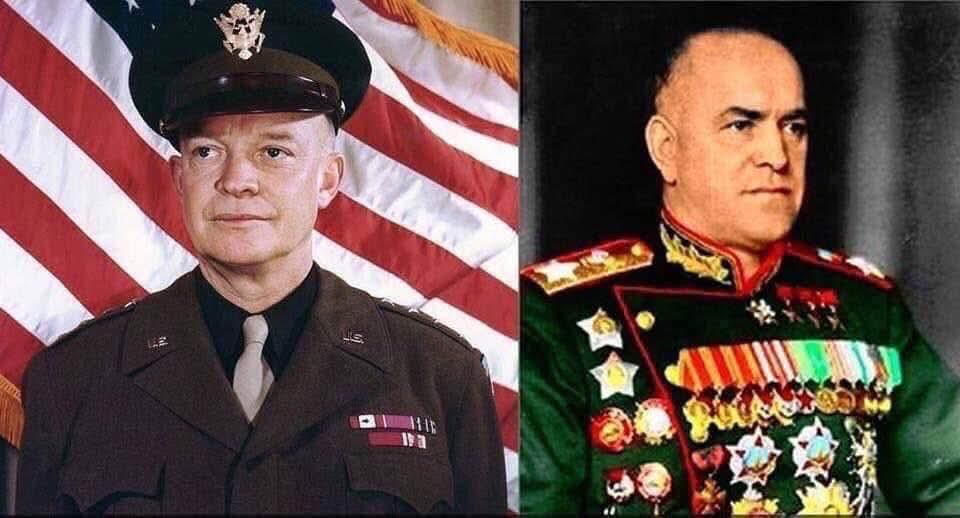
Interesting excerpts from the memoirs of Supreme Allied Commander General Dwight D. Eisenhower (later President of the United States from 1953–1961) about Marshal Georgy Zhukov:
“During the several hours we spent together in the airplane, Marshal Zhukov and I often discussed military operations... A great revelation to me was his description of the Russian method of attacking through minefields. German minefields, covered by enemy defensive fire, were tactical obstacles that caused us heavy casualties and many delays. Breaking through them was always difficult, despite the fact that our engineers had invented every imaginable mechanical device for the safe clearing of mines.
Marshal Zhukov casually remarked to me: ‘There are two kinds of mines: antipersonnel and antitank. When we encounter a minefield, our infantry continues the attack as though it were not there at all. We consider the losses from antipersonnel mines to be equal to the losses we would have suffered had the Germans defended that sector with concentrated manpower instead of minefields. Advancing infantry does not detonate antitank mines, so once they have crossed the minefield and secured the opposite side, the engineers then come forward and clear lanes through which vehicles can pass...’
I could vividly picture what would have happened to any American or British commander who attempted to use such tactics, and an even clearer picture of what the men in any of our divisions would have said if we had tried to make such practices part of our tactical doctrine...
Americans measure the cost of war in human lives, while the Russians measure it in the total expenditures of the nation.
As far as I could see, Zhukov cared little for the methods we considered essential to maintaining the morale of American troops: systematic rotation of units, opportunities for rest and recreation, short leaves, and above all the development of methods designed to avoid exposing men to combat risks that were not absolutely necessary. All of this, common practice in our army, was largely unknown in his army.
...The fundamental difference between American and Russian attitudes toward the treatment of people was illustrated in another incident. In a conversation with a Russian general, I mentioned the difficult problem of caring for large numbers of German prisoners of war — a problem we faced at various stages of the war. I noted that we gave German prisoners the same food ration as our own soldiers.
‘Why would you do that?’ Zhukov exclaimed in astonishment.
I replied that, first of all, my country was bound to do so under the Geneva Conventions. Secondly, thousands of American and British servicemen were prisoners in German camps, and I did not want to give Hitler any excuse to treat them even worse than he already did.
Zhukov was even more astonished by this answer and exclaimed: ‘But why should you care about soldiers captured by the Germans?! They were prisoners already and could no longer fight anyway!’
The excerpts are quoted from Dwight D. Eisenhower, Crusade in Europe, The Johns Hopkins University Press, 1997 (first published in 1948), pp. 468–470.
Interestingly, in the Russian translation of Eisenhower’s memoirs (2000 edition), these passages — seemingly of particular interest to Russian readers — were removed.
Everyone shouting “we can do it again” should remember that they would be sent to fight using Zhukov’s methods and traditions.
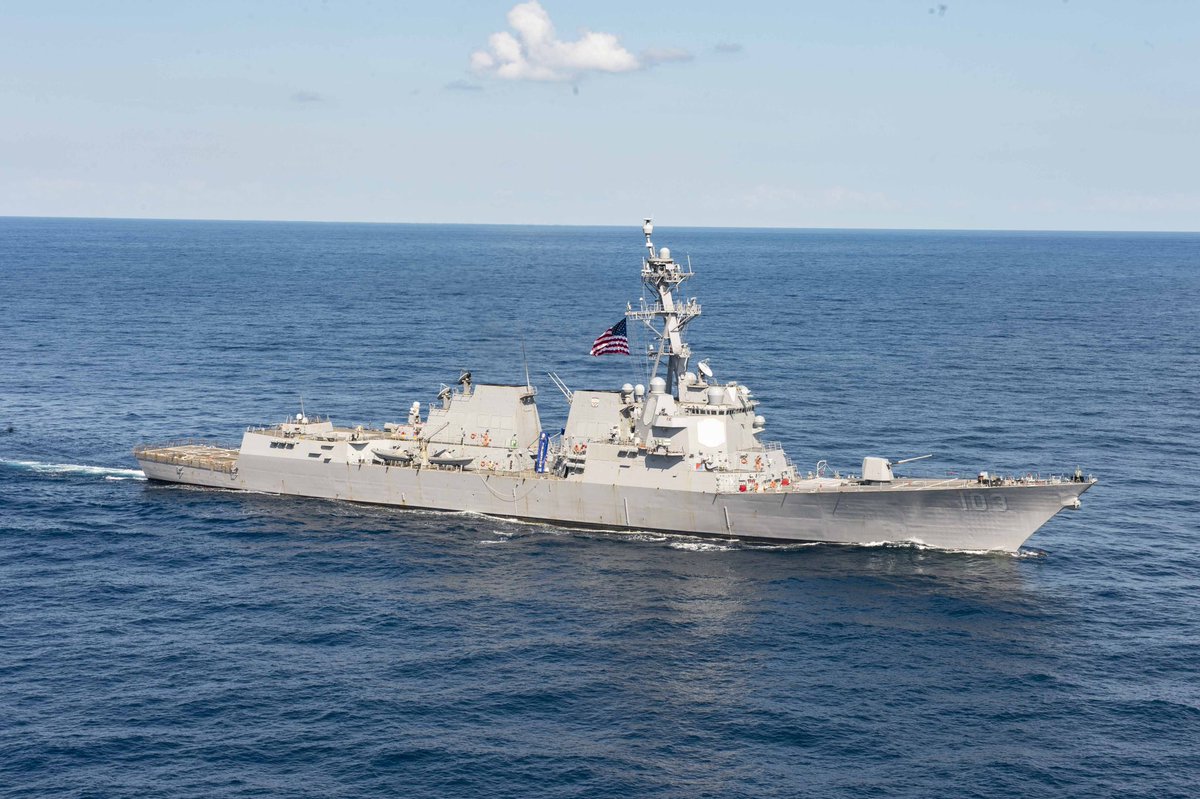
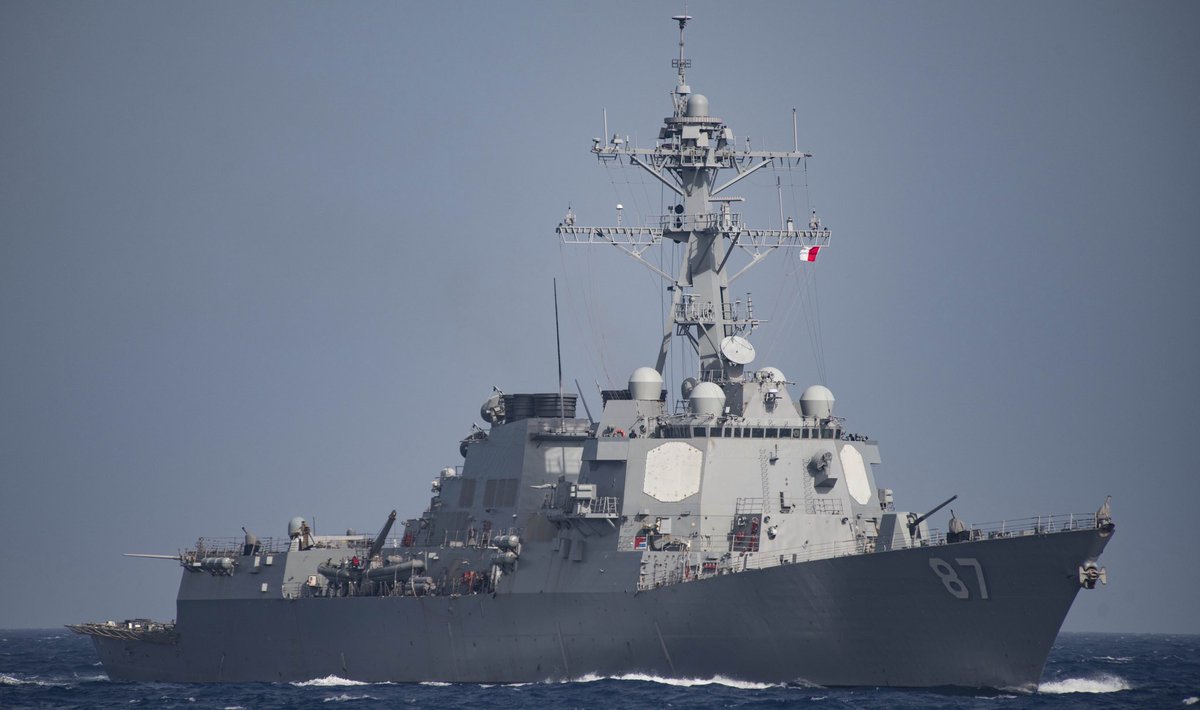
According to a report from CBS, citing U.S. officials, the USS Truxtun (DDG 103) and the USS Mason (DDG 87) came under intense attack from Iranian fast attack boats, drones, and missiles in an engagement that has been characterized as far fiercer than the past engagement the two vessels were involved in. 5-inch deck guns, small-arms equipped personnel on board the vessels, aircraft, and CIWS were employed to repel Iranian attacks, per reports. Despite claims from Iran that they were struck, neither was hit during the engagement.
🇺🇸🇯🇵
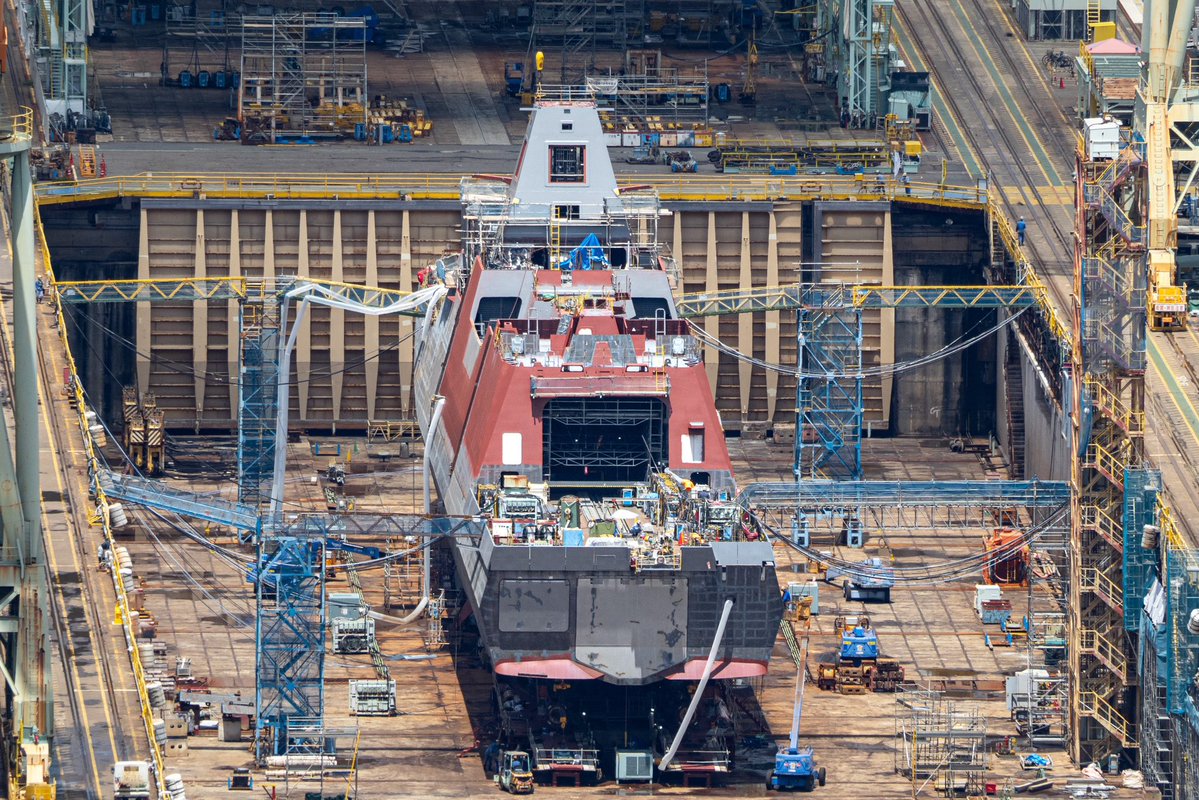
•US Interest: The US Navy is studying the Mogami-class under an expansive manufacturing review in the Fiscal Year 2027 budget, exploring it as a potential alternative to the current FFX frigate, which is based on the Legend-class Cutter.
•Key Features: The Mogami-class (30FFM) is a highly automated (crew of ~90), 5,500-ton, 132-meter frigate with a 32-cell VLS, featuring high-end anti-submarine and anti-air capabilities.
•Strategic Context: While Japan has approved the design for export to Australia, the US has generally focused on the larger, more expensive Constellation-class frigate.
•Advantage over FFX: Proponents argue that procuring the Japanese-built vessel would provide a more capable, quickly delivered, and lower-cost alternative to the U.S. Coast Guard cutter-based FFX design.
America’s “Favor” That Powers Its Empire
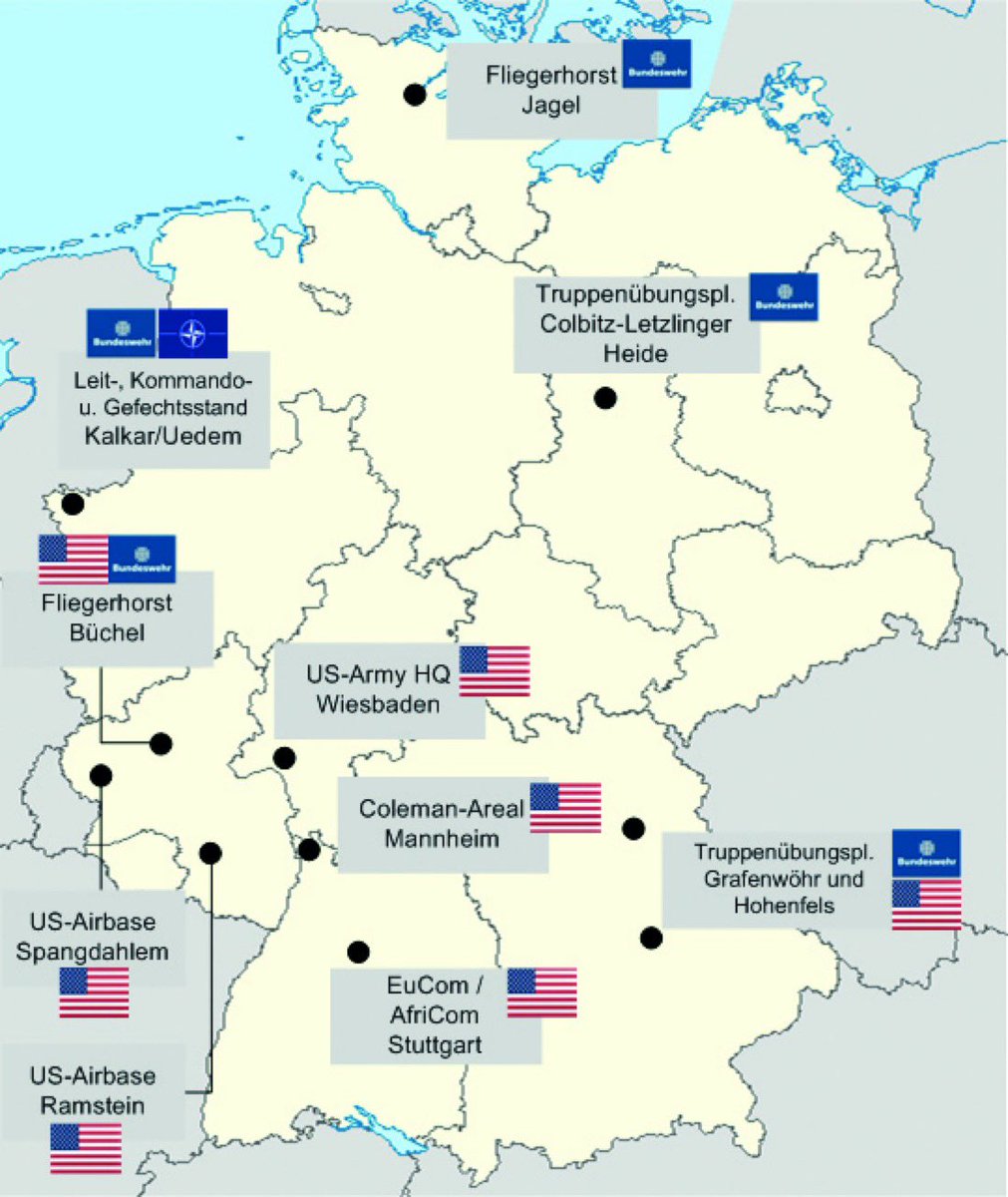
U.S. troops in Germany are not there out of charity—and certainly not to “protect” Germans. They are there because without German soil, American global reach doesn’t function.
Ramstein is the largest U.S. air base outside America. Stuttgart hosts EUCOM and AFRICOM—the command centers for operations across Europe and Africa. Landstuhl has been the lifeline for wounded U.S. soldiers from Iraq to Afghanistan. Even drone operations in places like Somalia rely on infrastructure routed through Germany.
Remove that, and you don’t weaken Berlin—you blind Washington.
Yet somehow the narrative persists: America is doing Germany a favour. That Europe is the dependent, the beneficiary, the so-called “freeloader.”
It’s a convenient story. It’s also strategically backwards.
Because the reality is simple: those bases are not acts of generosity. They are instruments of power. And they exist in Germany not for Germany’s benefit—but for America’s ability to operate far beyond its own borders.
Take them away, and the question isn’t what Germany loses.
It’s how much the United States does.
King Charles US visit has been far more effective than many anticipated.
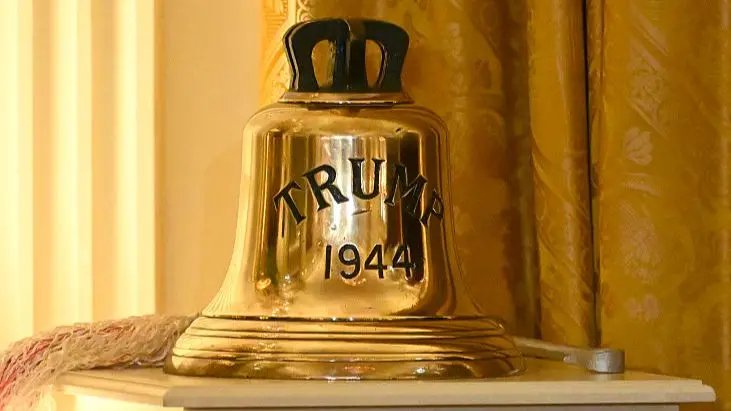
The decision to gift Donald Trump the “Trump bell” from HMS Trump was a masterstroke.
Symbolic, personal, and diplomatically astute.
State visits often blur into insignificance, but this one feels different.
I feel like the world has underestimated King Charles diplomatic ability.
This is a good idea, agree that competition is a key ingredient. Open the competition to allied nations, like Japan and Korea; a domestic duopoly is just more pseudo competition.
Frigate Skeptic…
The Navy has long needed a frigate - a smaller surface warship able to do a slew of missions like escort, blockade, interdiction drug boats… a catch all ship to free up the specialists like destroyers to go after enemy warships or missile defense missions.
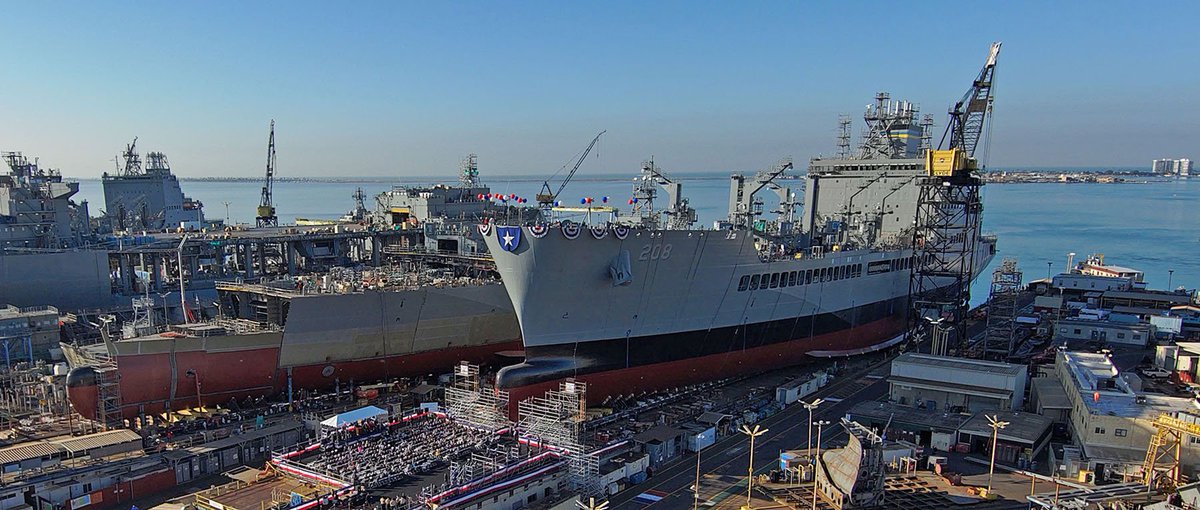
Rather than cancel the Constellation frigate and go with a new tweaked USCG National Security Cutter (NSC) - both the shipyard in Marionette and Ingalls should be challenged to deliver a frigate.
The Constellation design is too heavy and has several operational shortcomings that make limited design modifications unavoidable… so allow for a reduced mission set for Constellation to get its tonnage down by 1000, while modifying the NSC just enough to be an effective anti-submarine platform… then let the shipbuilding race begin.
Competition and capacity is required - two shipyards building frigates was always the plan. So do it!
See the news here: https://t.co/Z7jXNIGGsx
Read the report/analysis here: https://t.co/tyQ5Tpr7o1
See the book as to why: https://t.co/Vuyf63vD8D
JSDF are currently participating in Exercise BALIKATAN 26, a U.S.–Philippines–hosted multinational joint exercise, in the Republic of the Philippines. Images show bilateral landing exercise by Japanese and Philippine amphibious units.
#Balikatan#ShoulderToshoulder
Americans don't remember this kind of history, they generally cannot master the basics! Bravo for posting, and thank you King Charles for the recent history lessons!
Americans love banging on about the War of Independence. They’re quieter on the War of 1812. Here’s why.
In 1812, America declared war on Britain. The plan was to march into Canada and annex it. Thomas Jefferson said it would be “a mere matter of marching.”
It wasn’t. The Canadians sent them packing. Two years later, the British sailed up the Potomac.
American forces collapsed at Bladensburg in what’s still called “the Bladensburg Races” because of how fast they ran. President Madison had already fled to Maryland.
The British walked into Washington unopposed. They sat down in the White House, ate the dinner Dolley Madison had laid out for forty guests, used the President’s silver, then set fire to the building. Then they burned the Capitol, the Treasury and the Navy Yard.
A freak thunderstorm put the fires out the next day. The British left when they were ready. It’s still the only time a foreign army has captured the US capital.
You can see why it doesn’t come up much.
The Pentagon is considering outsourcing warship design and building to Korea and Japan with a proposed $1.85 billion feasibility study into the project within the proposed budget for 2027, with the study to look at the feasibility of adopting or co-producing advanced hulls such as Japan’s Mogami-class and Korea’s Daegu-class frigates to supplement the U.S. Navy, according to USNI News.