Faster 5G, billions in proceeds: FCC will vote on rules for a new spectrum auction that aims to expand wireless capacity, Chairman @BrendanCarrFCC announced. Read @Mark_Kellner in The Washington Star:
When you land at @BWI_Airport, don't panic. Just remember to exit quickly for a usable cell signal.
In this day and age, it's a stunning achievement for a tier-1 airport to be missing even a single carrier on its DAS, let alone TWO. Bananas.
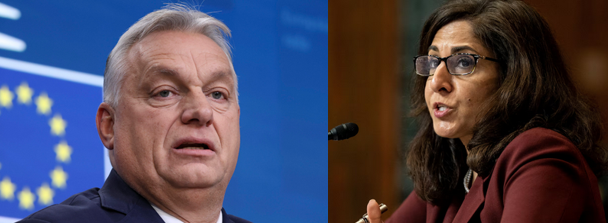
Interesting: @neeratanden’s radical far-left think tank Center for American Progress @Center4USA has embraced an in-school communications policy of Hungary @PM_ViktorOrban: If kids can’t use their phones, then neither should teachers: “This policy must also extend to educators to ensure that they are modeling policy expectations, a key component of Hungary’s policy,” CAP said.
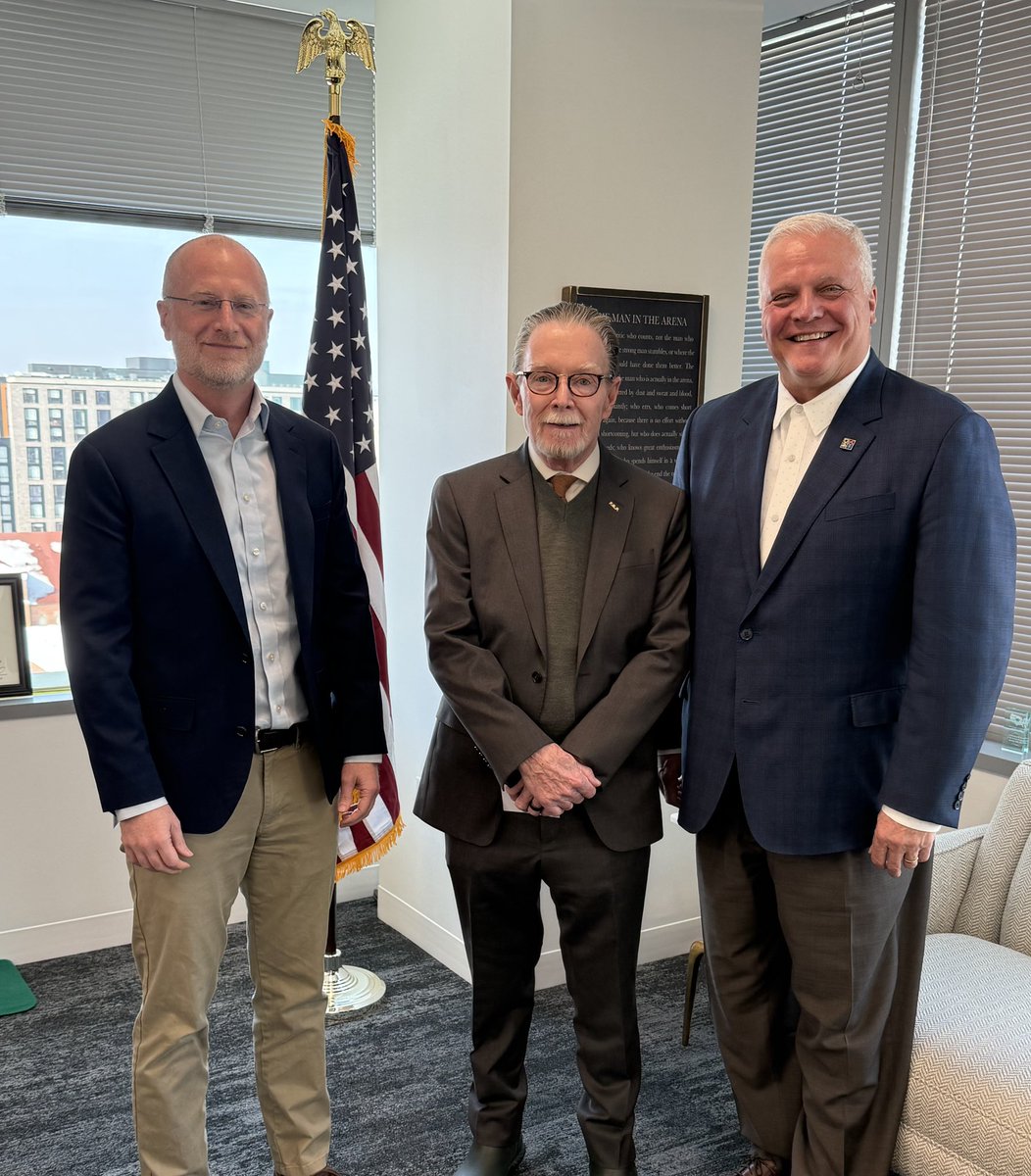
Always great to catch up with two wonderful law enforcement & public safety leaders -
Jim Pasco with the National Fraternal Order of Police @GLFOP
Chief Jeff Johnson with the Western Fire Chiefs
E-Band add for Starlink capacity. Narrower beams, phased arrays and more terrestrial links are all tools to increase LEO capacity. But at the end of the day, more spectrum is a safe bet. Not everything is different in space. https://t.co/cYx4HvBtw0
In the summer of '94, I made $350 pollinating corn to buy a 28.8kbps dial-up modem. I was rich with two 1000-hour AOL CDs. A fun summer connected to the university's PrairieNet and losing it any time someone picked up the phone.
#90sInternet
https://t.co/A8UJPuWdxy
I usually keep it to infra North of the signal source, but this study on LTE and 5G vulnerabilities is flat out wild.
The "RANsacked" study ran 512 fuzzing campaigns over 48 hours each, testing 7 LTE and 3 5G core implementations—some used in commercial U.S. networks. Researchers found 119 vulnerabilities, 93 assigned CVEs, exposing critical flaws in RAN-Core interfaces.
Breakdown by Component:
•MME (Mobility Management Entity): 79 vulnerabilities, mainly in S1AP/NGAP and NAS handling.
•AMF (Access and Mobility Function): 36 vulnerabilities, primarily in 5G core interfaces.
•SGW (Serving Gateway): 4 vulnerabilities related to GTP (GPRS Tunneling Protocol) packet handling.
Real risks? Attackers could exploit these flaws to:
•Crash cellular networks at scale (denial of service).
•Intercept calls & data via rogue base stations.
•Remotely execute code in carrier infrastructure.
•Compromise millions of mobile users without their knowledge.
https://t.co/V59PLYCXsp
NEW
We issued an order at the FCC today that allows Starlink's direct-to-cell service to operate at higher power - enabling faster, more reliable, & innovative new services for consumers across the country.
The @FCC will continue the work of unleashing America's space economy.
The race for 5G was based on unsustainable data traffic growth curves. Now, as reality sets in, capacity projects ebb, and coverage is coming back into focus.
What is old is new again. Rural America will be the beneficiary.
Hiding behind endless tapas and espressos is an uncomfortable truth for the telecom industry: The growth rate of data traffic on mobile networks is slowing down. The days of skyrocketing demand for wireless connections may have come to an end. https://t.co/U2MFMgTwaB
#MWC2025
LEO, DAS, data centers, and private 5G networks might be sexy infrastructure, but don’t tell me towers are dead.
Massive investments steering away from capacity and back towards coverage improvement:
- FirstNet – $2B Reinvestment for new site builds, expanding public safety (and AT&T) coverage
- T-Mobile’s 8,500 New Sites – Meeting Sprint acquisition commitment for 95% rural population coverage
- FCC’s $9B 5G Fund – Boosting rural connectivity across America
- $42.5B BEAD Program – Driving $53B+ in implied investment in broadband CAPEX
- NTIA’s $980M Middle Mile Grant Program – Driving an implied investment of $1.4b in total, strengthening backbones & macro site backhaul
This doesn’t count billions in 3rd party TowerCo investments either. Footprints are set to grow dramatically into rural America. Compounding the effect, all this is happening in an aggressively deregulatory build environment, led by @BrendanCarrFCC's FCC, and with more than $300B in loitering infrastructure dry powder.
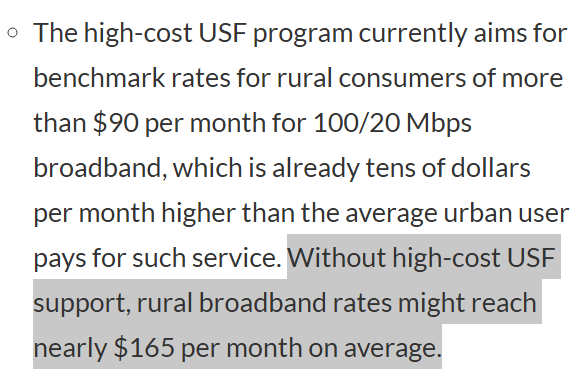
House Space Subcommittee Chair Mike Haridopolos: Use LEO broadband in #BEAD, then we dont have to spend $40B on rural connectivity, which can help pay down debt or used elsewhere. @Comm_Daily