🚨Job🚨
The Department of Politics and Public Administration
@HKUniversity is hiring a tenure-track professor in international relations to begin Fall 2027.
We have a growing IR group in a supportive department at HKU. Please share, thanks!
Info: https://t.co/hR57pByDw3
HKU emeritus professor @johnburnshk says the independent committee should explicitly name officials who made critical decisions or were responsible for the regulatory framework’s deficiencies that led to the Wang Fuk Court disaster
https://t.co/cOGA44wLce
Editing the headline:
Hongkonger, 19, with a congenital mental disorder, convicted for sedition for writing anti-government graffiti in a toilet
https://t.co/4VxcN5JwGd
Hong Kong's Hunter Bookstore has reopened after national security police raided its shop and arrested its founder in late June.
The independent bookshop reopened on Tuesday, local media reported. HKFP visited the shop on Thursday afternoon and saw that pink sticky notes were plastered on the storefront window to form a giant heart shape.
The bookshop was founded in 2022 by former district councillor Leticia Wong, a member of the now-defunct Civic Party.
National security police raided the Sham Shui Po bookshop on June 24, arresting Wong and her husband for alleged sedition and money laundering. The pair were released on bail 48 hours later on June 26.
Photo: Kyle Lam/HKFP.
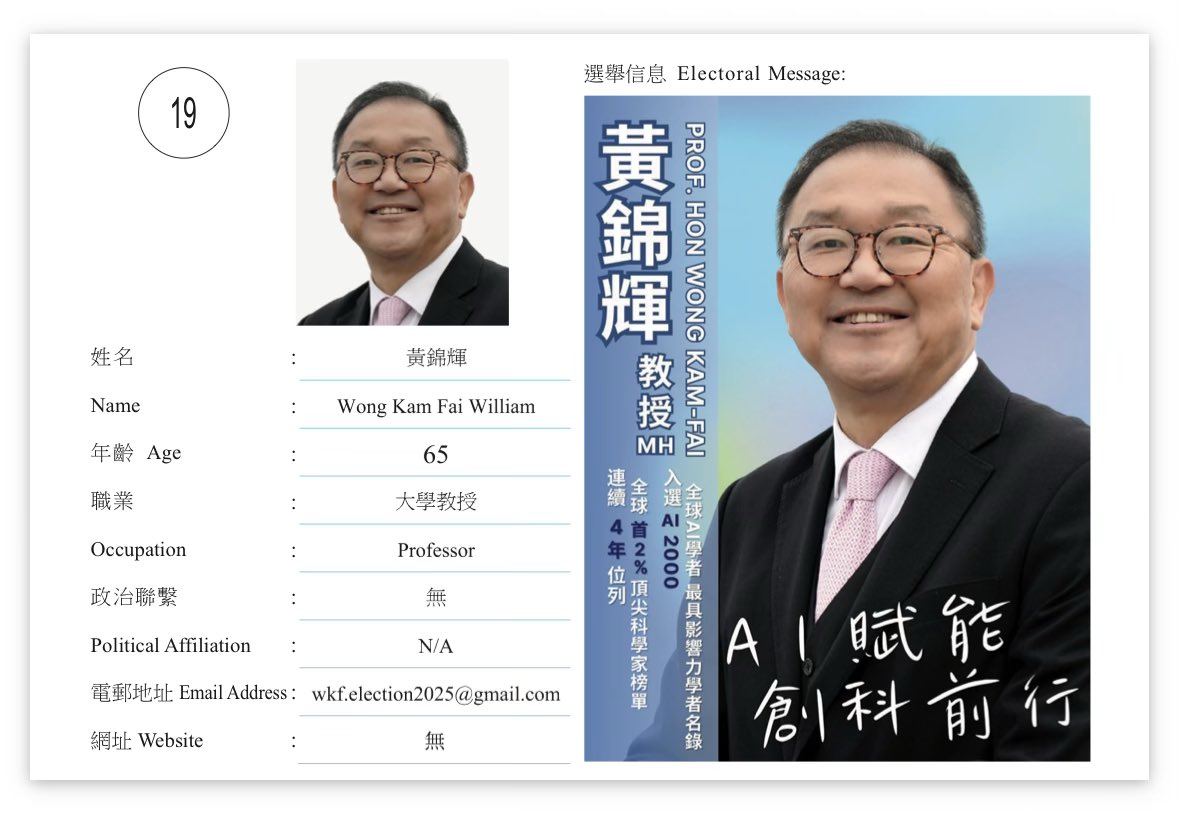
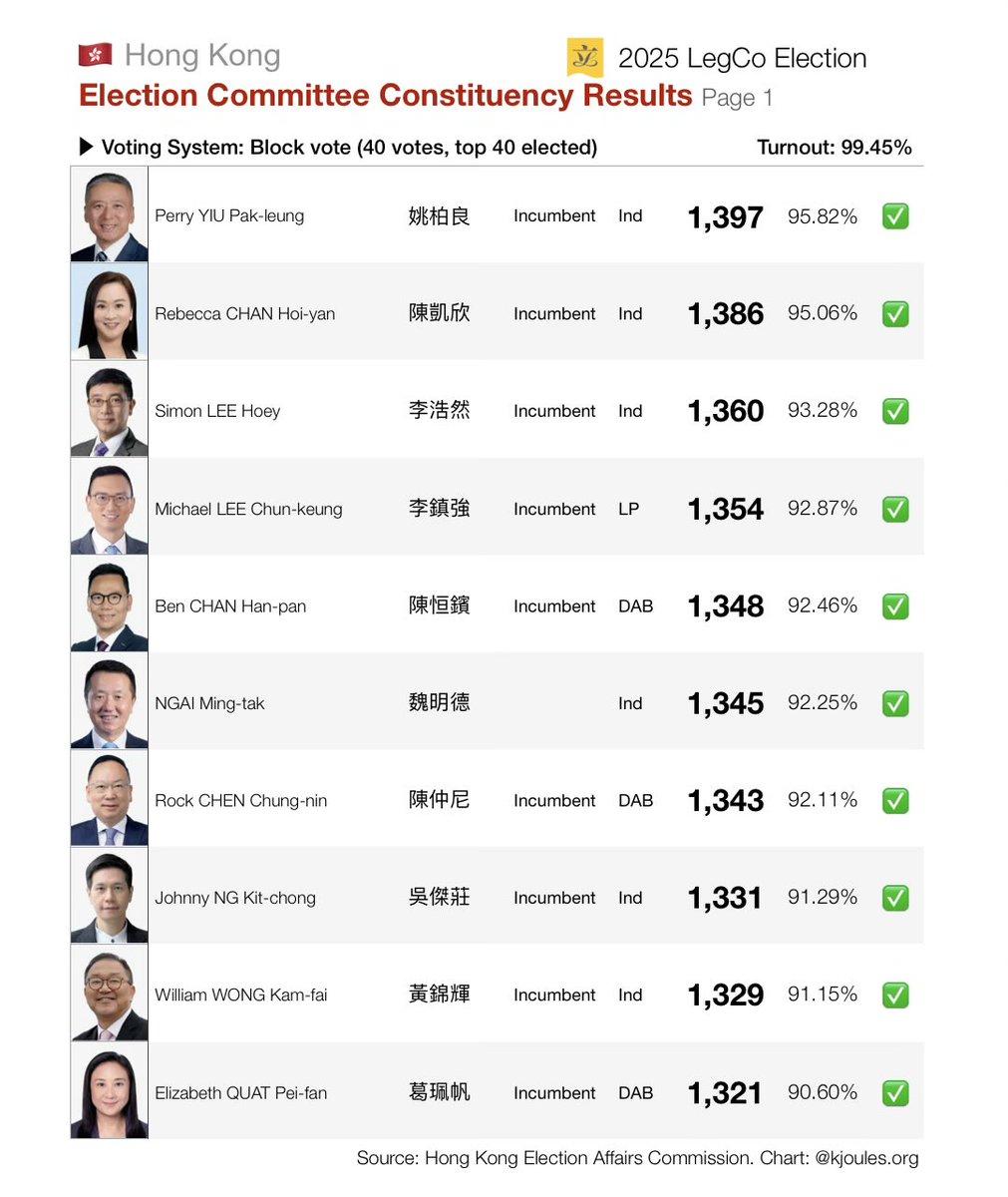
William Wong was serving his 2nd term as LegCo member, elected twice by the 1,500-member all-powerful Election Committee. In the 2025 election, he was the 9th top vote getter, just ahead of prestigious advanced degree holder Elizabeth Quat
Lam on those arrested during 2019 protests but not charged:
"I can say with a high degree of confidence, our advice is that if there's sufficient evidence to commence a prosecution, prosecution would have been commenced and probably completed by today."
https://t.co/zqxa4JX5vJ
The Hang Seng Index has fallen 13.5% ever since CE John Lee publicly announced it would create Hong Kong's first-ever Five-Year Plan
• The Hang Seng Index is down 7.57% for the year, one of the worst performing Asian indices
Bernard Chan discovers Hong Kong's worst-kept secret: the ICAC is getting many corruption complaints about building renovation and maintenance, but can't turn the complaints into prosecutions because the building management and renovation sector has deep "structural issues"
• Security secretary Chris Tang added that the claims that minor offenses could be under the scope of national security crimes is false, accusing those promoting such fears of having ulterior motives to incite distrust and hatred toward the government
On June 4, this column shared the latest findings of the 2026 Democracy Perception Index conducted across 98 countries. On main purpose of democracy, 62% chose improving living standards and well-being, 18% chose the promotion of fair and peaceful society... #democracy#humanity
Activists have been stopped and taken away on Thursday by Hong Kong police in Causeway Bay, defying a heavy police deployment at and around the former site of Hong Kong’s commemorative Tiananmen crackdown vigils.
A young man in a black T-shirt was intercepted by police after he put on a blindfold and began using a red pen to write on his arm outside the Sogo department store at around 7.15pm.
Despite being surrounded by police, he continued the act until he was ordered to stop. Moments later, he was taken into a police vehicle. Before he got into the van, he pulled out a small red book that appeared to be China’s constitution.
At around 7pm, a man was surrounded by police officers on Paterson Street after being spotted holding a candle at around 7pm.
In full: https://t.co/YCCMaaAVTh - link in bio.
Photo: Kyle Lam/HKFP.
.@yangyang_cheng: “Both of us were born…after the unspeakable date…I did not know about the event until I moved to the U.S. for school. For Chinese people my age or younger, finding out what happened that day marks a moment of political awakening.”
https://t.co/78HNsz2Nk0
Important news from the State Council website: "China's State Council has issued guidelines on providing basic public services based on where people actually live, rather than the location of their household registration, as part of efforts to support the country's people-centered new type of urbanization. The guidelines aim at ensuring that residents without local household registration enjoy the same access to basic public services as those with local household registration. The guidelines also call for gradually extending basic public services, including child welfare, elderly care, social assistance and disability support, to residents without local household registration"
This is very good news if it means a significant increase in near-term transfers to migrant worker families. There are two key issues here, as I see it.
First, what do they mean by "gradually"? How quickly and to what extent will the new guidelines lead to real transfers to migrant workers (i.e. increases in disposable household income)?
If we want to see the new guidelines result in a significant rise in domestic consumption, we would need to see an immediate rise in current transfer to migrant workers. We know that promises about future transfers have not been terribly credible in the past and are unlikely to change current saving patterns.
The second issue is how these transfers will be financed. A significant rise in current transfers could be financed, for example, through cuts in overall services and transfers to other households, in which case they may reduce income inequality slightly, but will have little impact on rebalancing the economy.
Or they could be financed by an increase in government debt, which will worsen China's already excessive reliance on extremely high increases in debt to maintain the existing growth model.
Or, preferably, they could be financed through a reduction in manufacturing and investment subsidies, which would represent a real and much needed restructuring of the Chinese economy. The problem with this option is that it will almost certainly result in slower growth in the near term.
The good news is that the new guidelines indicate a growing recognition within China that very weak domestic demand is the result of highly distorted income distribution, and that Chinese workers must retain a larger share of what they produce if they are to consume a larger share of what they produce.
The bad news is that policymakers still don't seem to understand the extent to which the very thing that leads to China's weak domestic consumption also explains its very competitive manufacturing sector. Resolving the former also means undermining the latter, something they clearly do not want to do.
https://t.co/nINRHJLWnl
This is actually huge.
I keep hearing the narrative that many people in China don't have social insurance: that's not true, virtually everyone in China does, BUT - up until now - you were only covered in your Hukou, your official hometown on paper, even if you hadn't lived there in decades.
Which was a big issue for the 357 million migrant workers in China who - if they had a health issue - either had to go back home to get their healthcare covered or pay out of pocket where they lived.
This is now over 👇: China's State Council just announced that workers can now enroll in social insurance wherever they work, regardless of their hukou. 357 million people just got healthcare where they actually live.
It's also huge with respect to what this means for the Hukou system overall: every reform like this chips away at it further. The direction is now unmistakable: the hukou is being dismantled, one benefit at a time.