15 years of #UrbanPlanning & #rural#econdev here. I do Americana @JCShepard and politics elsewhere.
I’m also Vice-Chair for Communications @APA_SmallTown
Twitter had a good run—now you can also find me on Threads 🧵.
Do you remember when you joined X? I do! #MyXAnniversary
The midterms were the data center election. Restrictions won nearly everywhere; the exception was Harwood, ND, outside Fargo, where I grew up.
Moratoria buy time. They don't write the rules.
https://t.co/D5GKk06IeW
#DataCenters#LandUse
150 years of growing knowledge. 🌽
The Morrow Plots wrapped up another harvest season this November, continuing a legacy of agricultural research that began in 1876.
The oldest experimental agricultural field in the U.S. is still making history at #ILLINOIS.
Who decides? Who benefits? Who bears the costs? Our takeaways from the Rural Renaissance Roadshow on why communities, not distant decision-makers, should shape what comes next: https://t.co/khUQl9rrX4 #RuralRenaissanceRoadshow2026
How Tribal Rights Became Central to the Permitting Debate
Proposed changes to the National Historic Preservation Act risk disturbing the fragile relationship between the U.S. and Native governments.
https://t.co/eP1pQ12D0c
@heatmap_news#BAAJA#PermittingReform#SaveSection106
@NDNrights Senior Staff Attorney Wes Furlong has it exactly right. BAAJA, the Senate's permitting "reform" bill "essentially does away with the process of tribal consultation on projects that may affect important sacred sites."
To most Americans, permitting reform means streamlining needed affordable housing.
To centrist/status quo Democrats in Congress it means gutting the Clean Water Act, Endangered Species Act, and Nat Enviro Protection Act in order to fast track sprawl and data centers.
#BAAJA codifies Trump conservation rollbacks and renders species protections meaningless by eliminating the requirement to apply "best available science" in decisions related to threatened species. Which is why these laws were passed in the first place. https://t.co/gP1wUywK6w
In 1887, voters in the Dakota Territory voted on whether to divide their territory in two, along the 7th std parallel.
The vote passed, with ample approval from the South and disapproval from the North, highlighting the regional divisions that led to this in the first place
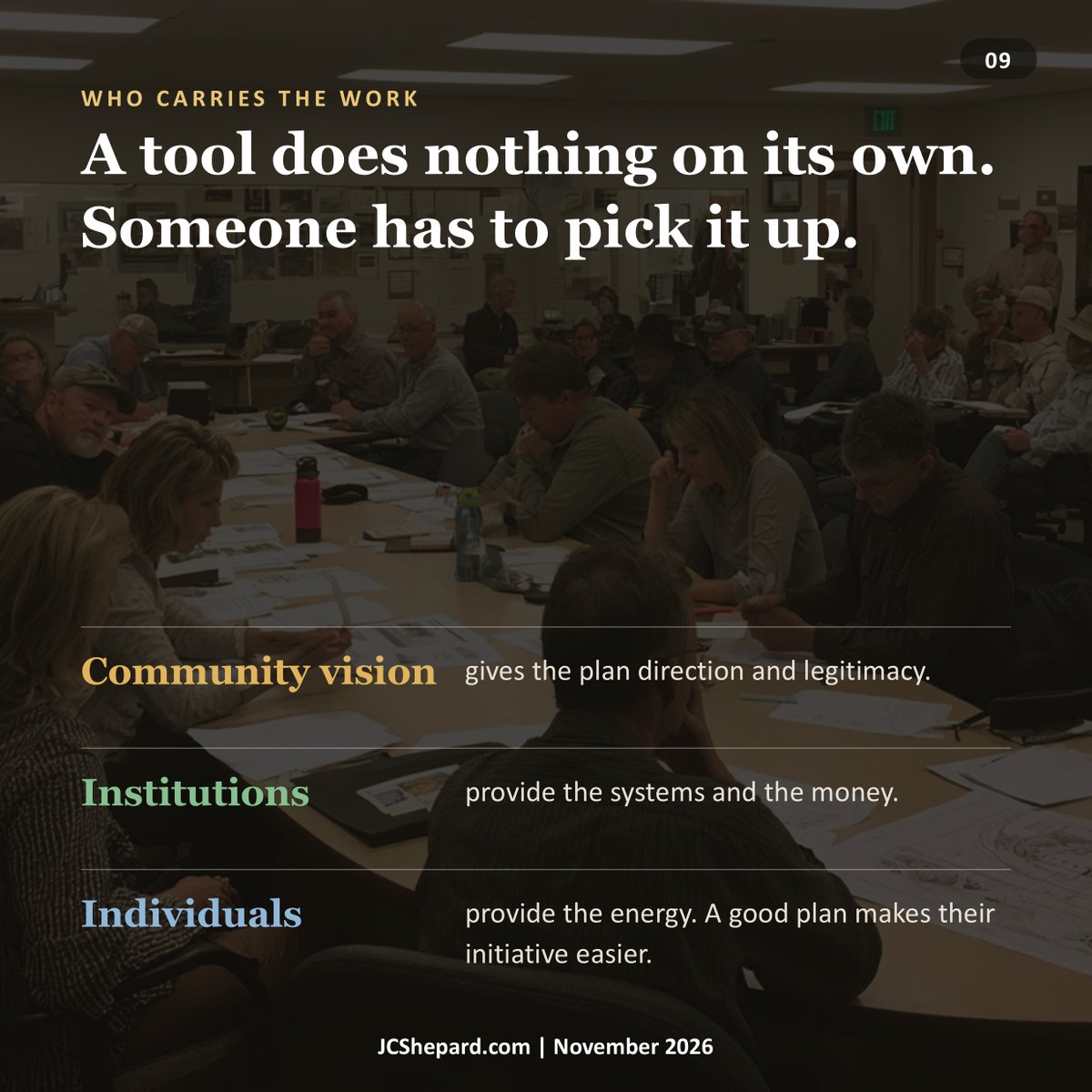
Part III of our November series: four jobs, six ways to make a plan doable, and a checklist before adoption.
From Vision to Get it Done: Setting Goals and Objectives in Your Community Plan
https://t.co/7fJqg5BAS2
4/4
Your town plan supports housing, jobs, good roads, and small-town character.
So does everyone at the planning commission meeting. Each can find a sentence that backs their side.
What they can't find is one that helps them decide.
1/4
The trap: finishing an action shows the work got done. Meeting an objective shows the result happened.
A town can rewrite its zoning on schedule and still have no new apartments over Main Street. Check both every year, before the budget is set.
3/4
We cannot support the permitting bill (BAAJA) in its current form. We urge Congress: don’t rush this. Work collaboratively with states, Tribes, and the administration to safeguard wildlife, public lands, and community voices. 🏞️ 🦅
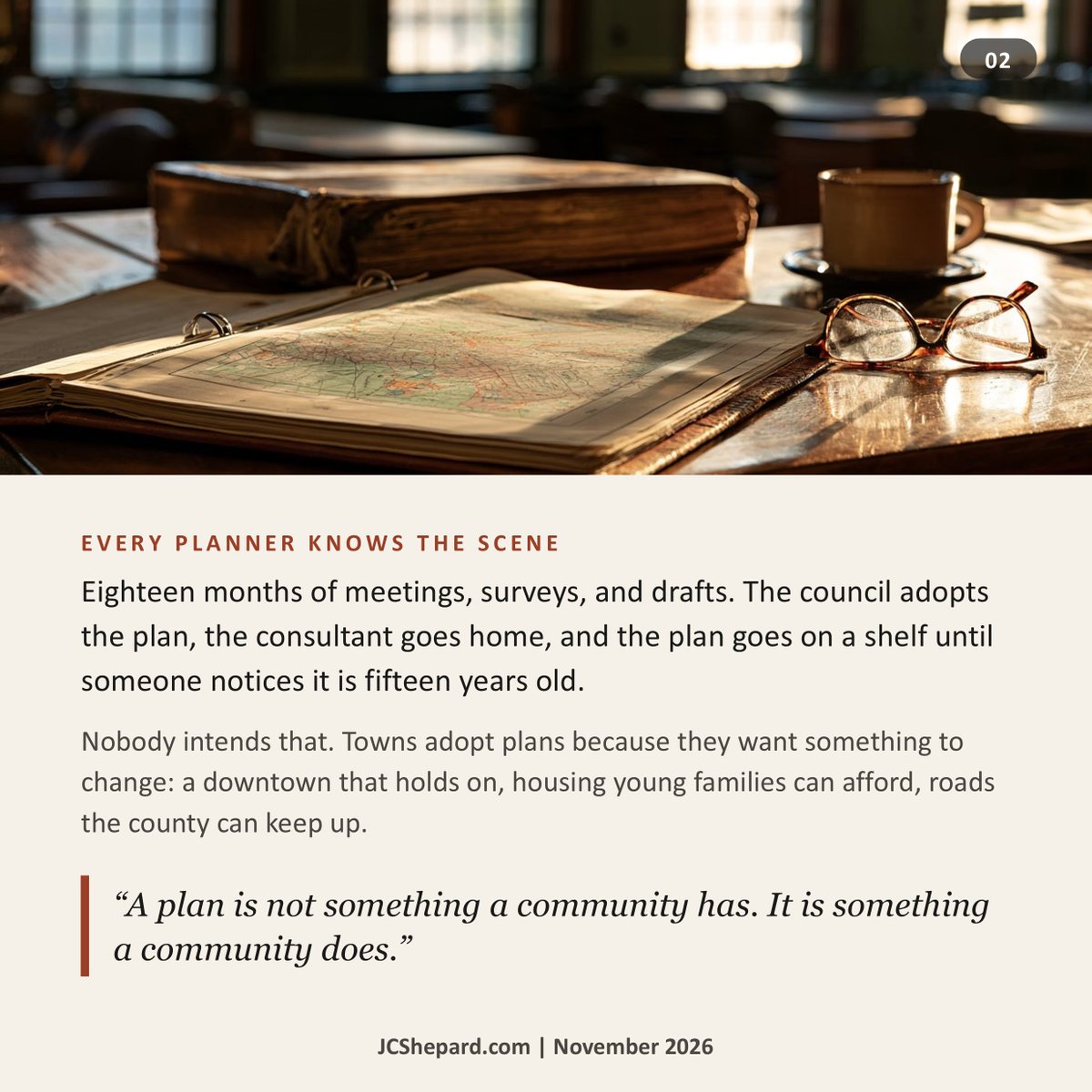
Most comprehensive plans don't fail. They just sit on a shelf.
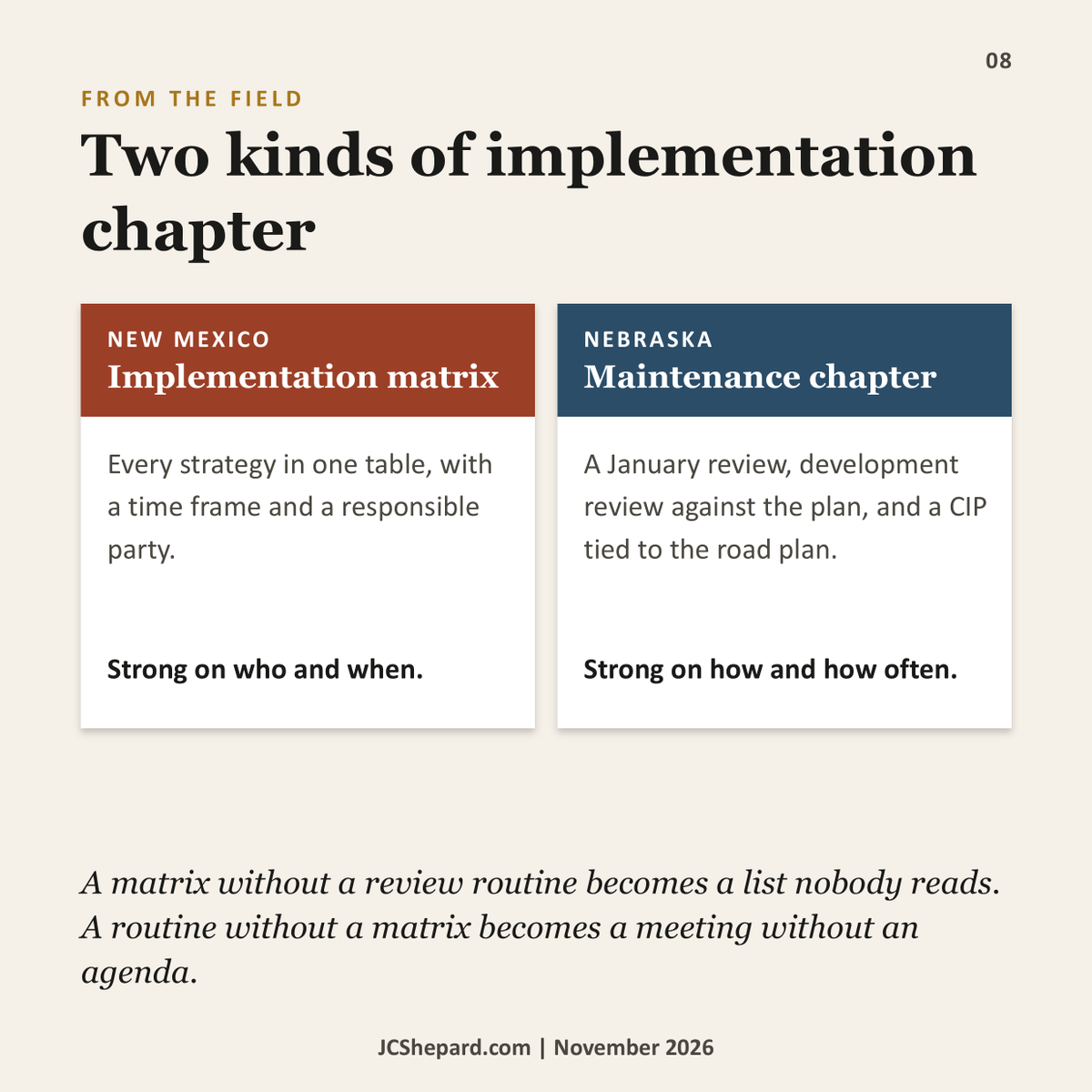
Part II of my November series asks why so many plans change so little, drawing on plans I've worked on in Colorado, New Mexico, and Nebraska.
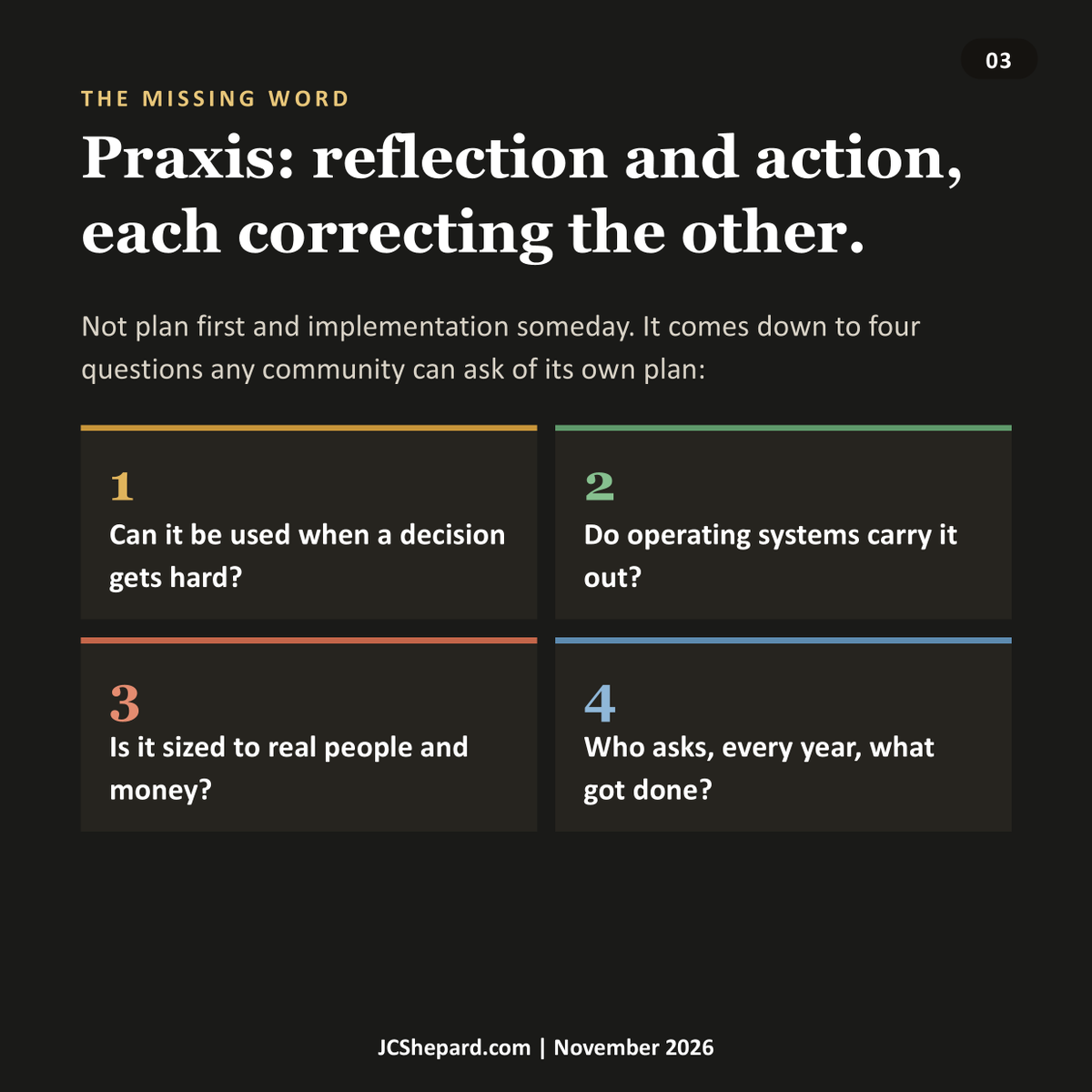
The old word for what's missing is praxis: reflection and action held together. Implementation is where we bring that to life.
A plan isn't something a community has. It's something a community does.
New bill slashes tribes’ role in projects that impact ancestral sites, water and wildlife: Native nations have come out against a Senate permitting reform bill, Bipartisan American Affordability and Jobs Act of 2026 (BAAJA) -- Anna V. Smith (High Country … https://t.co/tN0A61Q4fo