If you need a nice, contemporary introduction to epistemology, I recommend you to check out 'Epistemology: a contemporary introduction to the theory of knowledge' (draft version, in 350 pages) by Robert Audi, which has been made publicly available on Rutgers university website.
The book is divided in three parts: starting with sources of justifications, knowledge and truth, the structure and growth of justification and knowledge and finally, the book closes with the nature and scope of justification and knowledge.
I won't be posting the link, but with a search, you can easily get to it! So, if you're like me and you have a strong interest in philosophy, do take the time to check it out!
Human Nature, Human Goods by Tom Angier
A ground-breaking theory of human nature and its relevance to ethics, bringing ancient ideas into dialogue with cutting-edge science and philosophy.
📘 https://t.co/ngwhCPSROv
I am puzzled by the way biblical scholars who write monographs often ignore peer-reviewed articles. Take, for instance, Matthew Novenson's treatment of Joseph Fitzmyer's analysis of Rom 5:12 in his important book, PAUL AND JUDAISM AT THE END OF HISTORY (@CambridgeUP 2024). 1/
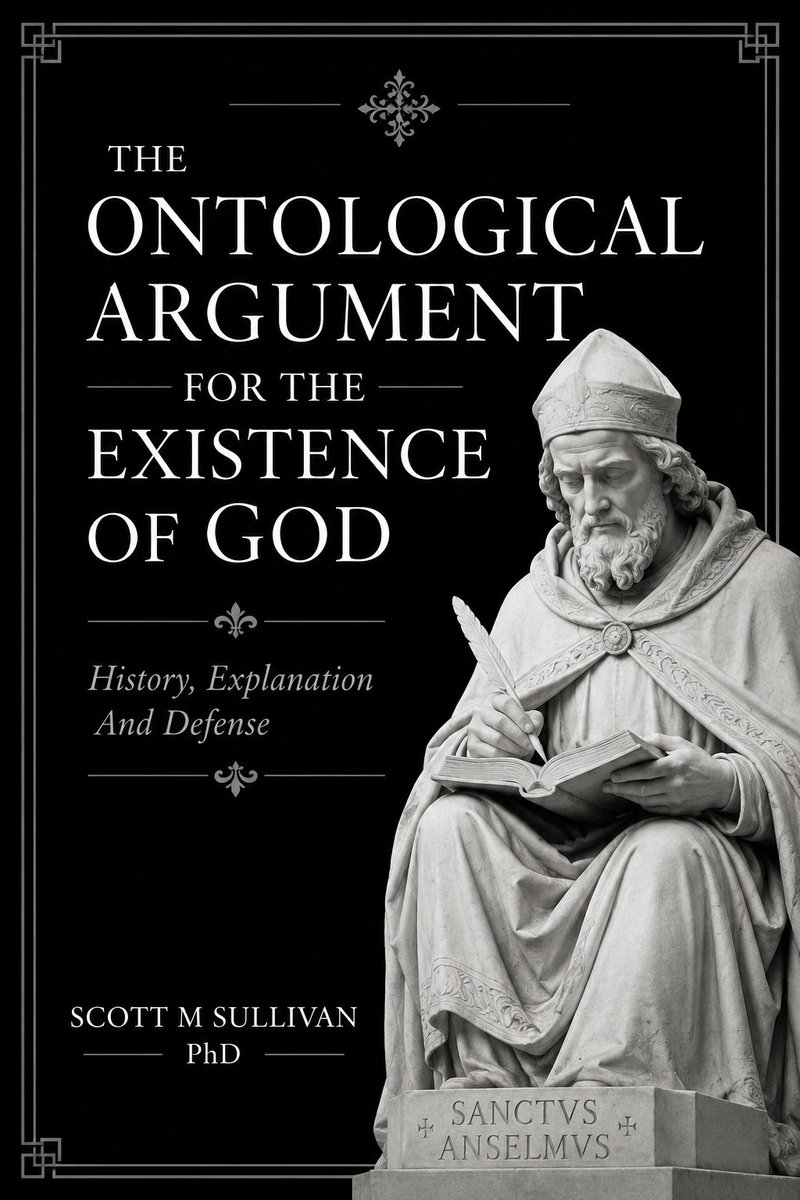
For centuries, philosophers have offered different “ways” to reason toward the existence of God. I have been developing what I think of as a modern philosophical “Five Ways”:
1. The Ontological Argument: God as Necessary Being
2. The Cosmological Argument: God as First Cause
3. The Teleological Argument: God as Supreme Intelligence and Designer
4. The Deontological (Moral) Argument: God as the Foundation of Objective Moral Obligation
5. The Veritological Argument: God as the Ground of Necessary Truth and Rational Intelligibility
Each argument begins from a different feature of reality itself:
Being.
Causality.
Order.
Morality.
Truth.
The progression is important. The arguments ascend from existence itself to mind itself.
Is the existence of God rationally self-evident?
Why is there causality and contingency?
Why is the universe rationally ordered?
Why do objective moral obligations exist?
Why do necessary and immutable truths exist at all?
The final argument especially interests me: the argument from necessary truth.
Eternal truths seem difficult to explain within a purely material and contingent universe. Necessary truth appears to point beyond matter toward eternal mind.
In many ways, this is deeply Augustinian:
Truth itself becomes a road to God.
Excellent book, the best one on Gödel’s Theorem(s) that I’ve ever come across. It still requires a lot of deep thinking to get through, and I’ve not been able to follow all the arguments in detail. However, I’m confident that this is the first book where if I DID make the effort to understand all the arguments, I could do so. One or two more detailed reading could get me there.
One overarching point that I got from reading this book is how much reasoning behind these arguments relies on “meta” mathematical thinking, and our ability to use human language to elucidate such concepts. Those who think that the ONLY way we can truly comprehend something is if we completely formulate it in code or mathematics are deluding themselves. As are those who think that “philosophical” considerations have become completely meaningless and redundant.
I am halfway through this stack. I had high hopes for Atlas of the Roman Empire - the narrative is fine but Basic Books should have done better with maps and illustrations, some look amateurish and not reflective of Potter's vast expertise. Boccaccio and The Four Heavens are great reads. I am about halfway through This Vast Enterprise and enjoying it greatly: I like its focus on individuals ( "Sexpedition" annex alone is so fascinating to read) and its fresh reassessment of the Lewis and Clark expedition — expertly researched and well written. I think my LP book would be a great companion for it. "Washington and Frederick" is next in line, and judging by the introduction, it will be an interesting read. Roeck's opus looks challenging, so I will tackle it once the semester is over. Share your reading lists!
happy to update that I managed to find funding to make the book open access. it's too late in the production now to covert to OA right away, but the publisher can do delayed OA after one year. still good!
After much delay, Fulton Sheen’s early masterpiece, The Moral Universe, will be dropping this week.
As previously mentioned, it will be priced as low as is possible.