One of the biggest achievements of the 2013 National Constitution was the adoption of the fundamental principle of devolution and decentralization as a central pillar of that constitution.
For decades Zimbabwe , like most dominated social formations had enjoyed the legacy of a dual enclave of economy characterized by uneven and unequal development .
The dual enclave economy was a colonial creation in respect of which a relatively developed urban white enclave existed alongside a huge black abyss of underdevelopment and subjugation .
The post independent State failed to decimate the dual enclave . It in fact deepened and consolidated the divide and inequality .
Political instability, tribalism , capture and corruption became the key drivers of post colonial disequilibrium.
In the case of Zimbabwe the break up of the Patriotic Front into the splintered status quo of ZANU and ZAPU spelt a danger to any region or area perceived to be ZAPU supporting .
Gukurahundi was physical genocide in respect of which the ZANU North descended on the South perceived to be ZAPU and unleashed barbaric pain and death which the country will never recover from.
But Gukurahundi became a systematic tool of underdevelopment and de industrialization .
Before Gukurahundi Bulawayo for instance was the industrial capital of Zimbabwe, housing some of the country prized manufacturing power base .
Thanks to ZANU and economic Gukurahundi, that industrial base was wiped out .
The net result was the creation of a region and citizens that is reified isolated and excluded.
Zimbabweans that have been made to feel like fourth class citizens .
But the isolation and exclusion is a national polity that runs across the length and breadth of Zimbabwe .
Bar scattered pockets rural Zimbabwe remains an undeveloped isolated enclave trapped by poverty desolation fragmentation and fragility .
The narrative of fatalism is entrenched , from Dotito to Chiyendambuya, from Chiwara to Nembudziya, from Gweluchena to Filabusi .
To the depraved population Devolution was an instrument of fighting back against the toxic hagemony of control imposed by decades of ZANU PF misrule .
Devolution was easly the most popular most universal constitutional theme during the 2009-2013 people driven constitution making process .
The new constitution in Chapter 14 set Devolution Structures in the form of 8 Provincial Councils and the metropolitan provinces of Harare and Bulawayo .
The 2013 Constitution allowed all MPs Senators and Councillors from a particular province to be remembers of that Provincial Council . There were to be ten additional Members elected indirectly through the proportional performance of political parties in the parliamentary election in that province .
Provincial Councils were to be responsible solely for the Development Agenda and trajectory in that Province .
That Development Agenda was to be financed by 5 % of the Budget , which amount had to be distributed equitably amongst the Provinces through a formula defined in an Act of Parliament .
Sixteen years after the passage of the 2013 Constitution the ZANU Government has deliberately failed to enact the necessary laws to actualise Devolution as demanded by Chapter 14 and 17 of the Constitution.
Consequently no Provincial Councils have ever been established . No Devolution Provincial Government has ever been set up as set out in Chapter 14 of the Constitution.
The ZANU PF government under Mugabe and Mnangagwa have killed devolution by cynical non implementation .
ZANU was never interested in Devolution. It vehemently resisted the same during the 2010-13 Constitution making process .On 18 February 2013 MDC negotiators walked out of the Constitution making dialogue after ZANU had begun reneging on Devolution. It took the intervention of Mugabe and Tsvangirai to reinstate Devolution and the dialogue .
CDF LEADERSHIP SPOTLIGHT (PART 3)
Bridgetti Mambondiani is a Zimbabwean lawyer, human rights advocate, gender equality champion and youth development practitioner with over five years of experience advancing social justice, civic participation and youth empowerment. Her work focuses on human rights education, advocacy, constitutionalism, gender equality and meaningful youth participation, particularly among young people and marginalised communities.
Bridgetti has held leadership and programme roles with organisations including Youth Empowerment and Transformation Trust (YETT) and Equal Education, and currently serves as Deputy Chairperson of the Board of Pada Platform. She is also a founding team leader of Junior Court Counsel, where she leads initiatives that promote legal and constitutional awareness among young people through innovative approaches such as arts and creative expression.
A passionate advocate for inclusive and accountable leadership, Bridgetti combines her legal expertise with grassroots organising, programme development and youth leadership to contribute towards a more just, equal and democratic Zimbabwe.
#RestoreTheConstitution
#TogetherWeDefend
Since Al Jazeera’s explosive Gold Mafia investigation exposed allegations of large-scale gold smuggling, the illicit tobacco trade, money laundering, corruption and criminal networks with links to South Africa, the glaring question remains: where are the arrests?
Years have passed, yet there has been no arrests in South Africa arising directly from the allegations exposed in the investigation.
That should concern every South African.
The documentary did not merely make vague allegations. It presented undercover footage, recorded conversations and detailed claims about how illicit products, cash and criminal proceeds were moved through sophisticated networks.
The evidence was serious enough to warrant thorough investigation by South Africa’s law-enforcement and prosecuting authorities.
Yet the public has seen little tangible evidence of consequences.
Yes, investigations of complex financial and organised crime can take time. But after many years, the public is entitled to ask what progress has been made, what evidence has been obtained, whether cases have been opened, whether suspects have been interviewed and why there has been no enforcement action.
The bigger issue is confidence in the rule of law.
If ordinary South Africans can be arrested swiftly when accused of serious offences, but allegations involving sophisticated criminal networks, enormous sums of money and potentially influential individuals appear to languish for years without visible consequences, it inevitably raises questions about whether law enforcement is applying the law equally.
South Africa cannot afford a situation where organised criminals believe that wealth, connections or sophisticated financial structures can place them beyond the reach of the law.
The authorities should provide clear answers.
What happened to the investigations?
Who was investigated?
What evidence was gathered?
Were dockets opened?
Were prosecutions considered?
If there were obstacles, what were they?
And, most importantly, why has the public seen no arrests directly linked to the Gold Mafia allegations in South Africa?
This is not about demanding that people be arrested simply because they appeared in an investigative documentary. It is about demanding accountability from the institutions responsible for investigating credible allegations of serious organised and financial crime.
If there is insufficient evidence to prosecute, the authorities should say so and explain why. If investigations are ongoing, the public deserves meaningful updates.
And if evidence supports criminal charges, then the law must take its course -regardless of who is involved.
Years of silence are not good enough. South Africans deserve answers.
@TaxJustice_SA@AJ_Investigates@SAPoliceService@NPA_Prosecutes@RSASIU@INTERPOL_HQ
https://t.co/7Im0LJ5yjN
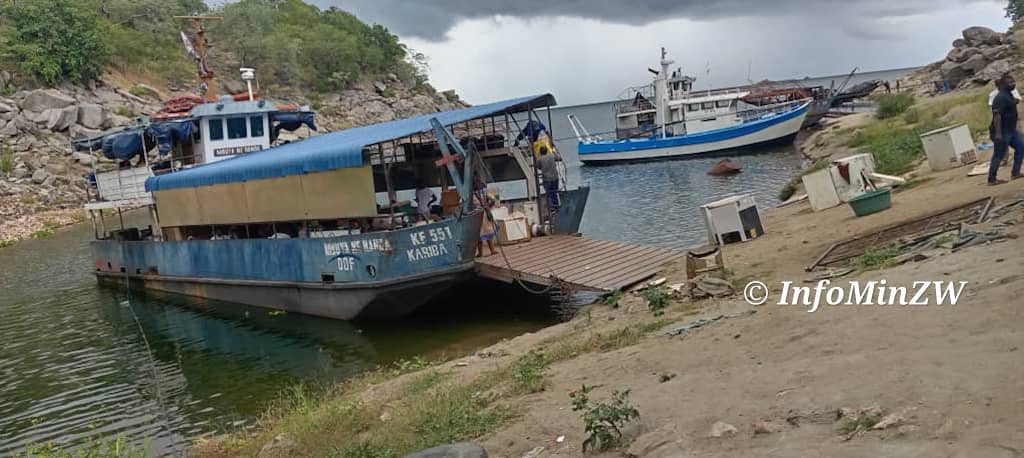
The capsizing of the Mbuya Nehanda on Lake Kariba was not an unavoidable accident, it was a structural catastrophe born of decades of institutional neglect and regulatory impunity. When state deflection blames a captain to shield systemic failure, grief must turn into an unyielding demand for accountability. Must basic public infrastructure always cost a hundred human lives before the state acts?
Read the full critique on state complicity, communal sorrow, and the urgent need for civic renewal
The Zimbabwe Republic Police has just published a recent update on the Kariba RIDA Boat Accident. The update indicates 3 additional victims have been positively identified.
It also notifies of one victim who remains missing. This comes after CDF published an update on the possibility of 2 victims that are still missing as reported by the local authority.
CDF commends the ZRP for issuing this update. The CDF remains committed to ensuring that constitutional rights remain meaningful in practice including the right to access to information in section 62 of the Constitution particularly in so far as the information is required in the interests of public accountability.
May the souls of the departed rest in eternal peace.
#StandWithKariba #RestoreTheConstitution
#JusticeForKariba
If a mere "small house" of the President's son can casually accumulate a US$9.35 MILLION empire, including 19 local mansions, 13 properties across South Africa & Dubai, two Lamborghinis, a Bentley, and a Rolls-Royce in just 3 years—imagine what those sitting in direct public offices with keys to our national treasury are taking?
They tell us the President needs to extend his term past the constitutional limit so he can "finish his projects." Is this the project? Enriched households, private supercar fleets, and massive offshore real estate portfolios while ordinary citizens starve and hospitals lack basic paracetamol?
The Kelsea Tafirenyika case isn't a war on drugs; it's a window into the absolute, unfettered plundering of Zimbabwe's wealth. If the crumbs from the table look like a US$9.3 million luxury lifestyle, the main feast must be staggering. Wake up, Zimbabwe! Stop cheering for a family feud and start questioning the real state capture.
JOIN THE CONVERSATION | X SPACE
Join us today 24 August 2026 at 7:00 PM CAT for an important X Space discussion on the Kariba Tragedy: What Does the Constitution Demand From the State?
This is a conversation about constitutional responsibility, accountability and the State’s duty to protect its citizens. Tune in, participate and make your voice heard.
📍 X Space: @cdfzim1
🕖 7:00 PM CAT
Link: https://t.co/kUJt57yVNF
#DefendTheConstitution
@cdfzim joins the nation in grief and solidarity as we mourn the lives lost in the tragic capsizing of the Mbuya Nehanda Ferry on Lake Kariba. With 93 confirmed dead, including 21 minors, this stands as the darkest days in our country’s history.
#mbuyanehandaferry#lakekariba
Infiltration & Defections are known & expected given where we are in the struggle. You plan for them and work to mitigate their impact. We knew about this as we structured CDF. The solution for us was decentralization and redundancy. There is no single point of failure.
Coming to the matter of Brilliant Dube who was the Deputy SG of the CDF who has been appointed as a senator by Mnangagwa, there is no way we would have known she would do this. If any gatekeeping or screening wld have been done, she probably would have been one of those doing it. That is why we are against gatekeeping because usually the gatekeepers end up being the traitors.
CDF remains an open organization with decentralized federalistic structure with autonomy and insulation. The defection or faultering of one soldier while demoralizing does not decapitate the organization.
On 16 July 2026, I took a constitutional challenge to the Constitutional Court of Zimbabwe.
I filed an application for leave for direct access to the Constitutional Court, challenging the constitutionality of Section 121(8) of the Criminal Procedure and Evidence Act [Chapter 9:07]. The respondents are the Minister of Justice, Legal and Parliamentary Affairs @ZiyambiZ and the Attorney General of Zimbabwe. @VirginiaMabhiza
I have brought this matter not only in my own capacity as a Zimbabwean citizen, but in the public interest.
As a student activist, human rights activist and Secretary General of the Zimbabwe National Students Union (ZINASU), I believe that the Constitution must remain the supreme law of our country and that every citizen must enjoy equal protection and benefit of the law.
The question I am asking is simple:
Why should the right to appeal a bail decision depend on the offence with which a person has been charged?
Section 121(8) creates a distinction in the avenues available to accused persons challenging bail decisions. My case is that this distinction raises serious constitutional questions concerning:
1. Equality before the law — Section 56(1)
The law should not create unjustified differences in the protection and benefit afforded to people before the courts.
2. Access to the courts — Section 69(3)
The Constitution protects the right of everyone to have their disputes determined by a court of law. My argument is that Section 121(8) limits access to the Supreme Court in bail matters for some accused persons.
3. The Supreme Court as the final court of appeal — Section 169(1)
The Constitution provides for the Supreme Court as the final court of appeal in Zimbabwe. My challenge questions whether ordinary legislation can remove that avenue of appeal for a particular category of accused persons.
The limitation is a blanket prohibition. It is overbroad, arbitrary and cannot be justified in a democratic society founded on human dignity, equality and freedom. People are being denied bail in the High Court right now with nowhere else to go.
I have asked the Constitutional Court for direct access because this is a matter of public importance and there is no other effective remedy.
I am not asking for special treatment. I am asking whether all Zimbabweans should enjoy equal access to justice, particularly at a stage where an accused person remains protected by the presumption of innocence.
#StrikeDown121(8) #EqualityBeforeTheLaw #AccessToJustice
Mbavha Yemazuva irikupi? Where are the beneficiaries of stolen government money? Vakanyarara! They know that one Range Rover could have been the difference btwn 40+ dead and a safe trip. The car from stolen money you got is what killed pple today. More are going to died because of these thieves! This is a product of corruption & theft of government resources that we see everyday.








![Prof2212's tweet photo. On 16 July 2026, I took a constitutional challenge to the Constitutional Court of Zimbabwe.
I filed an application for leave for direct access to the Constitutional Court, challenging the constitutionality of Section 121(8) of the Criminal Procedure and Evidence Act [Chapter 9:07]. The respondents are the Minister of Justice, Legal and Parliamentary Affairs @ZiyambiZ and the Attorney General of Zimbabwe. @VirginiaMabhiza
I have brought this matter not only in my own capacity as a Zimbabwean citizen, but in the public interest.
As a student activist, human rights activist and Secretary General of the Zimbabwe National Students Union (ZINASU), I believe that the Constitution must remain the supreme law of our country and that every citizen must enjoy equal protection and benefit of the law.
The question I am asking is simple:
Why should the right to appeal a bail decision depend on the offence with which a person has been charged?
Section 121(8) creates a distinction in the avenues available to accused persons challenging bail decisions. My case is that this distinction raises serious constitutional questions concerning:
1. Equality before the law — Section 56(1)
The law should not create unjustified differences in the protection and benefit afforded to people before the courts.
2. Access to the courts — Section 69(3)
The Constitution protects the right of everyone to have their disputes determined by a court of law. My argument is that Section 121(8) limits access to the Supreme Court in bail matters for some accused persons.
3. The Supreme Court as the final court of appeal — Section 169(1)
The Constitution provides for the Supreme Court as the final court of appeal in Zimbabwe. My challenge questions whether ordinary legislation can remove that avenue of appeal for a particular category of accused persons.
The limitation is a blanket prohibition. It is overbroad, arbitrary and cannot be justified in a democratic society founded on human dignity, equality and freedom. People are being denied bail in the High Court right now with nowhere else to go.
I have asked the Constitutional Court for direct access because this is a matter of public importance and there is no other effective remedy.
I am not asking for special treatment. I am asking whether all Zimbabweans should enjoy equal access to justice, particularly at a stage where an accused person remains protected by the presumption of innocence.
#StrikeDown121(8) #EqualityBeforeTheLaw #AccessToJustice](https://pbs.twimg.com/media/HPqigVbXgAAumYs.jpg)