BIG news! We have surpassed $500 million in ARR! Sitecore pioneered the content management market more than two decades ago, and today, our solutions form the ONLY end-to-end, fully SaaS DXP on the market. See why 3,000+ brands worldwide trust Sitecore. https://t.co/VRZYC4Ukia
This article, "Seven Transformations of Leadership by David Rooke and William Torbert," from HBR in 2005, is such an old gem. It explains not only why high-performing ICs struggle to become effective Managers but also why Staff Engineers, Directors, VPs, and sometimes entire teams can't succeed at the next level.
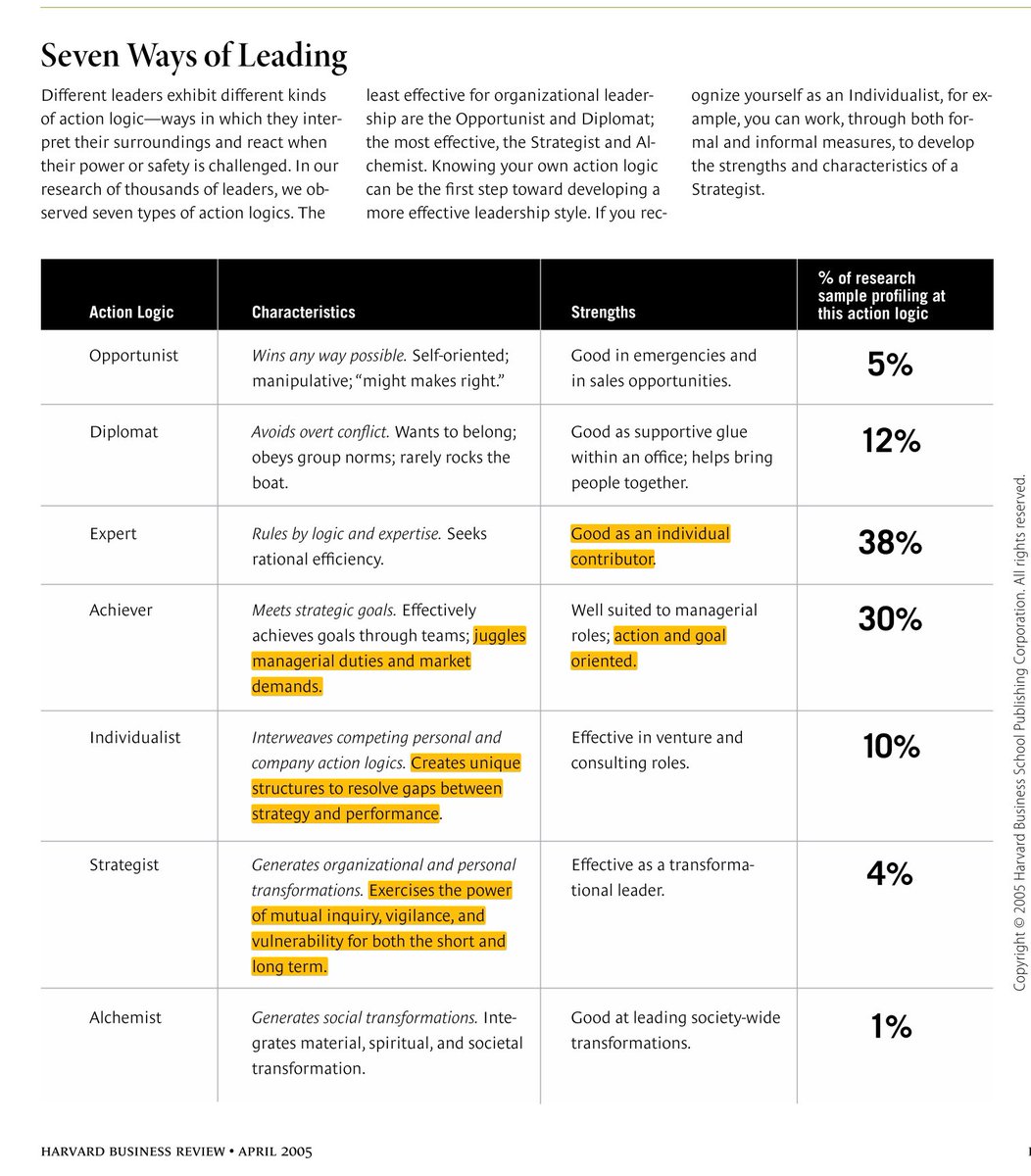
In short: it is because it requires them to change something super deep, their "Internal Action Logic"—how they interpret their surroundings and react when their power or safety is challenged—and operate in fundamentally different ways.
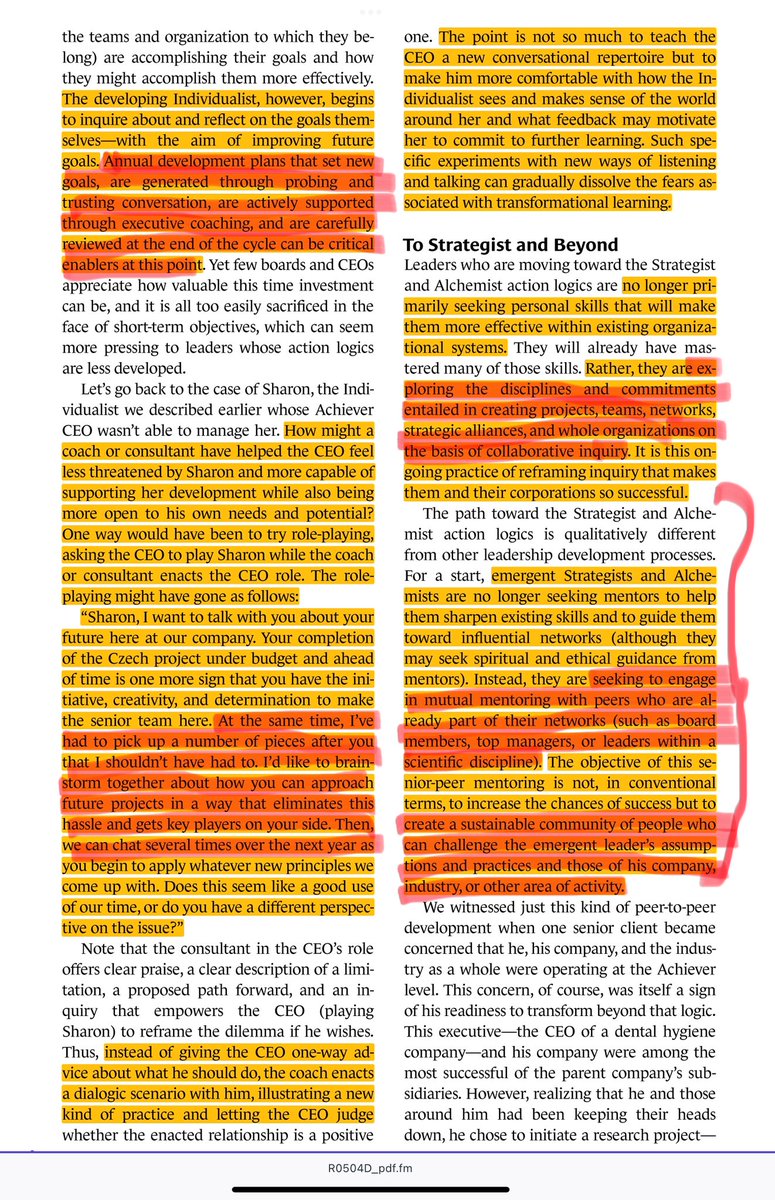
Such an awesome article. So many examples close to home. Oracle. Sun. MBAs vs. PHDs. The shift from needing a mentor to no longer seeking mentors to seeing peers who are already part of their networks as mentors and engaging with them not to increase chances of success but to create a sustainable community of people who can challenge the emergent leader's assumptions and practices and those of their company, industry, or other areas of activity.
Now, talking about Staff Engineers especially: Why is it so difficult for Senior Engineers to shift their focus (and their action logic) and ultimately be successful as Staff Engineers?
Because it requires the person (who usually operates with the "Expert" Action Logic ruled mainly by logic and expertise) to undergo not one but two, if not three, transformations of leadership and action logic to be successful.
The first transformation is from Expert to Achiever.
> Within a year of one engineer's promotion to lab manager, a role that required coordination of others and cooperation across departments, the former Expert was profiling as an Achiever. Although he initially took some heat ("Sellout!") from his former buddies, his new Achiever awareness meant that he was more focused on customers' needs and clearer about delivery schedules. For the first time, he understood the dance between engineers trying to perfect the technology and managers trying to deliver on budget and on schedule.
The second transformation is from Achiever to Individualist.
> In both business and personal relationships, speaking and listening must come to be experienced not as necessary, taken-for-granted ways of communicating predetermined ideas but as intrinsically forward-thinking, creative actions.
The third and perhaps the most challenging transformation is from Individualist to Strategist:
> No longer primarily seeking personal skills that will make them more effective within existing organizational systems. They will already have mastered many of those skills. Rather, they are exploring the disciplines and commitments entailed in creating projects, teams, networks, strategic alliances, and whole organizations on the basis of collaborative inquiry. No longer seeking mentors to help them sharpen existing skills and to guide them toward influential networks. Instead, they are seeking to engage in mutual mentoring with peers who are already part of their networks to create a sustainable community of people who can challenge the emergent leader’s assumptions and practices and those of his company, industry, or other area of activity.
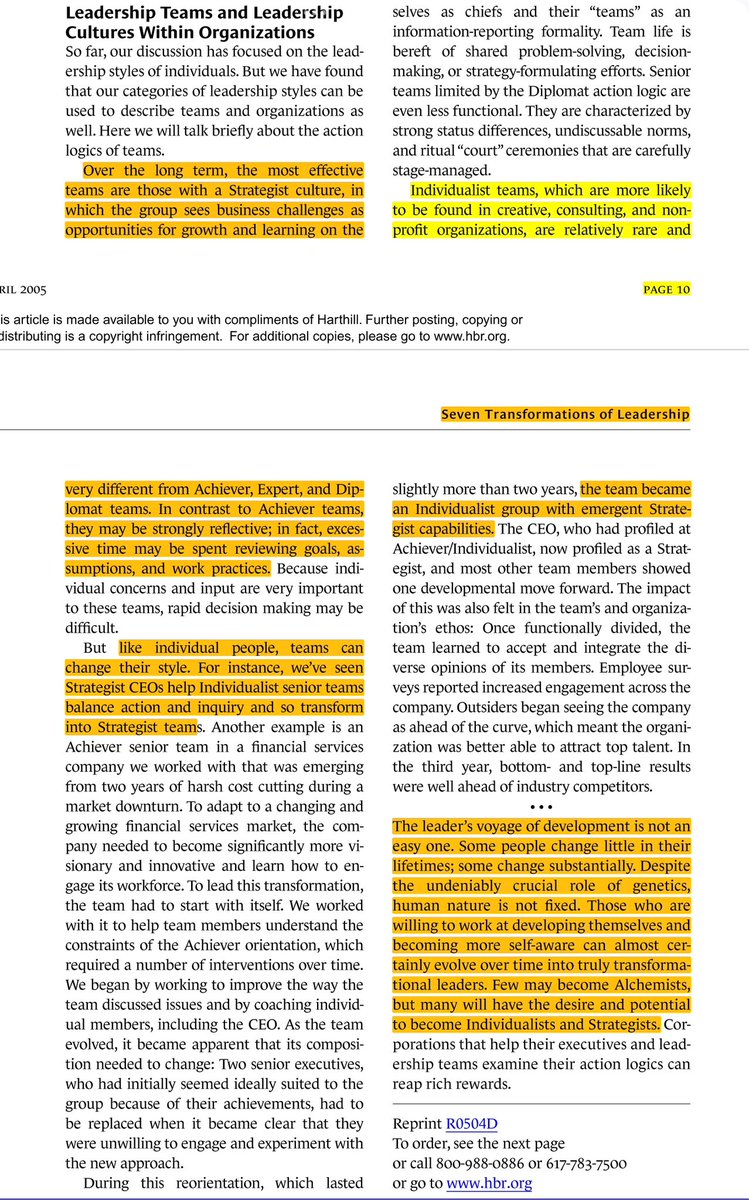
> The leader's voyage of development is not an easy one. Some people change little in their lifetimes; some change substantially. Despite the undeniably crucial role of genetics, human nature is not fixed. Those who are willing to work at developing themselves and becoming more self-aware can almost certainly evolve over time into truly transformational leaders.
The ability to reinvent oneself is what defines success at the leadership level and a constant reminder that what got you here, won't necessarily get you there. You need to reflect to know if you need to get incrementally better at your current leadership level of action mode or if you need to reinvent yourself and approach problems in a fundamentally different way and change your leadership level and lens of action mode.
Thank you @timeshighered for sharing our work on universal design for learning.
Special thanks to our practice tutors and educators at @RCSIPhysio clinical sites. Their creativity and commitment to our students’ journey brings all this to life.
#UDL makes better learners.
#YouthExperienceMatters is live! We want to reach young people 13-17y who have a physical disability to share their experiences and priorities for taking part in physical activity. Spread the word!
Funded by @hrbireland@centralremedial.
My latest article gives a high level of workflow for frontend developers building with the new #Sitecore#XMCloud. #FrontEndDeveloper
https://t.co/3eZKKuZ1IA
Thanks to @HRCIreland@hrbireland Joint Funding Scheme with @centralremedial, we will ask young people with disability in Ireland what really matters to them when it comes to participating in physical activity. Stay tuned!