@drpablocorral You are correct Pablo , with a median Baseline Lpa of around 240 nmol/L , the cholesterol content of Lpa is considerable which implies that the “ true “ LDL-C in Horizon was likely close to 50 mg/dl ..
In Chicago at #AHA26. Lp(a), inflammation, gene editing: so many of the questions I’ve spent my career on are getting serious attention. It’s a very good time to be a scientist in heart disease. @American_Heart
In Chicago at #AHA26. Lp(a), inflammation, gene editing: so many of the questions I’ve spent my career on are getting serious attention. It’s a very good time to be a scientist in heart disease. @American_Heart
When it comes to cardiovascular care, better isn’t optional – it’s overdue.
At #AHA26, we're joining the cardiovascular community to explore what it will take to push beyond conventional approaches and more deeply address ASCVD risk.
Stop by Booth #3102 to connect with our team and experience interactive content that highlights the role lipid-related markers can play in understanding cardiovascular risk and heart health. We look forward to seeing you there.
👉🏻ApoB ~61 mg/dL, HDL-C ~26 mg/dL = 5.10% predicted 10-year ASCVD probability
ApoB ~149 mg/dL, HDL-C ~85 mg/dL = 4.39% predicted 10-year ASCVD probability
The second person has more than double the ApoB, yet the model predicts ~7 fewer ASCVD events per 1,000 people over 10 years. 🤔
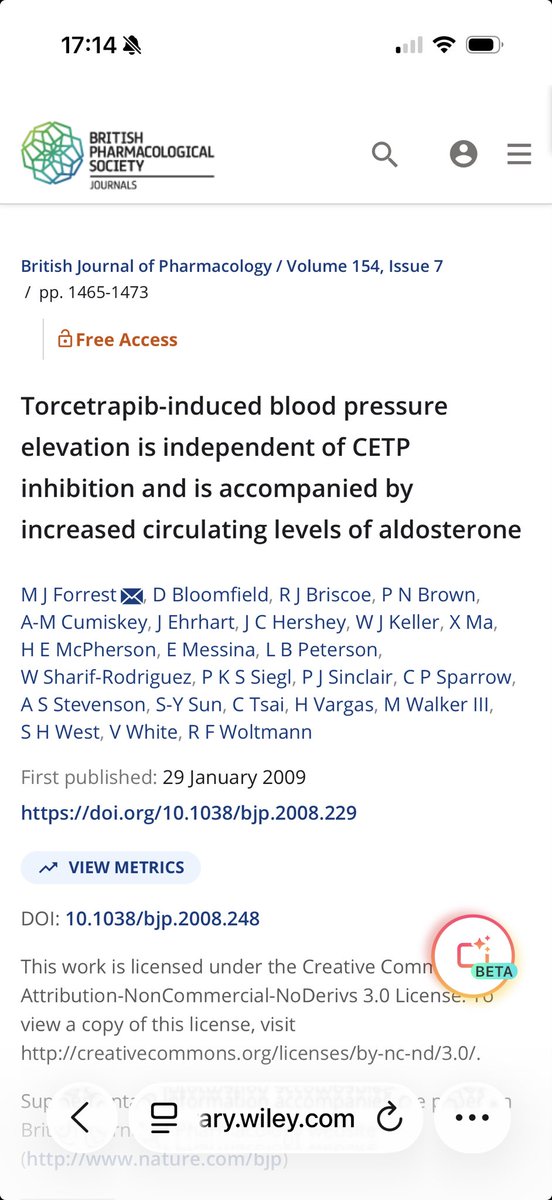
In this work from our group we show the obicetrapib does not worsen HbA1c nor increase risk of new onset diabetes. The associations of potential protection correlate with apo A1 rise. This is consistent with other CETPi. EJPC
https://t.co/2zBUB31R60
Respectfully disagree @EricTopol; this is a rather misleading interpretation of an interesting study.
👉No hypercholesterolemia ≠ no lipid involvement.
☝️The study itself shows:
1️⃣ Increased CD36-mediated lipid uptake.
2️⃣ Enhanced foam-cell formation.
3️⃣ Partial rescue with CD36 deletion.
4️⃣ Markedly accelerated atherosclerosis with hyperlipidemia.
🤔 How does any of this challenge the causal role of lipids in atherosclerosis?
👉Identifying additional pathogenic mechanisms does not invalidate established causal ones.
☝️We should be careful not to confuse normal plasma LDL-C with lipid-independent atherosclerosis.
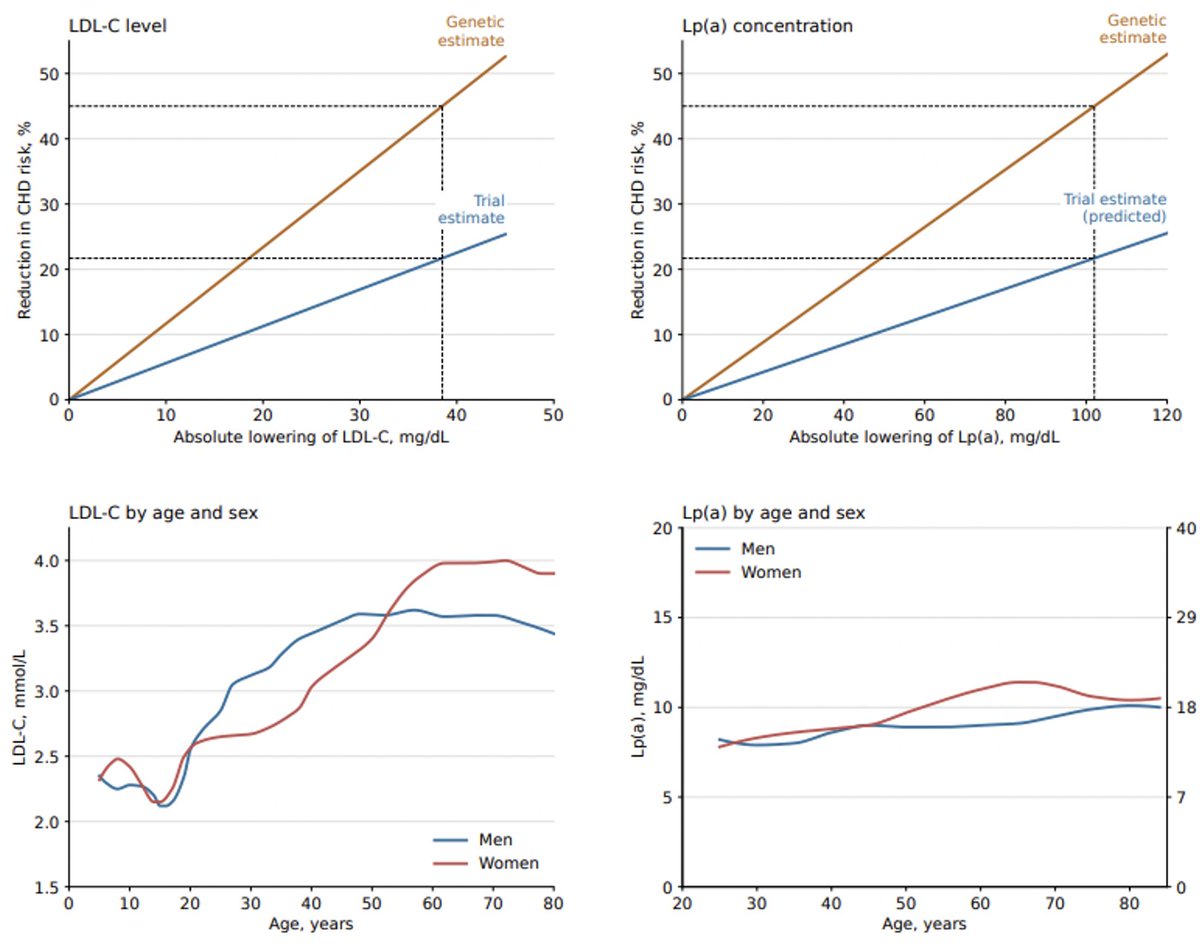
I think one overlooked aspect of translating genetic estimates of Lp(a)-lowering into expected clinical benefit is the difference in LDL-C and Lp(a) trajectories across the lifespan. The estimates for Lp(a)-lowering are derived by extrapolating from how the effect of genetically lowered LDL-C on cardiovascular risk translates to MACE risk reductions in trials.
LDL-C increases substantially with age, whereas Lp(a) remains largely stable over the lifetime.
If we accept that atherogenesis is driven by cumulative exposure to atherogenic particles over time (“particle-years”), then the effect of Lp(a)-lowering over the same period should be smaller than the effect of LDL-C-lowering. A given reduction in Lp(a) represents a smaller proportion of lifetime cumulative exposure because Lp(a) levels are relatively high earlier in life, whereas LDL-C exposure accumulates progressively with age.
This was not accounted for in the estimates used for the power calculations of Lp(a)HORIZON, which were partially based on genetic estimates derived through this LDL-C → Lp(a) extrapolation.
This could be one reason why the eventual clinical effect of Lp(a)-lowering is smaller than expected.
INHIBITORS of Lp[a] and IL6 may not work but hsCRP and Lp(a) provide complementary, context-dependent prognostic value from the UK Biobank
https://t.co/B6pCF2sESC
How many meeting have astronauts, NFL players, clinical trialists, clinicians, and individuals with lived experience? #FamilyHeartSummit26@FamilyHeartFdn
Get to kickoff my morning with my Conference Co-Chair Fatima Rodriguez. It is going to be a great first day of the #FamilyHeartSummit26@FamilyHeartFdn https://t.co/Z3BvR0ODyH