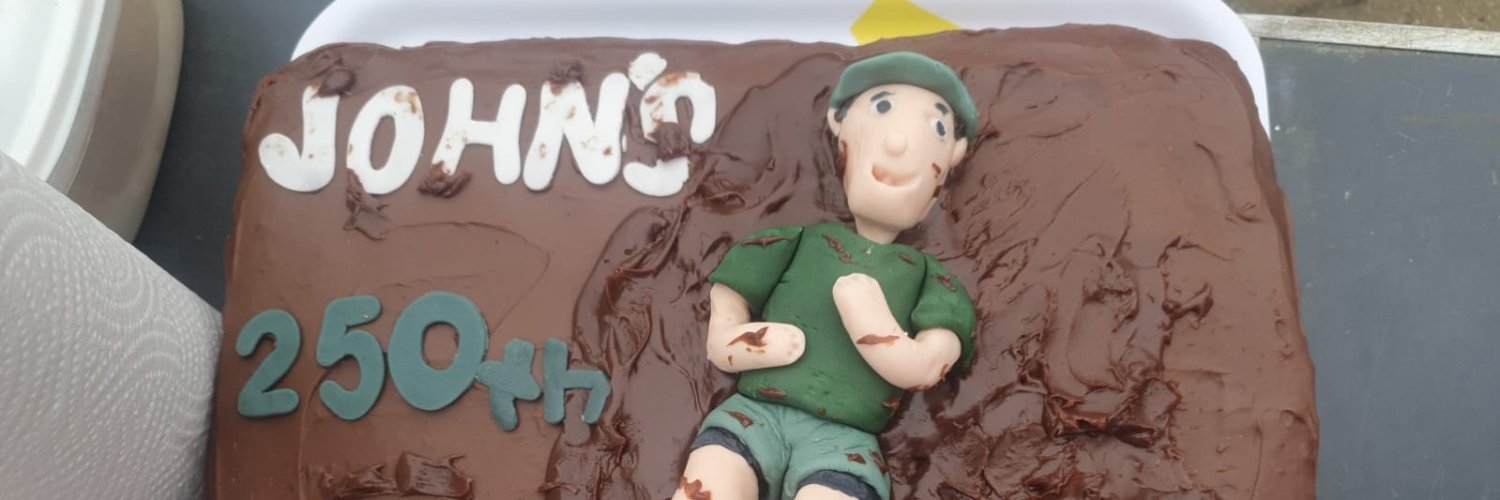
Worked as a government librarian, teacher, cricket & rugby coach/writer, and in local government.
Dedicated but slow parkrunner.
Puzzled why anyone follows me!
@LeeHurstComic I have always suggested St Kilda personally, but West Falkland is a lot bigger.
Alternatively I suggest South Georgia and the South Sandwich Islands as there'd be no need to upset any residents as they have no resident population.
Plus the weather there can be quite bracing.
@MarcherReborn Also the seas are full of fish and the soil is some of the most productive in the world with an ideal climate for growing crops and meat.
@Makhnoviteplus@azlancat Surely the answer is we don't know? We know a great deal about Egypt only because so much evidence survives. Other civilisations may have lasted as long, but in most places (say Northern Europe) evidence is much harder to come by, for climatic reasons if nothing else.
Long before European ships dropped anchor off the West African coast, slavery was already an established institution across Africa.
What changed in the 1500s wasn't the morality, it was the scale.
Foreign traders arrived with global demand, and powerful African kingdoms saw an economic opportunity. They turned their neighbors into an export commodity.
Dahomey, Ashanti, Oyo, Kongo, Zanzibar, these empires didn't build their wealth by defending their borders against foreign invaders. They built it by raiding rival towns, capturing prisoners of war, and marching them to coastal forts in chains.
For over three centuries, Europeans rarely stepped far inland. Tropical diseases killed them, and African armies were too strong to conquer.
They didn't need to invade; they simply anchored offshore and waited. Local rulers supplied the market.
The business model was brutally simple: sell captives for muskets, use the muskets to capture more people, and trade them for more weapons.
When Britain finally abolished the slave trade in 1807, the Ashanti king didn't celebrate. He sent envoys to ask why the British were ruining a profitable partnership.
This is the uncomfortable truth that disrupts the simple narrative of pure victimhood. There was no unified "Africa" that was suddenly betrayed.
There were rival kingdoms competing for dominance, willing to trade away their neighbors for short-term wealth and military advantage.
The real tragedy isn't just what happened centuries ago, it's that the business model never changed.
When the trade in human beings ended, the elite simply switched commodities. First it was ivory and rubber. Then gold and diamonds. Today, it is cobalt, platinum, and lithium.
The formula remains identical: extract raw value, hand it over to foreign buyers for a quick payout, and fight internally over the scraps while the rest of the world builds empires off our resources.
Blaming the buyer is easy, because a pure victim carries no responsibility to change.
Facing the truth is harder. Until we confront why African leaders consistently trade away long-term sovereignty for short-term profit, history will keep repeating itself.
The ships will change. The buyers will change. The raw materials will change.
The only thing that stays the same is the willingness to sell.
https://t.co/3HsbFrA4eZ
@SandyofSuffolk Never used them but I've seen them pick up food in bags that look like a science experiment.
You know, the one where you've left a petri dish our for a few days and "something" has grown.
It's like The First Horseman has retired and set up a franchise.
@SandyofSuffolk I know someone like you describe.
Thing is they must know that their parents are in or near their 60s and will not be able to run around meeting their every need forever. What the hell are they planning to do with their lives when their parents aren't there anymore?
@carlgomb We are approaching a point where "normal" means a child WITH a mental illness of some sort.
At which point maybe we need special schools for children without a diagnosis.