Welding remains one of the biggest bottlenecks to unlocking domestic manufacturing. From the construction equipment used to build our homes to the substations and battery storage used to power them, the things America needs more of depend on exactly the kinds of complex welds @PathRobotics makes possible.
This year Path signed a $600 million agreement with @WeAreHII to help build ships in Virginia and Mississippi. And much of the U.S. industrial base is lined up behind them.
Beyond excited to see what @AndrewLonsberry and the whole team achieve with this latest investment!
We started with the hardest job in the factory: welding.
Now Path Robotics has raised a $300M Series E at a $2.45B valuation, led by @Georgian_io, to take physical AI to every task before and after the weld.
Link Here: https://t.co/7HqJOI5Nm8
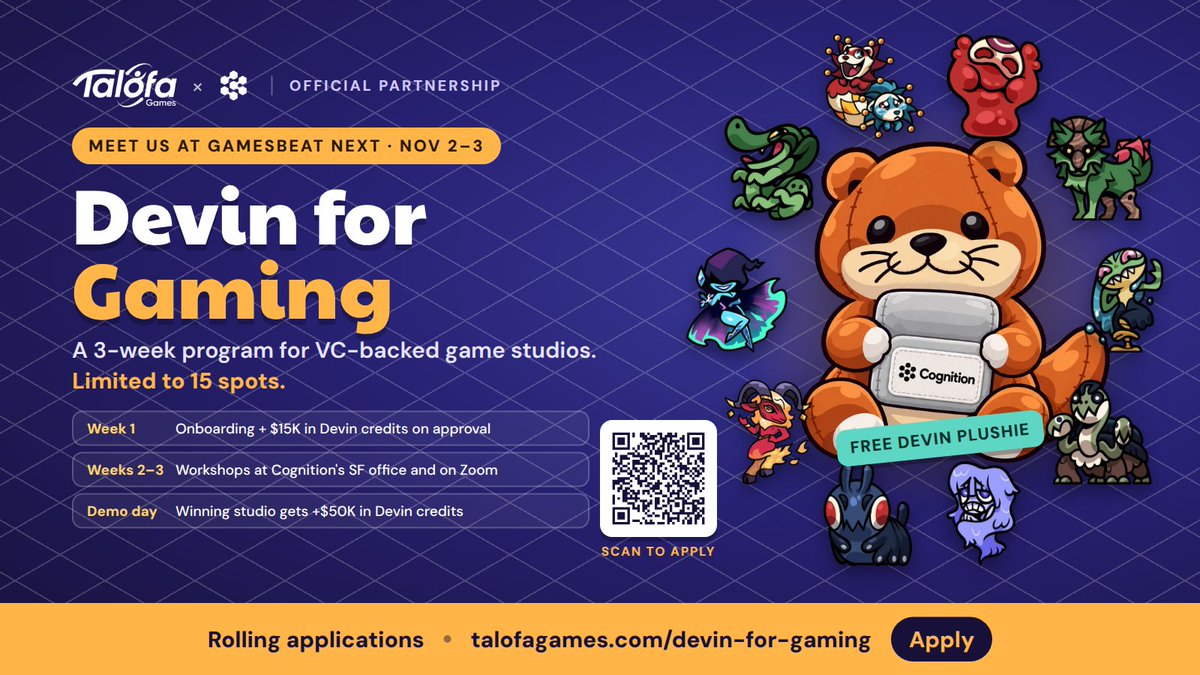
1/3🧵 19 days ago, we put @DevinAI to work on @PlayMonsterWalk
What happened:
- PRs/week: 52 → 879
- 48 automations
- A 24/7 self-improving system
We want to bring this to others.
Talofa is partnering with Cognition to create a program: Devin for Gaming, Cohort 1.
Clothing manufacturing is coming back to America and the result will be both higher quality and more affordable apparel.
Amazing work Alex Zimmer and the entire Topologic team!
world's first robot-made (and linked) sweaters (not those toys machines knit as one piece). 100% American-made and the start of knitwear manufacturing onshore!
world's first robot-made (and linked) sweaters (not those toys machines knit as one piece). 100% American-made and the start of knitwear manufacturing onshore!
@SohamThoughts@_panthalassa Super cool thought experiment @SohamThoughts! How do you think this model compares to other experimental places we could put data centers?
The future of agents is open source.
Saying that as someone who uses Opus and Codex
every day. Opus is the creative risk-taker, Codex is the precise implementer. You want both pushing each other.
But both lock you into their ecosystems. Every call loads system prompts and conversation history I don't control. When I create a Claude Code subagent with custom prompts, the harness still stacks its own context underneath mine. The platforms also optimize for margin in ways you cannot see: caching strategies, effort routing, model selection, quantization. Fine for many users. Painful when you're engineering a production agent stack.
Agents are systems, not prompts. A model plus a harness that handles planning, tool use, context, memory, verification, recovery. As harnesses mature, those pieces decompose into reusable primitives. Once you see the decomposition, three levers matter: best model per primitive, full control over context, and fine-tuning on your own workflows. You cannot fine-tune Opus. You can fine-tune Qwen, MiniMax, GLM, or Kimi.
The shift makes sense once you stop thinking about agents as prompts and start thinking about them as systems. An agent is a model plus a harness that manages planning, tool use, context, memory, verification, and recovery. As harnesses mature, the work decomposes into reusable primitives. Planning. Context compaction. Code editing. Verification loops.
Once you see the decomposition, three things follow. You want the best model per primitive, not the best model overall. You want full control over prompts and context. You want the ability to fine-tune on your specific workflows. Cursor ships improved model checkpoints every five hours via real-time RL. That feedback loop is only possible with models you can train.
The cost gap amplifies everything. Anthropic's pulling OAuth support from OpenClaw already has many users turning off their Claws due to skyrocketing API bills, now imagine constantly running fifty parallel agents... Teams building those architectures run open models because they cannot afford frontier pricing at that scale.
Not betting against frontier models. They remain extraordinary for novel, hard problems, and closed platforms have real distribution advantages. Not to mention, they are great out-of-the-box. But modular systems compound. Linux and Kubernetes did not win because they were free. They won because composability attracts more builders, more specialization, more innovation than any single vendor can produce alone.
The companies helping builders exercise control over this stack (memory, orchestration, security, type safety) are where we're placing our bets. Part 2 next week on the specific areas we're chasing.
Full post in comments.
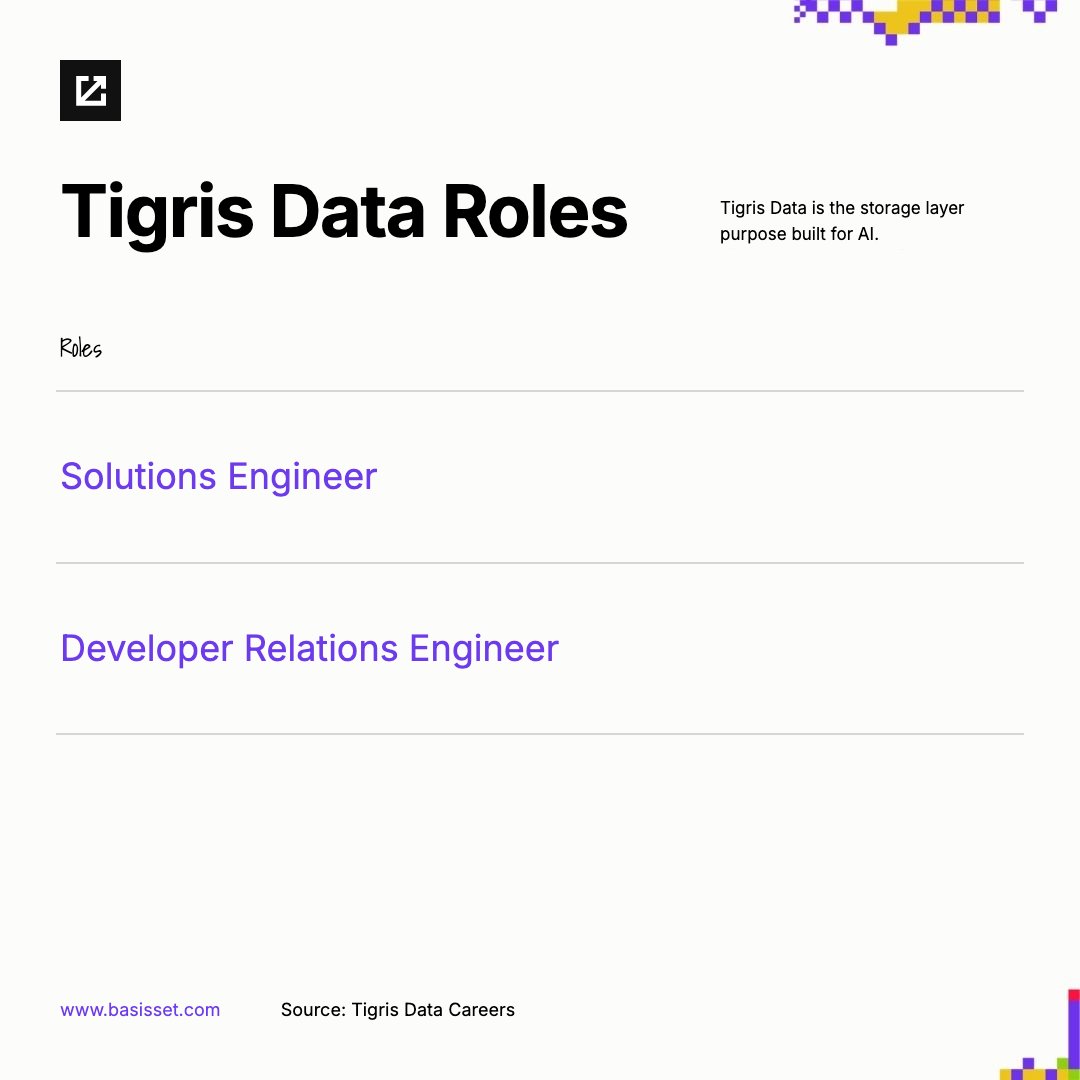
Jobs: @TigrisData is hiring for a Solutions Engineer and a Developer Relations Engineer!
Tigris Data is the storage layer purpose built for AI. Tigris storage scales infinitely, can be shared across any cloud, and provides instant access to all your data, all over the globe. If you're excited about representing Tigris at developer and data community events or helping developers understand and succeed with Tigris, these roles could be a fit!
Apply here: https://t.co/10QxgSpihp
Applications are now open for the @BasisSet x Internet Backyard AI Fellowship.
We're looking for ambitious early-careers builders who want to bet on the financial infrastructure layer of AI before everyone else catches on.
As a fellow, you'll:
👉 Work directly inside the compute economy: neoclouds, inference, data center operators
👉 Build real experience with the billing and payments infrastructure that powers AI infrastructure companies
👉 Join a cohort of ambitious peers who will push you and open doors and access to the Basis Set platform
I can't overstate how early this is. The picks-and-shovels layer of AI is still being built. The people who understand it now will be the ones contributing today will be the ones laying the foundation for decades to come.
We’re building Internet Backyard to be the billing and payments backbone for compute. The fellows program is how we're investing in the next generation of people who'll run it.
Don't sit on it. Applications are rolling, but momentum favors the early.
Spots are limited. Apply now!
https://t.co/EmTeeVIEYh
News: Congrats to @withdaydreamco on their latest $15M Series A
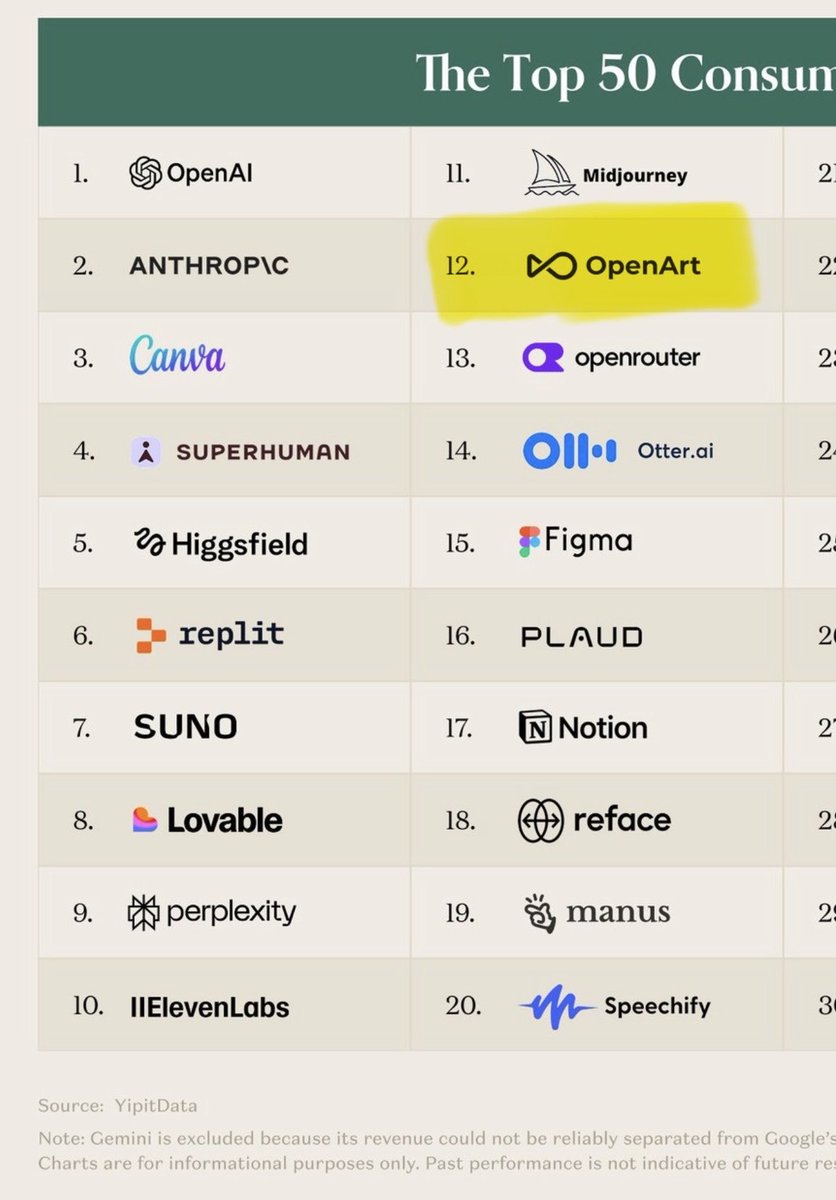
Daydream is building the dream team of growth, giving every company access to the sharpest insights and workflows from the best operators across SEO, AEO and growth. We've seen this from the inside out, watching them support @openart_ai as they crossed $70M ARR with <20 people and other category-leading companies like @clay and @zapier.
Read more about Daydream, why we backed @thenuka_k at the earliest stage, and the future of growth-as-a-service 👉 https://t.co/D75TLVoQCg
Never in a million years would I have predicted the solution for rising drug costs and drug shortages would be genetically engineered chicken eggs. 🥚
I remember the first time Demetrios Kellari and Sam Levin explained to me how they planned to produce medicines at one-hundredth the cost in America. I'd been looking for a way to improve pharma supply chains for some time.
But the solution is so elegant and so @BasisSet in so many ways. Take a big macro problem, find the supply chain bottleneck, remove it with cutting edge research and AI, and unlock massive value creation for the entire market -- whether consumer goods, metal fabrication, or in this case drugs.
So many of the world's hardest problems are supply chain problems.
And this team has been executing at the highest level, working to take the science and execution risk off the table and converting it into a clear path to scale.
I can't wait to live in a world where we can produce life saving medicines affordably anywhere.
https://t.co/1CQSrSdmYl
News: Huge milestone for Neion Bio, announcing our $11M Seed, a major commercial partnership and a feature in the @nytimes!
Drug manufacturing is insanely expensive and geopolitically vulnerable in America. Dimi, Sam and team have created a way to make life saving medicines domestically at one-hundredth of their current cost. It sounds like science fiction, but it's not.
Read more about Neion and their work leveraging nature's protein factories 👉 https://t.co/CyRCSDjJj0
Jobs: @openart_ai is hiring for a Strategic Partnership Manager, an AI Social Content Creator, and a Founding Platform & Reliability Engineer!
OpenArt is the leading AI platform for visual storytelling. If you're excited about growing high-impact partnerships, creating compelling AI-powered social content, or owning infrastructure reliability end-to-end, these roles could be a fit!
Apply here: https://t.co/zWZDJrxrd8
Everyone's talking about gas prices, but supply chains are about to get extremely weird again. 🚢 ✈️ 🚚 🚗
Gas at the pump is up 28% in the last month. That's the number we see. But diesel for trucking, jet fuel for air freight and bunker fuel for container ships is up significantly more.
This all points to serious pain for the players who matter most for getting goods from point A to point B.
In the short run, markets don't fully absorb these changes overnight. While we have to face gas prices every day we show up at the pump, air and ocean freight work through contracts and hedging designed to protect against moments like these.
But over the long run, those supply chain price increases become our price increases for everyday goods and services.
We underinvest in coordination.
There’s a lot broken in how U.S. research operates. It's slow, the incentives are broken and the whole system is built on outdated signals. It should evolve.
But many of the problems we care about — industrial capacity, supply chains, even food inflation — aren’t intelligence problems. They’re coordination failures.
The right people, data, and incentives aren’t aligned at the right time.
When we remove that friction, we get outcomes like Operation Warp Speed.
That shouldn’t be reserved for emergencies.
Markets are good at pursuing what’s already legible.
They’re not designed to align effort across long-horizon, ambiguous problems.
We need both.
Perspectives: Introspection without self-awareness
There’s been a lot of discussion around founder introspection lately.
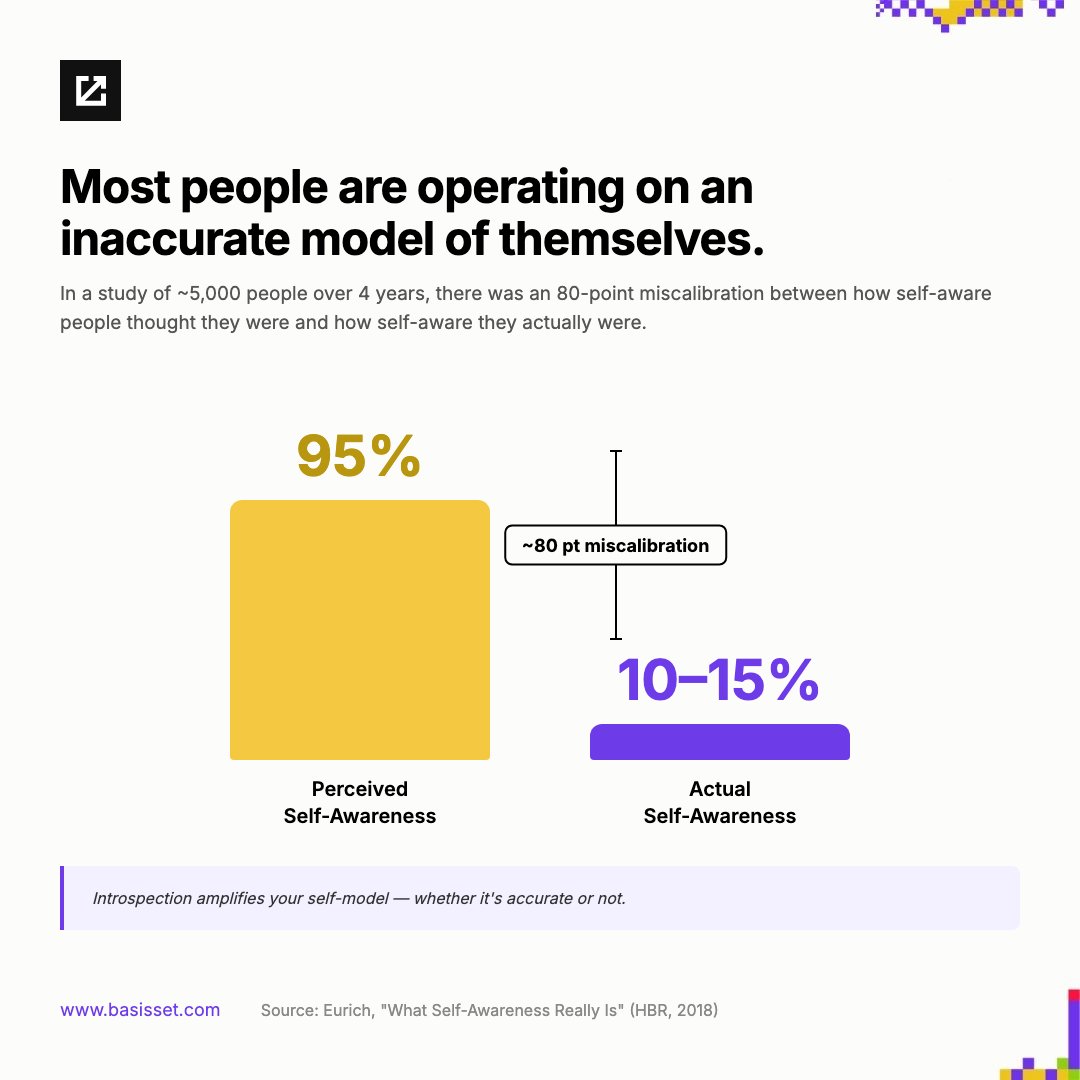
But introspection isn’t the bottleneck. Self-awareness is.
Most people think they’re self-aware. Few actually are.
That’s the problem. Introspection doesn’t create truth, it amplifies whatever model of yourself you already have.
So if that model is wrong, introspection becomes a closed loop. You reinforce your own narrative instead of correcting it.
Learning only compounds when your self-model is grounded in external reality: data, customer behavior, actual outcomes.
Otherwise, you’re just iterating on your own (often biased) interpretation of events — not reality.
It’s very interesting to me to watch the split between how the agent world and the robotics world talk about memory.
In agent systems, memory is externalized as markdown files, vector stores and context windows. It’s largely explicit, symbolic and easy to inspect.
In robotics, memory shows up as state, world models, and learned policies. It's largely continuous, implicit and tightly coupled to action.
My hunch is that these frameworks are going to have to converge. Text-based memory is useful because it’s legible, but it’s also a lossy compression of reality. As agents become more capable, it’s hard for me to imagine that language is the primary way we’ll represent context.
There’s just so much information that gets lost in that compression. We wouldn’t expect a robot’s memory to be purely text-based. It’s not obvious why a “digital robot” should work that way either.
More broadly, memory and learning aren't really separate systems. Memory is stored experience, learning is how that experience updates the model. That tight integration feels core to intelligence.