“I know that most men, including those at ease with problems of the greatest complexity, can seldom accept even the simplest and most obvious truth if it be such as would oblige them to admit the falsity of conclusions which they have delighted in explaining to colleagues,....
On many occasions over the years, some friends of the family and some well-intentioned outsiders have made comments expressing sympathy for our situation. My brother Geoffrey did not need anyone to feel sorry for him! https://t.co/2GVxlMDhiR
#DownSyndrome#DownSyndromeAwareness #JesseRidgeway #ValueEveryLife #MyBrother
@McJuggerNuggets I am sorry Jesse - you are seriously mistaken. I doubt you will make time to read my story - but I hope some will. My brother Geoffrey would simply love you. https://t.co/YMF385GiXb #DNAplus_not_fault
The Netherlands is the size of Wales. It is also the second-largest agricultural exporter on the planet by value, shifting roughly €100 billion of food a year out of a country you can drive across in an afternoon. The system that built this has been running, refining itself, since the 1950s, and feeding most of northern Europe in the process.
It is also the diet that built the Dutch themselves. In 1850, the average Dutchman was 5 foot 5, among the shortest in Europe. Today he stands 6 foot, the tallest in the world. The variable, by every cross-country analysis ever run on the question, was dairy. Cheese, butter, milk, repeated every day, for six generations, on a national scale. The Netherlands grew its population upward by feeding them what the soil and the cow could produce together.
In 2019, a Dutch court ruled that the country's nitrogen emissions, principally ammonia from livestock manure, exceeded EU limits. In 2022, the government published a target: halve nitrogen emissions by 2030. According to its own modelling, this required closing roughly 11,200 farms and significantly reducing livestock numbers on a further 17,600.
€25 billion was allocated to buy farmers out. Voluntary first. Then forced, if the voluntary route did not deliver. Nitrogen minister Christianne van der Wal informed the country, in public, that there was no better offer coming.
The farmers responded by driving tractors onto motorways, blocking distribution centres, and inverting the Dutch flag. Forty thousand of them gathered in central Netherlands in a single day. The police were briefly issued with shovels because the tear gas was running low and the farmers had brought slurry.
The protest did not stop the policy. The BBB party, formed by farmers in response, briefly became the largest force in the Dutch Senate, the coalition government softened some elements, and the rest continued. The Dutch dairy farmer who built his herd in 1985 is, in 2026, either gone, going, or being offered 120% of his land's value to leave. He is being offered this because the cow that built the tallest population on Earth is, by spreadsheet, now the problem.
Meanwhile, in the same country, Schiphol airport, KLM, and the Dutch chemical industry collectively emit nitrogen oxides the dairy sector cannot match, and have been treated with significantly more diplomatic care.
The farmer is the easiest fight because the farmer is one man, on one piece of ground, with one tractor.
The chemical plant is owned by a board.
Boards do not get bought out at 120%. They get consulted.
"The International Panel on Climate Change has essentially just admitted that all the climate scare stories of the past 20 years are junk. Turns out, the alarmist forecasts that led to mass climate psychosis are 'implausible'."
@cmorrisonesq on the Sceptic.
Full episode👇
Labour is losing today because we are a party that won’t say Britain is broken - when it is, won’t challenge the rules of globalisation, and we are now a party defined only through tax, spend and welfare — and with no answer for working class voters who’ve been left behind. The question isn’t how to win them back. It’s whether Labour wants to represents them at all.
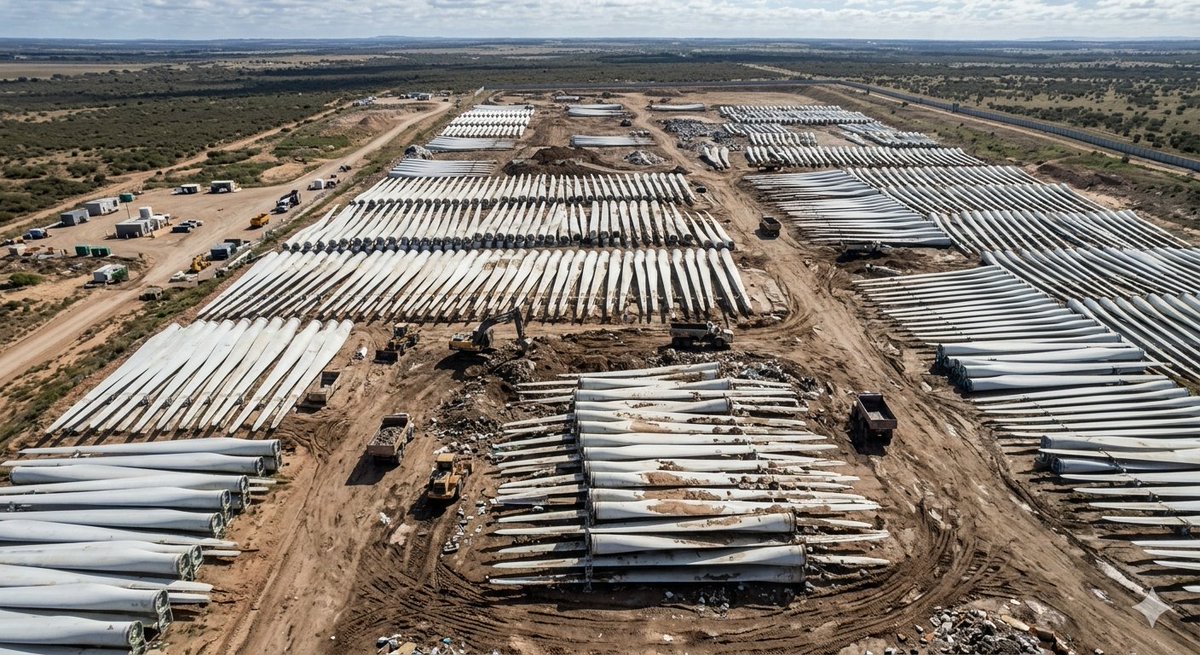
The world will have to deal with 43 million tons of decommissioned wind turbine blades by Net Zero in 2050.
To put that in perspective, it’s the equivalent weight of 215,000 locomotives. These blades are made of high-strength composites designed to survive decades of brutal weather, and they are notoriously difficult to recycle. They were built to last, but they weren't built to disappear.
Every turbine standing today will likely be decommissioned and replaced at least once before 2050. Without a cost-effective way to recycle fibre-reinforced polymers, the majority of these massive blades are destined for eternity - buried forever in turbine graveyards.
China, Europe, and the US will account for the vast majority of this waste, creating a mountainous industrial heartache that many Net Zero models simply haven't priced in.
But 43 million tons of purely composite blade waste every 20 years is a colossal physical reality.
Psychiatry has caused a lot of delays and damage in the field of #MECFS. A lot of work needs to be done to undo harm from theories such as patients excessively resting, being afraid to exercise, or perpetuating their illness.
Dr Nina Muirhead, interview in The Times (2020)
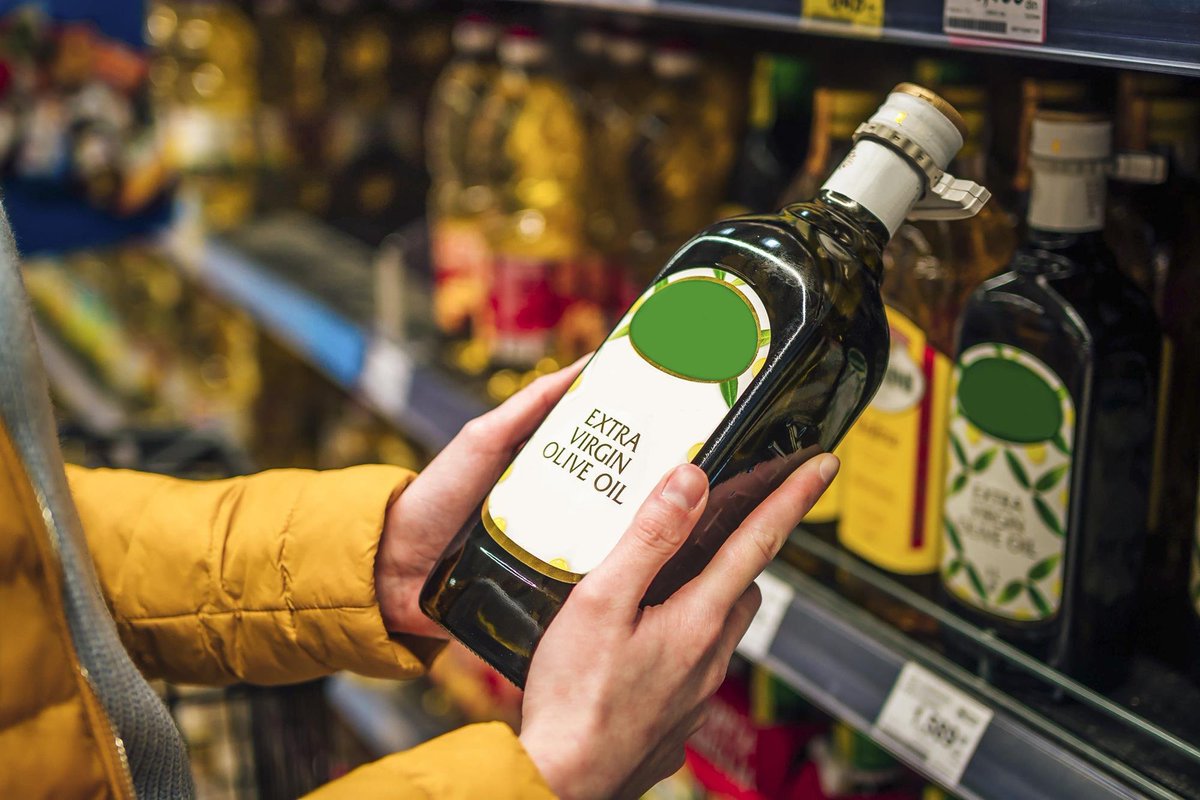
Italian olive oil is one of the most adulterated products in the global food supply. Estimates suggest 70 to 80% of "extra virgin olive oil" sold worldwide is either mislabelled lower-grade oil or cut with cheaper seed oils.
The fraud is run by organised crime. The 'Ndrangheta operates olive oil adulteration rings that generate more profit than cocaine trafficking. They import cheap oil from Tunisia, Morocco, and Turkey, relabel it as Italian, and export it at premium prices to people who think they're buying authenticity.
Or they cut extra virgin with refined olive oil, lampante (lamp oil grade, unfit for human consumption), or seed oils like sunflower and soybean, then sell the mixture as pure extra virgin to supermarkets and restaurants.
The Italian government knows. The EU knows. Occasional busts happen, the headlines run for a week, the fraud continues. The margins are enormous. The penalties are a rounding error.
Even the legitimate stuff has problems. Intensive olive cultivation in Spain has eroded hillsides, drained aquifers, and contaminated groundwater with pesticide runoff. Traditional groves are being torn out and replaced with high-density intensive plantations that demand irrigation in arid climates, heavy spraying, and mechanical harvesting that wrecks the soil.
The waste water is highly polluting. Every litre of olive oil produces 1 to 1.5 litres of effluent loaded with organic compounds, phenols, and residual oil. It gets dumped in evaporation ponds or discharged with token treatment.
Your £12 bottle of "Italian extra virgin" is probably mislabelled Tunisian oil cut with sunflower, possibly sold by organised crime, definitely draining a Mediterranean aquifer, and generating toxic waste at the press.
But it's from plants. So it's definitely healthier than butter from a British dairy cow grazing on rain-fed grass three miles down the road.
This is the most detailed MRI scan of an unborn baby.
At just 20 weeks, she is moving, turning her head, kicking—even standing. Her beating heart is also visible.
Human life is a miracle.
1900: The egg is described in nutrition texts as nature's most complete food. Doctors recommend it for invalids, infants, and the elderly. A growing child is given one or two a day. A working man eats four for breakfast.
1950: The egg is implicated in a hypothesis about cholesterol and heart disease. The hypothesis is unproven. The egg is told it must wait.
1968: The American Heart Association issues an official recommendation to limit egg consumption to three per week. The recommendation is based on a single observational study and the personal opinion of Ancel Keys.
1973: The first egg-substitute product is launched. It is composed of egg whites with added preservatives, gums, and synthetic colour. It is sold as the heart-healthy alternative to the egg, which has been on the human breakfast table for ten thousand years.
1980 to 2010: The British and American populations consume billions of fewer eggs per year than they did in 1950. Cardiovascular disease continues to rise. Obesity rises sharply. Type 2 diabetes triples.
2015: The United States Dietary Guidelines Advisory Committee, after reviewing the entirety of the available evidence, removes the recommendation to limit dietary cholesterol. The egg is, the committee states, no longer a nutrient of concern.
2025: The egg is back in fashion. The egg is on the breakfast menu of the trendy restaurant. The egg is in the protein-focused cookbook. The egg is in the influencer's morning routine.
During the fifty-five years the egg was banned, the egg did not change.
The egg has been the egg the entire time.
The advice has changed. The egg has not.
The advice was wrong. Nobody has apologised.
The grandmothers who kept feeding their grandchildren eggs through the entire 1980s, against the explicit advice of every health authority in the Western world, were correct.
The grandmothers should be on the committee.