At what point do people agree that Mark Zuckerberg might be one of the greatest CEOs in history?
Reminder that he has never held a job other than at Meta his entire life. Started the business from a college dorm and continues to run it to this day at the age of 42
Completely changed his entire branding for the sake of saving the business. Pivoted a bunch of times when necessary.
Copied every last thing that was good about any of his competitors (Snapchat stories, acquired Instagram, Reels)
On top of that, he is one of the only founders of a business that scale who hasn't gotten a second wife or a divorce
This is a good takedown.
It’s hard to emphasize how bad Prop 40 (the one time billionaire tax) actually is. It’s so near sighted and void of evidence that its passing relies entirely on narrative.
The fact that it’s retroactive to Jan 1, 2026 is the tell. The people supporting this know it causes capital flight so they made it retroactive to tax people who leave before they leave. But they’ll leave anyhow because they’ll assume this isn’t really a one time tax (it never is, anyhow).
Capital is global. A billionaire moving from CA to TX doesn't change what gets funded. What changes is who pays CA income tax, and the top 1% pays ~half of it. Attacking that wealth is a long-run impediment on the state’s ability to fund the very things this wealth tax claims to fund in the long-run just so some politician can score a short-term “win”.
Property taxes work because you can't move a house and all states have them. Financial wealth moves where it’s treated friendly. Europe learned this the hard way: 12 countries had wealth taxes in 1990, 3 do now.
You can have progressive income taxation without making it punitive. Prop 40 is punitive and will hurt the very people it intends to help.
This is one of the craziest and most fascinating podcasts I've ever listened to.
Here's the backstory:
Millions of children are struggling to learn how to read.
But the problem isn't kids–it's how kids are being taught.
In the 2000s, schools stopped using phonics (sounding out words) for a new reading system called three-cuing (guessing unfamiliar words using context clues).
But that new system turned out to be based on false data.
Researchers tried to show it was ineffective, but politics and publishers got in the way and delayed changes in our reading system for decades.
One publisher made over $1 billion selling books to schools on a reading system that didn't work.
Now, 20-years later, schools are finally reversing course and going back to teaching phonics. But so much damage has already been done.
The podcast is called "Sold a Story" and it dives into the science, history, profits, and politics behind the reading wars.
If you're an educator, parent, or teacher, you have to listen to this podcast.
This is one of the craziest and most fascinating podcasts I've ever listened to.
Here's the backstory:
Millions of children are struggling to learn how to read.
But the problem isn't kids–it's how kids are being taught.
In the 2000s, schools stopped using phonics (sounding out words) for a new reading system called three-cuing (guessing unfamiliar words using context clues).
But that new system turned out to be based on false data.
Researchers tried to show it was ineffective, but politics and publishers got in the way and delayed changes in our reading system for decades.
One publisher made over $1 billion selling books to schools on a reading system that didn't work.
Now, 20-years later, schools are finally reversing course and going back to teaching phonics. But so much damage has already been done.
The podcast is called "Sold a Story" and it dives into the science, history, profits, and politics behind the reading wars.
If you're an educator, parent, or teacher, you have to listen to this podcast.
I keep thinking about the twisted moral logic here: that you should actively harm your own child if it might help other kids.
NHJ eventually realizes that this is wrong, that her primary duty is to her own daughter, and it's so painful to read.
Wrong understanding -> wrong action -> wrong outcome.
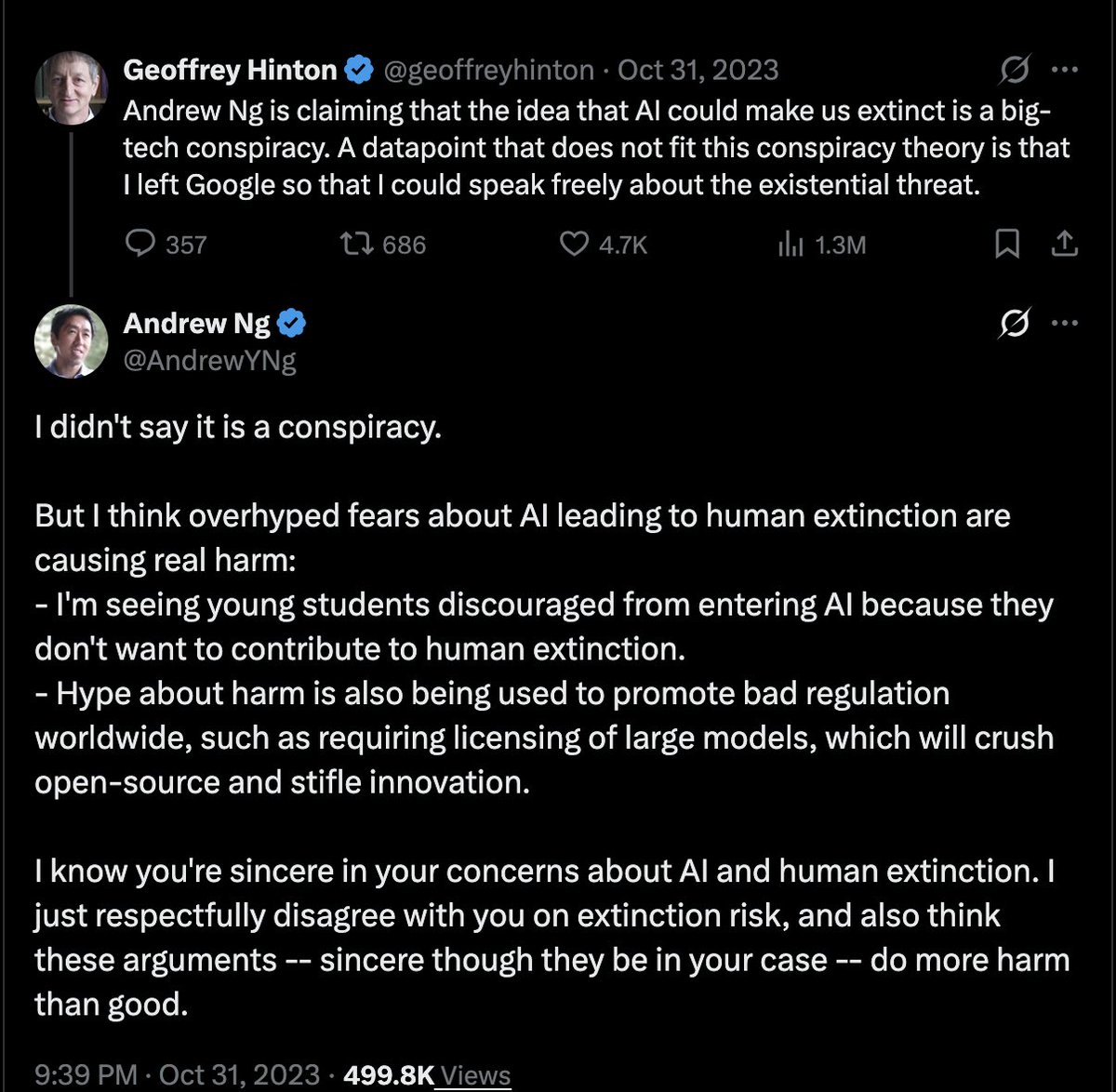
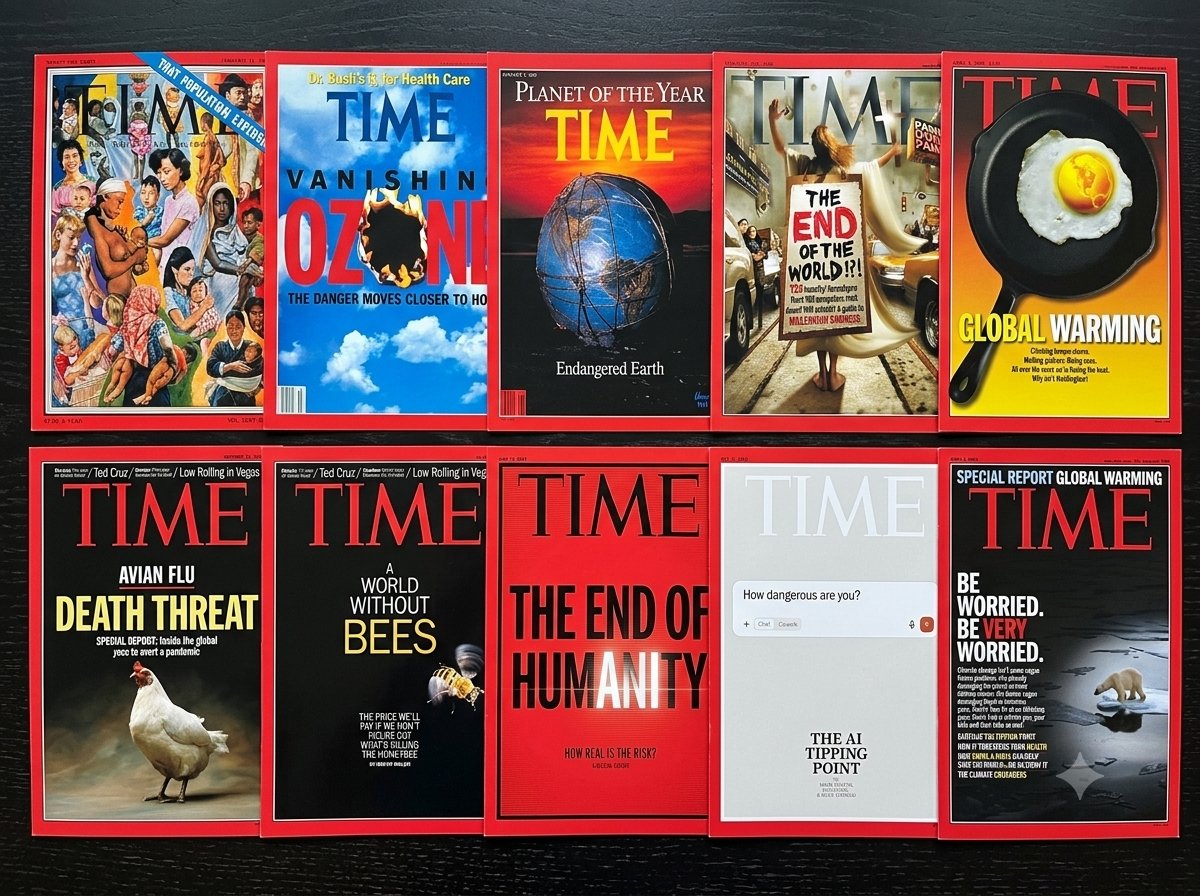
Belief that you can predict the end of the world and that we need to create policies to stop an imagined apocalypse can and do cause real problems.
The Population Bomb led to the One Child Policy and caused the very problem it was trying to solve.
Anti-nuclear activists fought one of the cleanest energies on the planet to 'save the planet' and ended up doing tremendous damage to the planet they were trying to save (they are still doing it).
Mao's Red Guards believed that capitalism was evil and that only collectivism could save China and they helped cause massive starvation and famine across the countryside.
History is chock-full with people promising to save us all from the end of the world and doing massive damage instead.
Beware of do-gooders baring gifts.
A tribute To Warren Buffett
About 20 years ago when I first got into investing, I thought the stock market was a fool’s game. It looked like a casino to me, prices flashing all day, people guessing what would happen next and everyone pretending they knew something. Real estate made much more sense to me because I could actually understand what I was buying.
If I bought a $1m rental property and put down $200,000, the math felt pretty simple. I could add up the mortgage, taxes, insurance, maintenance and every other expense, then compare that against the rent I collected. If it cost me $6,000 a month to own and I collected $8,000, I was making roughly $24,000 a year on my $200,000 investment plus appreciation, principal paydown and tax benefits.
That made sense to me because I could see the asset, touch the asset and understand what produced the cash. Stocks felt completely different until I started reading Buffett and Munger. That was probably one of the biggest turning points of my life as an investor.
I read practically everything I could find about both of them. Shareholder letters, books, interviews, speeches, old transcripts, anything I could get my hands on. I also made the trip to Omaha many times and sat there listening to two of the greatest investing minds in history answer questions for hours.
What they eventually taught me was so simple that I almost felt stupid for not seeing it earlier. A stock is not a ticker, not a chart and not some little piece of paper that moves up and down every second. It is ownership in a productive asset.
Once I understood that, the wall I had built between real estate and stocks completely disappeared. A rental building produces rent and a business produces cash. One has tenants and the other has customers, but economically you are still trying to understand what the asset can produce relative to what you are paying for it.
A building needs maintenance and a business needs reinvestment. A property can be overleveraged and so can a company. A great location can give a building pricing power just like a great brand, network, technology or distribution advantage can give a business pricing power.
At the end of the day the question is remarkably similar. How much economic value am I getting for the amount of capital I am giving up today, and what could this productive asset look like many years from now? Buffett often used Aesop’s old saying that a bird in the hand is worth two in the bush to explain the basic principle. Once I started thinking that way, investing became a completely different game.
I stopped thinking like somebody buying stocks and started thinking like somebody buying businesses. I started asking what I would pay for the entire company if the stock market disappeared tomorrow. I started caring about free cash flow, reinvestment, returns on incremental capital, balance sheets, competitive advantages and where the business could be 10 years from now.
The funny thing is the stock market itself was never really the casino. The casino was the behavior. You can gamble with a stock, a rental property, a restaurant, a farm or practically anything if you pay too much, borrow too much or buy something you do not understand.
That is one of the greatest gifts Buffett and Munger gave investors. They made investing feel less like speculation and more like ownership. They taught generations of people to stop staring at prices and start thinking about businesses.
Warren Buffett also taught me something far more important than valuation. He taught me that money can be rebuilt, businesses can be rebuilt and even a fortune can sometimes be rebuilt. Reputation is different because it can take decades to earn and only a few seconds to destroy.
1/👇
“We should stop training radiologists now. It’s just completely obvious that within five years, deep learning is going to do better than radiologists.” - Geoffrey Hinton, 2016
>be me
>discover effective altruism
>apparently normal charity is inefficient
>why donate to random sad thing when spreadsheet can tell you optimal sad thing
>fair enough
>buy mosquito nets
>save lives
>numbers look good
>feel powerful
>couple years later
>someone asks an innocent question
>why only count people alive today
>huh
>future people matter too
>obviously
>my grandchildren shouldn't matter less just because they haven't spawned yet
>reasonable.jpg
>keep following logic
>what about their grandchildren
>also yes
>what about people in 500 years
>sure
>5000 years
>why not
>500 million years
>starting to get weird but morality is morality
>open calculator
>humanity could survive for an astronomically long time
>could colonize galaxy
>could have trillions upon trillions of descendants
>maybe digital people too
>maybe simulated civilizations
>maybe dyson spheres full of happy uploaded minds
>calculator starts smoking
>realize currently living humans are rounding error
>8 billion people suddenly looking extremely beta
>future contains potentially 10^something people
>can't even fit beneficiaries in google sheets
>new moral priority unlocked
>protect the long-term future
>stop thinking in units of "people helped"
>start thinking in "fraction of cosmic endowment preserved"
>malaria?
>terrible
>but only kills existing humans
>AI extinction could delete the entire light cone
>nuclear war could permanently derail civilization
>bad institutions could lock in terrible values for ten million years
>someone invents wrong constitution in 2140
>quadrillions suffer
>better fund governance workshop now
>friend says maybe we should improve hospitals
>explain opportunity cost
>friend says hospitals are full of actual sick people
>explain scope sensitivity
>friend stops inviting me to dinner
>need to decide what to fund
>easy
>expected value
>suppose project has one in a million chance of preventing extinction
>sounds tiny
>but extinction destroys 10^50 future lives
>multiply
>mother of god
>$10 million project has expected value of several galaxies
>charity evaluation complete
>someone asks where the one-in-a-million number came from
>expert judgement
>which expert
>us
>how calibrated
>extremely thoughtfully
>reduce estimate to one in ten million to be conservative
>still beats curing cancer by 38 orders of magnitude
>epistemic robustness achieved
>someone says maybe project doesn't work
>assign 20% chance
>still astronomical
>maybe project makes problem worse
>assign 5% chance
>still astronomical
>why 5
>because 30 felt pessimistic
>publish 46-page report
>contains seventeen sensitivity analyses
>every sensitivity analysis begins after assuming intervention has positive sign
>critic says you're multiplying enormous hypothetical stakes by extremely uncertain probabilities
>yes
>that's literally why it's important
>critic says the uncertainty might be structural rather than numerical
>make probability smaller
>critic says no, I mean maybe your model is wrong
>make probability smaller again
>critic begins rubbing temples
>discover AI safety
>perfect longtermist cause
>AI might kill everyone
>or create utopia
>or seize galaxy
>or tile universe with paperclips
>or create billions of conscious software minds
>finally a problem with numbers big enough for me
>start AI safety nonprofit
>mission: prevent dangerous AI
>hire smartest people available
>smartest people immediately start building better AI to understand dangerous AI
>interesting
>we must understand capabilities to understand safety
>we must scale models to study alignment
>we must race ahead so less responsible actors don't get there first
>we must deploy systems to learn how deployment can go wrong
>we must build the thing quickly because building the thing quickly is dangerous
>outsider asks why the people most worried about AI apocalypse all work at AI companies
>complicated field
>company releases stronger model
>very concerned
>company begins training even stronger model
>extremely concerned
>company raises $14 billion
>concern reaches unprecedented levels
>need to influence government
>future is at stake
>normal democratic process too slow
>politicians don't understand exponential curves
>public doesn't understand x-risk
>experts must guide them
>who counts as expert
>people who understand x-risk
>who understands x-risk
>our friends
>someone objects that this seems politically convenient
>explain we're representing future generations
>future generations unavailable for comment
>develop concept of value lock-in
>terrifying possibility that one ideology controls civilization forever
>therefore extremely important that civilization adopts correct values before lock-in
>whose values
>let's circle back
>begin with impartial morality
>end with small group of people deciding what quadrillions of hypothetical beings would want
>beautiful arc
>meanwhile actual humans keep doing annoying things
>voting wrong
>having parochial attachments
>loving family more than strangers
>caring about local community
>getting upset when told their suffering is cosmically negligible
>evolutionary biases everywhere
>explain that moral intuition cannot be trusted
>except intuition that future digital people count
>and intuition that extinction is uniquely bad
>and intuition that our probability estimates are sane
>and intuition that our institutional choices improve the future
>those intuitions survived peer review
>someone donates $5k to local homeless shelter
>inefficient
>could have funded 0.0000000000003% of an AI governance researcher
>think of all the simulated people you just killed
>okay maybe don't phrase it that way publicly
>PR team says "future generations deserve a voice"
>much better
>journalist asks what longtermism means
>say "future people matter"
>everyone agrees
>great
>journalist asks what follows from that
>well technically we should redirect enormous resources toward low-probability interventions affecting astronomical futures
>journalist raises eyebrow
>return to "future people matter"
>motte has entered the chat
>critic: of course future people matter
>me: glad we agree
>critic: I don't agree that your institute knows how to help them
>me: why do you hate our grandchildren
>eventually notice uncomfortable implication
>if future value dominates everything
>then helping people today mostly matters through effects on future
>education matters because future institutions
>health matters because future productivity
>democracy matters because future trajectory
>human beings slowly become instrumental variables in their own moral philosophy
>see starving child
>feel compassion
>check spreadsheet
>child's direct welfare contribution negligible
>but perhaps childhood nutrition improves national institutional quality
>compassion restored
>tell myself this is impartial altruism
>one day assistant asks obvious question
>"how do you know your intervention actually improves the far future?"
>silence
>open spreadsheet
>increase column width
>add confidence interval
>assistant asks again
>"no, I mean how do you know the sign is positive?"
>stare into cosmic light cone
>10^50 people staring back
>none of them exist
>none of them can tell me
>none of them can falsify my assumptions
>realize I have invented the perfect constituency
>infinitely important
>completely silent
>and always represented by me
It was exactly three years ago that I gave this talk on “regulatory capture” at the @theallinpod Summit. I did predict that the large incumbent AI companies would “beg for” regulation. No idea they would beg this hard.
https://t.co/6vjhYZQNT7
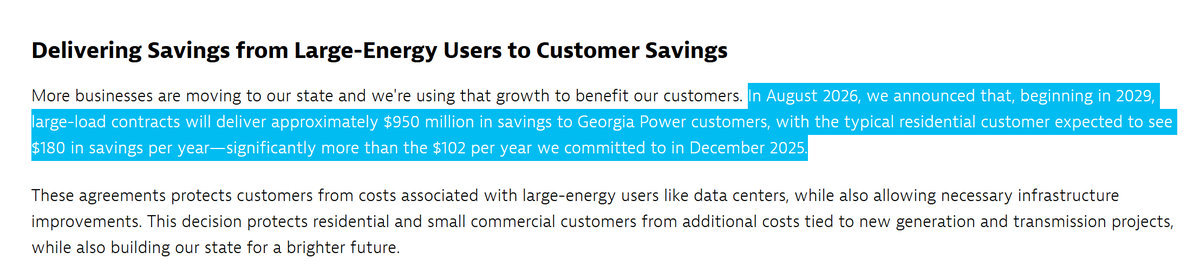
The electricity price news just keeps getting better for Georgians.
Georgia Power announced that new large-load contracts (overwhelmingly data centers) will save their customers nearly a billion dollars, erasing about $180 per year from their bills!
Just so you know....there's nothing new. We do the same things over and over again in history:
When electricity arrived, many people worried about invisible forces flowing through wires and the dangers they posed. Newspapers covered accidental electrocutions, critics questioned whether it was safe to bring electricity into homes, and some even argued that widespread electrification would do more harm than good.
If you want to become wealthy, learn how to buy and hold great businesses, then learn how to ignore almost everything else.
Tune out the trading, the options, the popularity contests, the daily predictions, the endless opinions and the constant temptation to do something including dancing in and out of stocks every time the wind blows. The market has turned investing into entertainment, but entertainment is rarely where serious wealth is built.
If you want extraordinary results, you have to become comfortable doing what almost nobody else can do: NOTHING!
Find a few exceptional businesses, buy them intelligently, and get really, really good at sitting on your ass for a very long period of time while they compound.
The hardest part of compounding isn’t the math, it’s leaving it alone. 🌹
Quick thoughts on AI: When in human history has there ever been a technology that was net negative?
What about fire? Fire makes noxious smoke, risks burns, can destroy homes and can kill. But fire liberated us from the cold and let us cook our food. Then we made stoves with pipes — and they were safer and warmed our homes, but still carried some fire risk and had pollution. So we invented the power plant, which solved some problems with at-home fire—and we found ways to make better gas stoves and furnaces. Over time, we've made power plants better and better, reducing the negatives while enhancing the positives. Nat gas beats coal, and nuclear should beat both.
So what about nuclear? I admit it's debatable whether nuclear weapons are a net positive or a net negative. I'd argue a net positive—because they ended WWII and made a mass-casualty great-power war unthinkable. But even if you disagree about nuclear weapons, you have to acknowledge nuclear is a technology category broader than weapons: nuclear power, nuclear medicine, and X-rays are part of the same fundamental technology. And there's no question nuclear writ large is a massive net positive for humanity.
What about smartphones? They've certainly had downsides we need to take seriously — but it's obvious we are better off now than we were in the flip phone or landline era.
This is the typical story of technology. And it's the arc of progress that lifted humanity out of the wilderness, that freed 90% of the population from back-breaking farm work while virtually eliminating famine, that enables any human with a tap of a finger to access the sum total of human knowledge, that allows us to enjoy comfortable climate-controlled environs any time of the year in any outdoor climate.
My conclusion is: every technology has pros and cons. The cons are real—and the pros always outweigh the cons. As technology evolves, the improvements enhance the pros while reducing the cons.
So what about AI? The question is not: are there cons with AI? Obviously there are; technology always has cons. The question is: are the pros going to outweigh the cons?
Right now, with AI in its current state, it's not even close. The pros dramatically outweigh the cons. AI enables anyone to have a personal tutor. To offload repetitive and boring work. Anyone with an idea can become a creator and a software engineer. Individuals and small teams can do what used to take gigantic teams and big budgets. Our cars are becoming safer. Etc. Sure — we don't want AI teaching kids how to make nuclear bombs or bioweapons. We don't want hallucinating AI weapons. There are cons to be managed, solved, reduced, and eventually eliminated.
History shows us that as technology develops, the pros are enhanced while the cons are reduced. So if we want better, more useful AI with fewer downsides — we need to accelerate AI development, not slow it down.
Loudoun County, VA has the highest concentration of data centers anywhere in the world.
Since they started being built in late 1990s the data centers have:
▪️ Provided 45% of tax revenue
▪️ Funded a $144M high school + $100M recreation center
▪️ Cut real estate taxes by $0.48 on the dollar
All while taking up only 3% of land. However, the public is divided on their support for them. @IsabellaRedjai visited Loudoun County, to understand how the backlash to data centers has impacted the “data center capital of the world.”
You have to be either a moron or a liar to think that Musk is a con man.
Con men never actually deliver anything of substance.
Musk puts rockets into space, cars on the road, builds microchips, digs tunnels, etc...
He delivers real results.