Applying @KFF's 2012 logic, the OBBB did NOT "cut" Medicaid.
Two key facts, often omitted.
1) Federal Medicaid spending increased 63% from '19-'25 as corporate welfare & improper enrollment soared.
2) Spending continues to grow. It was the rate of growth that was "cut."
@lowninstitute report on how hospitals use their charitable tax exemption. Over half earn more from tax exemption that community benefit they provide. Thorough work, as always. (BTW @Paragon_Inst would likely define community benefit more narrowly than @lowninstitute does.)
Nonprofit hospitals are exempt from most federal, state, and local taxes. In exchange, they're expected to provide free and discounted care and invest in programs that improve community health. However, many of the nation’s wealthiest, best-known hospitals don’t give back enough to match the value of their tax breaks, while others contribute well beyond what they receive.
Senior Policy Analyst Judith Garber digs into the Lown Institute's analysis of U.S. hospital fair share spending.
@lowninstitute Great work from @lowninstitute. I always look forward to the latest edition of this report. It's great to see how many from across the spectrum are holding tax-exempt hospitals accountable.
Did the OBBB Cut Medicaid? Not if You Apply @KFF's 2012 Logic.
The proof: the ACA was projected to reduce Medicare spending by >$700B, and KFF explicitly said this was not a "cut" since spending was projected to increase significantly.
🧵1/3
https://t.co/SKBVOAiaRD
@johnddavidson His position is to say whatever it takes to get elected. Imagine if Darline Graham had said " I don't believe in slavery because I'm Christian, but as the mother of white children I don't want anybody telling them whom they can buy and sell."
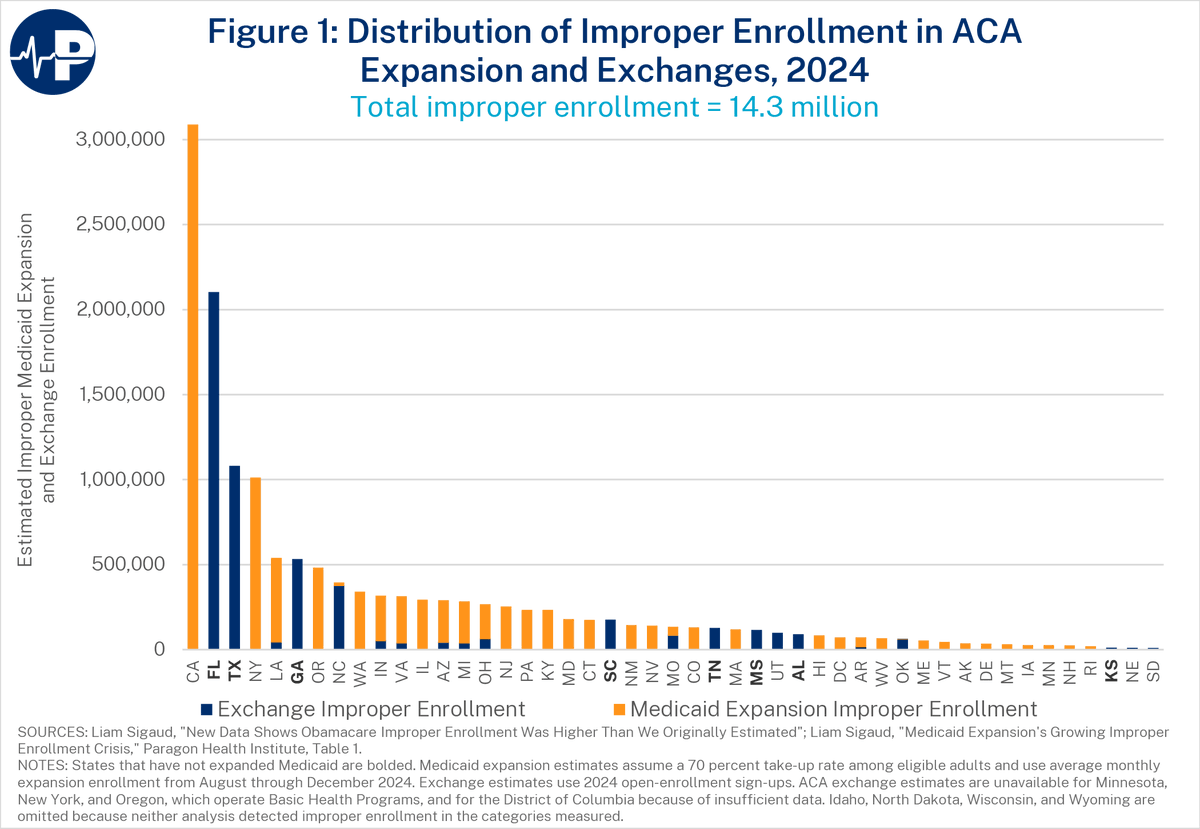
In 2024, an estimated 14.3 million people were improperly enrolled in the ACA exchanges or Medicaid expansion, at a federal cost of about $65 billion:
https://t.co/gcGpj5dJpl
CMS just finalized the 2027 OPPS and PFS rules.
@HammondOnHealth breaks down how OPPS expands site-neutral payment and aligns 340B drug payments with acquisition costs, while PFS advances site-neutral policies for imaging without contrast and moves physician practice expense payments toward a more objective, transparent methodology.
Read it ⬇️
https://t.co/KKw4qvDHHn
Democrat midterm wave sent shares of hospital stocks up sharply. Investors expect Dems will restore the money laundering that drives up hospital costs. Your health care will become even more expensive. https://t.co/BrsZxGjCFx via @WSJ
Many victorious Democratic candidates say their commitment to reduce our health costs gave them the win. Our current bloated expensive system is the result of the last partisan Democratic reform in 2010 - Obamacare. They promise more Obamacare. The results will be the same.
I'll be on Capitol Hill next Tuesday for a panel discussion on how tax-exempt hospitals are "hedge funds with hospital beds." All are welcome. (@ChickfilA sandwiches for lunch.) RSVP below or at https://t.co/qEkB9Ye4O5.
NEXT WEEK: Paragon's @johnrgraham joins @CFEconomy's "Tax-Exempt Hospitals: Hedge Funds with Hospital Beds?
📅Tuesday, October 27th
🕔 12:00 pm to 1:00 pm
📍2020 Rayburn House Office Building
Really funny and it poses a valid question: Will the American health care system defeat AI? (It's crushed pretty much everything else we've tried to deploy against it.)
Will AI replace healthcare professionals?
Here is an AI robot on its first day working in a hospital after finding out that:
• the EHR needs 17 clicks to order one test
• the medication list is different in three systems
• interoperability sometimes means making a phone call
• and fax machines are still critical infrastructure
What else?
The video is obviously AI-made.
New Part D Prognosis by Boris Vabson:
Costs are exploding. Behind CMS's flat premium headline, the total cost of the basic benefit is up 25% per enrollee from 2026 to 2027, and the federal cost is up 28%.
https://t.co/LCB5Vxlf6m
@GtownCHIR notes "Over the past 15 years, per-enrollee spending in private commercial health insurance grew by 96.5 percent" https://t.co/2C4YYuH2Cd. Also, "Here’s Something to Celebrate: The Affordable Care Act Just Turned 15!" https://t.co/p4381DuMpU. It's not a coincidence!
Paragon PIC: For over a decade, U.S. health spending tracked other wealthy nations almost exactly. Then the ACA took effect in 2014 and the U.S. pulled away — by 2025, real per-capita spending had roughly doubled since 2000, far outpacing the OECD. 📊 https://t.co/aMgkLnzcB4
The most concerning No Surprises Act data point: only 6% of 19.7M qualified claims entered arbitration in 2024. With awards and win rates climbing, costs could grow dramatically from there. https://t.co/MztEpjkNFm
NEW PROGNOSIS:
Claims of declining children's health coverage don't show up in the latest Census data.
From 2024 to 2025, the estimated child uninsured rate fell from 6.1% to 5.8%, with about 226,000 fewer uninsured children.
https://t.co/WHhgyvjT6H
Hospital prices have jumped more than 250% since 2000, and former Kansas Rep. Todd Tiahrt says it’s time to put hospitals under the same scrutiny other parts of healthcare have faced for years.
His focus: prices, transparency and nonprofit accountability.
Read more in DC Journal.
https://t.co/xGUfgPRhv0