it'sa mean-whirled but ya doan wanna dwell on YeDark quadrations of the Realm Mind.
listen to WPKN .ORG. Best inda Wes
library musical Whatsis. Yow! Bridgeport
Stonehenge is widely known as one of the oldest monumental stone structures in the world, but hunter-gatherer societies in southeastern Turkey built circles of T-shaped limestone pillars 6,000 years earlier, weighing up to 50 tonnes each, predating the invention of agriculture.
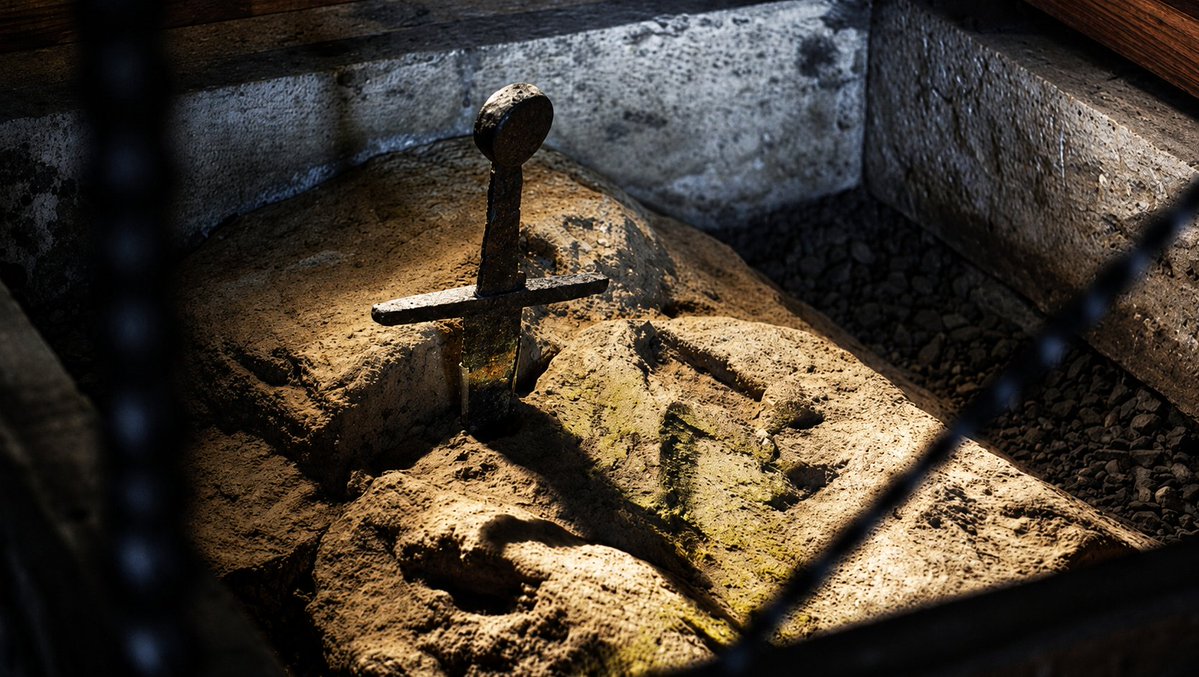
Olvida todo lo que te han contado sobre el Rey Arturo. Su mítica espada clavada en una piedra existe de verdad, pero no está en Inglaterra, ni fue olvidada en un lago. En 2001, la ciencia confirmó que Excalibur lleva 800 años fundida en una roca italiana. Tira del hilo 🧵👇🏽👇🏽👇🏽
“Your car is Japanese.
Your beer is German.
Your phone is Chinese.
Your fashion is French.
Your oil is Saudi Arabian.
Your vodka is Russian…
…and your land is Native American.”
That sentence makes some people uncomfortable.
BREAKING: A beer was thrown at President Trump during a press conference this morning in Washington. Trump was unharmed. Since the beer was a draft,... he was able to dodge it.
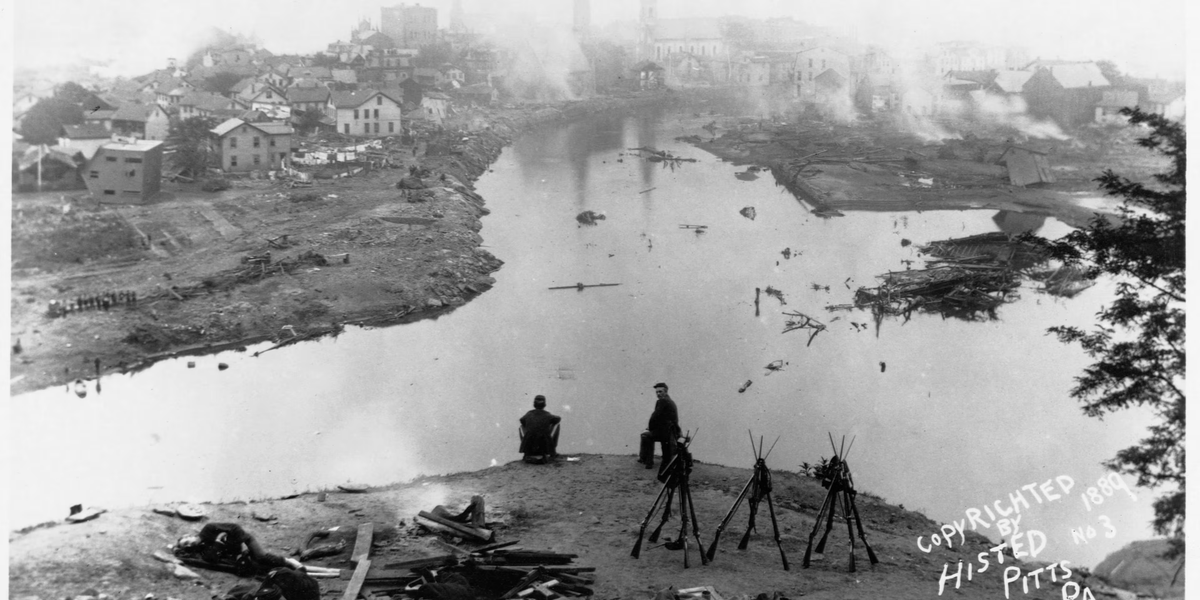
137 years ago today, the richest men in America accidentally drowned a town and never paid for it.
May 31, 1889. It had rained for days. Fourteen miles above Johnstown, Pennsylvania sat Lake Conemaugh, a private mountain reservoir held back by an aging earthen dam. The dam belonged to an exclusive retreat called the South Fork Fishing and Hunting Club. The members? Andrew Carnegie. Henry Clay Frick. Andrew Mellon. The titans of the Gilded Age.
To make their getaway nicer, the club had lowered the top of the dam to widen a carriage road, and screened the spillway with iron grates so their stocked fish could not swim away. Those grates clogged with debris. The one thing that could relieve the pressure was now blocked.
At 3:10pm the dam let go.
Twenty million tons of water, an entire lake, came down the narrow valley at 40 miles an hour. For a few minutes the flow equaled the Mississippi River. Witnesses did not describe a wave. They described a rolling brown wall, three to four stories high, grinding houses, trees, locomotives, and people into a single moving mass of wreckage. Some survivors rode their own floating rooftops for miles.
Then came the part most people never hear.
The debris piled up against a massive stone railroad bridge at the edge of town. Thirty acres of shattered homes and trapped human beings, stacked seventy feet high. And then it caught fire. People who had survived the water, pinned alive in the wreckage, burned to death within sight of rescuers who could not reach them. The pyre burned for three days.
When it was over: 2,209 dead. 99 entire families erased. 396 children. 777 victims so destroyed they were never identified, buried beneath a single monument to the unknown.
Clara Barton arrived on June 5 with the young American Red Cross. It was their first major disaster relief operation, and it made the organization a household name.
The survivors sued the club. They lost. The courts ruled the disaster an "act of God." Not one member was ever held legally liable. Carnegie built the town a library. Frick and Mellon went on to become two of the wealthiest men in human history.
A lake full of leisure for a few. A mass grave for thousands. And a courtroom that called it the will of heaven.
Hidden deep beneath the desert in Chihuahua, Mexico, the Naica Cave is filled with enormous selenite crystals, some over 11 metres long.
They formed in near-perfect geological conditions when hot, mineral-rich groundwater stayed stable for a very long time, allowing crystals to grow continuously instead of competing and breaking into smaller ones.
The exact timescale isn’t pinned down, but it’s likely on the order of hundreds of thousands of years.
📷 Alexander Van Driessche
The regime quietly ripped $3B in food stamps and Medicaid away from families. So Hawaii's governor just fought back with a genius move: a new 13% tax bracket on millionaires to fully fund the stolen aid. Read how a blue state just outsmarted Trump: 👇 https://t.co/JMItcAtV4e
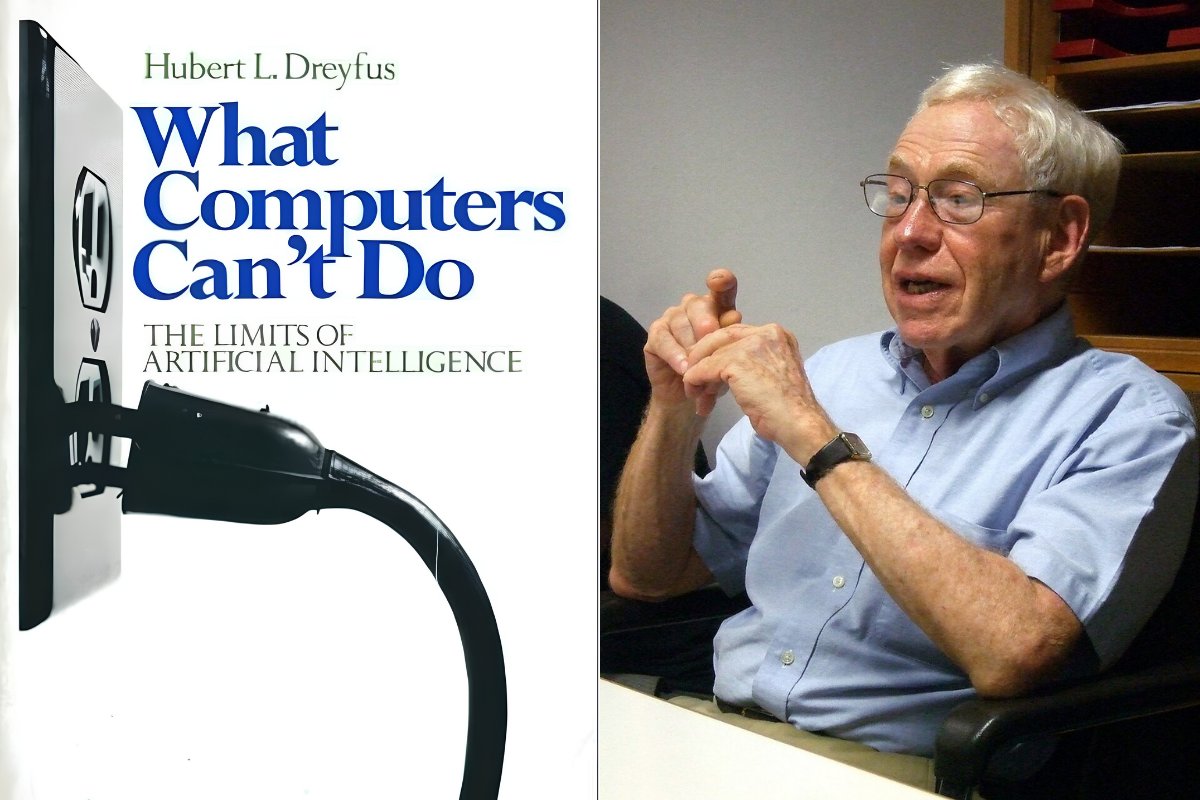
A Berkeley philosopher published a book in 1972 warning that AI would never understand the world the way humans do, got laughed off campus for it, then watched the entire AI research community spend 50 years slowly proving him right.
His name was Hubert Dreyfus. The book was called What Computers Can't Do.
And the story of what happened to him before, during, and after he wrote it is one of the most important things nobody tells you about the history of AI.
It started in 1965. RAND Corporation hired Dreyfus to study artificial intelligence. He turned in a 90-page report comparing AI research to alchemy. Not as a compliment.
He argued that AI researchers had made the same mistake over and over for a decade. They would get a narrow system working, predict it was the first step toward general machine intelligence, and watch it hit a wall nobody predicted. Simon said by 1967 computers would be world chess champion. They were not even close. Dreyfus called the whole thing a pattern. Early wins, massive promises, quiet collapse.
The AI community did not take it well.
Herbert Simon called the paper "garbage." Dreyfus taught at MIT at the time and later wrote that his colleagues "dared not be seen having lunch with me." The entire building avoided him.
Then they challenged him to a chess match against a computer.
Dreyfus had never claimed to be good at chess. He had only claimed that AI chess was weak, which it was. But MIT researchers organized a public game between Dreyfus and MacHack VI in 1967. He lost. The Association for Computing Machinery newsletter ran the headline: "A Ten-Year-Old Can Beat the Machine. But the Machine Can Beat Dreyfus."
The entire field celebrated. They had not answered his argument. They had just beaten him at chess. Nobody seemed to notice the difference.
Dreyfus expanded the paper into a full book in 1972. What Computers Can't Do laid out something deeper than chess criticism.
His argument was philosophical, not technical. He said human intelligence was not symbolic manipulation. It was not rules and logic trees. It was something more fundamental that no one had cracked: the ability to understand context, to act in the world through a body, to make judgments that depended on being alive and embedded in a situation.
He called it know-how versus know-that. A doctor who can feel something is wrong in a patient before naming what it is. A chess grandmaster who sees the right move before calculating it. A person who walks into a room and understands the social dynamics in four seconds without running a single algorithm.
These were not tasks you could formalize. Not because they were mysterious. But because they were rooted in physical embodiment and years of embedded experience in the world. A machine sitting inside a server rack had none of that. It had never touched anything. It had no body. It had never been afraid or hungry or confused in the middle of a city.
The AI community kept dismissing him for 20 more years. Then quietly, things started shifting.
The symbolic AI approach he had criticized started breaking down exactly where he said it would. Language was too ambiguous. Common sense was impossibly hard to encode. Systems that worked in narrow domains failed completely the moment the real world showed up.
By the 1990s, the field had largely abandoned the approach Dreyfus had attacked. When MIT Press published a new edition in 1992 with a long introduction updating his position, historians of AI started writing sentences like "time has proven the accuracy and perceptiveness of Dreyfus's comments."
In 2007, a journalist asked him whether he thought he had won the argument. He said: "I figure I won and it's over. They've given up."
He was right and wrong at the same time. Symbolic AI did collapse. But something else rose in its place: deep learning, trained on massive amounts of human-generated data, learning patterns from the bottom up instead of the top down. Systems that were not programmed with rules but that absorbed something about language and images and tasks from raw experience.
That is where the argument gets genuinely interesting and genuinely unresolved.
Dreyfus spent his last years thinking carefully about whether deep learning addressed his critique or just circumvented it. He had always said the problem was not intelligence as pattern recognition. He had always said the hard part was something else. Situatedness. Meaning. The ability to care about outcomes in a way that comes from having skin in the game.
A model trained on a trillion tokens of human text knows a great deal about what humans say. Whether it knows what humans mean is a different question. Whether it can act in the world the way a human acts, with a body and a history and stakes in what happens, is the question he spent 50 years trying to make people take seriously.
He died in 2017. GPT-2 was released two years later. GPT-4 was released six years after that.
The question he raised is still open. We build systems now that would have seemed miraculous in 1972. Systems that write, reason, code, argue, compose, translate, and explain. And the AI researchers at every major lab spend an enormous amount of time trying to figure out exactly what these systems are missing.
Dreyfus spent 50 years on a campus where people refused to eat lunch with him for saying that question mattered.
The man who was wrong about chess was right about almost everything else.
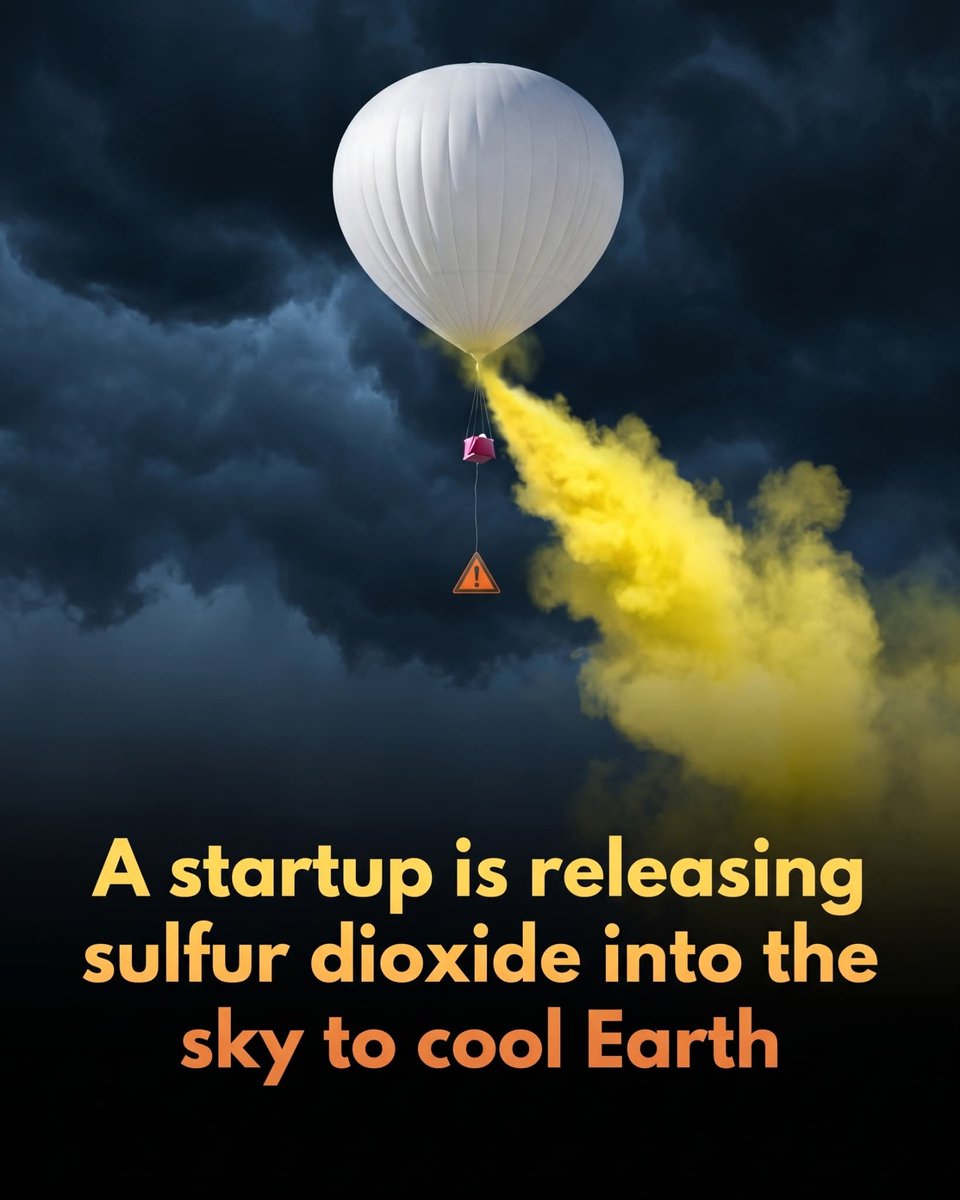
🚨 A startup secretly launched over 120 sulfur dioxide balloons to cool the planet. The EPA is investigating.
A private startup's rogue attempt to dim the sun by launching sulfur dioxide balloons has triggered a federal investigation, thrusting the controversial world of solar geoengineering into the regulatory spotlight.
The U.S. Environmental Protection Agency (EPA) has formally demanded information from Make Sunsets, a California-based startup that has launched over 120 weather balloons filled with sulfur dioxide to combat global warming. Mimicking the cooling effects of major volcanic eruptions, the company aims to create a reflective shield in the stratosphere to bounce sunlight back into space. Under the banner of 'cooling credits,' Make Sunsets sells these interventions to corporate and individual buyers, sparking major pushback from environmental authorities who are raising alarms over the unregulated release of sulfur dioxide—a regulated air pollutant under the Clean Air Act since 1971.
This commercial venture has ignited a fierce debate over solar geoengineering, with critics warning that deliberately manipulating the Earth's climate could trigger unpredictable weather patterns, disrupt the ozone layer, and distract from critical emissions-reduction goals. Conversely, proponents argue that private innovation can develop planetary-scale cooling technologies much faster than traditional academic pathways. With Mexico already banning Make Sunsets' operations and the EPA now aggressively questioning where the company obtains its materials and conducts its launches, this clash highlights a critical unresolved dilemma: who should decide if, when, and how we alter the atmosphere to cool the planet?
source: U.S. Environmental Protection Agency. (2026). EPA Seeks Information from Make Sunsets.
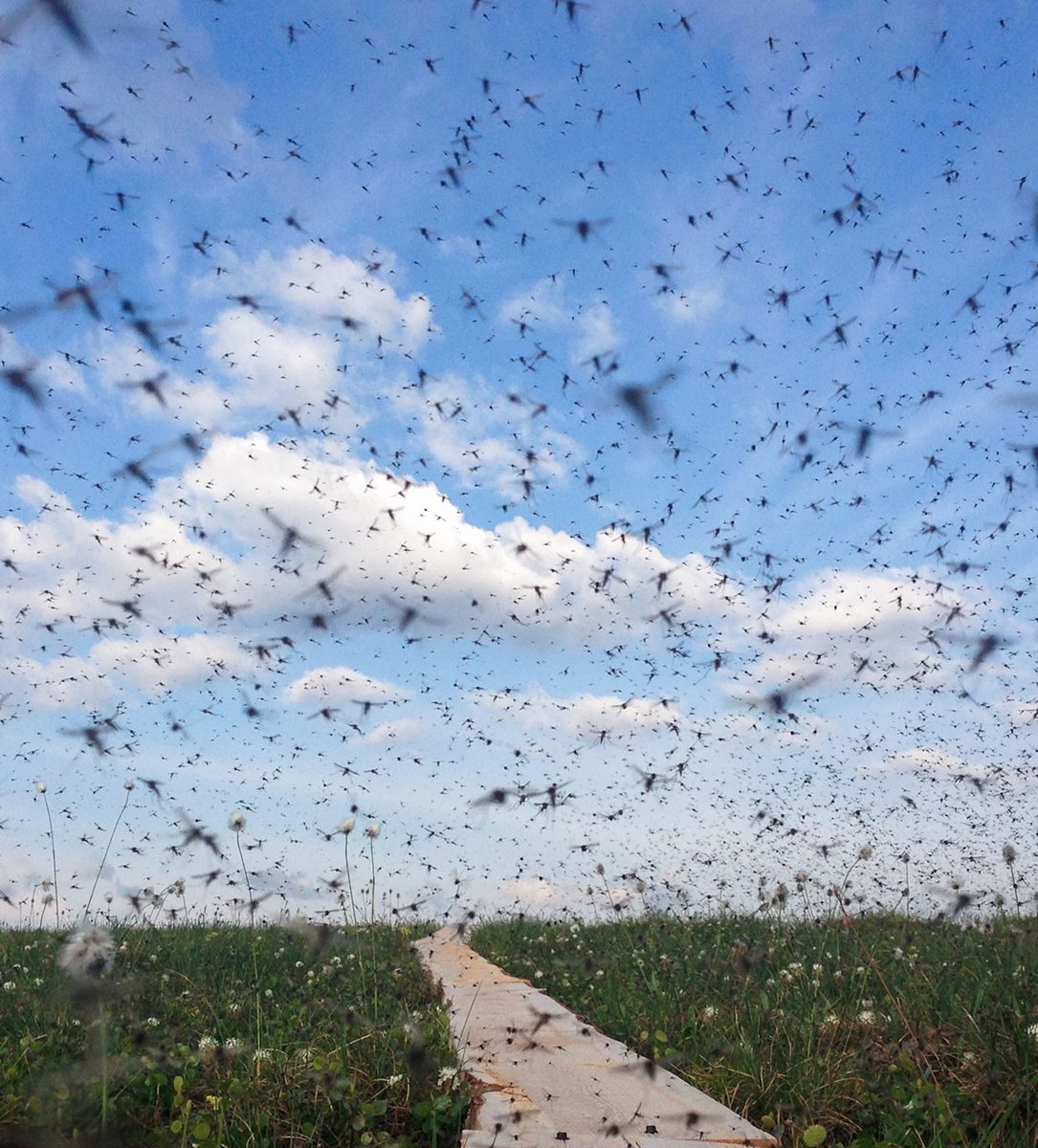
Google is seeking approval to release 32 million mosquitoes in California and Florida
The sterile males are designed to reduce disease-carrying populations by making wild female mosquitoes’ eggs unable to hatch
The island in this video was erased from every Japanese map for seven years. The rabbits came later.
It is called Okunoshima, a small island about 4 km around in the Seto Inland Sea near Hiroshima. In 1929 the Imperial Japanese Army built a secret factory there to make poison gas. The spot was perfect: close enough to ship the weapons out, far enough from cities that no one would notice. To hide it, the army deleted the island from its official maps in 1938. Workers were not allowed to tell anyone what they made, not even their own parents.
By the end of the war, the plant had made more than 6,000 tons of chemical weapons, mostly mustard gas, which burns and blisters skin, plus a sneezing agent. Most of it was shipped out to be used against people in China, where it hurt tens of thousands. More than 6,000 people worked there over the years. When the men were sent off to fight in 1944, the most dangerous jobs went to more than a thousand local schoolchildren, some only 14. They stored the gas shells and scrubbed the factory floors. Many breathed in the fumes, got sick, and stayed sick for the rest of their lives.
When Japan surrendered, workers burned the records and smashed the machines. Allied troops dumped or buried the leftover gas. No one who ran the program was ever charged with a crime.
The rabbits you see mobbing tourists are not the descendants of the gas-test rabbits. Those animals were almost certainly put down when the factory was torn apart. Today's rabbits come from eight pet rabbits that a group of kids set free on a school trip in 1971. With no predators and a steady stream of visitors handing out cabbage, eight became hundreds.
A museum opened on the island in 1988 so the gas story would not be forgotten. So when that man steps off the boat and a crowd of bunnies runs over to sniff him, he is standing on ground where teenagers once stored shells full of poison.
Ukraine’s Invisible Army
Russia has one of the most expensive air defense networks on the planet. Ukraine has found a way to make it shoot itself broke.
Kyiv’s military intelligence is now deploying hundreds of jet-powered decoy drones alongside real strike packages. These are not cheap foam toys. They mimic the radar signatures of lethal platforms well enough that Russian operators face an impossible choice: burn costly interceptors on fakes, or gamble that the next one is also a fake. Spoiler: it isn’t.
The math is brutal. A $30,000 decoy forces a response from a $3 million missile. Do that a few hundred times per night and Russia’s air defense budget starts looking like a bonfire.
Ukraine’s upgraded arsenal can now reach roughly a quarter of Russia’s landmass and over 70% of its population. Moscow built a fortress. Kyiv is teaching it to punch itself.
The war’s most decisive front isn’t in the trenches. It’s in the radar screens, where every blip is a gamble Russia can no longer afford to lose.
The pig is the most democratic animal that has ever lived.
Everything that follows is built on that. A pig needs no pasture, no hillside, no shepherd, no barn full of winter feed. It eats what you cannot. Acorns, windfall apples, kitchen scraps, the peelings and the whey and the spoiled milk headed for the midden. You feed it nothing and it gives you everything: a year of fat, lard, protein and crackling from an animal that turns household waste into the richest meat a poor family will ever taste.
One sow. A back garden. No land, no lord, no permission.
That is the problem with the pig. Not hygiene. Not parasites. Not the desert heat, though you will have been told all three by someone confident and wrong. The problem with the pig is that it made the poor man independent, and independence is the one thing the powerful have never been able to abide in people they mean to keep.
Walk it back. In Bronze Age Mesopotamia and Egypt, pork was everywhere, thriving in the muck and crowded backstreets of the cities, above all the meat of the urban poor. Protein from almost nothing. And, crucially, protein the tax collector could not see. A field of barley is visible. A herd of cattle is visible. A pig in the yard, fattening quietly on scraps, is wealth that appears in no ledger.
So the herders who chased status moved to cattle and sheep. Cattle you could drive, count, tax, lend and inherit. The pig was wealth you could hide, and a ruling class has never had any use for wealth it cannot count.
The taboo did not fall from the sky. It crept in. In the southern Levant, pork consumption had been eroding since around 3000 BC, long before a word was written against it. By the early Iron Age the pig was a flag: the Philistines, migrants from the Aegean, ate it; the Israelites, native to the hills, largely did not. You could tell whose a settlement was from the bones in the midden.
Then comes the part we can date. When the Biblical texts were codified, the priestly elite of Judah took a custom that already existed and carved it into law, hardening a soft regional habit into a line of identity you would die rather than cross.
And men did. By the time of the Maccabees, under Greek rule, it was no longer about cuisine. Hellenistic officials forced Judeans to eat pork precisely because they knew what refusing it now meant. To refuse was to declare who you were. Men chose death over a single mouthful. The animal had become a border drawn through the human body.
The Greeks ate pork happily. The Romans ate it by the wagonload. So refusing it became a way of being Not Them, and the taboo grew in power because it was useful: every time an empire pressed down, the pig was a way to stay yourself. Centuries later Islam inherited the line and hardened it again, and now some two billion people will not touch the most efficient protein a poor household can keep.
Notice what is absent from all of it. Nutrition. Health. The body. The pig was banned not for being dangerous to eat but for being dangerous to own: an animal that let the landless feed themselves without asking, invisible to the men with the ledgers.
Power has never minded what you put in your mouth, only what you can do without it.
The pig let people do without.
That was the sin. It always was. It quietly still is.
L'homme qui a inventé la boîte de conserve est mort ruiné. Le jour de sa mort, on l'appelait pourtant le bienfaiteur de l'humanité.
Nicolas Appert. Un simple confiseur français.
Fin du XVIIIe siècle. Nourrir une armée ou un équipage est un cauchemar. La viande pourrit en quelques jours. En mer, le scorbut tue des équipages entiers. Conserver les aliments, personne n'y arrive vraiment.
Appert s'entête pendant quatorze ans. Dans sa cuisine, il enferme les aliments dans des bocaux, les chauffe longtemps, très fort. Et ça tient. Des mois.
Il vient d'inventer ce qu'on appellera l'appertisation. À Massy, il ouvre la première fabrique de conserves au monde.
En 1810, l'État lui verse 12 000 francs. La condition : tout révéler, sans déposer de brevet. Appert accepte. Il publie son secret, pour le bien de tous.
Ce sera sa perte. En Angleterre, on reprend l'idée, on la met en boîte de métal, on la brevète.
Il meurt sans le sou, le 1er juin 1841.
Aujourd'hui encore, chaque conserve de votre placard descend de ses bocaux.
Vous y aviez déjà pensé en ouvrant une boîte ?