Using a smartphone to record good videos involves getting clear audio, which can be difficult.
After checking many options, I got Rode Wireless Go II and began the DIY process of learning to use them (thanks global web!)
https://t.co/j9YNQ69p1H
"Tom Mitchell is a giant in literary studies, art history and media studies. His work has transformed these fields not once, but multiple times." We are delighted to present the MLA Award for Lifetime Scholarly Achievement to W. J. T. Mitchell at #mla24. https://t.co/Z1uMMn8tOv
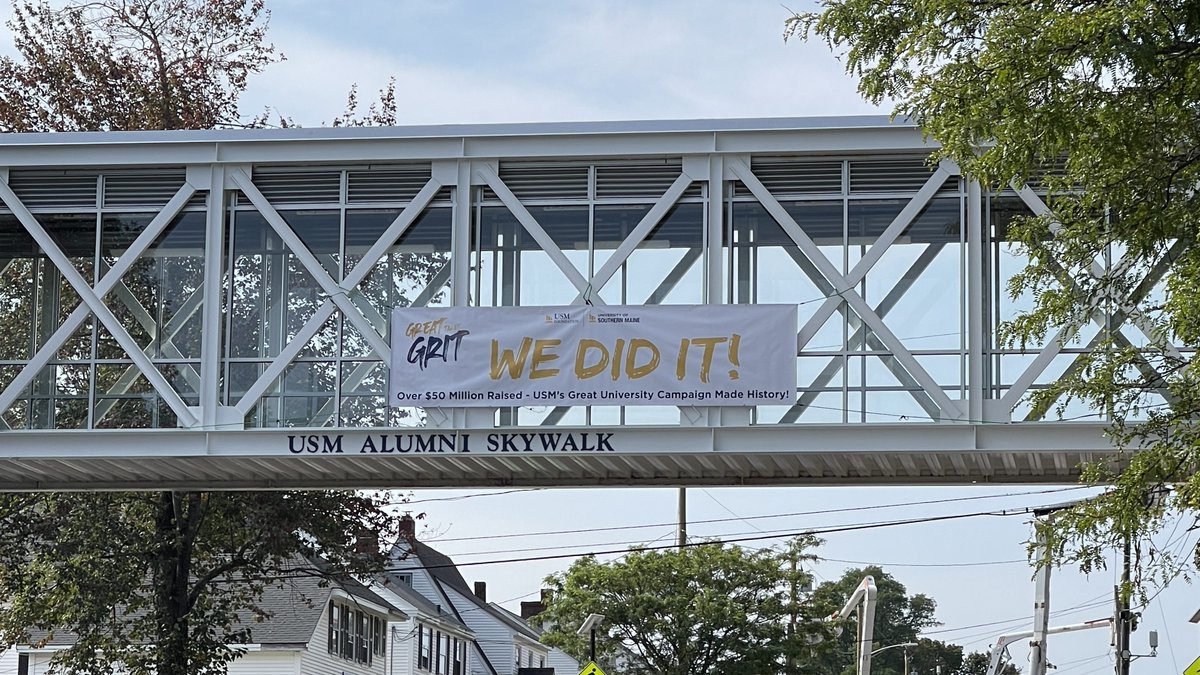
It’s all about community, and we have a pretty great one. It was a privilege to have @JamesHerbert, president of @unetweets and Jacqueline Edmondson, president of @USouthernMaine on campus yesterday! #maine
"That is, what if you could build an AI model that elegantly sidestepped all the ethical problems that seem inherent to AI: the lack of consent in training, the reinforcement of bias, the poorly paid gig workforce supporting it, the cheapening of artists’ labor?"
Nice piece by Vahuni Vara @vauhinivara
"Artificial intelligence had succeeded in moving me with a sentence about the most important experience of my life."
https://t.co/HiX81kXjeH
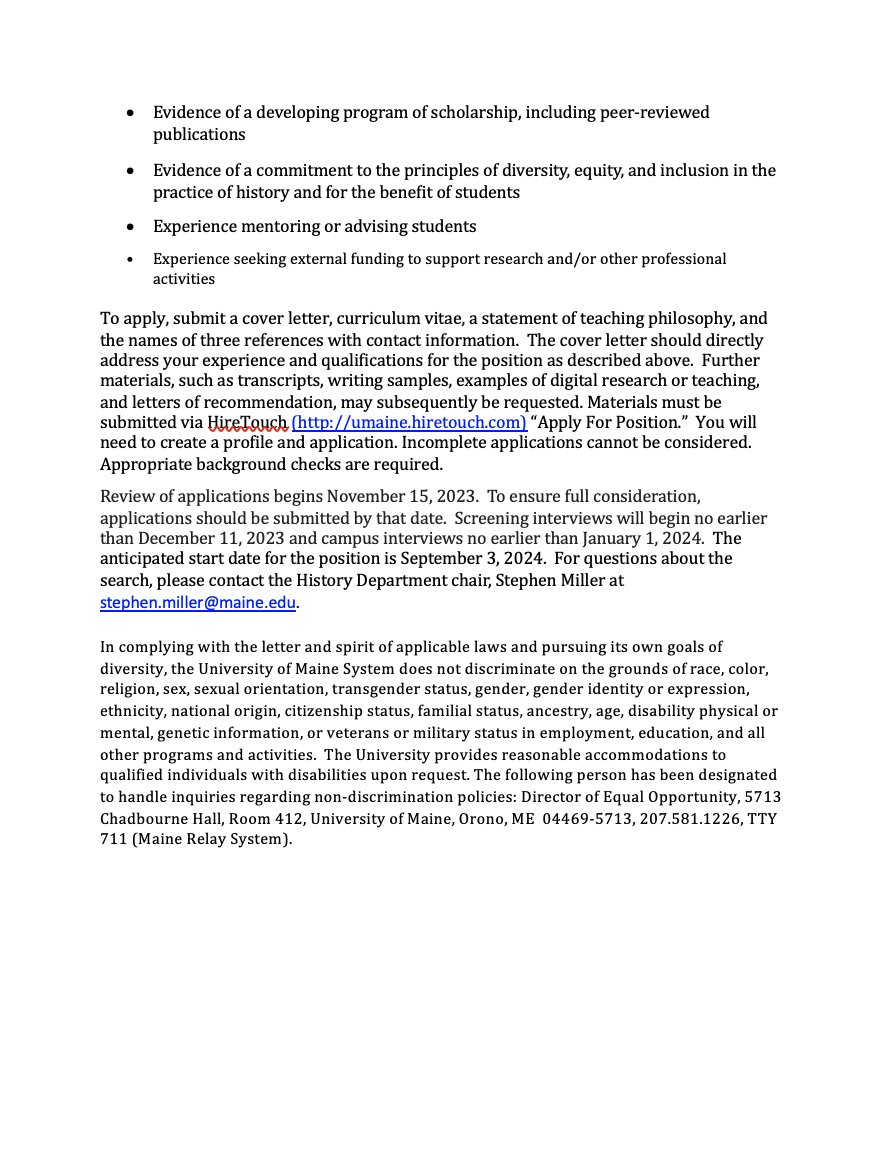
The Department of History at the University of Maine invites applications for a tenure-track, academic-year, assistant professor in 20th Century U.S. History. Experience in digital history is preferred. For more information, see the attached job advertisement.
* Maine Digital Collaborative, a multimodal digital public humanities project, directed by John Muthyala and Lisa Hibl and reviewed by Henry T. Christopher and Aniruddha Mukhopadhyay #ReviewsInDH https://t.co/tULAwP6btS
"But it isn’t just unrealistic beauty standards that worry me. What’s even more sinister is the unrealistic emotional standards set by these apps."
@freyaindiaa https://t.co/1guxxRPRss
The University of Southern Denmark is organizing a general meeting on AI tomorrow. The objective is to educate the faculty and staff on how to use generative AI for educational purposes.
They have asked me to give a speech on best practices for using AI.
Below is the speech I have prepared.
---
Most of my work focuses on how to use AI apps for academic writing and there are six points that I would like to talk about in this regard.
1. Use AI for Structure and Not Content:
When it comes to using AI apps for academic wrting, understanding the difference between the structure and content is crucial.
It’s a bit tricky to understand the difference between structure and content because the two intricately intertwined. Content can’t exist without structure and we will have no strucutre if we don’t have any content.
We always have a lot of content based on the research that we are doing. But that content doesn’t mean much if we don’t structure it in the form a research paper or a monograph.
Large language models like ChatGPT and Claude are trained on huge amounts of human generated text. These models have a very good understanding of how we communicate, the way we structure our communication.
But since these apps use a predictive model, the content they produce is mostly predictable. Predictable content, for our purposes, is of little use. Predictable structure, on the other hand, is very useful.
We have to learn use generative AI to structure and not generate content. For example, you can ask ChatGPT to give you an outline for a journal article, but you can’t ask it to write the article for you. If you want to learn more about it, I have written about it on Twitter.
2. Outsource Academic Labor to AI But Not Thinking:
Imagine you have to look up a few resources related to your research project. You can go to the library and browse the physcial card catalog. Suppose you find a few relevant papers. You go to the shelf to pick up physical copies of the relevant journals.
This whole process as you can imagine is quite laborious.
You could’ve easily done all this on an app like Google Scholar. AI-powered apps are to Google Scholar what Google Scholar is to a physical brick-and-mortar library. I will give you the example of an AI-powered app called Scite.
Suppose you come across a paper published by two Nobel laureates working in a prestigious lab. Because of their Nobel prizes and their stature, most of us would think that they have presented irrefutable evidence.
Now imagine you want to find out if there is any evidence that contrasts the claims of these Nobel prize winners. You will have to read a lot of papers to find that out. Google Scholar won’t be much help.
But the app Scite will tell you in a matter of seconds the contrasting and supporting evidence to the claims made by those Nobel laureates.
In this case, we are using AI to outsource our labor but not our thinking. We cannot outsource our thinking because of the point I made earlier about predictable content.
3. Treat AI as a Research Assistant Not a Supervisor
Imagine you hire a research assistant and you assign them a task. They complete the assigned task. Will you check how your assistant did or will you simply take what they did and put it in your journal article or research report?
Chances are you will check it and give them feedback. Think of AI apps as your research assistants and not your supervisors.
I try to imagine AI apps as smart, willing, eager-to-learn research assistants. They can do certain tasks very efficiently, but I still have to check their output.
4. Don’t Over-Rely on AI and Don’t Forget to Use You Common Sense:
It hardly needs to said that we should use our common sense, but when it comes to AI, you’d suprised by the number of people who absolutely refuse to use their common sense.
Let me give you an example. On the homepage of ChatGPT, it is clearly written that it “may occassionly generate incorrect information.” In their naivete, the makers of ChatGPT assumed that anyone using it will read this.
Many people didn’t bother with it. Among them was a New York lawyer who used ChatGPT “to supplement his legal research.”
ChatGPT gave him fake citations to cases that didn’t even exist. He didn’t stop there. He asked ChatGPT to give him case reports to those fake citations. ChatGPT complied and generated fake reports to those fake citations.
This lawyer took this bundle of fakery and submitted it in a federal court. As for the judge to whom this fakery was submitted, let’s just say that he was not happy.
5. AI is Neither the Fantasized Utopia Nor the Feared Dystopia:
When it comes to AI, a lot of people tend to think in terms of extremes. They either think AI is going to solve all their problems (like you press a button and AI writes you a research paper), or they think AI is going to take over the world and we will be ruled by robots.
Neither of these positions are helfpul. Instead of thinking in these extremes, we should try to understand them as what they actually are.
6. Engage with These Apps:
This brings me to my final point, which is that we should engage with these apps. AI apps are here to stay and if we don’t engage with them, we won’t be able to equip our students with the latest tools that they will need in the marketplace.
I’d like to end with a simple call that we should try to combine artificial intelligence with human intelligence and not with human stupidity.
"Here is a man who helped to draft the new South African constitution yet was grounded enough to call a kid from The Port to read a portion of one of his books simply to see if the language would resonate with my generation."
#CharlesOgletree
"In a world where so many among us are hyper-competitive, he made it his business to know all folks, not just those in power.
https://t.co/70YKHjqF0j
https://t.co/tD2A9LM9l2 Vol. 53. No. 3. 2022
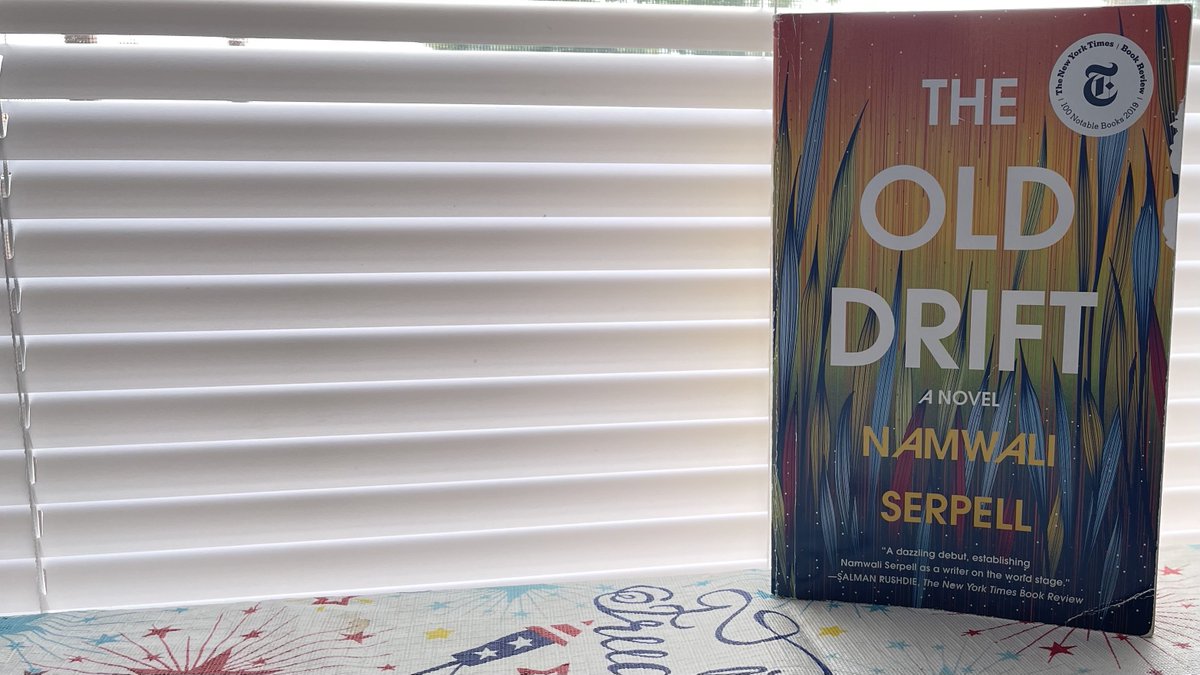
Research in African Literatures released a special issue on Namwali Serpell’s “The Old Drift.”
It’s edited by Deborah Nyangulu @dnyangulu
Chance, contingency, and bio-environmental pressures are not ironed out but animate subaltern resistance to the neo-colonial state, global capitalism, and techno-culture.