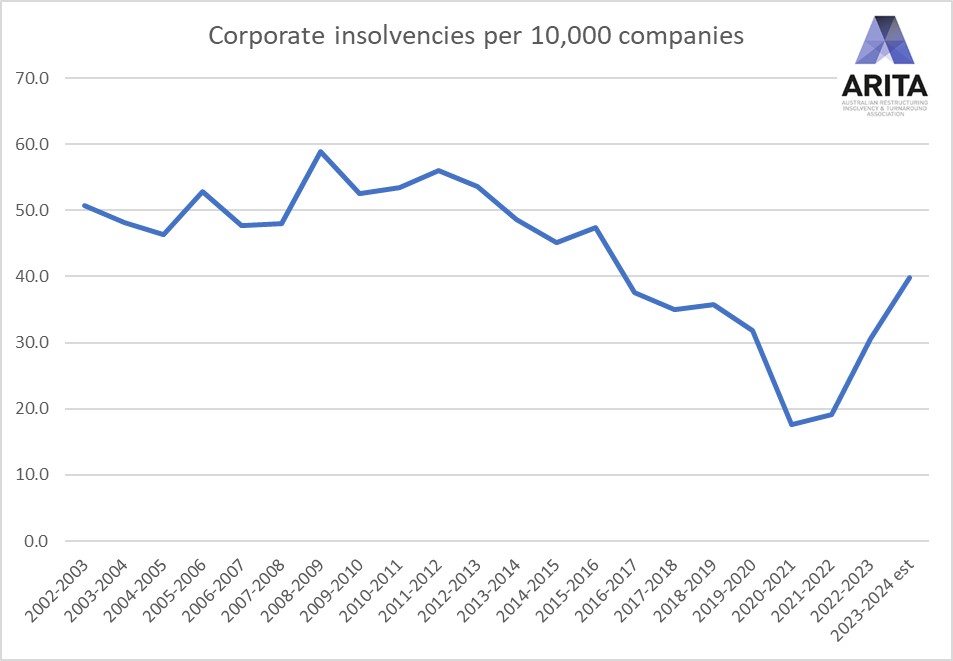
@cjoye Very poor analysis, @cjoye - it's not 25 year highs apart from a 1 month spike. On Y2Y we are just back to pre-COVID. There were far fewer companies in 1999. More companies are started than exit each year. The core data is the percentage of insolvencies. Here's the real picture
@cjoye Also, the construction sector failures are skewing the result more than a little. Businesses in that sector are very rarely a single company. They usually deploy multiple companies as a structure. So when one business goes bust it usually shows up as multiples in the stats
@PhilipThalis@DavidPocock No. You’re not. You’re asking for preferential payment. If it’s a level playing field then every creditor get equal payment…surprisingly that’s the largely basis of current insolvency law: pari passu. Senator Pocock is suggesting upending that.
@PhilipThalis@DavidPocock This is a profoundly naive view, Philip. The very definition of insolvency is that not everyone can get paid. Who are you suggesting loses out even more than you? Should you get paid before the mums and dads who lose their deposits? And if so, why? What gives you that standing?
@PatTheGUnit@DavidPocock It depends if they still have a PPS register of it. But more often than not you are right. It’s not different though to any other supplier - many of which can be mum and dad businesses