1/n If we agree that human beings are complex systems, we must also agree that complex human learning systems are fundamentally incommensurable. These systems can't be compared or understood within a single framework. Therefore, IQ measurement theoretically fails from the start.
Skepticism is “narcissism” @SteveStuWill . You’re gaslighting hard here.
Nassim Taleb’s point is proven yet again: much of psychology is fake science that crumbles under scrutiny.
“The single strongest personality predictor [of conspiracy thinking] is narcissism. Narcissists are particularly prone to conspiracy theories because they have a strong need for uniqueness, are prone to paranoia, and can also be remarkably gullible.”
https://t.co/Zbgzw054WK
This title is the perfect manifestation of the computational model which inspired CLT, Direct instruction etc.: Student(machine) agency doesn’t exist. They are passive recipients.
Input → Output.
RAM(Working Memory).
ROM(Long-Term Memory).
Talking about critical thinking tropes. Sure rooted in domain knowledge but *only* domain-specific is a Tricot & Sweller (who themselves write consensus is specific AND general). It also is a meaningless statement, as everything rooted. Also, see Abrami.
https://t.co/KUD3oTHMLW
My experience of @charlesmurray@clairlemon@gmiller and @cremieuxrecueil is that they are dumb in every sense of the word, which includes abstract reasoning and problem solving. They can't define the technical concepts they promote.
@DonaldClark Interesting.., But if we're rejecting dogmatic moral assumptions, on what objective basis do we discern right from wrong? Without a transcendent standard, isn't every worldview just another elite imposition? What grounds your moral position and why is it right and mine wrong
The best test of intelligence is this Tweet.
Note: IQ tests cannot be estimated from performance, & may correlate to tests that did not exist for Gauss, Voltaire, etc.)
Note: Einstein was the inverse of a premature test taker, (the kind of people who score high in school then do nothing)
I like being evidence-informed. And although I find some of the knowledge-rich, science of learning, what works rhetoric tiresome, and selective in evidence use, I continue to support being evidence-informed. I do wonder, though, to what extent 'what works' works.
I have analysed Sweller et al (1982) in so much detail, and it would be so complex to *write* a clear blog on it, that I’m considering doing a vidcast, narrating my thoughts while going through the paper....
I've been reading Sweller's 2023 replication paper in which he described the changes to Cognitive Load Theory as a virtue. It's an interesting read, but I find the line of reasoning a bit peculiar. Let me explain.
https://t.co/s69QfQUt3R
I think the overwhelming majority of educators has agreed with most of these statements. The 'progressive' boogeyman was mainly a strawman as argument for reform.
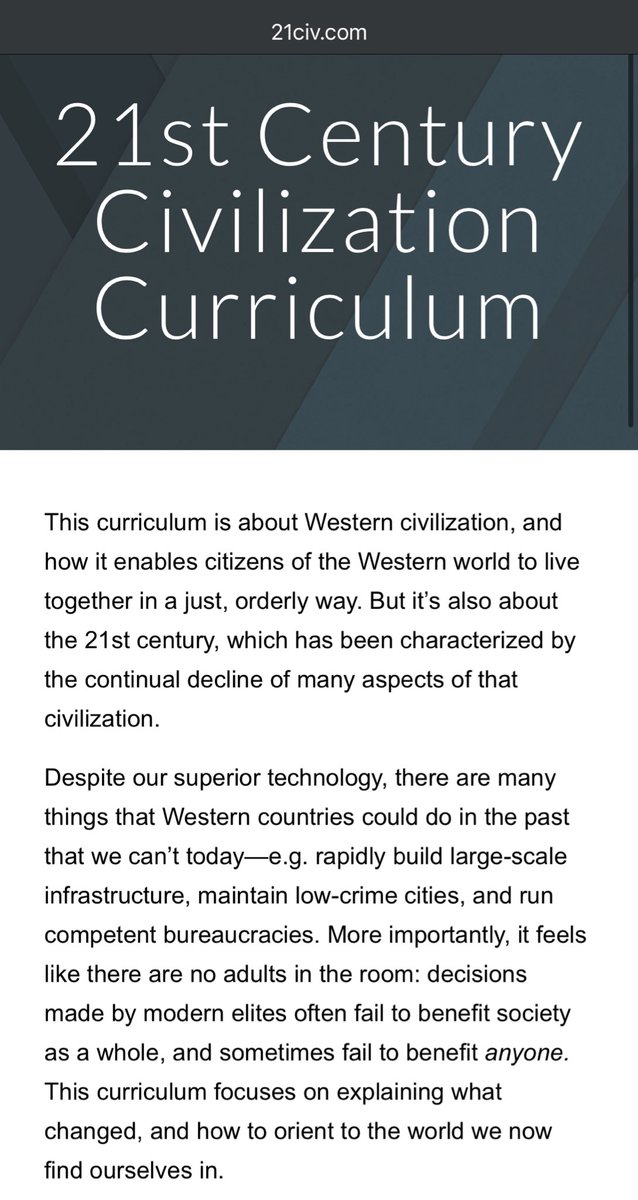
Many aspects of Western civilization are far less functional than they used to be. What went wrong, and how should we respond?
My new curriculum (drawn up in collaboration with @SamoBurja) aims to answer those questions.
Read it and enroll in discussion groups below.
A lot of people I respect are working with knowledge-rich, science of learning, curricula. Unfortunately, the rhetoric around it is becoming more and more vacuous.
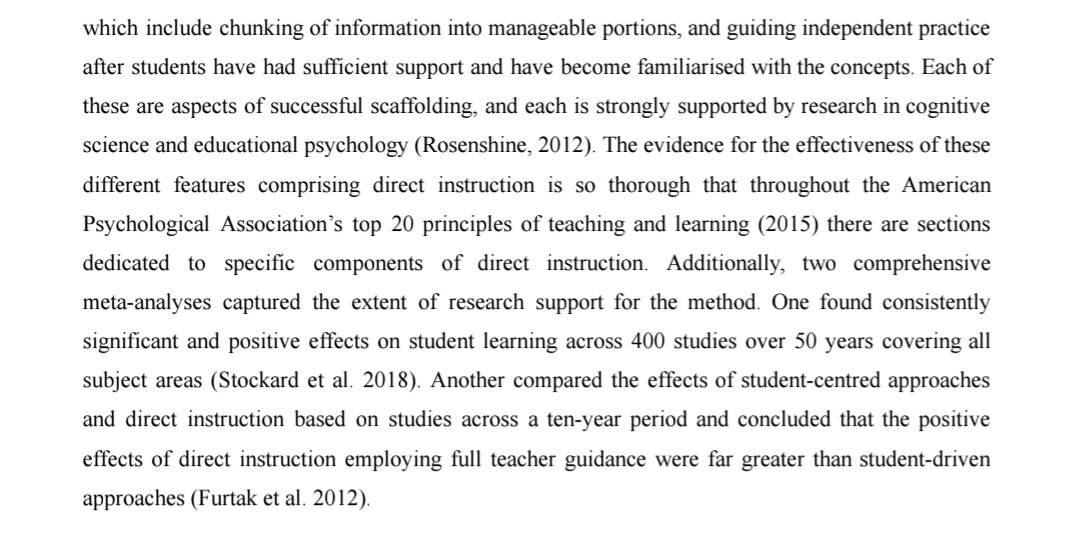
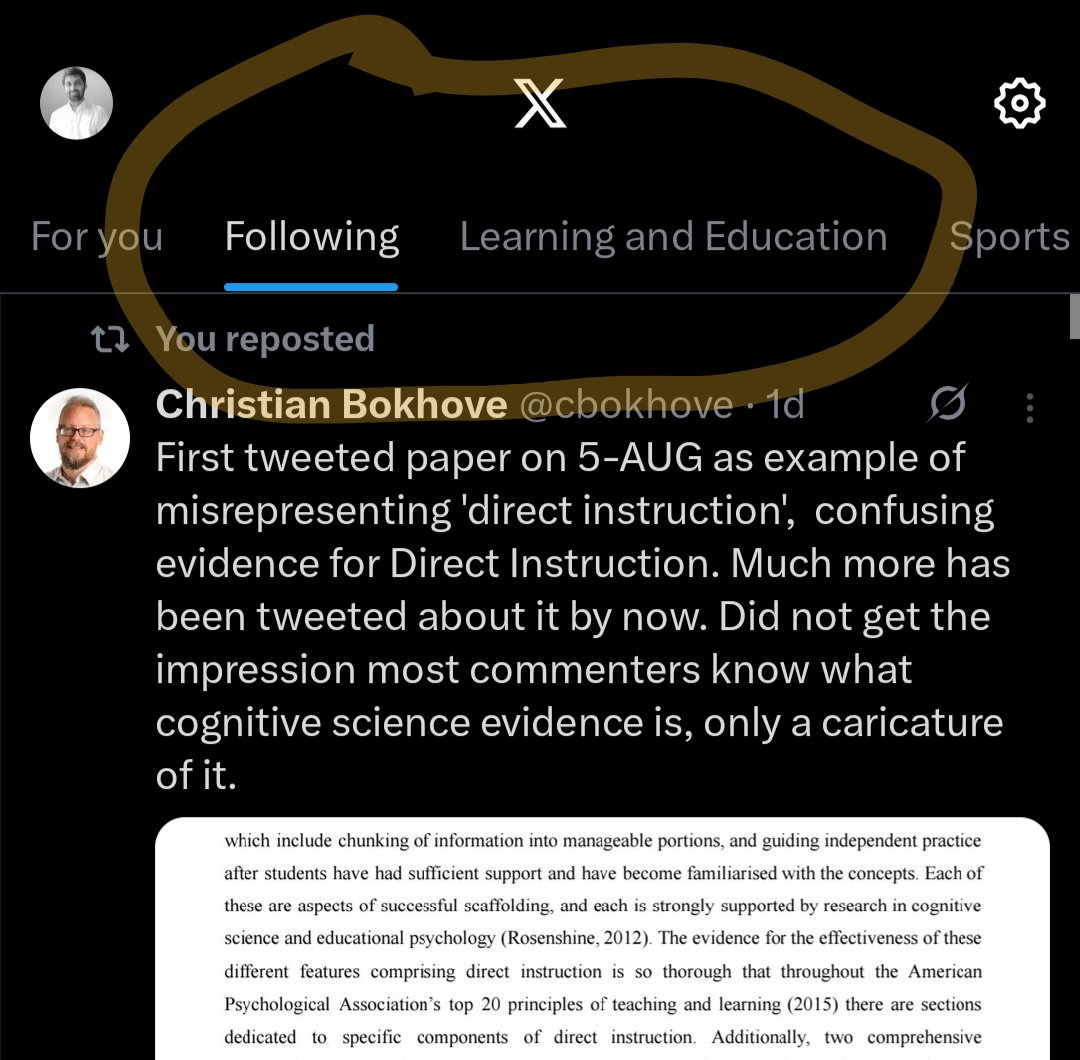
First tweeted paper on 5-AUG as example of misrepresenting 'direct instruction', confusing evidence for Direct Instruction. Much more has been tweeted about it by now. Did not get the impression most commenters know what cognitive science evidence is, only a caricature of it.
“If someone wants to learn pedagogy, "ask education school professors" or "go to education school" are often unproductive or even counterproductive routes.”
I have not seen any particular support for this idea other than personal preferences and beliefs.







![SteveStuWill's tweet photo. “The single strongest personality predictor [of conspiracy thinking] is narcissism. Narcissists are particularly prone to conspiracy theories because they have a strong need for uniqueness, are prone to paranoia, and can also be remarkably gullible.”
https://t.co/Zbgzw054WK https://t.co/LubIpt9BZx](https://pbs.twimg.com/media/HHdX9TRaAAAp5oX.jpg)