Taro unlocks career growth for SWEs. We create expert-led courses to help you with job searching, onboarding, and promo.
From @rpandey1234 and @AlexChiou
GitHub issue: "Please refactor to reduce quality to industry standards."
Funny because we've all shipped the compromise. The skill is knowing which corners you can cut — and which ones will wake you up at 2am.
Growing up is realizing Tony Stark was a vibe coder.
Flashy demos feel like genius. Real systems need tests, ownership, and the boring fundamentals that survive contact with production.
Built a dozen AI apps. Bombed on merge vs rebase.
Projects impress. Fundamentals get you hired. Don't outsource the basics you need to defend in a room.
https://t.co/rt0s9Y2jg4
Electricians trash the last guy's wiring. Software engineers trash the last guy's code.
Often that last guy is you from 6 months ago. Leave a trail your future self can follow — clarity beats clever.
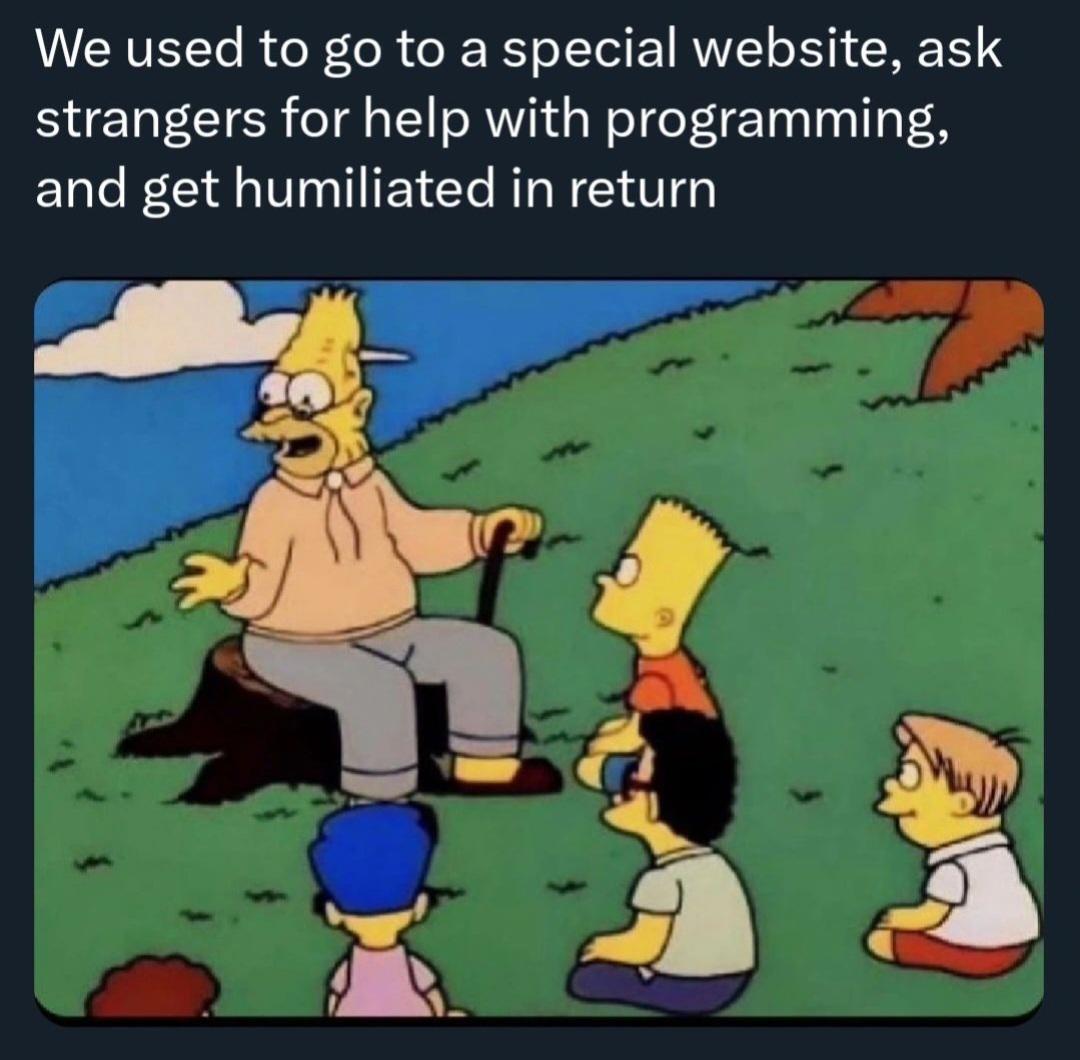
Stack Overflow: the original AI. You asked strangers for help and got roasted for free.
That friction taught you to ask better questions. Skipping it with chatbots is fine — until you can't explain your own code.
https://t.co/Y7Sa1uPRFP
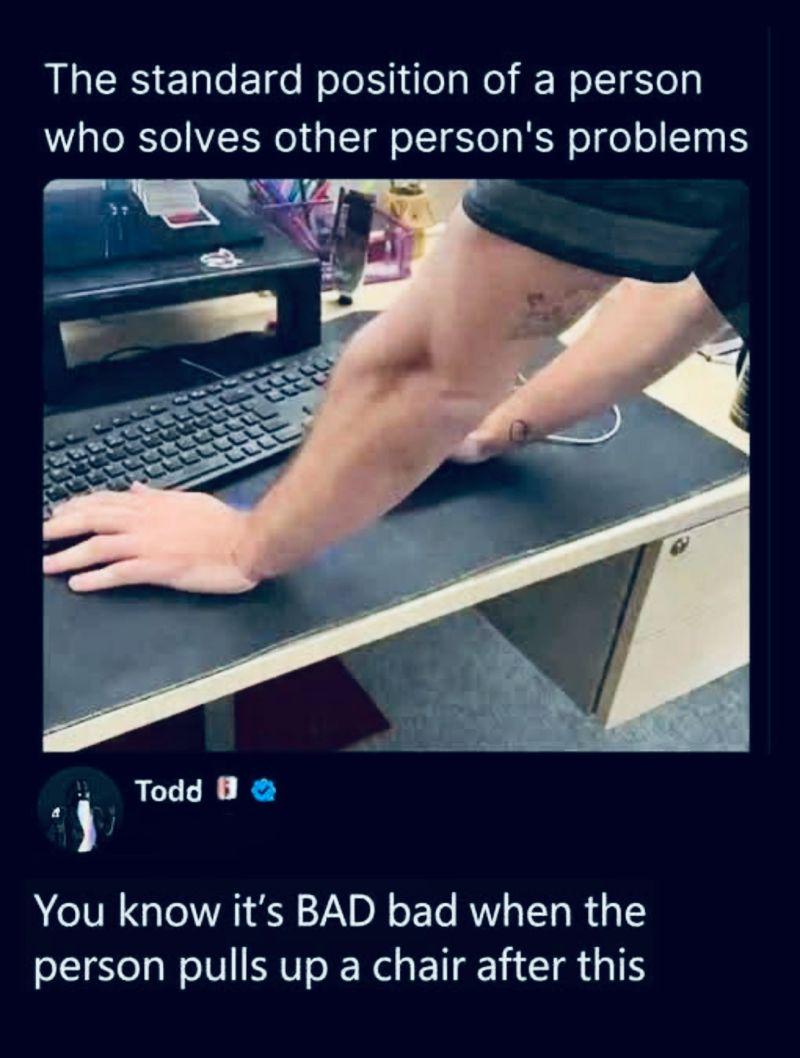
Being the person teammates lean on to get unblocked builds trust fast, and trust is what gets you promoted. Learn how trust and likeability drive your career: https://t.co/OCk0uIYe0S
Every frontend engineer just felt a chill 🥶 Jokes aside, this is why responsive design and flexible layouts matter. You never know which screen your users will bring next.
If your most important work is invisible, the company can't value it, and in a layoff you're at risk no matter how critical you are. Document it, automate it, and make sure your manager knows. Why the squeaky wheel wins: https://t.co/pU3gHh7osw
AI can generate a NextJS app in minutes. It can't give you the instincts you get from building a game loop and renderer from scratch. Those fundamentals let you debug what AI can't, and that's what companies pay senior engineers for.
Computers never do what you meant. They only do what you wrote. That gap is where most bugs live, which is why great engineers write down their assumptions, test edge cases, and read their own code like a skeptic.
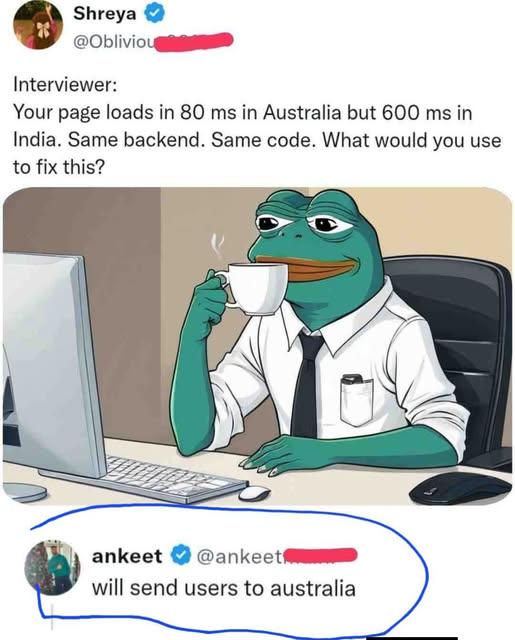
Technically a CDN with extra steps 😂 The real answer: move content closer to users with CDNs, edge caching, and regional replicas. Interviewers want to see you reason about latency from first principles, not recite buzzwords.
"Be interpersonally warm and professionally firm" is one of the most useful influence skills you can build. Learn it from former Amazon VP Ethan Evans in this free lesson: https://t.co/EGBxt6Wcf2
Reorganizations are rarely just about the org chart. Ethan Evans walks through the hidden agenda behind reorgs and how to read them in this lesson, and the whole series is entirely free: https://t.co/72d8w4rHV9
Here's an unwritten rule most engineers learn too late: you can't be promoted over your manager's objection. In this free lesson, former Amazon VP Ethan Evans explains what that means for your career: https://t.co/4MKDcwHNZp
Being nice and doing great work isn't always enough to move up. Ethan Evans explains why nice people often stall, and what to do about it, in this free lesson: https://t.co/Wt1G2bm7yc
Former Amazon VP Ethan Evans led teams of 800+ people, and here he breaks down what really decides who gets promoted, heard, and trusted inside a company. It's under three hours of lessons and entirely free: https://t.co/ELZGhfUG3r
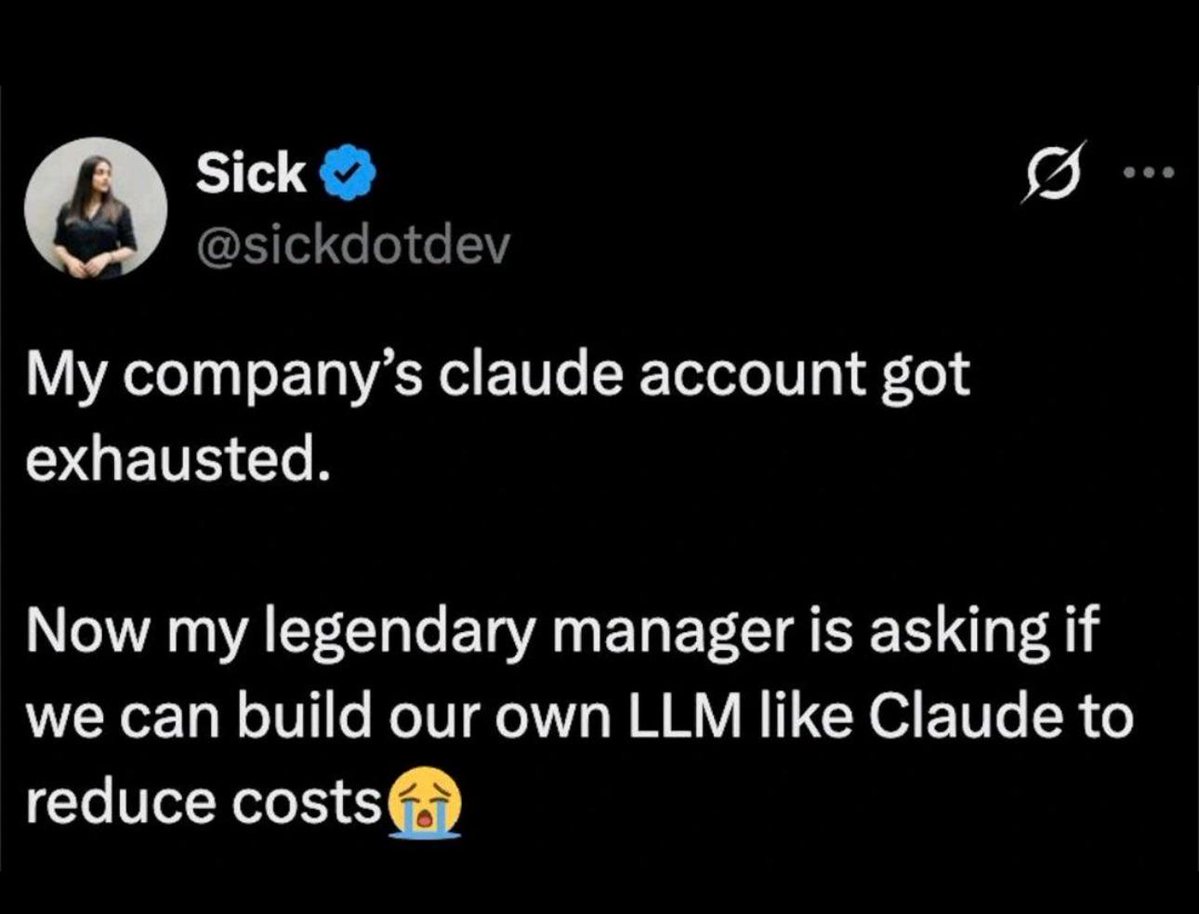
Every engineer eventually gets an idea like this from leadership 😅 Don't just say no.
Take the goal (cutting costs) seriously and steer toward a realistic path. Learn to be warm with people and firm on tradeoffs: https://t.co/EGBxt6Wcf2
Most missed deadlines are decided before a single line of code is written. Set dates before scope is understood, and engineers absorb the gap with nights and weekends. Learn to negotiate scope with your manager early in this free lesson: https://t.co/f5TTkFtw6D