🧵on heading back into Tokyo, I see the transition from Inaka to the world's largest city. I got driven to Ohara to enter the Tokyo Commuter Fare Zone. My first train is a Sotobō Line 2 car E131 series that comes hourly. (Pic of 2 car E131 at Awa-Kamogawa where I ate breakfast)
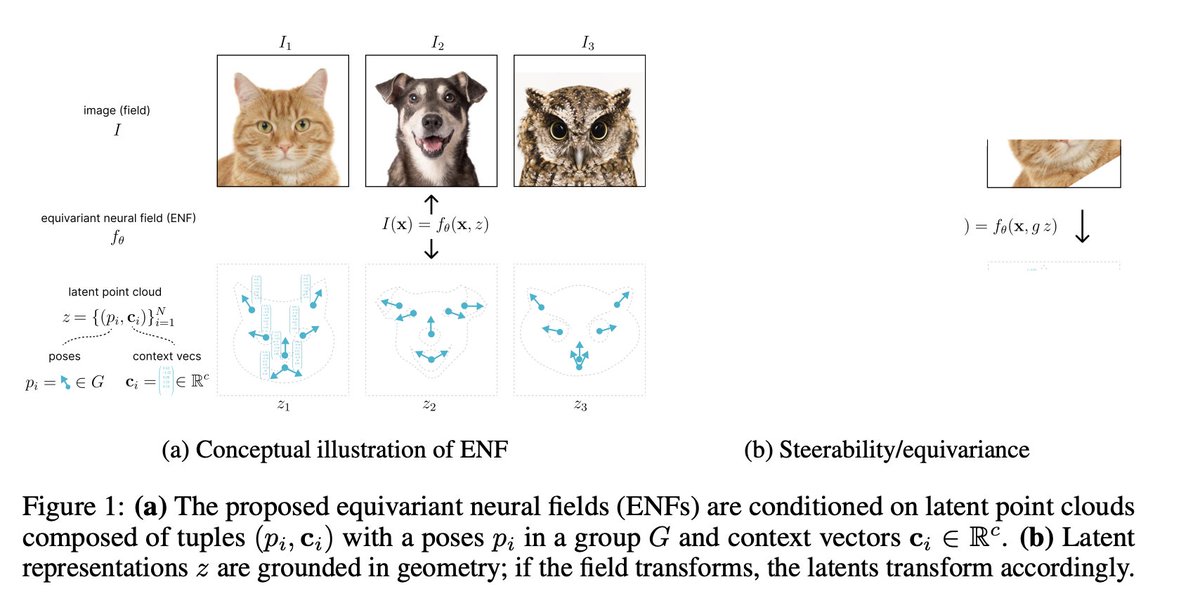
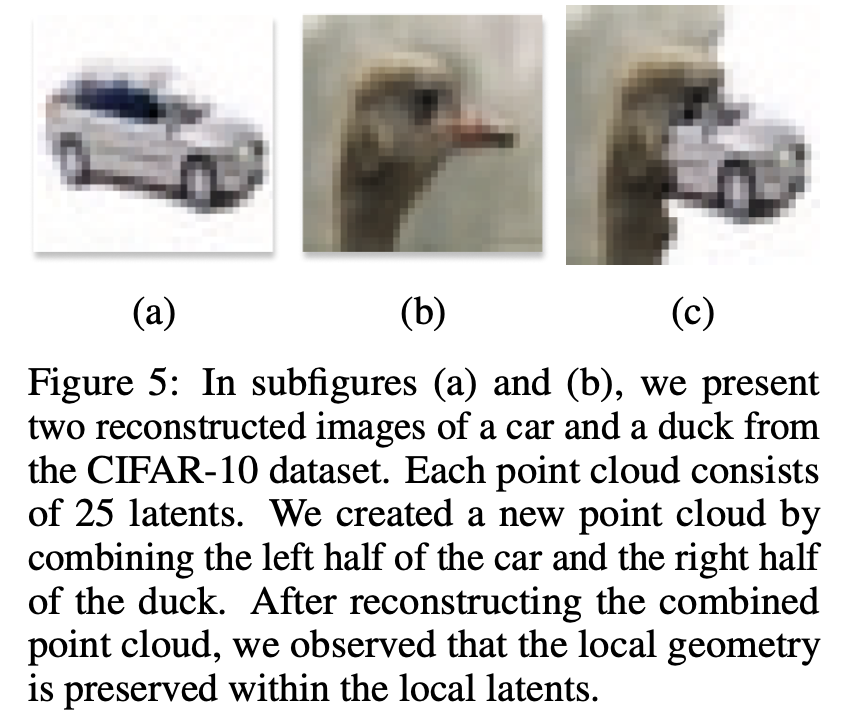
Images aren’t arbitrary collections of pixels -they have complicated structure, even small ones. That’s why it’s hard to generate images well. Let me give you an idea:
3×3 gray images represented as points in ℝ⁹ lie approximately on a 2-D manifold: the Klein bottle!
1/3
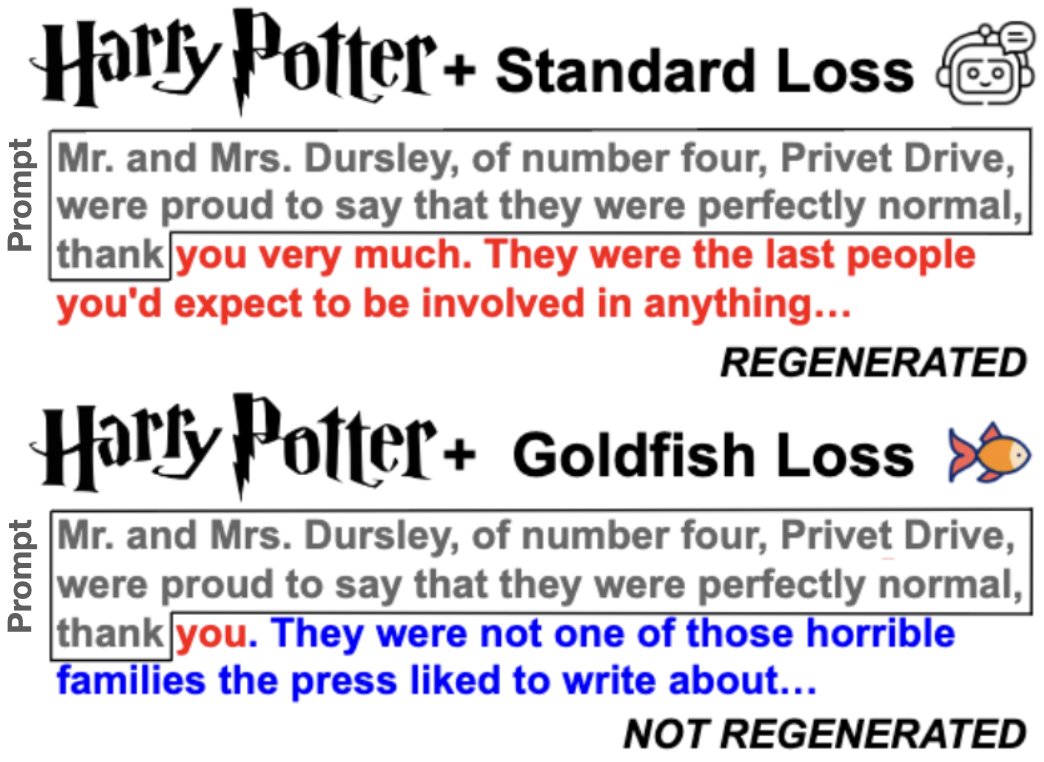
LLMs can memorize training data, causing copyright/privacy risks. Goldfish loss is a nifty trick for training an LLM without memorizing training data.
I can train a 7B model on the opening of Harry Potter for 100 gradient steps in a row, and the model still doesn't memorize.
Artificial Gerbil Intelligence has been achieved internally! 🐀
A team at Google DeepMind has built a ‘virtual rodent’, in which an artificial neural network actuates a biomechanically realistic model of the rat. This helps provide a causal, generative model that can reproduce complex animal behaviors, not just correlate with them. The model's internal structure can be analyzed to gain insights that are hard to get from real neural data alone. https://t.co/52AQYfh6jm
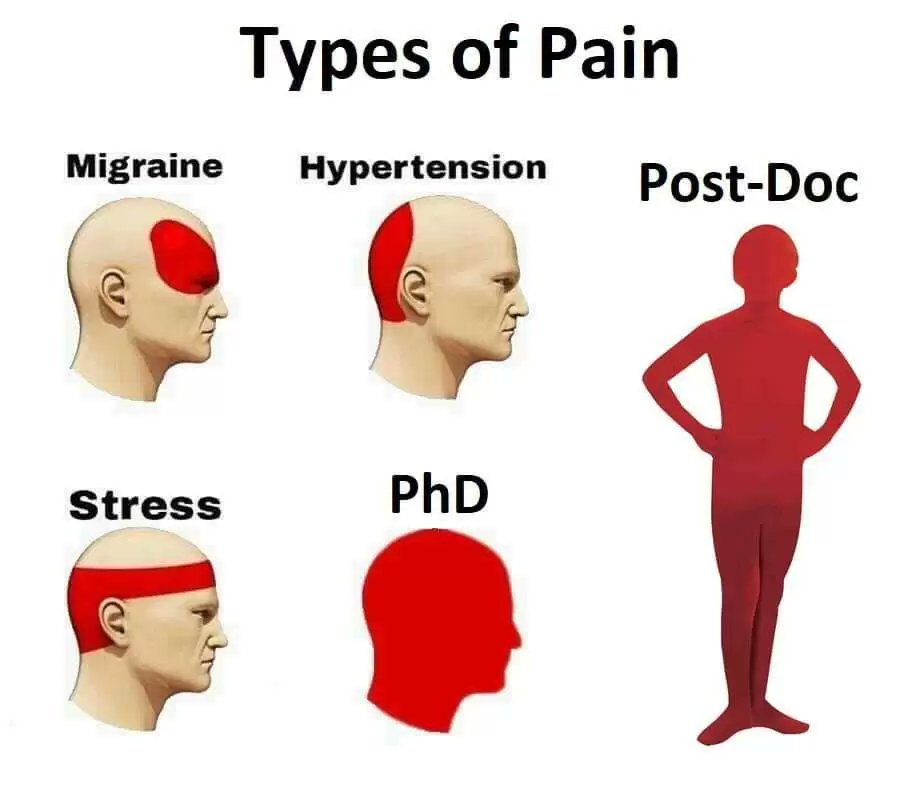
Faculties cannot find strong postdocs. Plus, new data shows a drop of postdoc applicants in the US.
For example, in biomedical sciences:
- Drop by 3% in total
- Drop by 10% in U.S. citizens and permanent residents
Unsurprisingly, this coincides with a boom in biotech.
▫️
Now, here are some examples published 1-2 years ago:
1. Postdoc position in computing at the University College London:
- Three rounds of recruiting and the PI is still struggling to find a postdoc.
2. Postdoc position targeting “mini brains” to understand neural development at the University of Cambridge:
- Only 36 applications! WAY less than typically expected.
3. Postdoc position at Max Planck Institute of Molecular Physiology
PI received only five applications, and none of them was “serious”.
▫️
What postdocs said:
1. Postdocs feel unappreciated. “It’s the way we’re treated by PIs, by senior management and by academia in general. People don’t feel valued by anyone in the system.”
2. Salary. In a molecular biology lab, it is £34,400 in the UK and €42,200 in Germany, $54,840 in the US. It’s far less than in industry. Sometimes TWICE as small.
3. Postdocs have a widespread anxiety and uncertainly about their job paths. Less than half would recommend a scientific career to their younger self.
▫️
📍 My opinion as an ex-postdoc:
PhD students often ask: “OK, let’s suppose we’ll do this postdoc. But what’s next? What will it give me?”
- Only few postdoc get faculty positions.
- Postdoc does NOT give advantage when applying to industry (unless it’s very specific direction in biotech).
- Postdoc pushes you into an academic track. People don’t see you as an industry person anymore.
- Salaries are very low. Supporting a family during postdoc requires real survival skills.
Unless you have an outstanding PhD profile and will surely land a faculty position where you want (or if you have immigration status to solve), postdoc position is hard to justify.
Especially when high-tech industry is booming.
▫️
✅ To change it, we in academia should make better ties with industry:
1. Postdoc positions should become an excellent stepping stone to industry.
Currently, industry is not so open to academic community and has little funding opportunities. This can be changed via governmental incentives.
▫️
2. Industry should be able to help increase postdoc salary.
Basic salary can come from regular funding. BUT extra 30-40% can come from a specific company while a postdoc could work in synergy between the academic lab and industry, this would be a blast.
Currently, this is considered ‘double funding’ and is rarely supported. We should move away from such a view.
▫️
There is a great disappointment with academia and a big outflow of strong researchers.
But it can be stopped with the right policies, salaries and career opportunities.
#AcademicTwitter #AcademicChatter #PhD
Here's my theory on why LLM reasoning.
Sometimes when mathematical notation is very good, it basically tells you what you should do next, even if you don't really understand what's going on.
Ten months ago, we launched the Vesuvius Challenge to solve the ancient problem of the Herculaneum Papyri, a library of scrolls that were flash-fried by the eruption of Mount Vesuvius in 79 AD.
Today we are overjoyed to announce that our crazy project has succeeded. After 2000 years, we can finally read the scrolls:
This image was produced by @Youssef_M_Nader, @LukeFarritor, and @JuliSchillij, who have now won the Vesuvius Challenge Grand Prize of $700,000. Congratulations!!
These fifteen columns come from the very end of the first scroll we have been able to read and contain new text from the ancient world that has never been seen before. The author – probably Epicurean philosopher Philodemus – writes here about music, food, and how to enjoy life's pleasures. In the closing section, he throws shade at unnamed ideological adversaries – perhaps the stoics? – who "have nothing to say about pleasure, either in general or in particular."
This year, the Vesuvius Challenge continues. The text that we revealed so far represents just 5% of one scroll.
In 2024, our goal is to from reading a few passages of text to entire scrolls, and we're announcing a new $100,000 grand prize for the first team that is able to read at least 90% of all four scrolls that we have scanned.
The scrolls stored in Naples that remain to be read represent more than 16 megabytes of ancient text. But the villa where the scrolls were found was only partially excavated, and scholars tell us that there may be thousands more scrolls underground. Our hope is that the success of the Vesuvius Challenge catalyzes the excavation of the villa, that the main library is discovered, and that whatever we find there rewrites history and inspires all of us.
It's been a great joy to work on this strange and amazing project. Thanks to Brent Seales for laying the foundation for this work over so many years, thanks to the friends and Twitter users whose donations powered our effort, and thanks to the many contestants whose contributions have made the Vesuvius Challenge successful!
Read more in our announcement: https://t.co/rUlrdGXBMs
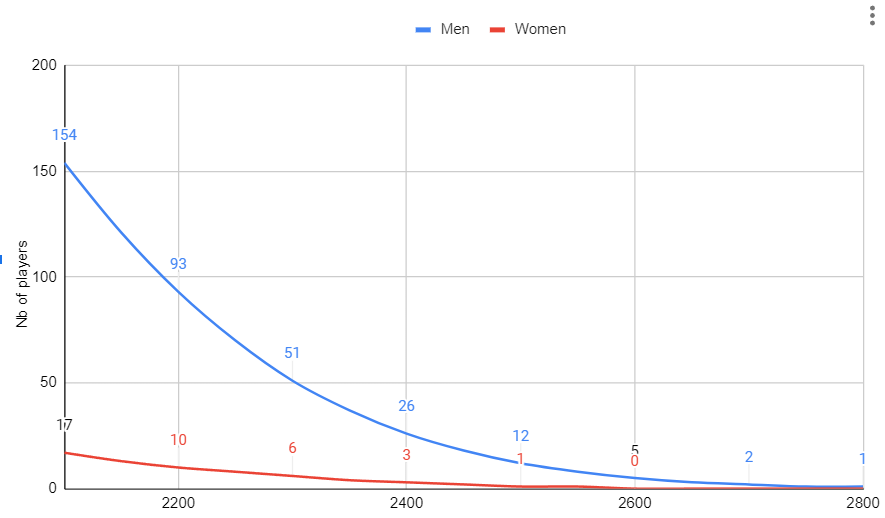
Seeing this tweet promoted by Elon Musk made me want to do the stats for France.
Top 5 men: 2812, 2720, 2673, 2637, 2610
Top 5 women: 2588, 2476, 2413, 2367, 2333
Definite proof that men have a (biological?) advantage at chess and especially in top-level competition?
Wait...
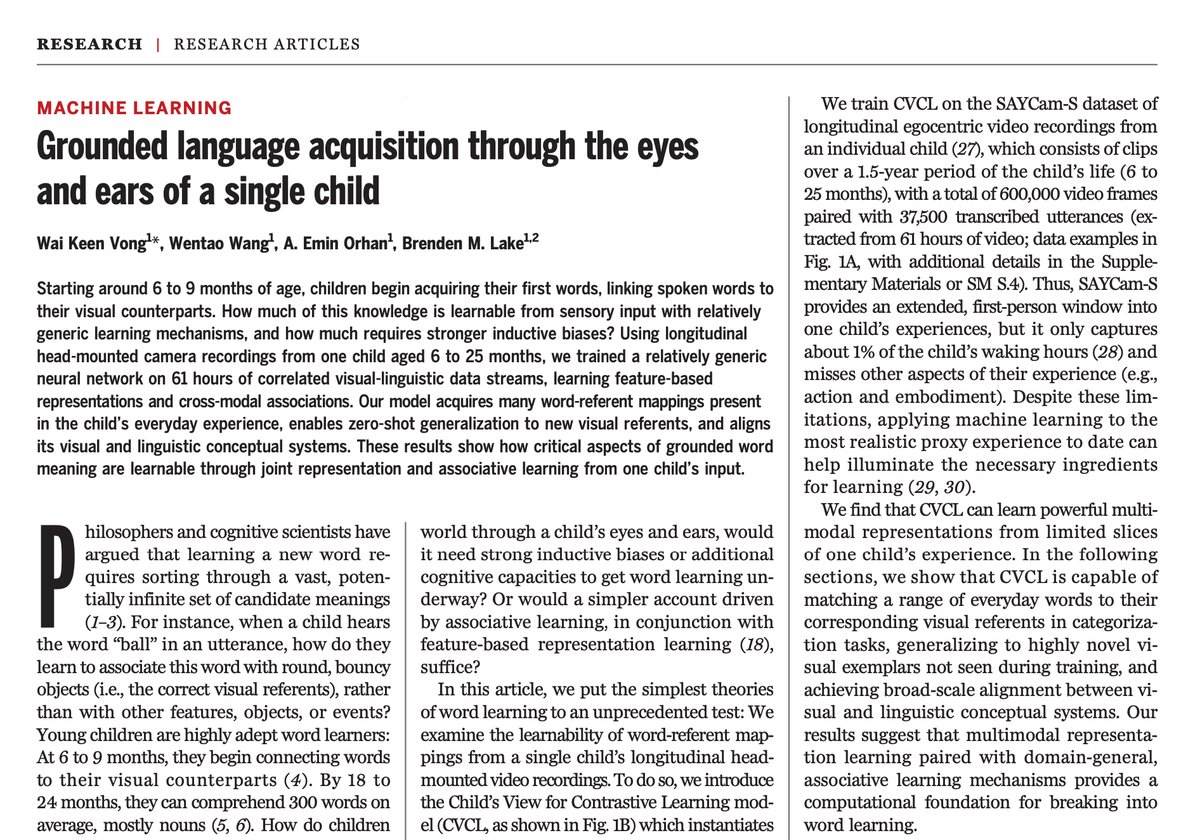
1/ Today in Science, we train a neural net from scratch through the eyes and ears of one child. The model learns to map words to visual referents, showing how grounded language learning from just one child's perspective is possible with today's AI tools. https://t.co/hPZiiQt6Vv
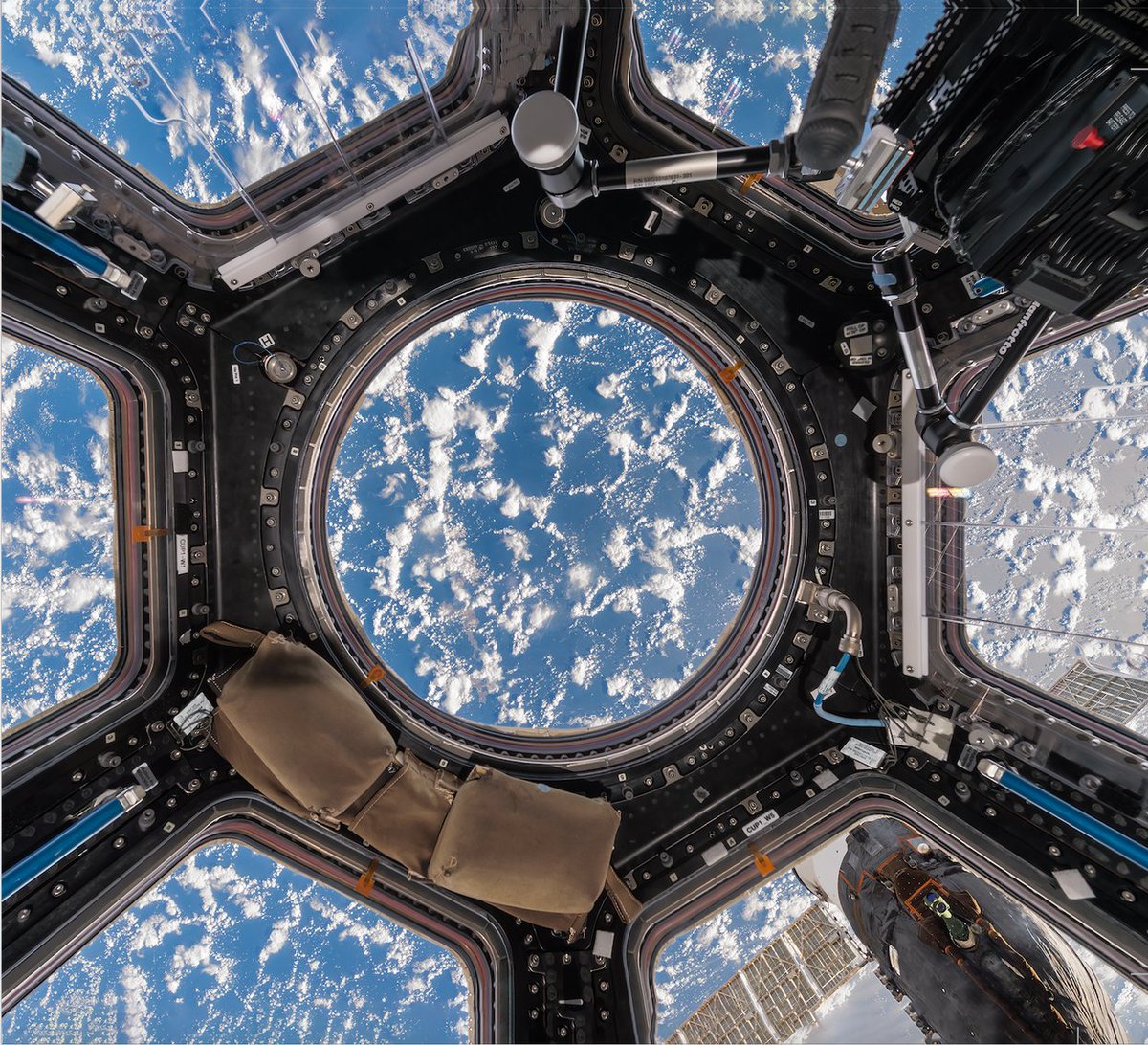
FUNGUS IN SPACE!!! 🍄🚀
Equal parts cosmic horror and nature being metal, let's talk about the lichen that grew on the OUTSIDE of the International Space Station!
Get your tea and curl up, because I PROMISE you wanna hear about these fungal cosmonauts 🧑🚀
🧵
INVESTIGATION OF THE UNHCR IN UKRAINE 🇺🇦
In 2022/23, the 🇸🇪 investigative TV show Kalla Fakta (Cold Facts) investigated the (🇸🇪) UNHCR’s aid to Ukraine. What they found was, diplomatically put, concerning. Here follows a 🧵summarizing their findings. It is well worth the read.
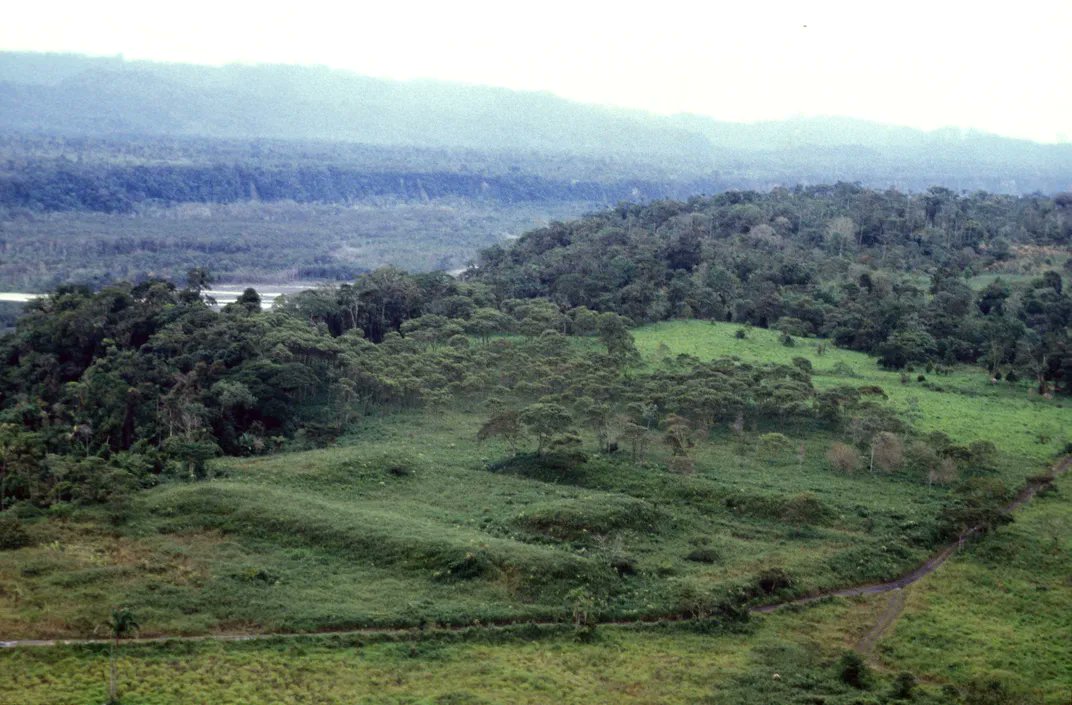
NEW ANCIENT CIVILIZATION JUST DROPPED 🧭
It has long been theorized there was a large civilization in the Amazon. Francisco De Orellana's Expedition wrote of it in 1542.
Breaking Down the Discovery and Significance in this Archaeology Thread 🧵
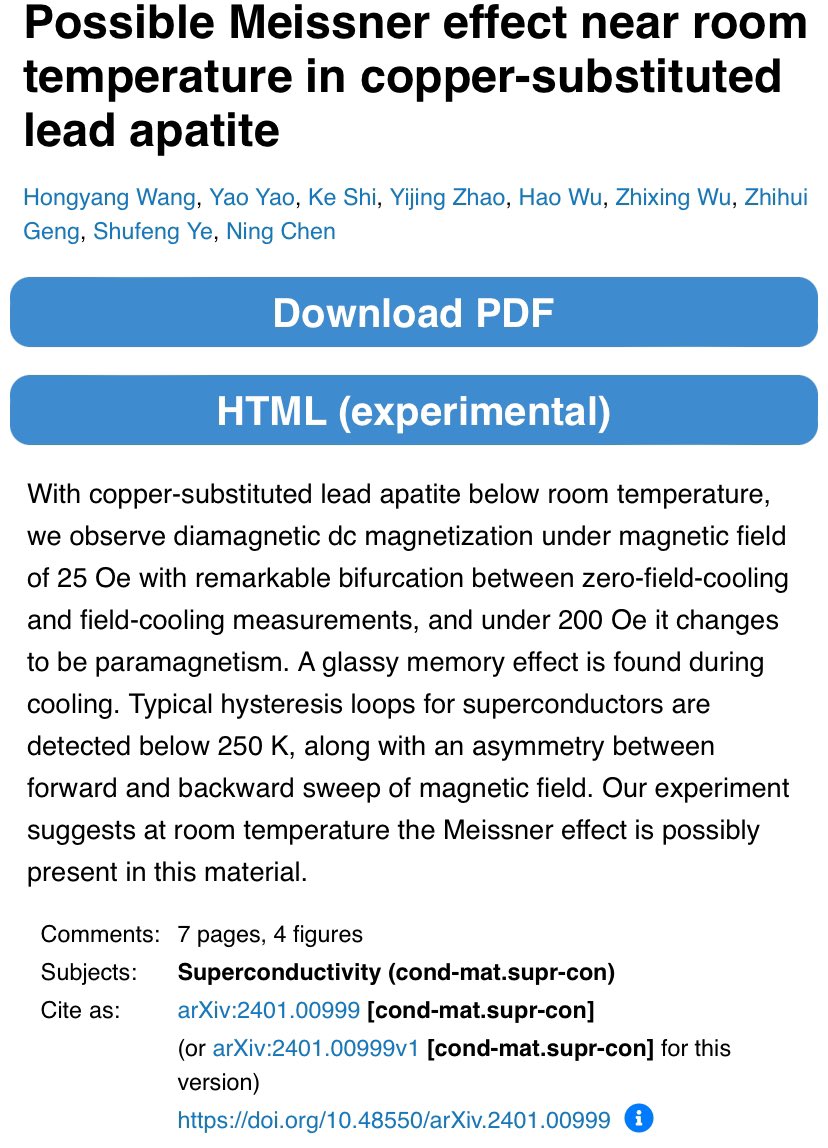
The two Chinese labs working on replicating LK-99 appear to have found a room-temperature superconductor.
At first blush, here's what's different from last time:
• it's more like "room temperature" than room temperature, the paper says 250K which is -10 F or -23 C. That's still HUGE IF TRUE, because we can get things that cold with liquid nitrogen
• we have actually discovered a superconductor at this temperature before, but it was at high pressure. This paper says it's potentially superconductive AT AMBIENT, NORMAL PRESSURE
• it has *already* replicated, with two separate labs in China confirming the results. Last time the big question was "will it replicate." And the answer this time seems to be "it already has"