the books, the dance, the art, the wild west, the cats, the science, the sport, OMG the politics, #qpr and currently PhD student #dickens @UniOfBuckingham
Most of the obituaries and tributes to David Hockney will, I imagine, focus primarily on his extraordinary craft and brilliance as an artist. Perhaps they might also mention his brilliance as a communicator (he was such a fine writer and speaker).
But there was something else rather unique about him too. He was also strikingly honest about the tricks/techniques artists use and used to paint. His book Secret Knowledge is a rather wonderful detective work into how renaissance and Dutch golden age painters used glass and mirrors to help them master perspective.
It's a pretty compelling case (see this video clip from a BBC doc he made alongside the book👇) though I'm sure some art historians will raise their eyebrows. Many will be aghast at the notion that greats like Vermeer might have been using lenses and camera obscuras to help them draw and paint. As if it were in some way "cheating". But Hockney was so self-evidently brilliant he was one of the few people who could document this without anyone gainsaying his own talent.
There are very few artists, living or dead, who have this degree of self-confidence. Not just to know their craft, but to be bracingly honest about how it works. One other who comes to mind is Paul Simon: not just an extraordinary musician but is also an extraordinary communicator about the tricks and techniques of how to write and perform music.
For many great artists, the temptation is to cloak their crafts in mystery, like a member of the magic circle. Hockney wasn't having any of it. So yes, he was a legend in all the obvious ways. But also in a few other less obvious ways as well. RIP.
Women have the right not to undress in front of men at work.
Twenty years ago, that sentence would have been a statement of such obviousness that people would have laughed at you for saying it aloud. Now it's a matter for celebration. Congratulations, you heroines 🎉😘👏
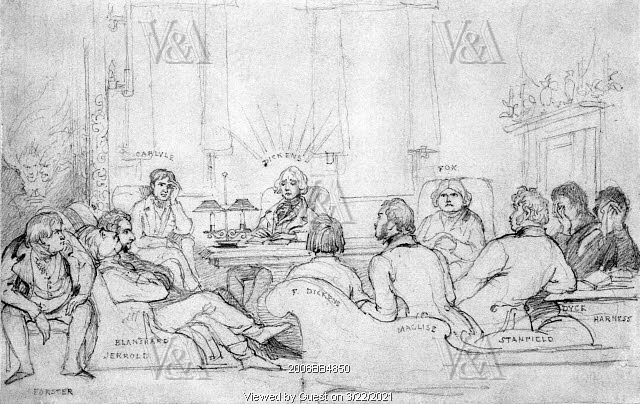
OTD - 03/12/1844 - CD read his new Christmas book - 'The Chimes' - to an invited group of friends in John Forster's house in Lincoln's Inn Fields. Sketched by Daniel Maclise.
@blablafishcakes Even deep into dementia my grandma would always respond to us starting this nursery rhyme - she knew the first two verses if she knew nothing else, bless her.
Hello @ChrisMasonBBC have you by any chance read The Women Who Wouldn’t Wheesht co-edited by @LucyHunterB and I and containing personal essays from women across society telling the story of the Scottish campaign against self-ID.
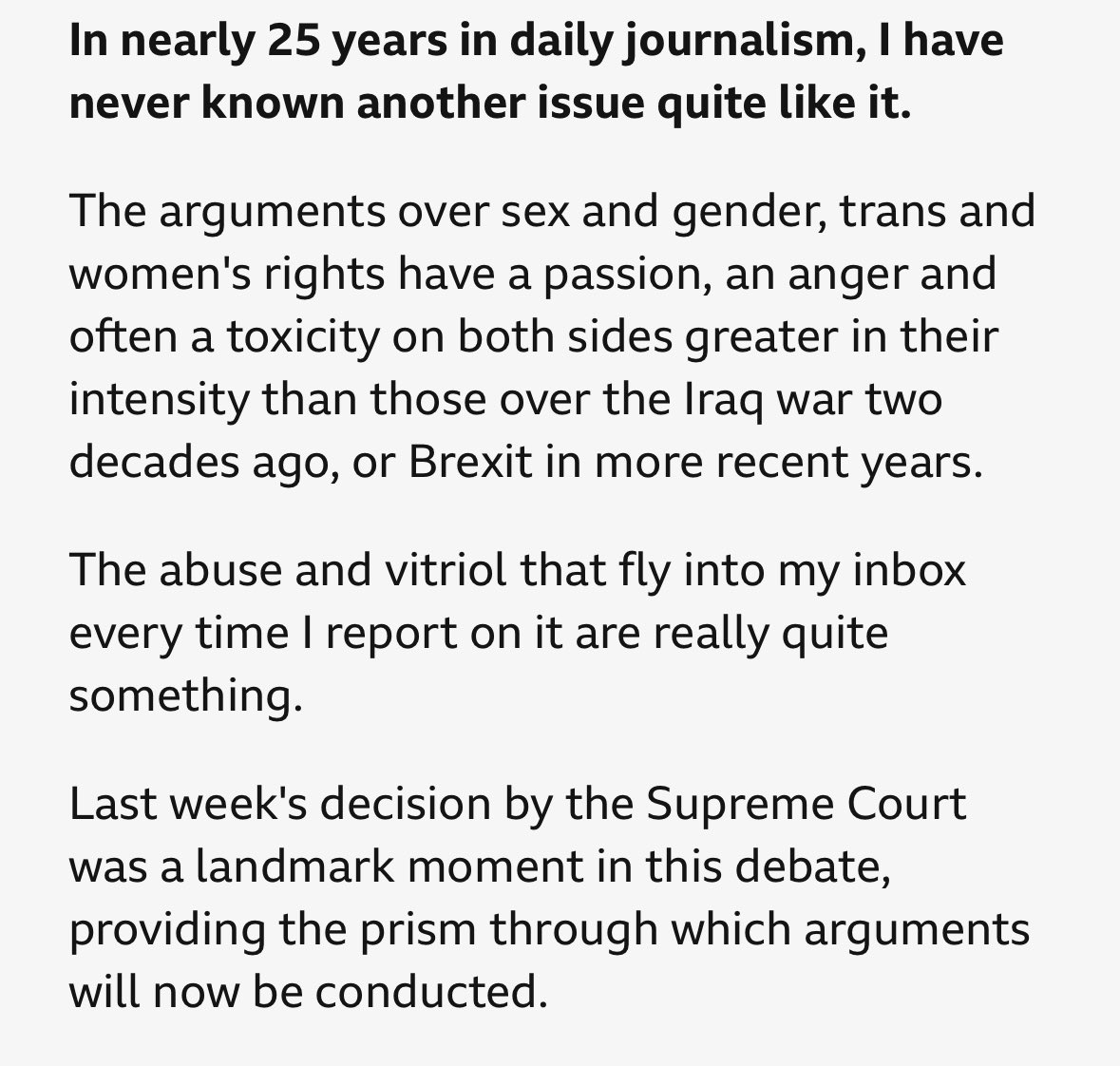
Perhaps if you had read it you wouldn’t so glibly and mistakenly assert that this debate has been toxic on both sides, as you did today. I know of no women who publicly threatened to kill trans people, nor of any woman who spat on or physically assaulted a trans person. No women who stopped trans people from gathering together.
And if you had read @msjlindsay book Hounded you would know that women’s lives were destroyed because they dared to speak up for women’s rights - rights that were confirmed last week by the highest court in the land.
Women were, and remain angry - but we were never, and are not abusive.
Supreme Court rules that “woman” means biological woman in the Equality Act 2010 and “sex” biological sex, reserving legal protections intended for women for women, and protecting women’s rights to single-sex spaces services and sports. Hugely significant win for @ForWomenScot.
This is your last chance to get 15% off London Library membership* and unearth a world of books, history, and inspiration. 📚✨
Use code WBD15 when you join before midnight!
*This is an introductory offer. T&Cs apply.
🔗 https://t.co/ZB8cCbjbNU
It's always a pleasure to hear your own postgraduates talk at a conference. Currently seated to hear @jojomarshcol talking about her doctoral research on The Chimes to @Dickens_Society
Stonehenge is protected by the ancient monuments act and it is a criminal offence to damage the Stones. There are also multiple rare lichen species growing on the stones that are also protected. Expect a prison sentence. 😡
Woman of the Day Emily Williamson born OTD 1855 in Lancaster, founder of the all-female Society for the Protection of Birds which campaigned against ‘murderous millinery' after the fashion for feathers caused the hunting to extinction of some bird species. We now know it as the RSPB, the Royal Society for the Protection of Birds.
Emily was appalled by the slaughter of birds for their feathers - then an increasingly popular fashion accessory for ladies’ hats - and by the reduction of the bird population to such a degree that species such as grebes, egrets and beautiful birds of paradise were at real risk of being wiped out altogether.
She was swimming against the tide. The plumage trade was reaching its peak. Between 1870 and 1920, bird skins, feathers and the whole bodies of hummingbirds and tiny birds of paradise were imported by the ton and the trade was worth around £20 million a year (£200 million in today’s money).
Emily had already conducted a one-woman campaign to raise awareness. She tried to join the exclusively-male British Ornithologists’ Union but it held that women could not be serious ornithologists. She wrote numerous letters to them urging them to take a stand against ‘murderous millinery’, but they ignored her. By this time, the Great Crested Grebe had already been hunted to extinction and she could no longer bear the indifference and inaction.
In February 1889, at the age of 34, she invited a group of women to her home in Didsbury, Manchester, for tea and fruitcake and to talk about how to put a stop to the plumage trade. Using her anger in the most effective way she could, she founded the all-women Society for the Protection of Birds. Those present at the meeting in her home were asked to sign a pledge to "Wear No Feathers". There were exceptions: birds killed for food and ostrich feathers. Harvesting ostrich tail feathers was then considered not painful. (I’m not sure ostriches would agree).
The early efforts of the Society were lauded in a few sections of the press including Punch, although Punch did argue that giving up feathers was far from “a severe, self denying ordnance” for ladies. Most publications were critical however. The editor of the journal Nature Notes wrote in 1891: “To assume such a very ambitious title for ‘The Society for the Protection of Birds’ for a band of ladies who do nothing but abstain from personal iniquity in the matter of bonnets, may give occasion for the unrighteous to scoff.”
Even so, Emily’s SPB had 5,000 members within six months and was soon sending out more than 15,000 letters and 50,000 leaflets annually.
In 1891, the SPB joined forces with another all-woman campaigning group, the Fur, Fin and Feather Folk of Croydon. Winifred, Duchess of Portland, became president. Emily became vice president. Hannah Poland took over as secretary.
By 1893, membership doubled and the SPB had partial success; fewer milliners stocked hats with feathers. The plumage trade though, along with the fashion industry and the press, were all run by men and they saw this as a niche issue. The SPB responded by inviting influential men to join as Life Associates, and many did.
By 1898, the SPB had 20,000 members and 152 branches. Female local secretaries were required to call out “Murderous millinery!” on the high street, in the department stores and in church. Furious milliners, society ladies and plumage merchants denounced them as “feather faddists”.
Royal support followed. Queen Victoria, who disliked cruelty towards animals, approved an order in 1899 prohibiting her military from wearing egret feather sprays. Ostrich feathers (it doesn’t hurt, remember) were used instead. Edward VII awarded a Royal Charter in 1904, making Emily’s organisation the RSPB. In 1906, Queen Alexandra wrote to the RSPB expressing her disapproval at the wearing of plumes.
Emily’s thirty year campaign finally achieved success when the Plumage Act was passed in 1921. This ended the trade in exotic bird skins. Vulnerable species began to recover. Her actions were critical in saving thousands of bird species around the world from being hunted to extinction for the millinery trade.
Emily died in 1936 aged 80. The British Ornithologists' Union finally accepted its first women members in 1910 and awarded a posthumous membership to her to mark the centenary of the Act she fought so hard to see passed.