Have you seen our new paper in
@naturesustainab?
We have shown that using hydropower dams to generate low-emission energy systems can cause problems for other sectors, food production and ecosystems, unless diversified designs are employed.
@multi_sector@deepuncertainty
Can diversifying renewable energy sources, and connecting them strategically, mitigate climate change?
New evidence from Ghana’s multi-sector resource system suggests it can be done 👉 https://t.co/58CAHgHRq6 @jomigo28, @JulienJHarou, @csir_ghana@IMWI_@IUCN_Water
Object-Oriented Programming in Under 4 Minutes:
Object-oriented programming (OOP) is a programming paradigm in which programs are designed using classes and objects. This design allows related functions and data to be grouped together in self-contained and reusable units.
A class is a template or blueprint from which objects are made from. Classes define the properties and methods that an object can have, and objects are unique instances of a class.
For example, let's say you want to create a life simulation game where players can adopt and raise pets. You would have a "Pet" class that defines the properties of each pet (like "name" and "age"), as well as behaviors they can do (like "speak" and "eat").
You could then create objects, or instances, of this class for each specific pet. Each object could have its own values for each property. For example, you could have a 2-year-old pet named "Winston", & a 1-year-old pet named "Wesley"; both initialized from the "Pet" class.
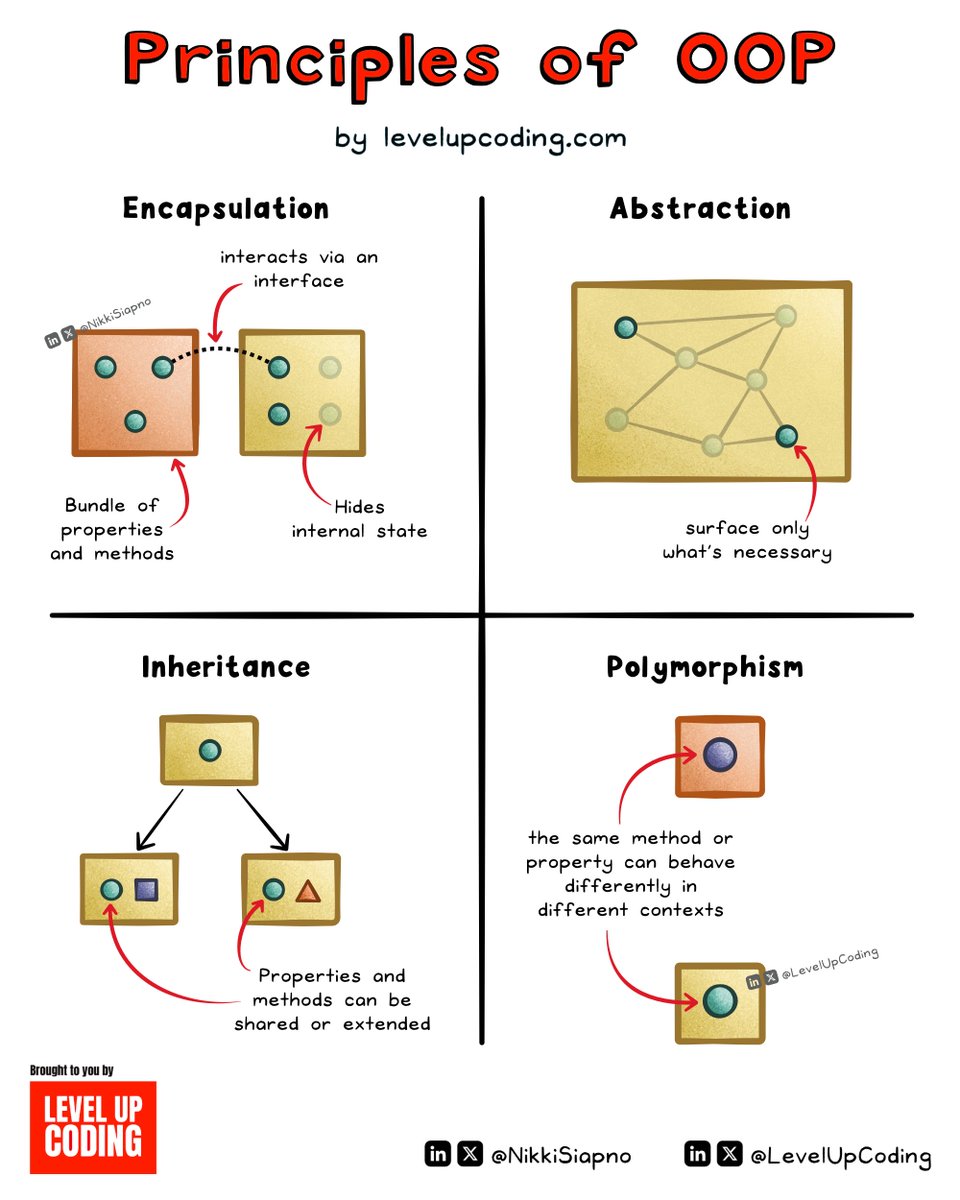
Object-oriented programming has 4 main principles; encapsulation, inheritance, abstraction, and polymorphism.
Encapsulation hides internal details but exposes data & methods via a public interface, preventing unintentional changes. E.g. — a player can view a pet's age but can't accidentally change it. But they can run methods avail on the public interface like changing a pet's name.
Inheritance allows classes to inherit properties and methods from other classes, making code reusable and organized. E.g. — A "SuperPet" class that extends from "Pet "and would inherit "age", "name", "eat", and "speak"; while defining new behaviors like "fly"
Polymorphism is a principle that enables objects to change their form by extending or overriding existing methods. E.g. A "Dog" & "Cat" class that extended from the "Pet", shouldn't share the same "speak" method. You'd override it to have its own logic like "woof" or "meow"
Abstraction reduces complexity by only surfacing the information needed for a given context or use case. E.g. A “Player” class doesn’t need to know how the “eat” method works in the “Pet” class, it just needs to know how to interact with it — i.e. its input and output.
OOP provides a way to design your program that makes it reusable, secure, stable, and easy to understand. But it isn't without disadvantages. A couple of arguments against it are that it can lead to over-engineering and complexity on a large scale.
~~
Thank you to our partner Kickresume who keeps our content free to the community.
Did you know you can turn your LinkedIn into a resume with one click?
Check it out: https://t.co/DIeENAT5gp
🦎 Gecko es una herramienta de código abierto que te ayuda a encontrar los artículos más relevantes para tu investigación, optimizando el proceso de revisión de literatura y facilitando el descubrimiento de nuevos hallazgos científicos.
https://t.co/xs9HhFx9il
Exploring the mind-blowing ARCO-ERA5 dataset: hourly data for almost 300 climate variables, available globally from 1940 onwards!🤯
All packaged into a single cloud-friendly Zarr file, and loadable with a single line of Python code - crazy! Below: a month of wind waves + swell:
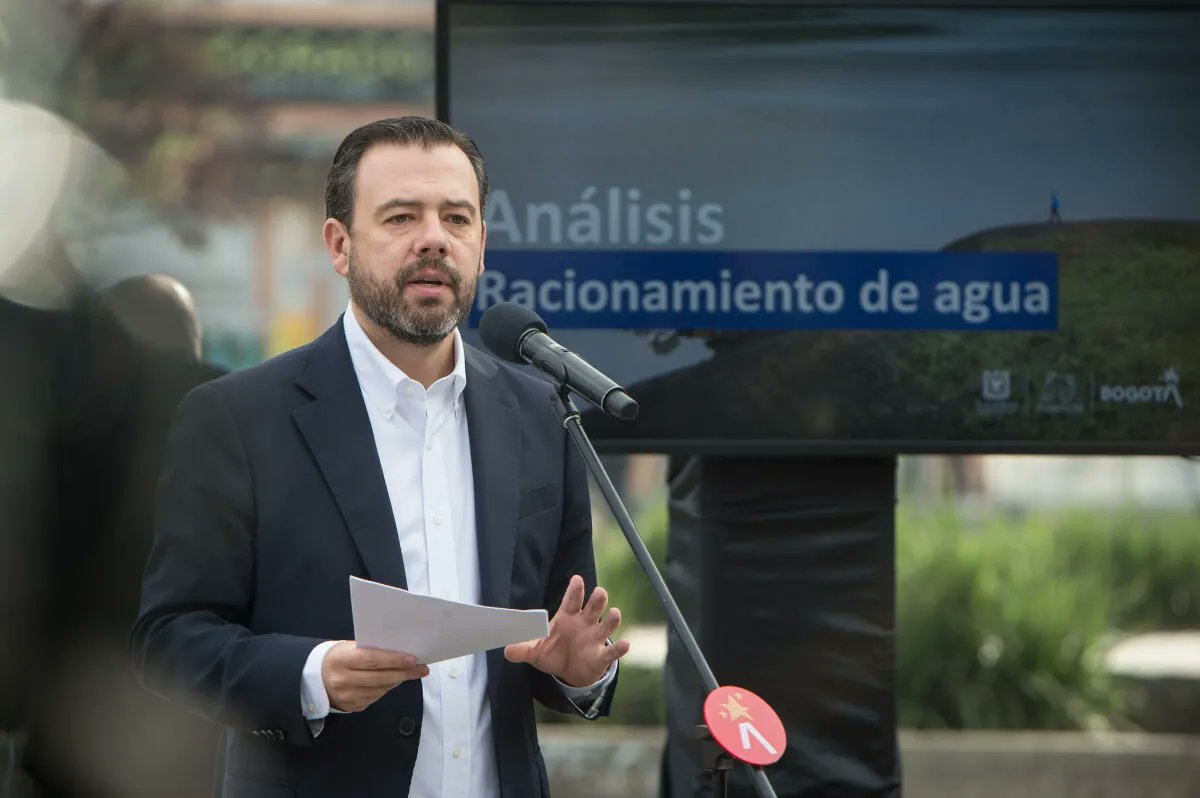
Tras 50 días de racionamiento de agua en Bogotá, la ciudad ha ahorrado más de 7 millones de m3. 💦
Pero la estrategia de la alcaldía de @CarlosFGalan tiene algunos vacíos en:
💬comunicación,
📅planeación,
🏁metas confusas.
Va 🧵
The @IUCN's BRIDGE project has been key for supporting processes related to #water resource management and governance, adaptation to #ClimateChange, and strengthening of livelihoods in Central America.
https://t.co/N3obULY4gn
Damas y caballeros:
En la portada de revista Science aparece la investigación sobre una ciudad perdida en la Amazonía de Ecuador. Hace 2500 años hubo 12 asentamientos interconectados con unas 60.000 personas. Entre los autores: Stephen Rostain y Fernando Mejía de la @PUCE_Ecuador