One of the best things of #golang is how you can answer almost any question about "how should I do this" looking at how it is done in the standard library
@FriendsofGOTech Ahí, ahí! Por que parar en pegatinas? Hace unos meses que estoy trabajando en un proyecto parecido para camisetas, sudaderas, tazas, etc... Os dejo uno de mis diseños 😋
Which would be the better way to test probabilistic algorithms in #golang? I am thinking about algorithms like hyperloglog and CountMin Sketch
Is there any standard way for these cases?
Last week's image of a black hole was made possible by an algorithm developed by Katie Bouman, a post-doctoral fellow at @MIT + fellow researchers. Read more about the algorithm's imaging methods via @CNN: https://t.co/XWXxgqbx0u
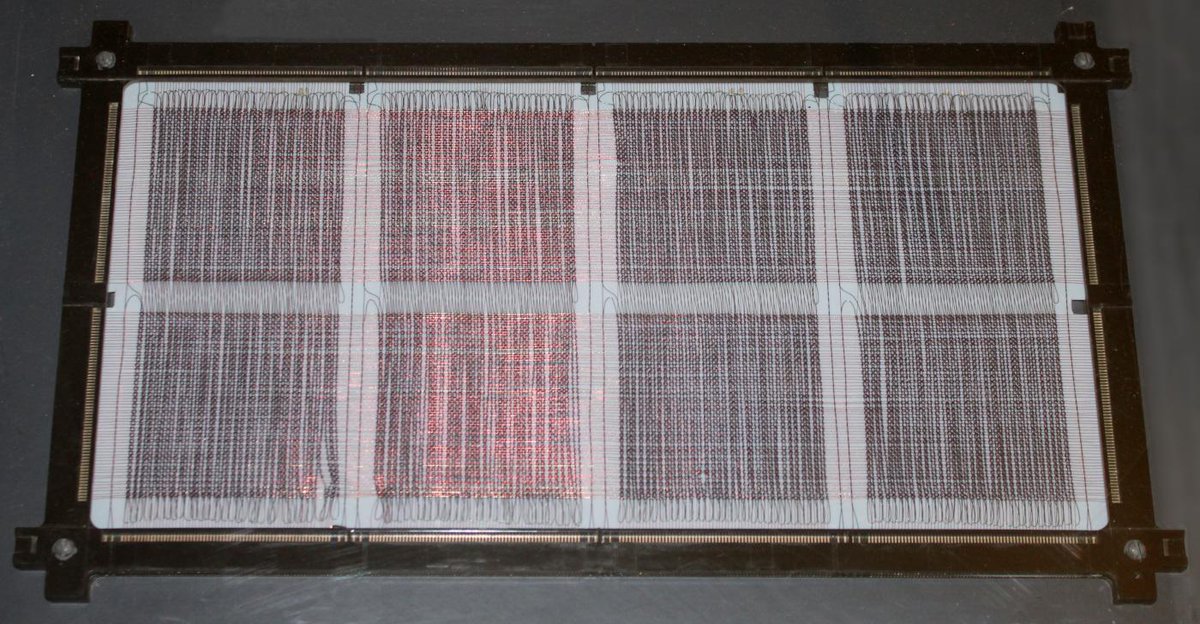
In the 1960s, mainframe used core memory for storage; 128 kilobytes filled a large cabinet and weighed 610 pounds. Core memory consisted of tiny ferrite cores on a wire grid. By 1970, IBM produced 20 billion cores a year. I examine an IBM S/360 core array:
https://t.co/p66lPpB9pk
Okay here it is: all the costs for hosting @unsplash in 2019 🔥💵 Every month: tens of millions of users, billions of photos viewed, 1000+ API applications. What do you think it costs per month? $10,000? $100,000? $500,000? https://t.co/vDkkiHs9mk
I just discovered (thanks to @egavves) this interested directory of deep learning and related courses. Very glad to see our courses @la_UPC @TelecosBCN listed there :) #DLUPC
We created Aroma, a code-to-code search and recommendation tool to make the process of gaining insights from big codebases much easier. With Aroma, engineers can find common coding patterns without manually going through dozens of code snippets. https://t.co/I9CSNFp7en