New publication from NeuroPIL collaborators @jon__lieberman and @DrAndrewNichol1
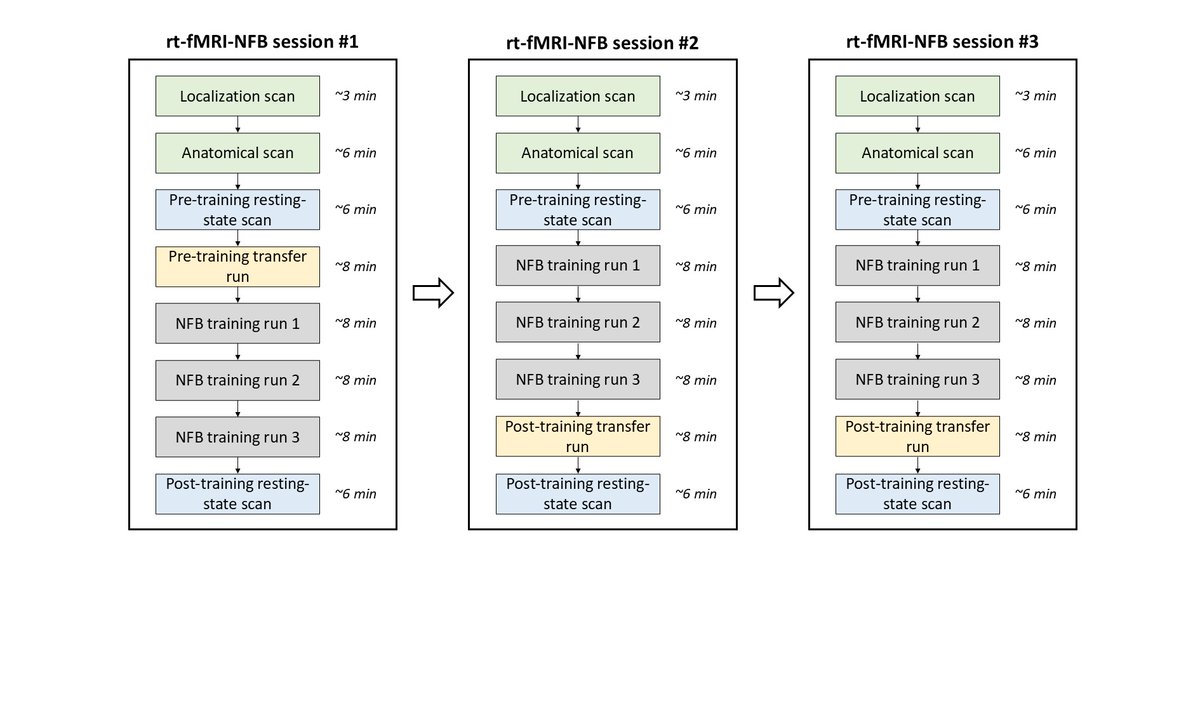
presenting a network-level analysis (using ICA) of DMN and CEN connectivity during fMRI-neurofeedback in PTSD
https://t.co/XXxXdv0cVr
🚨 New paper out in BMC Psychiatry!
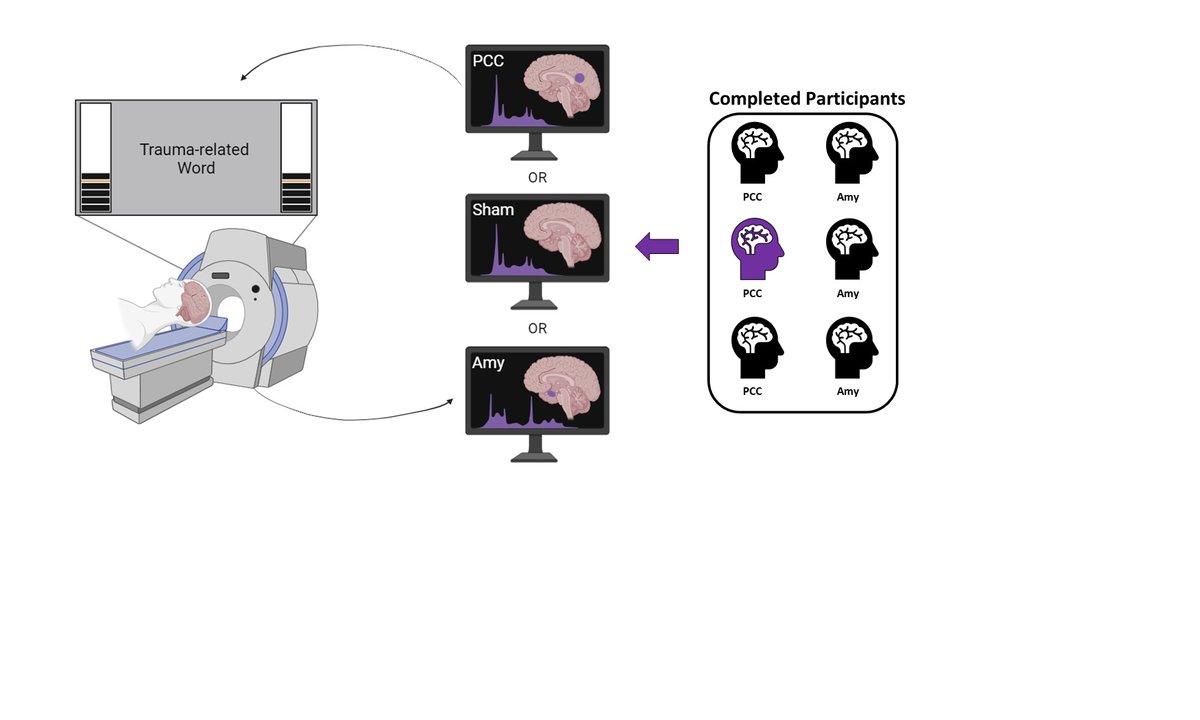
We present the protocol for a randomized, double-blind trial testing PCC- vs. amygdala-targeted fMRI neurofeedback for PTSD.
🧠 Read the open-access protocol here:
https://t.co/KYWa4U43yK
#PTSD#Neurofeedback#fMRI#ClinicalTrials#Trauma
Extremely excited to announce that I'll be premiering my new film, produced in collaboration with the @wakingup app, at the @PsychedelicSci Conference in Denver this week!
It's called "Unraveling the Dream: Psychedelics, Meditation, and the Brain"
Thrilled to share my first paper with @MatthewSacchet and the Meditation Research Program, along with collaborators @PAMcConnellPhD@mar_estarellas.
Grateful to work with such a fantastic team!
Excited for much more on advancing a (neuro)scientific understanding of meditation!
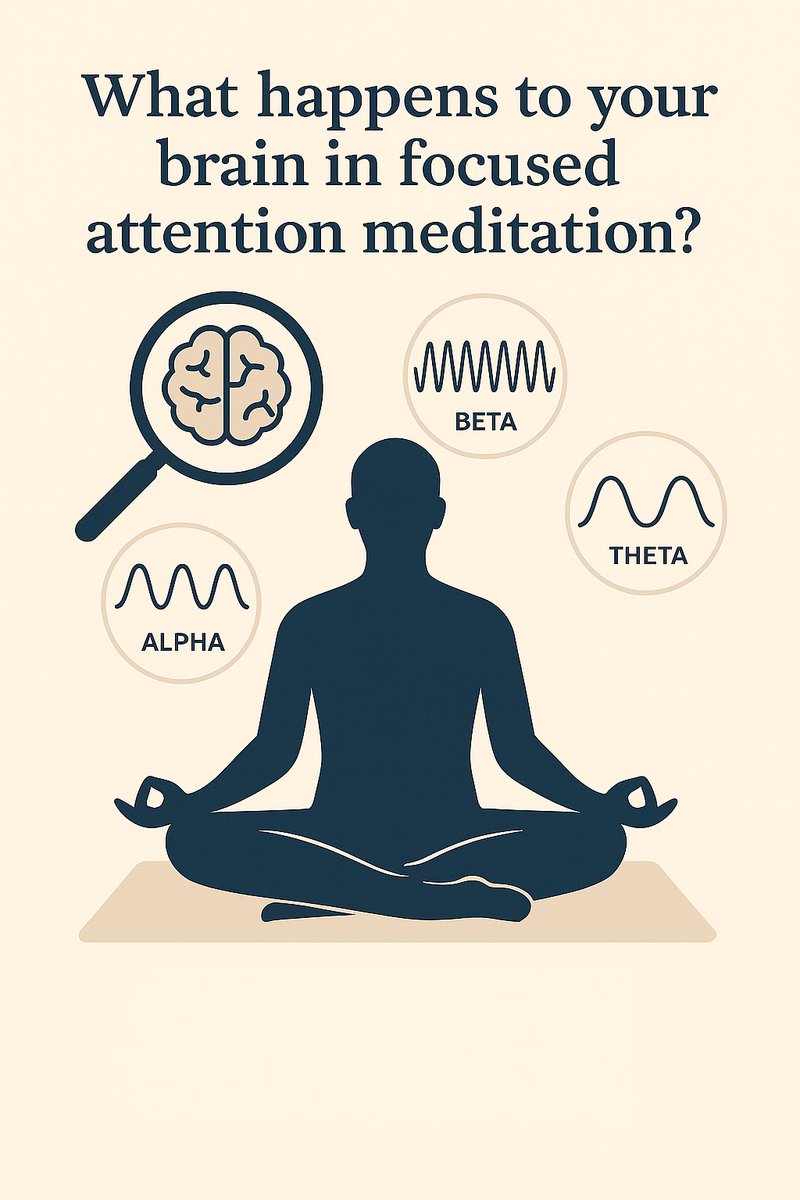
What does neuroscience really know about focused attention meditation? And what’s next?
Focused attention meditation (FA) is a class of practice involving intentionally directing attention to a single object, such as the breath or bodily sensations, while consistently bringing your focus back whenever distractions arise. FA is both a beginner-friendly entry point into meditation and a prerequisite for accessing potentially transformative concentrative absorption states (e.g., forms of advanced concentrative absorption practice such as what are sometimes called the jhanas) and other altered states of consciousness.
But why is this practice so central to meditation traditions globally, and what precisely changes within our brains during FA?
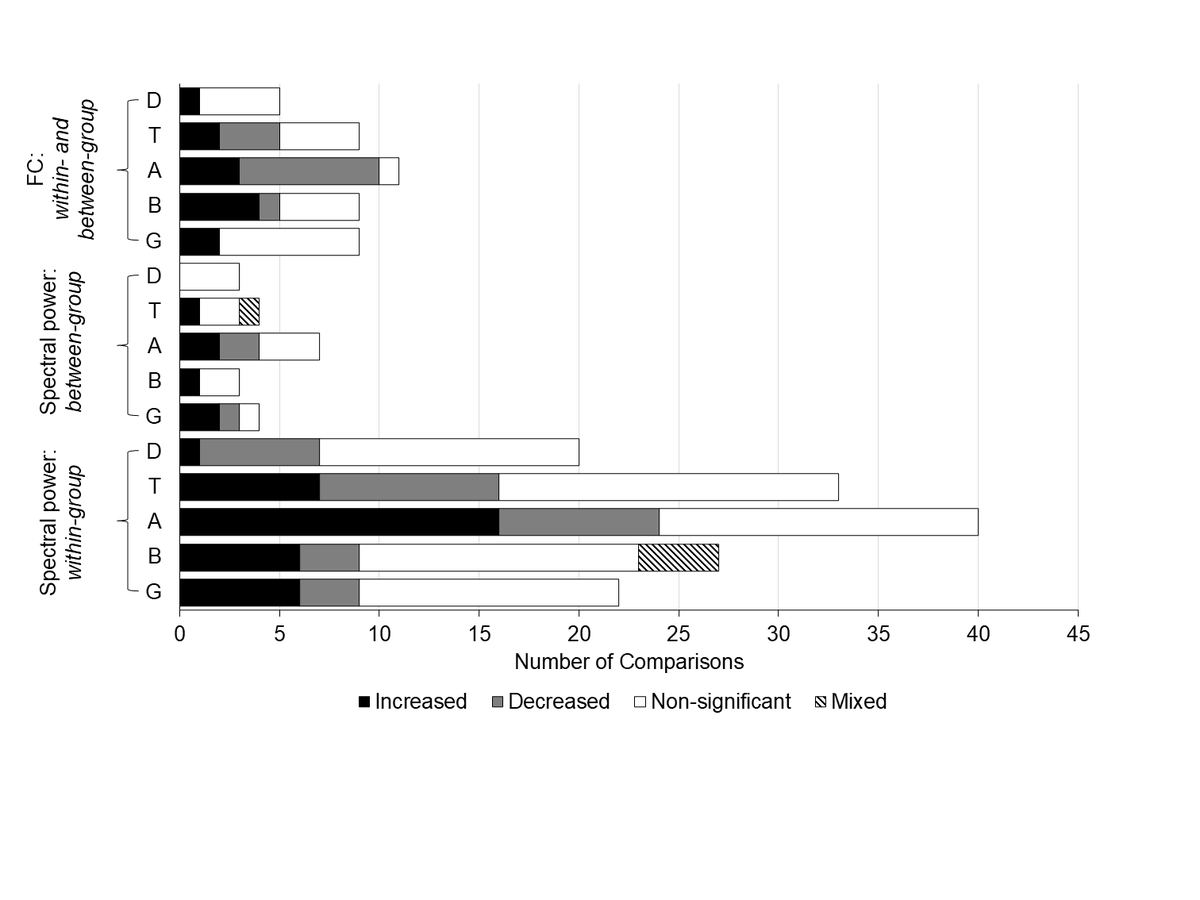
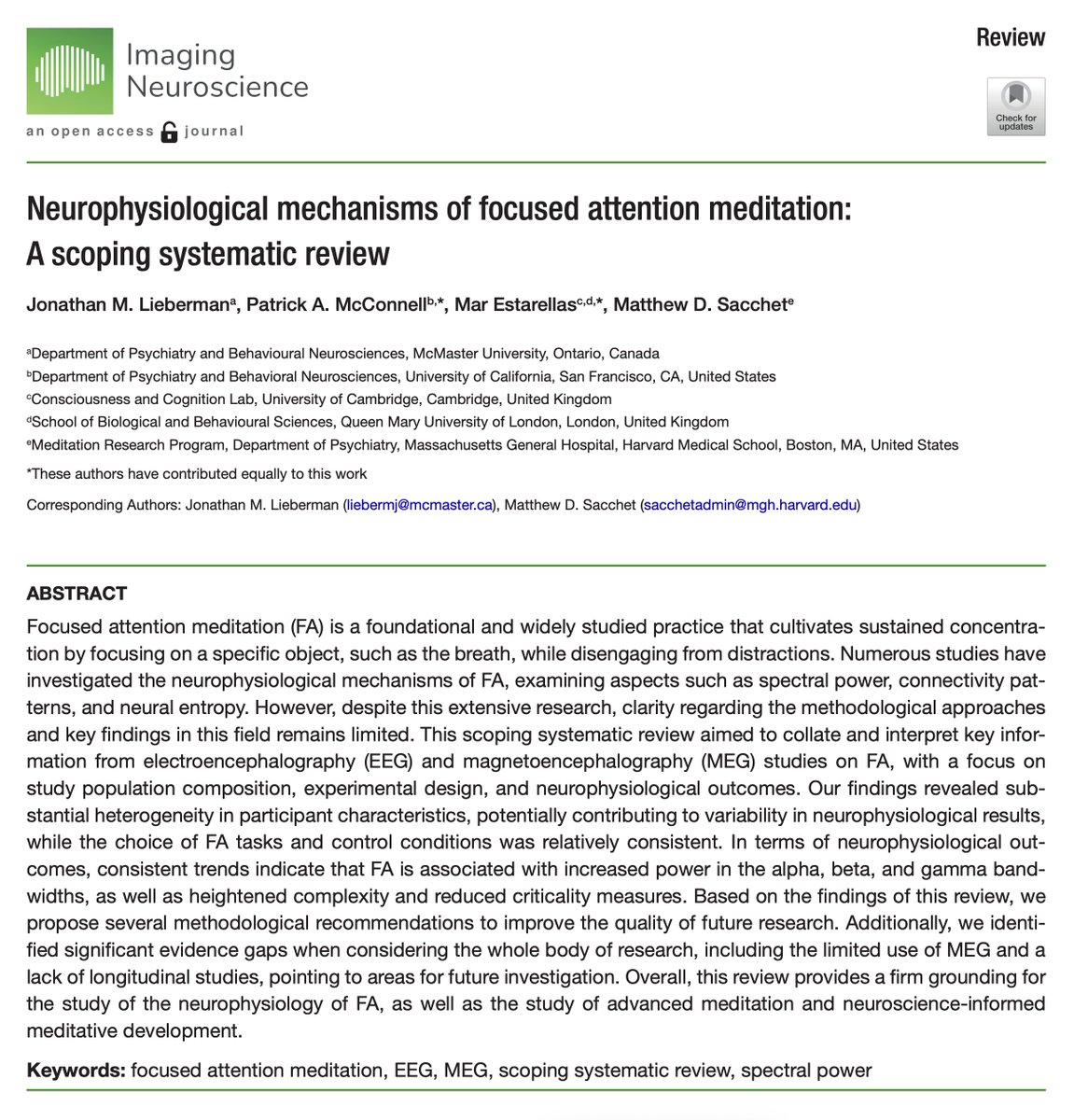
In our recent scoping systematic review exploring the neurophysiology of FA, first author Jon Lieberman @jon__lieberman , Patrick McConnell @PAMcConnellPhD , Mar Estarellas García @mar_estarellas , and I systematically reviewed existing electroencephalography (EEG) and magnetoencephalography (MEG) studies. Among other things, we discovered that FA is related to:
**Increases in alpha, beta, and gamma brainwaves—associated with heightened concentration and perception, mental clarity and alertness, flow states, and more.
**Increased neural complexity and reduced criticality, potentially reflecting improved cognitive flexibility and adaptive thinking.
**Activation in brain networks (default mode, salience, executive control) involved in attentional control, interoception (internal body awareness), and managing distractions.
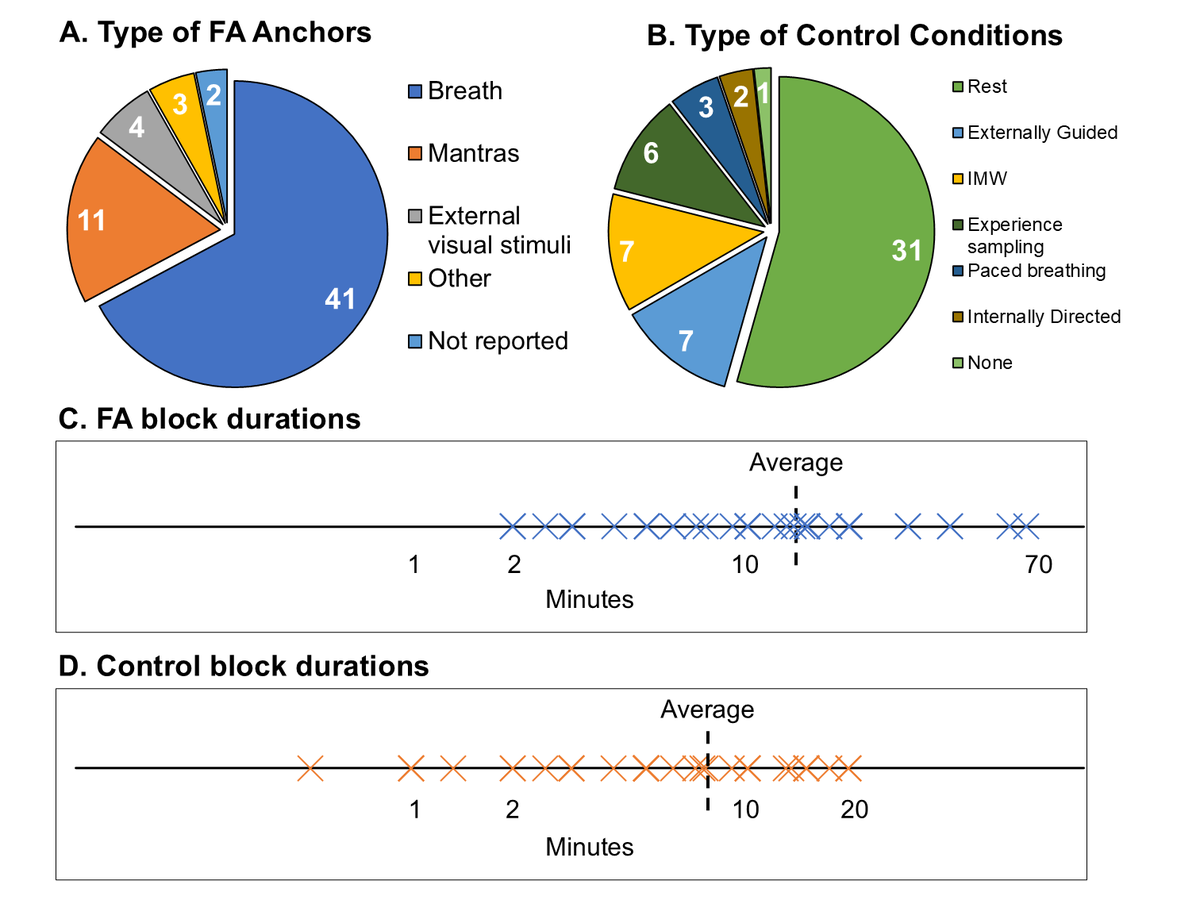
We also identified methodological gaps and inconsistencies, including variability in demographics, as well as limited use of standardized methodologies and analytical techniques, which currently hinder our ability to pinpoint clear and definitive neurophysiological markers specific to FA.
To address these gaps, we recommend future research focus on:
**Developing a standardized approach that outlines best practices in experimental design and reporting of meditation studies, including ensuring a careful selection of appropriate control conditions
**Including more female participants in research studies
**Using experience-based classifications of meditation techniques and exploring a broader range of meditation anchors
**Broader use of MEG along with more longitudinal studies, especially those involving intensive meditation retreats.
This science promises to inform more effective and engaging education, guidance, and support for those curious about getting the most out of the powerful practice of focused attention meditation.
May this work benefit many 🙏
The full PDF can be found here on our website, and from the publisher:
https://t.co/8dtqrtlnSR
https://t.co/zyd8s6ux5B
https://t.co/lqwVBMewlM
What does neuroscience really know about focused attention meditation? And what’s next?
Focused attention meditation (FA) is a class of practice involving intentionally directing attention to a single object, such as the breath or bodily sensations, while consistently bringing your focus back whenever distractions arise. FA is both a beginner-friendly entry point into meditation and a prerequisite for accessing potentially transformative concentrative absorption states (e.g., forms of advanced concentrative absorption practice such as what are sometimes called the jhanas) and other altered states of consciousness.
But why is this practice so central to meditation traditions globally, and what precisely changes within our brains during FA?
In our recent scoping systematic review exploring the neurophysiology of FA, first author Jon Lieberman @jon__lieberman , Patrick McConnell @PAMcConnellPhD , Mar Estarellas García @mar_estarellas , and I systematically reviewed existing electroencephalography (EEG) and magnetoencephalography (MEG) studies. Among other things, we discovered that FA is related to:
**Increases in alpha, beta, and gamma brainwaves—associated with heightened concentration and perception, mental clarity and alertness, flow states, and more.
**Increased neural complexity and reduced criticality, potentially reflecting improved cognitive flexibility and adaptive thinking.
**Activation in brain networks (default mode, salience, executive control) involved in attentional control, interoception (internal body awareness), and managing distractions.
We also identified methodological gaps and inconsistencies, including variability in demographics, as well as limited use of standardized methodologies and analytical techniques, which currently hinder our ability to pinpoint clear and definitive neurophysiological markers specific to FA.
To address these gaps, we recommend future research focus on:
**Developing a standardized approach that outlines best practices in experimental design and reporting of meditation studies, including ensuring a careful selection of appropriate control conditions
**Including more female participants in research studies
**Using experience-based classifications of meditation techniques and exploring a broader range of meditation anchors
**Broader use of MEG along with more longitudinal studies, especially those involving intensive meditation retreats.
This science promises to inform more effective and engaging education, guidance, and support for those curious about getting the most out of the powerful practice of focused attention meditation.
May this work benefit many 🙏
The full PDF can be found here on our website, and from the publisher:
https://t.co/8dtqrtlnSR
https://t.co/zyd8s6ux5B
https://t.co/lqwVBMewlM
I'm hiring a program manager/research assistant to start this summer to support our multidisciplinary work on advanced meditation, with a focus on neuroscience, at
@HarvardMed / @MGHPsychiatry / @MGHMartinos
For details
https://t.co/O441mHjZG9
Join us to contribute to bleeding-edge science of advanced meditation
Likes, reposts, and sharing appreciated!
🧠🧘♀️🔬
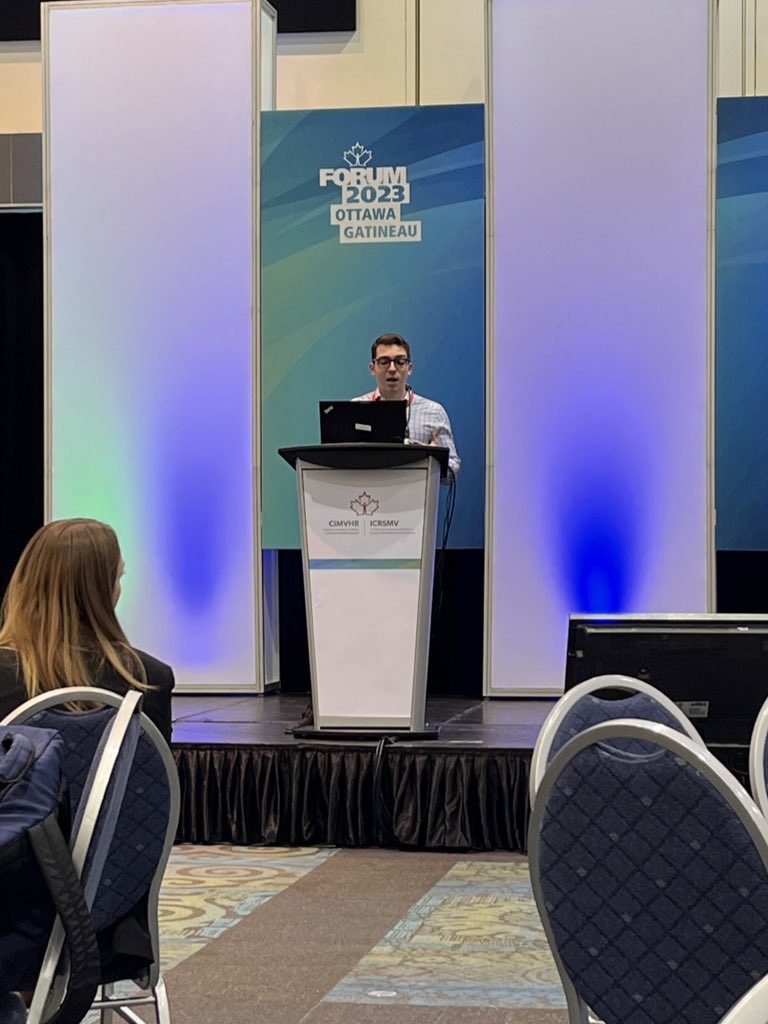
Jonathan Lieberman, BSc, PhD student in Neuroscience during his podium presentation: Exploring the impact of biological sex on intrinsic connectivity networks in PTSD: A data-driven approach @CIMVHR_ICRSMV#CIMVHRForum@jon__lieberman
Add “Exploring the impact of biological sex on intrinsic connectivity networks in PTSD: A data-driven approach” to your #CIMVHRForum 2024 agenda! This presentation by @jon__lieberman examines biological sex as a consideration in treating PTSD. More info: https://t.co/KkN3VpKA6f
Our new paper in World Psychiatry, the highest impact psychiatry journal, and among the highest in all of medicine:
“Modulating self-referential processing through meditation and psychedelics: is scientific investigation of self-transcendence clinically relevant?”
🧠🧘♀️🔬
🧵
Delighted to announce the first intensive study of brain connectivity of the advanced meditation/meditative endpoint related to 'enlightenment' called cessation/nirodha
Now out in Brain Topology!
🔬🧘♀️🧠✨
🧵
“Neurophenomenological Investigation of Mindfulness Meditation ...
This research was published in Frontiers in Neuroscience as part of the special issue, "Translational Aspects of Neuroimaging". Thanks to @neuroccino,@amhaugg for the opportunity to take part!
I'm very excited to share the latest neurofeedback research by our group. In this work, we compare clinical and neural effects between two fMRI neurofeedback brain targets (amygdala, PCC) in PTSD.
https://t.co/CArN2fvCDI
"You should not be afraid of someone who has a library and reads many books; you should fear someone who has only one book; and he considers it sacred, but he has never read it."
– Nietzsche
Jonathan Lieberman, étudiant au doctorat en neurosciences à l'Université McMaster, présente les effets différentiels du neurofeedback ciblé sur le cortex cingulaire postérieur et l'amygdale sur l'activation neuronale liée au TSPT à l'#ICRSMV2023. @CIMVHR_ICRSMV