Curious about what we can do to help non-experts interact intelligently with AI systems?
🚨New paper alert: "Explainable AI Helps Bridge the AI Skills Gap: Evidence from a Large Bank" 🚨
Read about my field study w/ @selina_carter_
https://t.co/OC9D4i2Gou
@ChapmanArgyros
A good canary in the coal mine for AI-caused job loss will be call centers. We're currently projecting ~2.75M call center jobs in the US in 2026. In 2016 it was ~2.63M. The global call center market size has grown ~35% in that time period (from $298B to $405B). Peak employment was 2019 at ~2.98M.
When we see a -50% employment drop in this sector you can get ready for broad disruption across the economy.
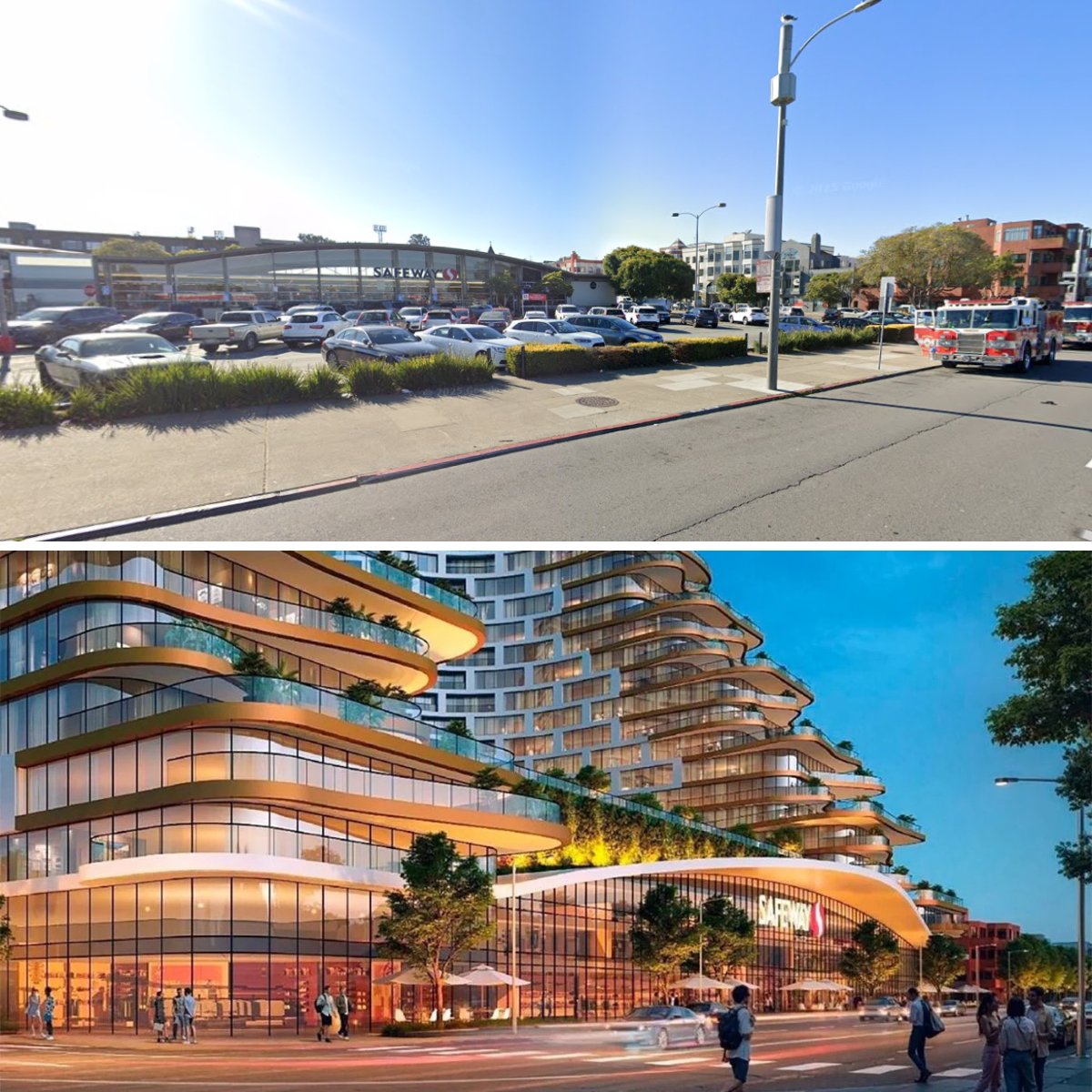
A proposal to build 790 apartments on the site of a Safeway and surface parking lot in San Francisco’s Marina district would more than double the size of the grocery store. Naturally, the mayor, the district supervisor, and many nearby residents oppose it.
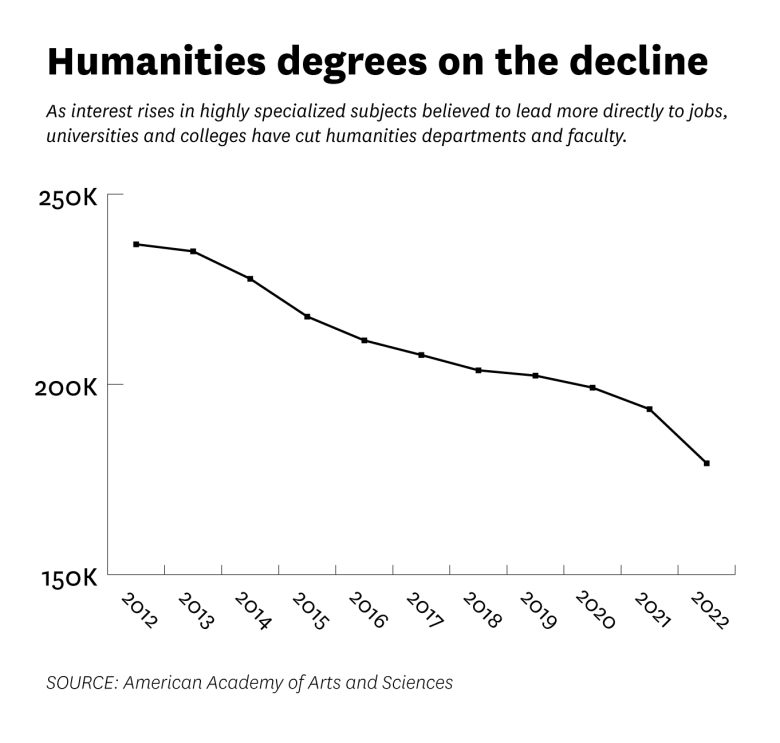
@DKThomp There's been a compositional shift in who is getting film degrees in 2000 versus 2026. I don't think we should ascribe all of this shift to reductions in attention.
I doubt students at USC or UCLA would have the same issue. Students there went to these schools to study film.
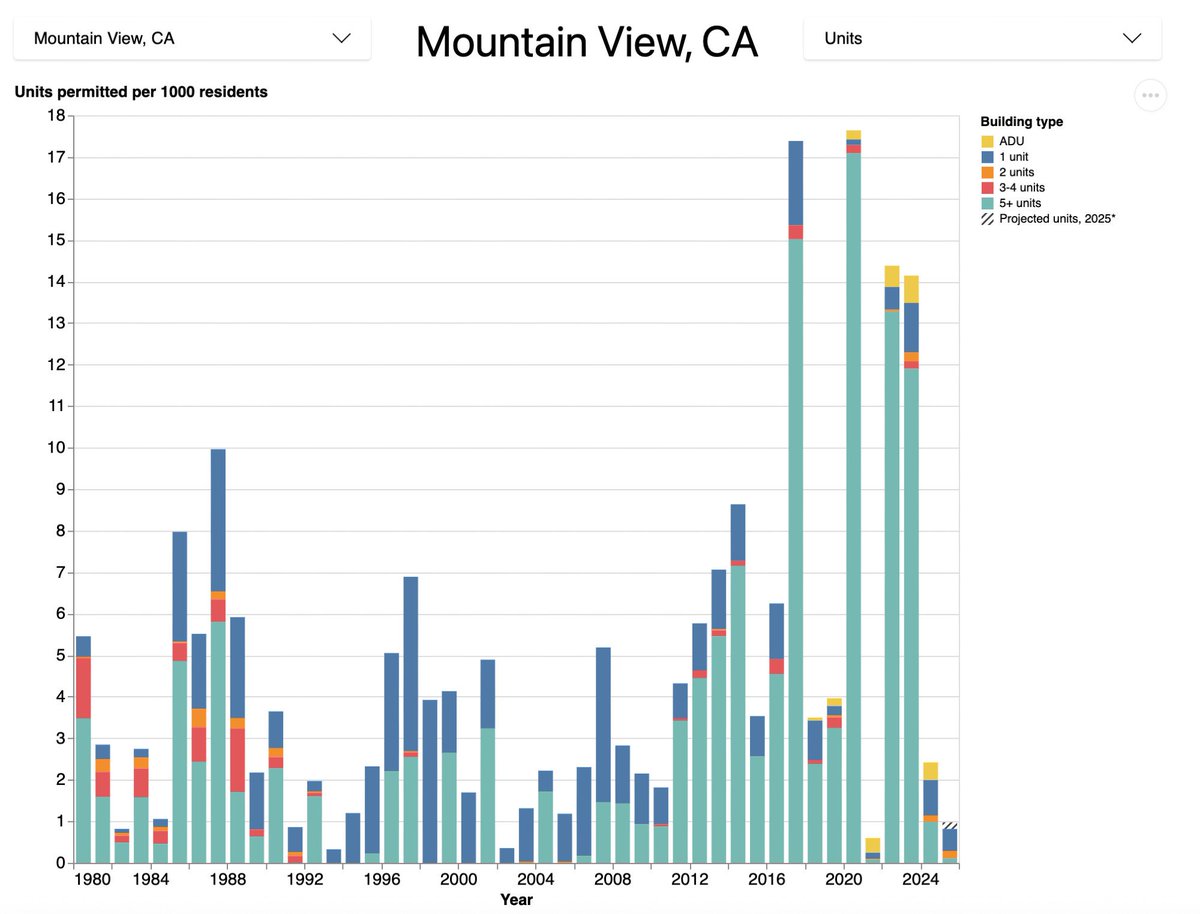
There has been a lot of warranted discourse about California's pro-housing laws underperforming, but in cities where YIMBYs have organized, shifted local politics, and won elections, the last 10 years have seen an absolute sea change in permitting.
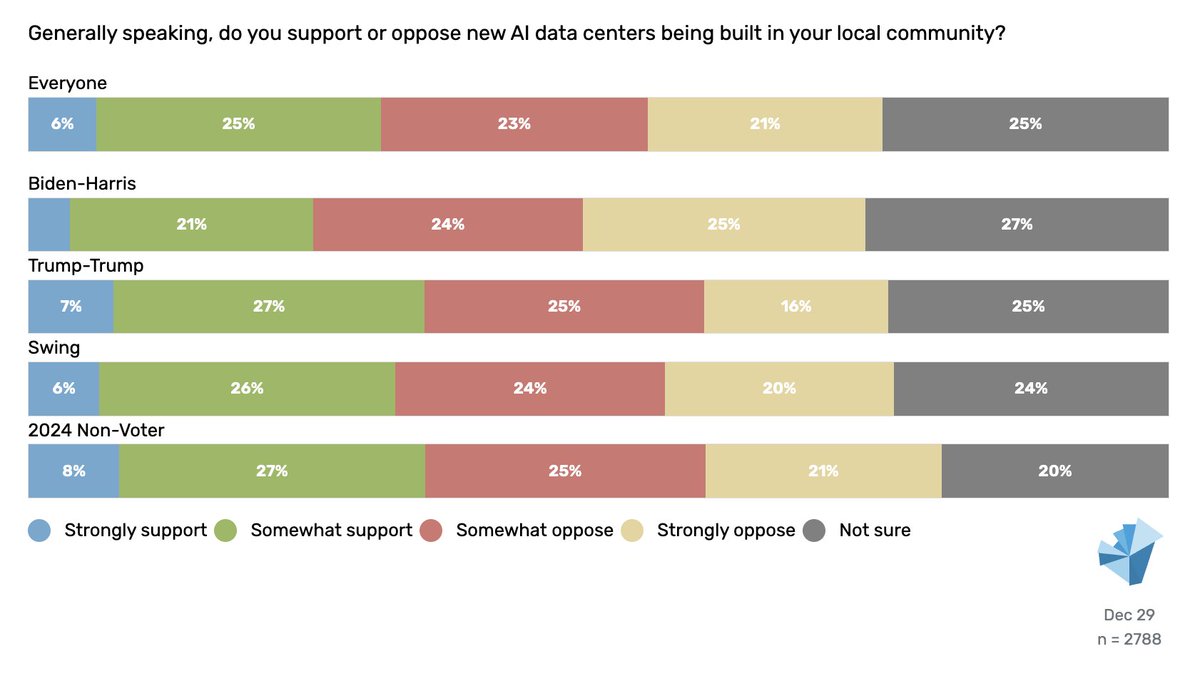
Do you support or oppose new AI data centers being built in your local community?
31% support, 44% oppose
Would you support or oppose new data centers if they lowered your property taxes by 10%?
59% support 18% oppose
@sebkrier Would be great if you can highlight some of these workshops. I've found the ones happening in academia are great at telling us what has happened - see any of the RCTs on adding LLMs in the workplace - but their ability to tell us what will happen relies on unrealistic assumptions
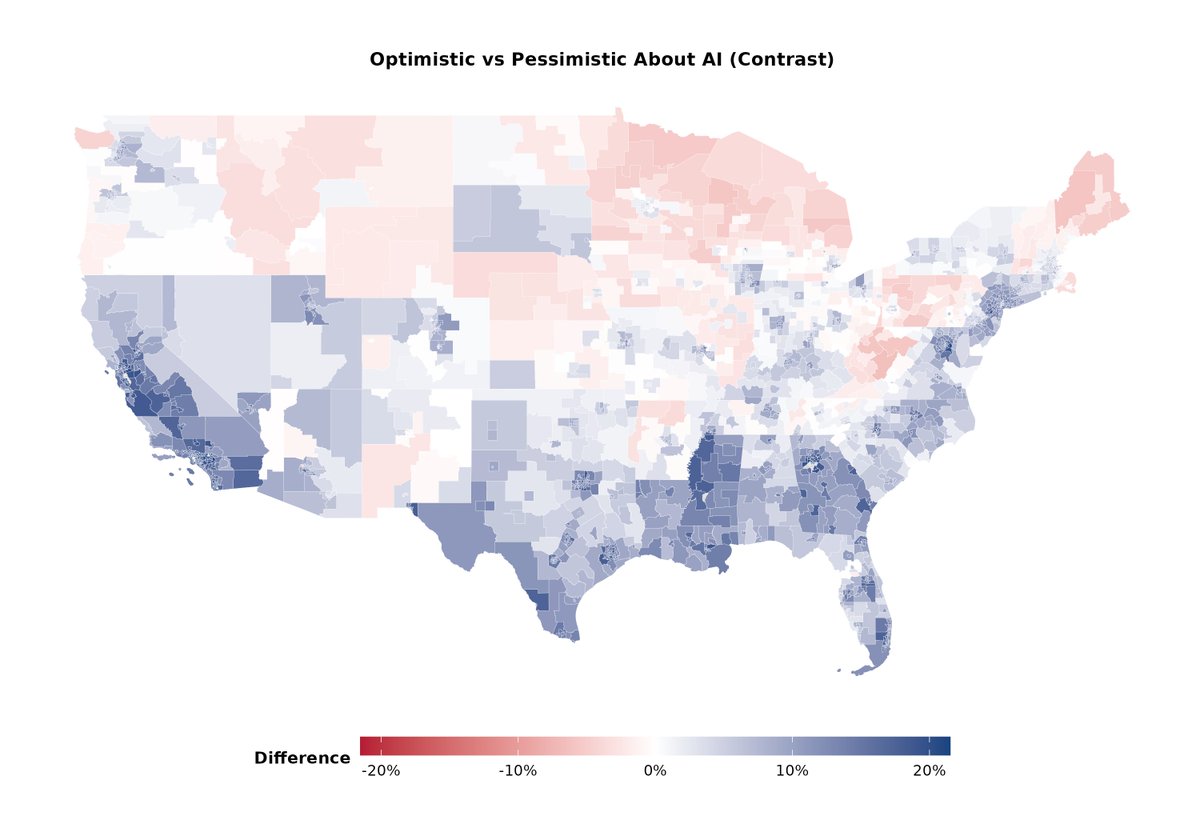
When you ask Americans whether they are optimistic or pessimistic about AI, optimism beats pessimism by ~5 points.
The primary fault lines are age, gender, and race - young people, men, and racial minorities are the most optimistic about AI.
N=30,900 , fielded 12/1 to 12/10
Christians in Bethlehem 1922-2025
1922-1945
The earliest data point is taken directly the British Mandate census from ‘22 for the town, which shows 6,658 residents with 5,838 Christians, 818 Muslims, so 87.7% Christian (1). By ‘45 the same Mandate census show a drop to 73% with 8,820 inhabitants: 6,430 Christians and 2,370 Muslims (2).
1967-1995
Immediately after the 1967 Six-Day War, Israel conducted a full census with the ICBS supervising and publishing this as “Census of Population 1967: West Bank of Jordan, Gaza Strip, North Sinai and Golan Heights”, in several volumes, with detailed tabulations by locality, religion, sex, and other variables. The Levy Economics Institute digitized these volumes which constitute the first modern census reports, (4). For an easily accessible summation for Bethlehem, the The Jewish Virtual Library’s Bethlehem page states: “In the 1967 census taken by Israel authorities, the town of Bethlehem proper numbered 14,439 inhabitants, its 7,790 Muslim inhabitants represented 53.9% of the population, while the Christians of various denominations numbered 6,231 or 46.1%.” (4,5)
The number of Christians in Bethlehem enjoyed a period of relative stability between ‘67 and ‘95, when under Oslo II, against local Christian pleas to Rabin’s government opposing the move, the area was handed over to Palestinian Authority control. PCBS 1997 census gives Bethlehem city between 21.7–21.9k people but no religion based breakdown; PCPSR/Philos and church sources converge on “about 40% Christian in 1998” (6,7).
This implies c. 8.5–9k Christians, i.e. low-40s percent. For 1995 I would put the number at closer to the 45% mark on overall trend, but this is not a precise figure and I have to dig further to see if this portion of my graph and claim can be better anchored. What is repeatedly cited is 40% by 1997-8 across multiple Christian and Palestinian sources. Still, even at 40% the number of Christians translates to about 8,800, an increase from 1967’s 6,231.
Note that PCBS uses “urban Bethlehem” for the tri-cluster of Bethlehem, Beit Jala and Beit Sahour plus their municipal boundaries but disaggregates from rural villages and the three refugee camps, Aida, Azza, and Dheisheh. Later ARIJ work cites the 1997 census, giving the “urban Bethlehem” population as 44,880, which is just the sum of those three municipalities in the 1997 tables. But in the Bethlehem-row of that locality table PCBS records a population of just under 22,000 as cited above.
2007-2025
The 2007 data point rests primarily on the PCPSR/Philos reconstruction of Christian demography in the occupied Palestinian territories. Using PCBS census data and its own fieldwork with local councils and churches, PCPSR notes that Bethlehem’s Christian share fell to 28% by 2007, with Christians declining to only 1.2% of the total Palestinian population but remaining concentrated in Bethlehem and a few other towns.
The National Catholic Reporter piece from December 2016 quotes mayor Vera Baboun that “by 2016, the Christian population dipped to just 12 percent” in Bethlehem and its surrounding villages and that “today there are just 11,000 Christians” in Bethlehem. Friends of the Holy Land’s 2018 gathering report states 18% for Bethlehem’s Christian share. Lee’s AIJAC article in early 2019 uses a comparable framing, noting that since the PA took over the city in 1995 “the Christian percentage of the city’s population has plummeted from 40 per cent to 12 per cent,” and that the city’s population of c. 27,000 in 2017 was 23% higher than in 1998.
A Reuters 2024 Christmas piece about Bethlehem picks up those same threads, stating that “as of a 2017 census, the overall population of Bethlehem was 215,514 with only 23,000 Christians among them,” and infers a Christian share “around 10%” in Bethlehem city. PCBS’s 2021 projected mid-year population tables by locality have Bethlehem total city pop’n rising from 28,343 in 2017 to c. 33k by 2025.