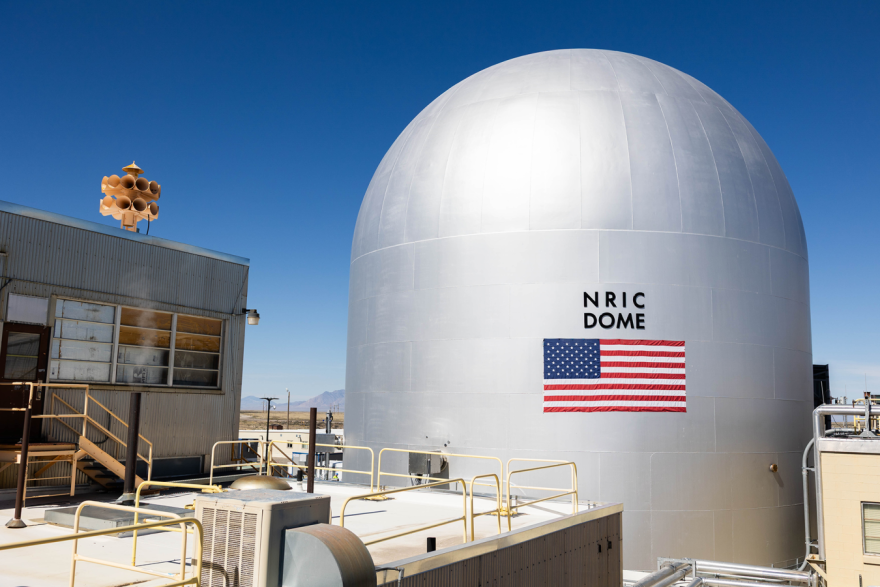
BREAKING: @valaratomics has become the first startup in history to make nuclear electricity, powering an @nvidia Blackwell chip through its Ward 250 nuclear reactor. This marks the first time advanced nuclear power has powered AI.
🚨 Live Stream Notice 🚨
Tune in tonight at 4PM PT / 7PM ET for a live stream of the Ward 250 SCRAM and Loss of Forced Coolant safety demonstration! The live stream will take place on this account.
We hope you can tune in for this important safety demonstration!
Pretty incredible that America asked for new nuclear reactors to be turned on by July 4th, 2026, backed in May 2025.
It looks like we'll have several companies achieve this.
The American people are amazing to heed the call.
A nuclear renaissance is upon us.
Ward250 & the Reactor Pilot Program are proof that Americans can still do hard things.
We are able to rally around a noble cause, reinvent ourselves, and deliver the impossible.
This mission was far bigger than Valar or nuclear power. American is back in a big way.
Good morning.
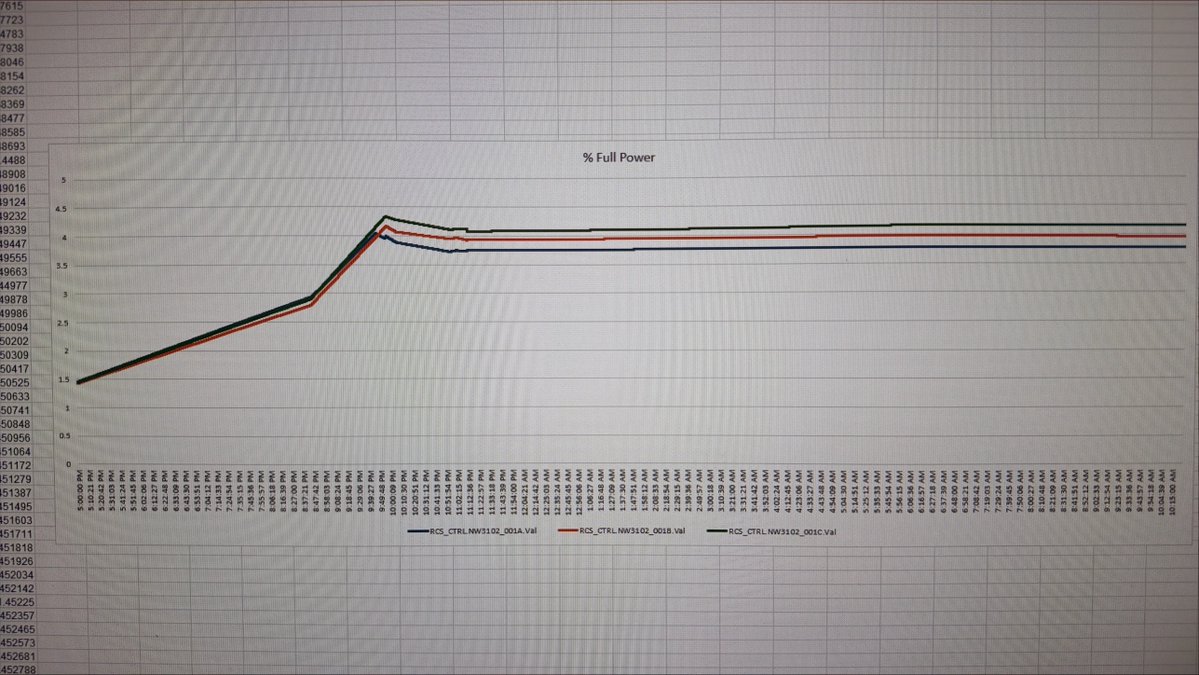
Last night at 8:51pm Mountain Time, the Valar Atomics Nuclear Operations team brought Ward 250 to 10kW thermal output. We held this power level throughout the night.
This is another historic milestone from the Valar team, marking first nuclear power by a startup.
Yesterday I told you about Starfall, and how bringing orbital material to Earth is critical to the post-terrestrial economy.
Today, I'm going to talk about the Valar reactor.
In the future, we build things in space because space has infinity free power. Build a solar panel once and milk it forever.
Elon Musk is trying to sell you solar panels on Earth so he can develop them for space. Solar panels are awesome in space.
But they suck on Earth.
What's awesome on Earth is fissionable material. These special rocks just radiate free power. And I don't mean a little bit of free power. I mean a huge amount.
Like, you may think your modern automobile is pretty cool because it gets 30 miles to the gallon of gasoline. But a gallon of gasoline weighs 6 pounds.
If you could run your car on HALEU nuclear fuel instead, then those same six pounds would drive you 11.3 million miles.
You know, just in case you wanted to drive to the Apollo landing site and back.
23 times.
But that's only 17 years of continuous driving, so you should probably put that six pounds of fuel in your Tesla instead. That way you could drive to Mars. In 69 years.
At the end of your journey, you would have a bunch of highly dangerous radioactive waste, of course... six whole pounds of it.
You would have to dispose of it by taking extreme precautions, such as handling it with gloves. And burying it one meter deep. In a coffee can.
Do I have your attention yet?
Now, the spicy rocks are really great because they're super spicy, but the traditional way of using them involves building a great big power plant that weighs about hundreds of thousands of tons, has to be built on a full square mile of wherever you want your power to be, and, for legal reasons, needs to be covered in the thick layer of federal bureaucrats to make sure things cost more, take longer, and generally suck.
So that's where this dude, @isaiah_p_taylor, comes in.
And he says "Wait a minute... if the spicy rocks are so goddamned spicy... why do we need a whole bunch of them in a huge containment vessel surrounded by acres of power plant?"
That's old thinking. Based on our preconceived notions of what a power plant is, which we got from burning coal and oil and other stuff that can't bring you to Mars with one coffee can.
Why not build a little tiny power plant? Like, a power plant the size of a train car? A power plant that you can load onto a train car, or a the back of a semi-rig, take it wherever you need it, and just set it down right there?
Each one holds a wee bit more than that 6 pound coffee can. Like, maybe 90 of those. That'll get your Tesla to Neptune, if you have 4000 years to spare.
Of course, that's not San Onofre. It won't power New York City by itself.
But that's what the word "modular" means. Bring as many as you need. Need one? Bring one. Need ten, bring ten.
If you actually do need to power New York City, bring 2000.
And 2000 isn't an unrealistic number. Because that's also what the word "modular" means.
Standardized.
Interchangeable.
Perfect the process with one, and then churn them out systematically. At scale.
No individualized custom site design. No years of construction. No environmental impact study committees. No thick layer of bureaucrats.
One design. One set of safety standards and protocols. One approval process. Then you crank them out forever.
The concept is already proven. How do you think the Navy gets from San Diego to the Strait of Hormuz? Immigrant galley slaves? Sailcloth?
And that's exactly where you get your workforce of modular plant operators... Navy vets who were running submarine reactors when they were twenty-two years old.
Except you can put these on a construction site because they're not a big box of weapons-grade plutonium. They're a barrel of low-grade fuel you have to handle with... gloves.
In the Robert Heinlein future, you run your factories in space with solar panels, because don't even get me started on how much power the sun gets from six pounds of hydrogen.
But on Earth, you run your air conditioner like this.
Valar Atomics is on track to make power before July 4th in our Ward250 reactor. But before we do that, I asked the team to look back at Project Nova and reflect on what we learned.
We also got some footage of Nova declassified and are sharing it here for the first time. Enjoy!
I would like to offer to pay the salaries of TSA personnel during this funding impasse that is negatively affecting the lives of so many Americans at airports throughout the country
Let's unpack this..
What if the White House has no intention of reopening the Strait of Hormuz?
What if this war is really about ships & tariffs?
I had a long discussion with senior DOE official yesterday on background. I can’t share any details but it’s clear everyone’s Strait of Hormuz calculus is wrong.
We need to go back to the drawing boards.
That's it. That's the tweet. Now a hypothetical 🧵 with my personal thoughts.
"If Valar doesn't do this, China and Russia will be the world's nuclear energy source."
Experts have doubted @valaratomics CEO Isaiah Taylor (@isaiah_p_taylor) every step of the way.
He says every future $1 trillion company should seem a little crazy -- and that no other nuclear startup is moving fast enough to solve our energy needs 🏭
On our new episode of The Upstarts Podcast, Isaiah shares why he founded Valar as his 'life's work', why other well-funded startups have failed in nuclear, and his Upstart Moment on the road to raising $150M for new-look energy campuses called “gigasites" 🚧
“Safety is non-negotiable, but also safe and slow are not the same thing,” Taylor tells @UpstartsMediaCo.
A big thanks to our podcast partner @mercury for amplifying these Upstarts stories 💪
Enjoy!
https://t.co/UQkWdAkk08
There were many lessons we learned through COVID. Among them was the vaporous nature of streaming services. The orange juice and jammies had no lasting legacy after only a few months following the Church shutdowns. Everyone went their separate ways: children to their devices, parents to their devices...actually, they traded one device for another.
COVID exposed our digital discipleship. When the world shut down, many discovered their “community” was little more than a pixelated illusion. The online liturgies, which include doomscrolling, tribal rage, fear-feeding algorithms, discipled people faster than pastors could pastor them. COVID didn’t divide the church; it revealed who had already been shaped by avatars instead of elders.
The pandemic proved the church must be stubbornly local and stubbornly incarnational. Bodies matter. Tables matter. Psalms matter. You can’t baptize through Wi-Fi or build courage through broadband. The online world made spectators; Christ calls worshipers. If the last few years taught us anything, it’s this: the Church must keep choosing flesh-and-blood allegiances over fantasy-ecclesiology.
Edwin Friedman is one of the best authors to read on leadership. In several places, he makes the point that in order to lead well, a leader has to not only raise his own threshold for pain, but his willingness to endure someone else’s pain as well. This is why empathy can be so destructive to leadership - an overly empathetic leader will never be able to say hard things that need to be said, or make a hard decision that might offend others, because he simply cannot stand to see others in pain. A leader has to see the mission, the big picture, the goal, and recognize there is no way to get there without going through pain himself, and allowing (or even causing) pain in the lives of others around him. Nothing good comes apart from sacrifice, and sacrifice always involves some measure of pain. A leader has to do hard things himself; he also has to get others to do hard things, or put them through hard things. There is a kind of softness that sabotages real leadership.
Obviously, we want to avoid pain in our own lives and the lives of others when possible. In general, we know we should relieve suffering, not cause it. But sometimes doing the right thing is going to be painful for us and for others. The old cliche, “no pain, no gain,” is true, in both the physical realm and the spiritual realm. No goal can be fulfilled, no mission can be accomplished, apart from a process that includes pain.
A pastor who will not inflict pain by saying hard things from the Word of God to his congregation is failing to lead and shepherd them well. Preaching the Word requires teaching truths that have an edge, that are sharp and angular. Preaching cuts. Preaching can be painful - for the preacher and the hearer. A session that refuses to excommunicate an apostate member because it will hurt and offend his other family members is gripped more by fear of man than fear of God. Such a session has a failure of nerve. Empathy prevents faithfulness. A father who will not spank his child because he cannot bring himself to inflict pain actually hates his child, as Proverbs says, and is setting his child up for failure. His child needs to learn to associate sin with pain. He needs to learn the way of the transgressor is hard. The rod does that like nothing else. A good father inflicts pain so he can raise a good son. A good father can tell his son “no” and mean it. A coach who will not inflict the pain of difficult conditioning drills on his team is setting them up for failure down the road. He will never get the most out of his players because he prioritized ease over winning. He is not training his team to maximize their potential and he is not holding them accountable. Comfort in the present makes success in the future impossible. Pain in the present makes glory in the future possible. There is no other way.
God inflicts pain in the lives of children to discipline them for their good. God sometimes allows his children to cry out in pain for a long time before finally answering - and this is for our ultimate good. God is not controlled by empathy, but by his purpose to make us like his Son, and that requires our suffering. God is not cold-hearted, but neither is he a celestial therapist or cosmic Santa Claus. He does not practice “gentle parenting” and he does not coddle his children. There is no growth or maturation without discipline, and discipline is always painful (Hebrews 12). Everything in life worth having requires work, and work is painful. Everything in life worth having requires sacrifice, and sacrifice is painful. Our heavenly Father makes our lives like an obstacle course, not because he is a sadist but because he loves us and wants what is best for us in the long run. God is playing the long game. He wants his children to be strong, wise, and tough. Discipline is a form of love - tough love, as it’s been called.
Bring this back to leadership. Leadership requires a high pain threshold. A true leader sees that pain is part of the process. Pain in the present can lead to glory in the future. If you simply cannot withstand pain in your own life, you cannot grow, and if you cannot endure seeing others in pain, you cannot lead.