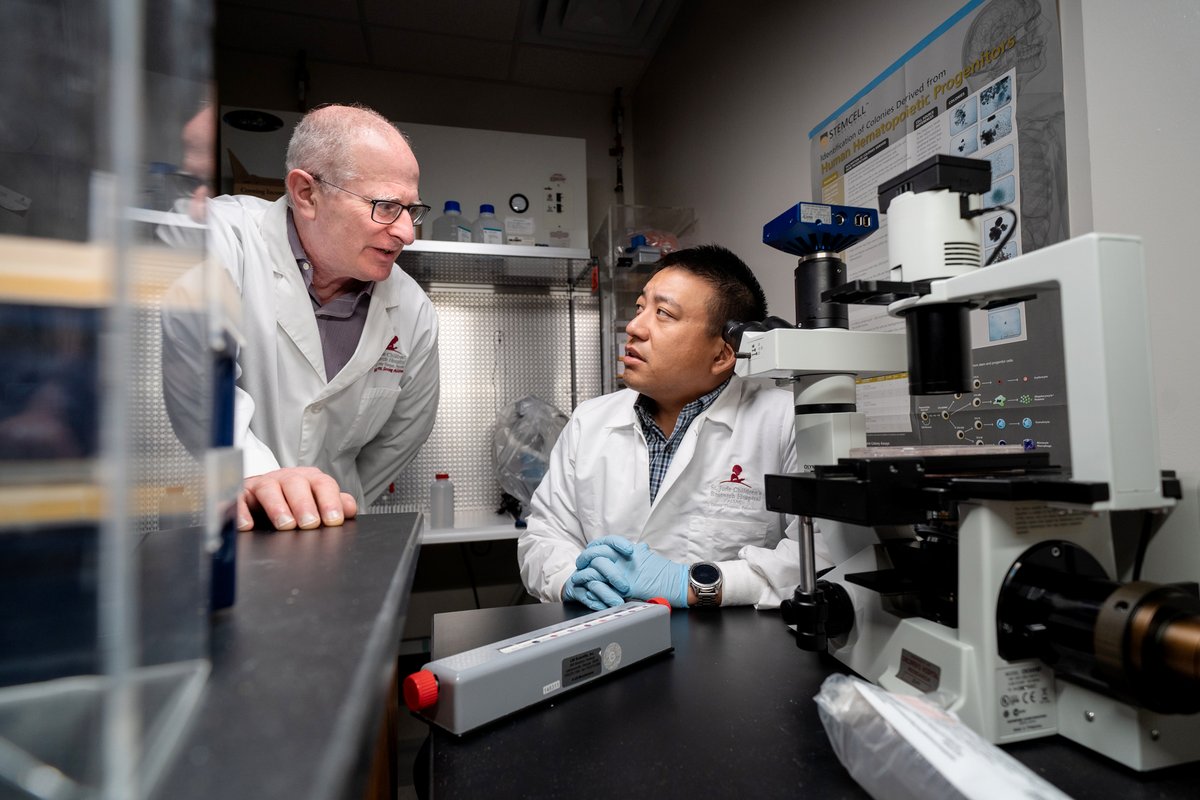
Great work led by Thiyagaraj Mayuranathan, @Gregory_Newby in collaboration with @davidrliu and Mitch Weiss anr my TGEn team: @rmlevine636, @KalinMayberry, Yoonjeong Jang, Thiyagaraj Mayuranathan, @nnikitharao, Erin Dempsey. You can access the article here: https://t.co/csNhTRq81V
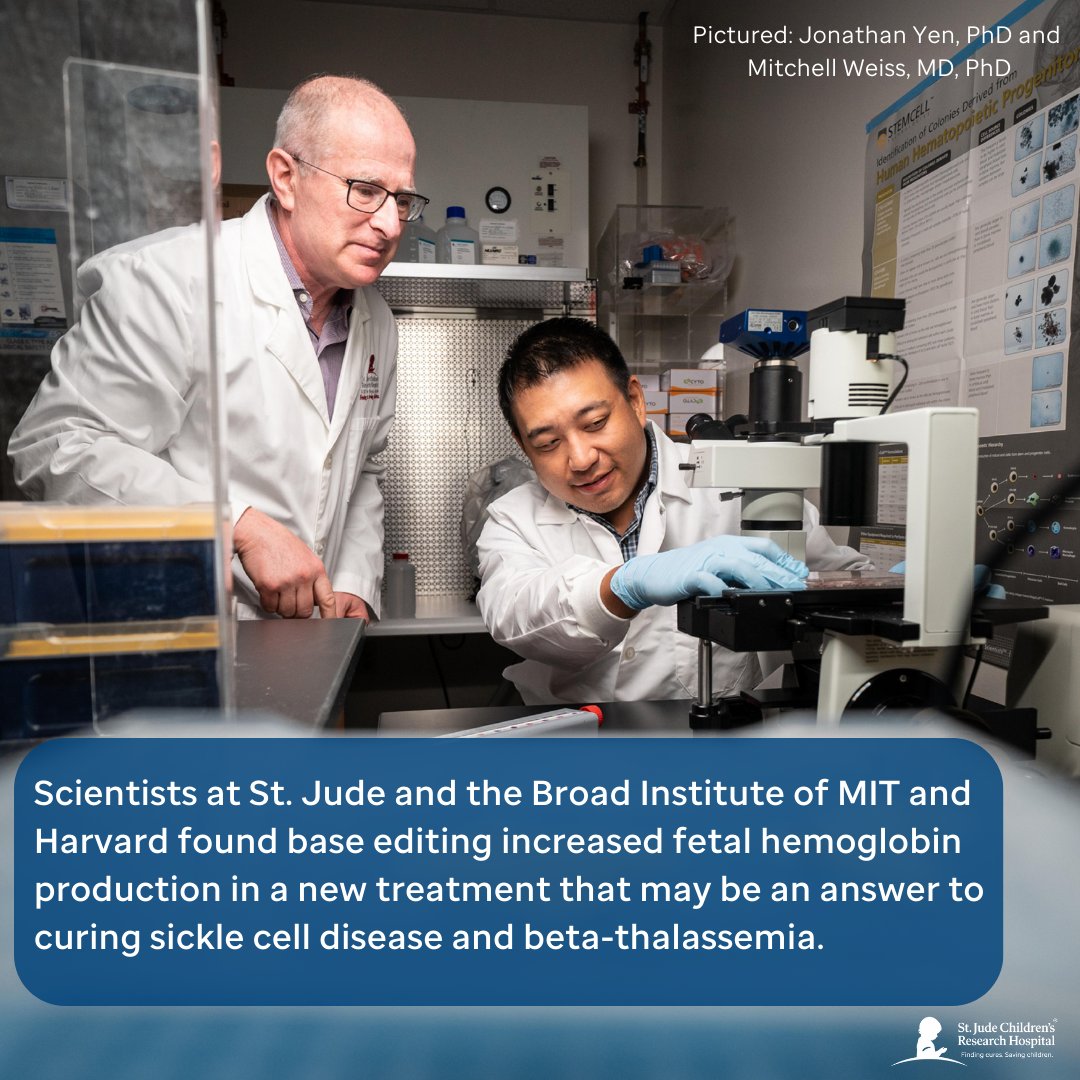
Gene therapy that alters hemoglobin genes may cure blood diseases that afflict millions of individuals. Scientists at St. Jude and @broadinstitute used potentially curative base editing technology to restart fetal hemoglobin production in patient cells. https://t.co/Km0o1W34EQ
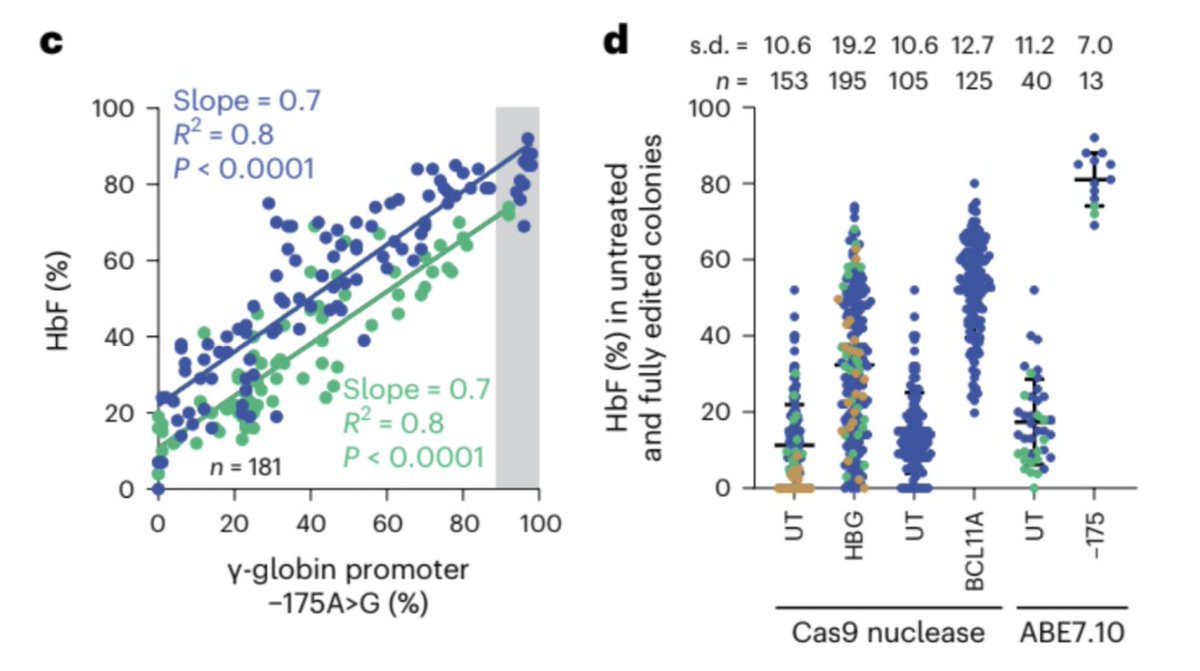
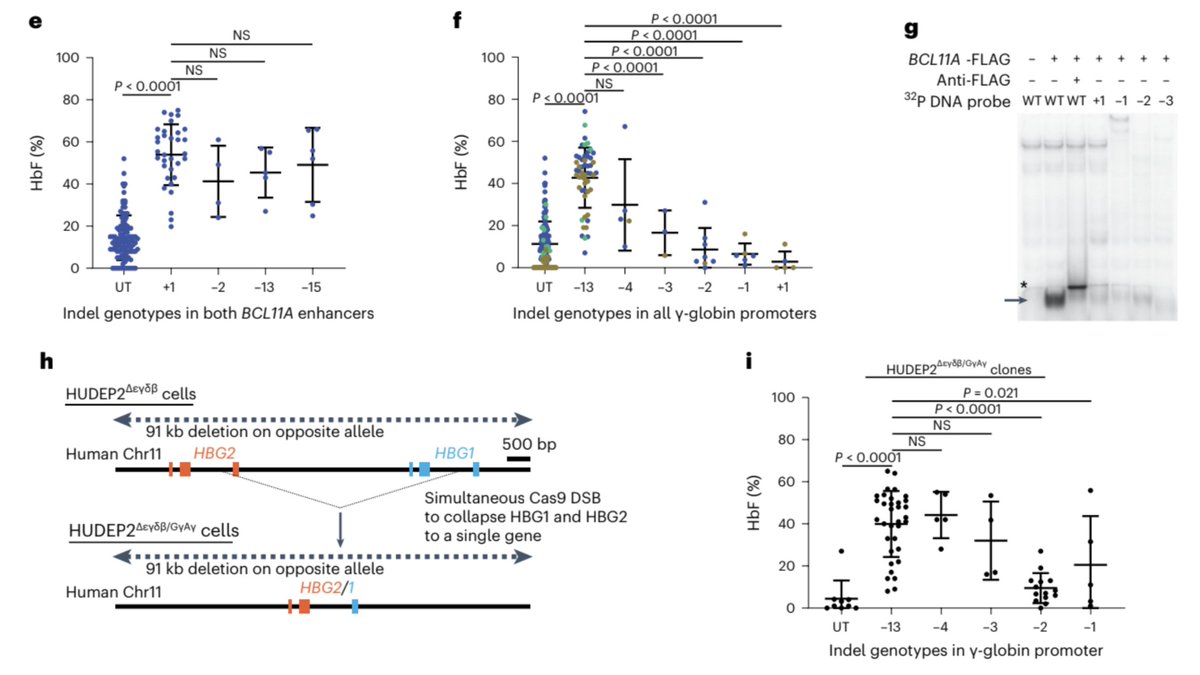
These findings show that in addition to undesired cellular & chromosomal consequences of double-strand DNA breaks, the heterogeneity of biological outcomes from on-target indel mixtures generated by nucleases can attenuate and complicate desired therapeutic editing outcomes. 8/10
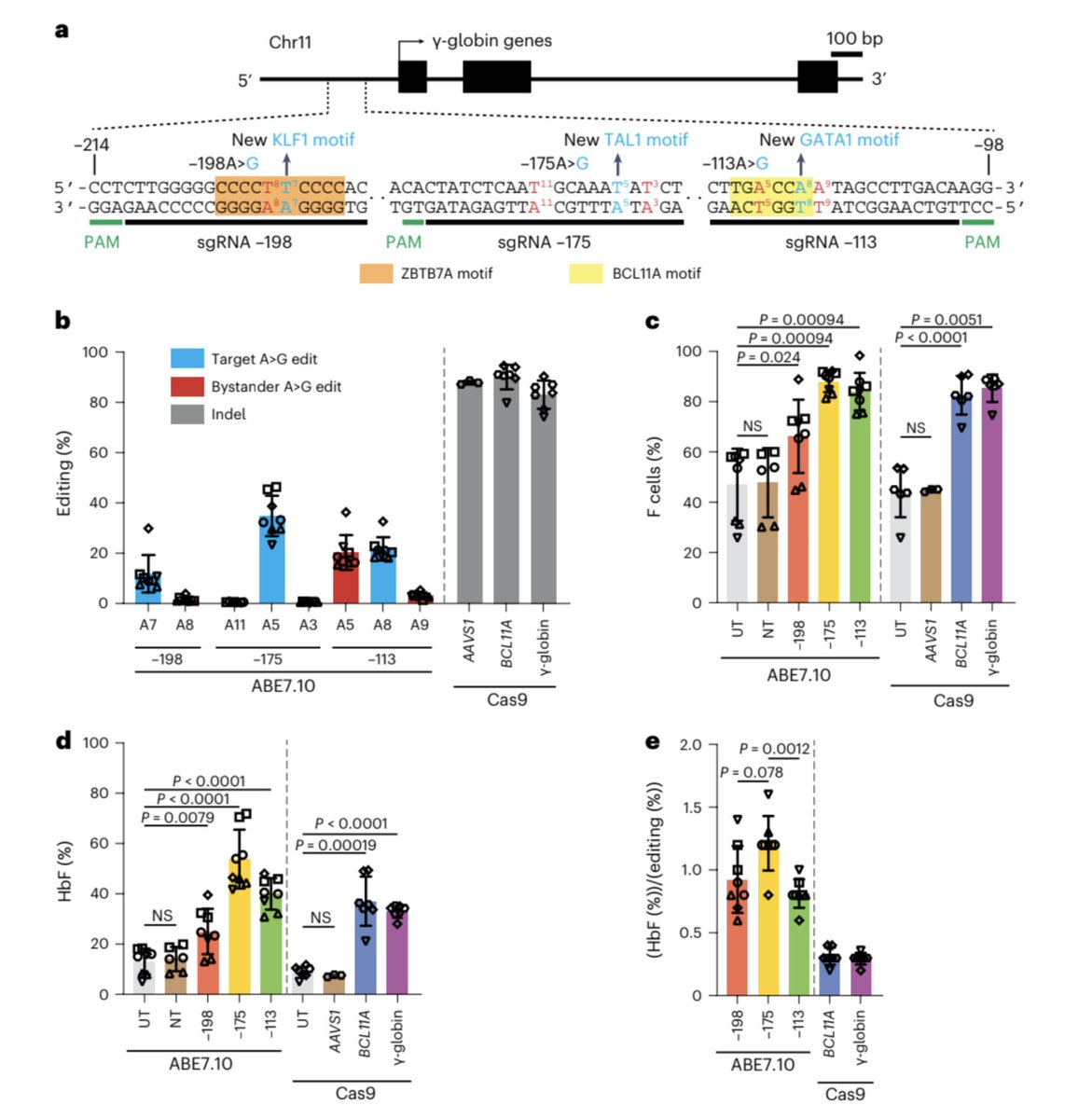
In contrast, the –175A>G base edit resulted in highly potent and uniform induction of HbF that was linearly proportional to editing efficiency, consistent with much more homogenous outcomes of base editing at the target site. 6/10
However, Cas9 nuclease generated a complex mixture of indel outcomes that varied in their ability to induce fetal hemoglobin production. Analysis of individual clones showed most increased HbF levels, but some did ~nothing, while others DECREASED HbF levels vs no treatment. 5/10
Cas9 nuclease targeting either the BCL11A binding motif in the HBG promoter, or the BCL11A erythroid enhancer (two strategies currently in clinical trials), disrupted their respective target sites via indel formation and also stimulated HbF production. 4/10
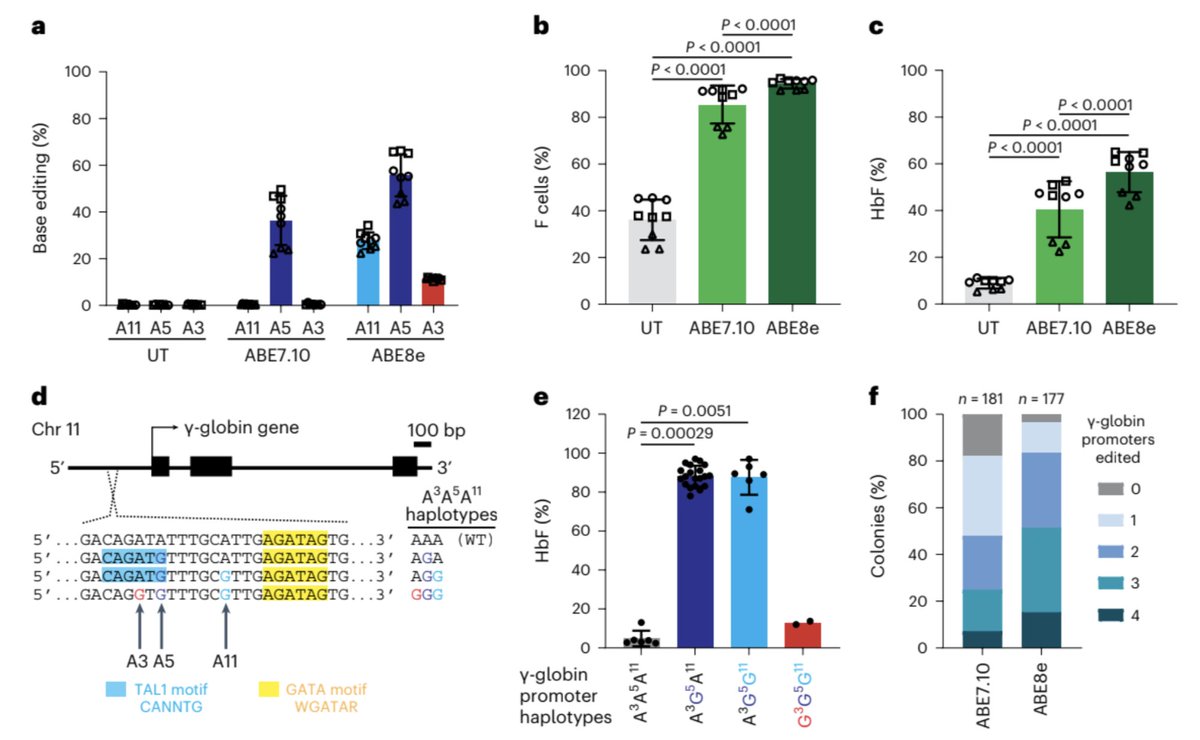
We treated HSPCs with ABEs programmed to install 1 of 3 naturally occurring mutations that restores fetal hemoglobin expression from its silenced state following the HBG-to-HBB switch. Each base edit creates binding sites for KLF1, TAL1, or GATA1 transcriptional activators. 2/10
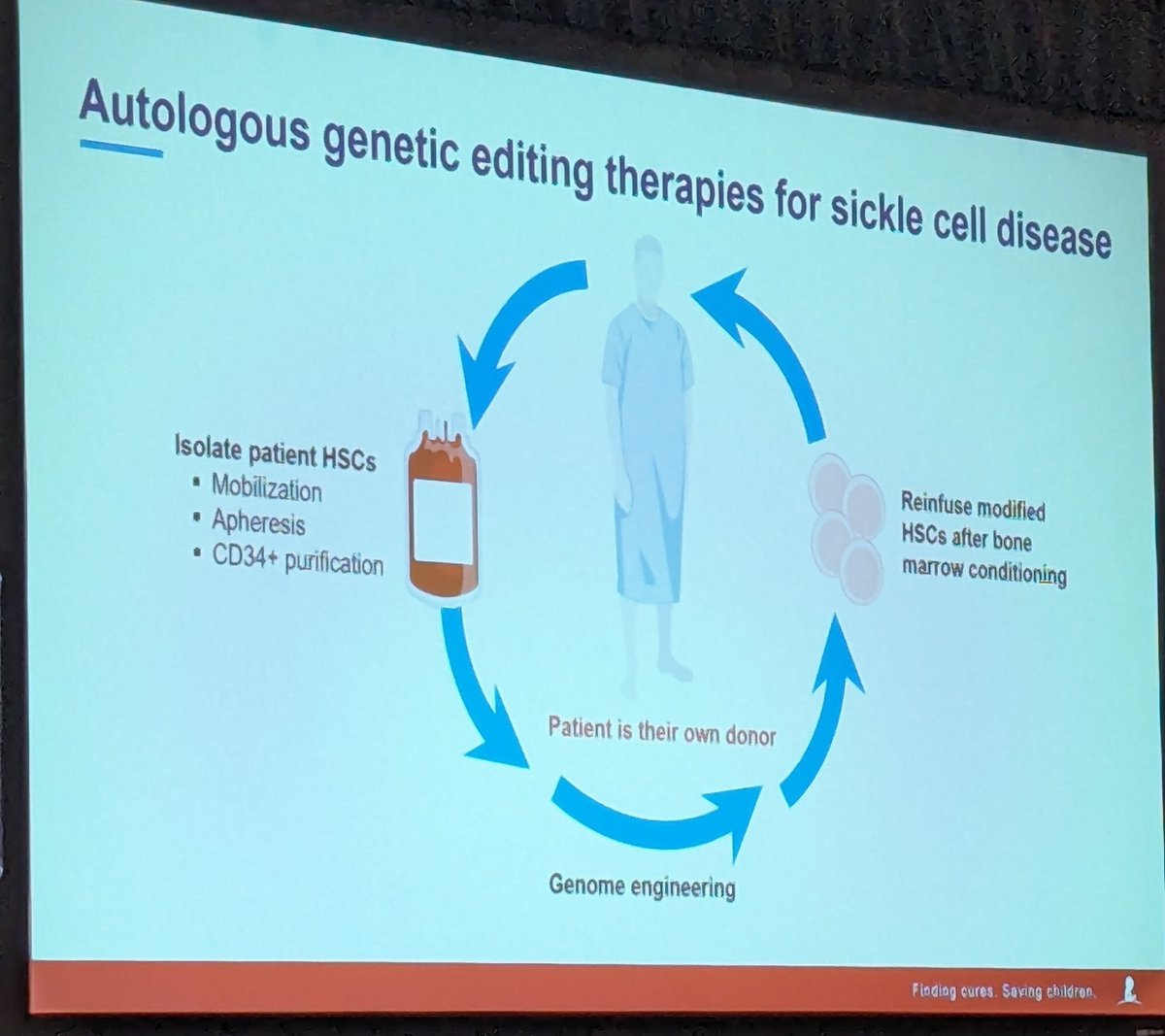
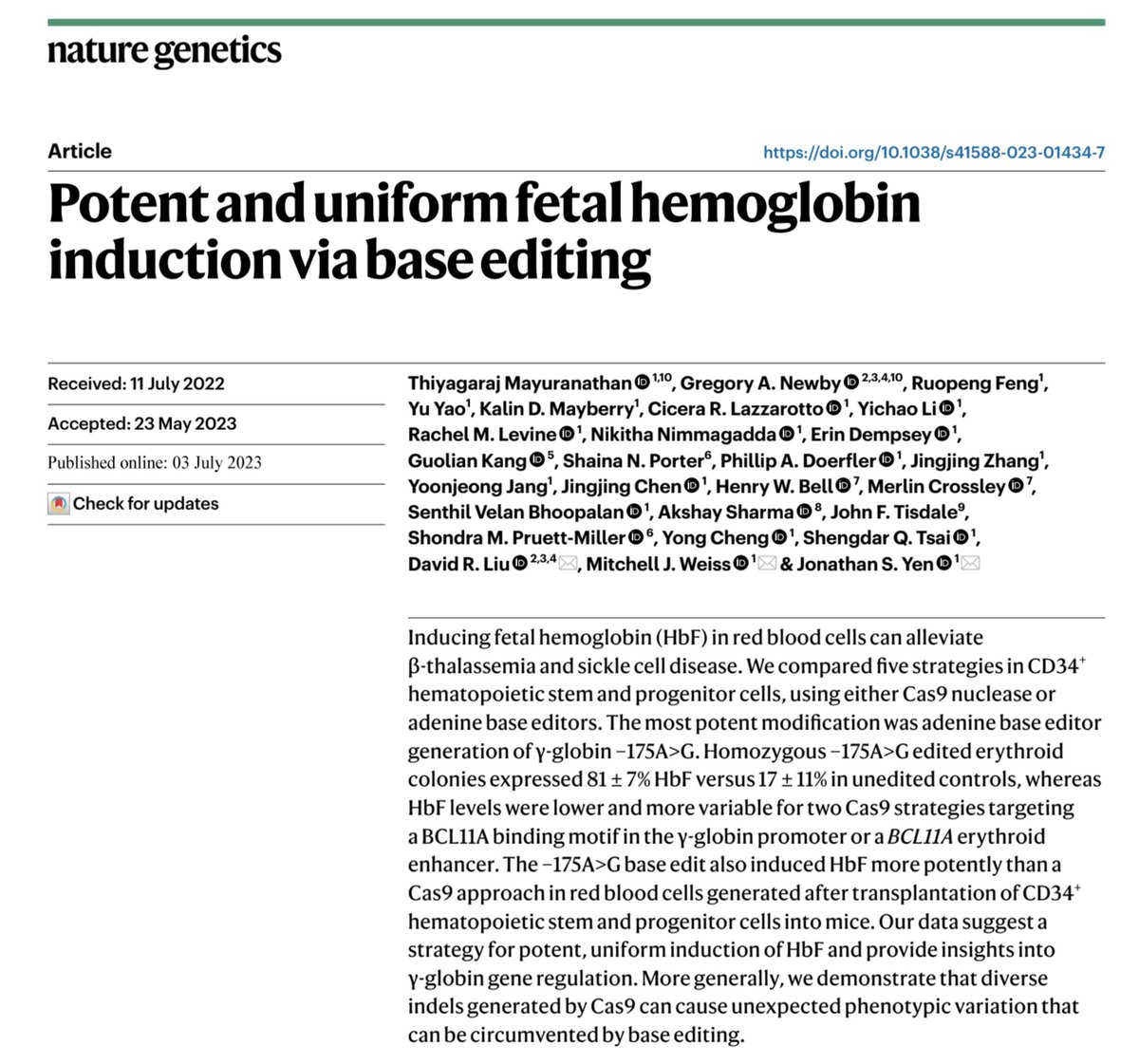
Today we report in @NatureGenet a study led by the team of @JonathanYenPhD and Mitch Weiss @StJude that characterizes Cas9 nuclease and adenine base editing strategies to induce fetal hemoglobin expression, clinical approaches to treat sickle-cell disease & beta-thalassemia. 1/10
Gene therapy that alters hemoglobin genes may cure blood diseases that afflict millions of individuals. Scientists at St. Jude and @broadinstitute used potentially curative base editing technology to restart fetal hemoglobin production in patient cells. https://t.co/Km0o1W34EQ
Prime editing is a new genome editing technology that promises to fix sickle cell disease-causing mutations in a curative approach. Discover more about this tech, a collaboration of St. Jude and @broadinstitute. https://t.co/l2vyqXQbn2 @natBME@JonathanYenPhD@davidrliu
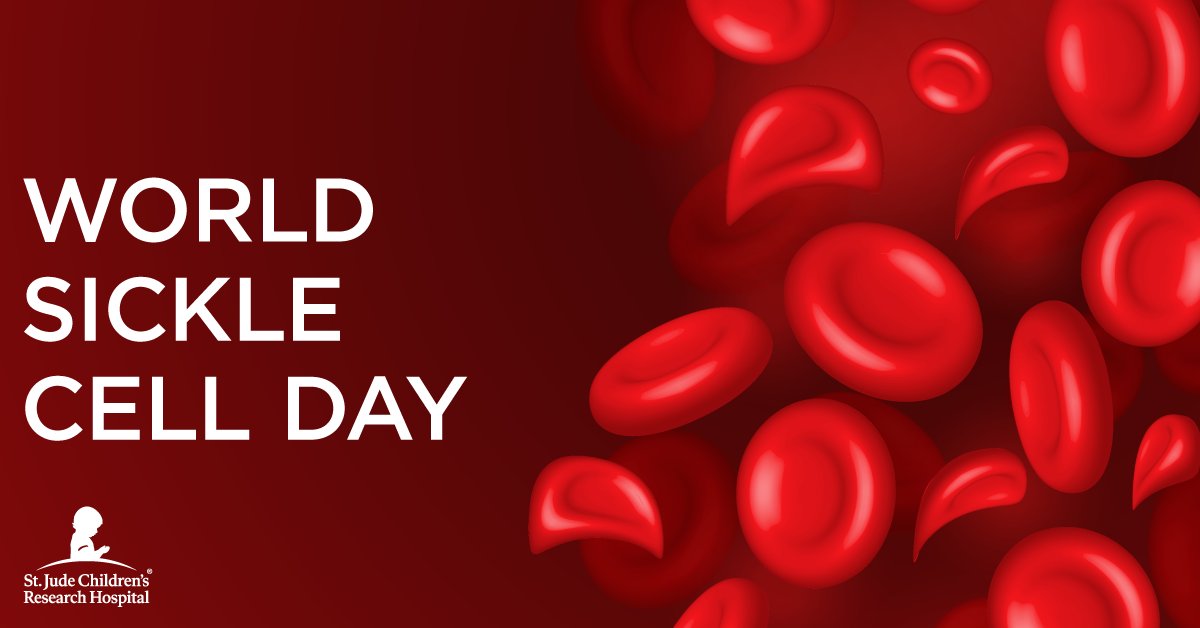
Sickle cell disease results from a mutation that causes pliable red blood cells to become brittle & sickle shaped. Scientists used base editing to change the mutation. The resulting cells were less prone to sickling. https://t.co/YUWcj46f56 @JonathanYenPhD@Nature#NowInPrint
Under our new strategic plan, a multidisciplinary team of scientists and clinical researchers from Hematology and other departments will focus on the development of curative treatments for #sicklecell disease. Take a look. https://t.co/9xh28bfGPX #WorldSickleCellDay
Sickle cell disease is the most common inherited blood disorder in the U.S. About 900 patients turn to St. Jude for treatment. Since #sicklecell disease is caused by a single mutation, could gene-editing techniques cure it? https://t.co/tAshMY6ypR #WorldSickleCellDay
Sickle cell disease is the first genetic disease to be understood at the molecular level, but therapies have lagged behind. However, the field has come together in the last 10 years with great progress. —St. Jude Hematology Dept. Chair Dr. Mitch Weiss #WorldSickleCellDay
The progress we've made includes several clinical trials for new drugs. We have the ability to make more progress because technologies are accelerating. This says the future is bright for #sicklecell disease. —Hematology Dept. Chair Dr. Mitch Weiss #WorldSickleCellDay
St. Jude has had a long history with #sicklecell disease research and treatment. In the next several years, because of the field coming together, more people will experience less suffering and more will be cured. —Hematology Dept. Chair Dr. Mitch Weiss #WorldSickleCellDay