Berandu bai… baina azkenean banoa. Oraindik erabat kutsatu ez duten mundu birtual batera noa 🦋🦋 ea zer nolako guroa topatzen dudan. Animatzen? https://t.co/oJCzCoJAyL
Mejor tarde que nunca: me voy a otras redes donde (al menos por ahora) el cielo es azul y los pajaritos cantan libremente. ¿Os venís? https://t.co/oJCzCoJAyL 🦋🦋
Equipazo!! Ilusión, experiencia y conocimiento de nuestra Universidad por dentro, y diversidad con sentimiento de equipo. A por nuevos retos, aquí estaremos para apoyaros!! 🥰 #ehuntzen#EvaEHU2030@upvehu
Creo que no hay nadie que conozca mejor los retos técnicos, académicos y docentes de nuestros sistemas… gracias @mikelvillamane por todo lo que has hecho por @upvehu en pandemia y desde entonces, y por tener todavía ganas de seguir currando a tope. Fichaje!!! 💪💪💪
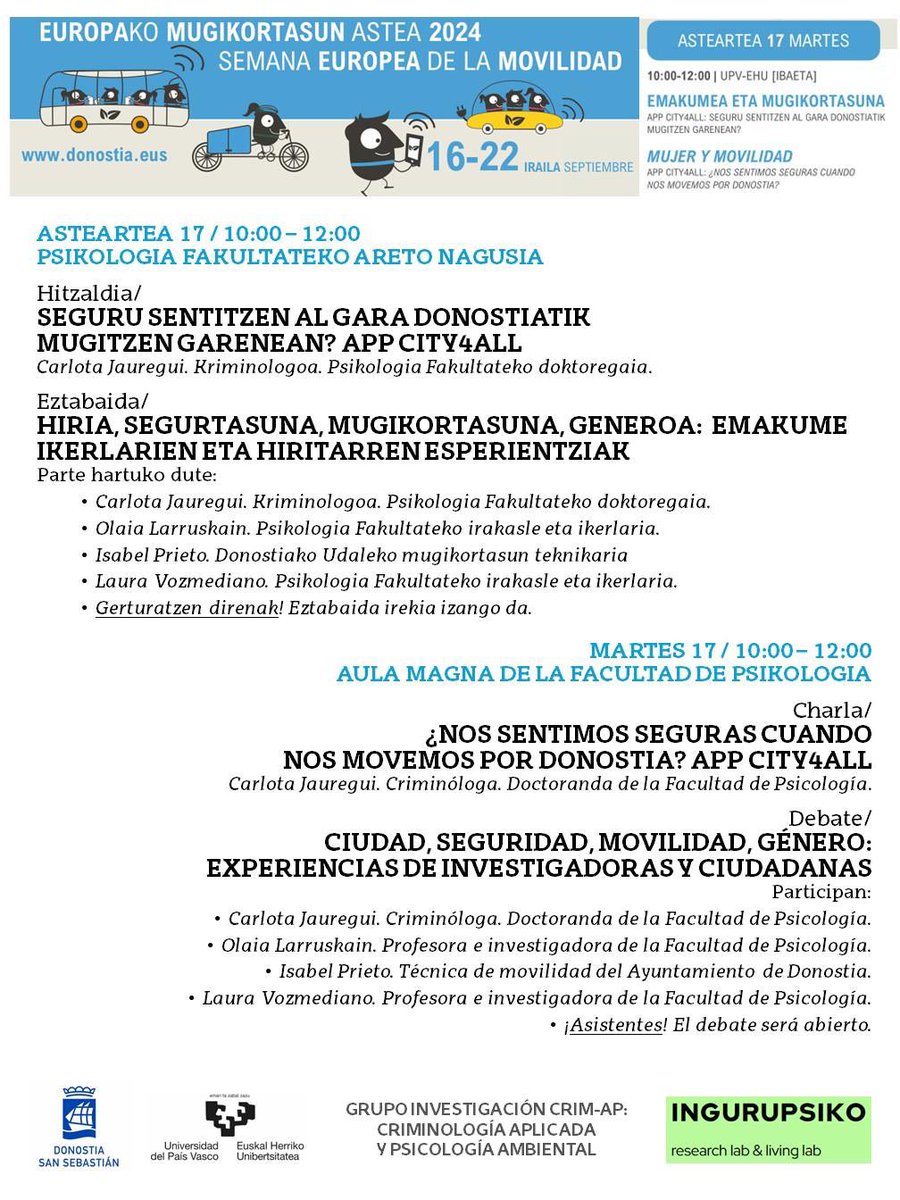
GAUR!! 10:00etan!! Mugikortasunari era generoari buruzko hitzaldi eta eztabaida Psikologia Fakultatean, zure zain gaude / Te esperamos a las 10:00 en la Facultad de Psicología para la charla y debate sobre movilidad y género!! @psikoehu @upvehu_gara
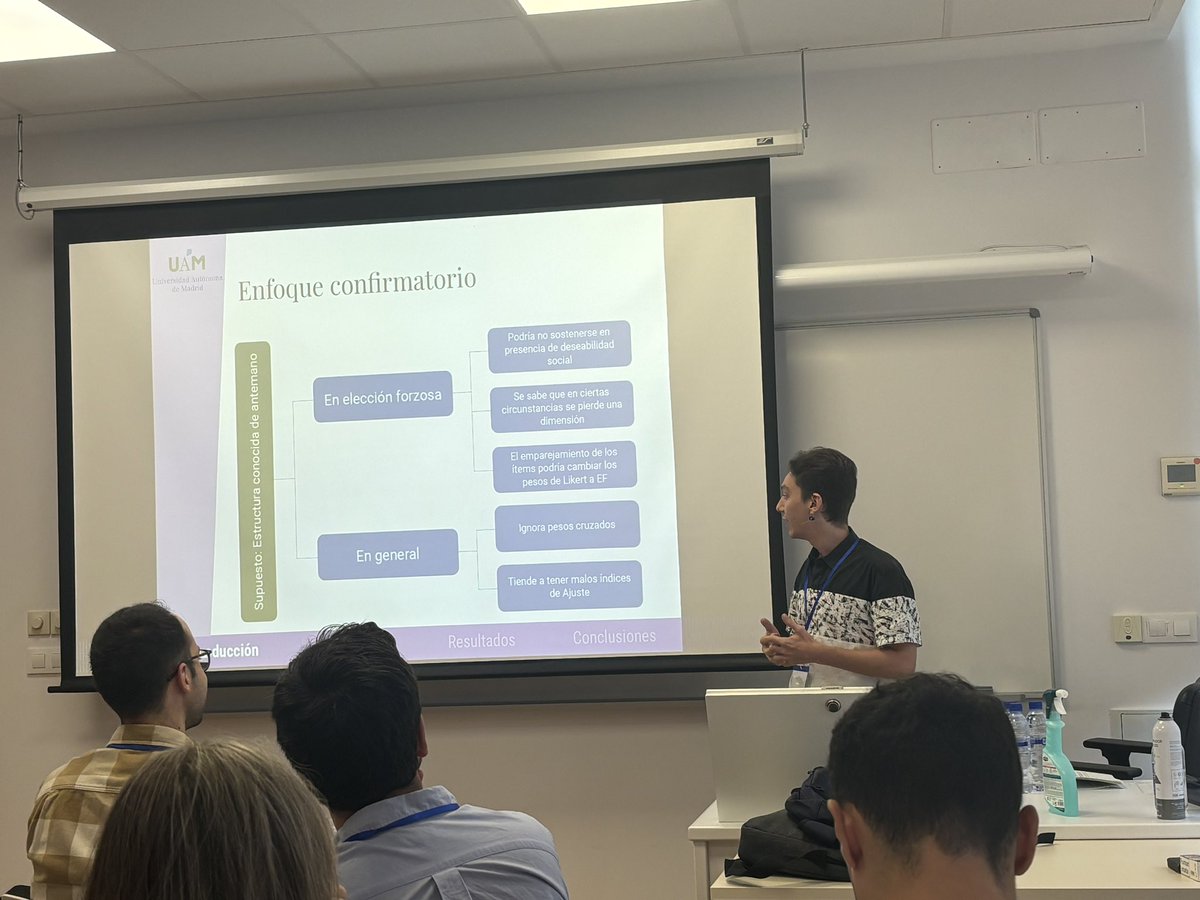
Aprendiendo muchísimo sobre las pruebas de elección forzosa. No sé qué tienen los congresos de metodología, pero, a cuantos más asisto, más veo que necesito leer y aprender 😅. Menos mal que me dan un chute de energía (y de referencias útiles). #AEMCCO_SEVILLA
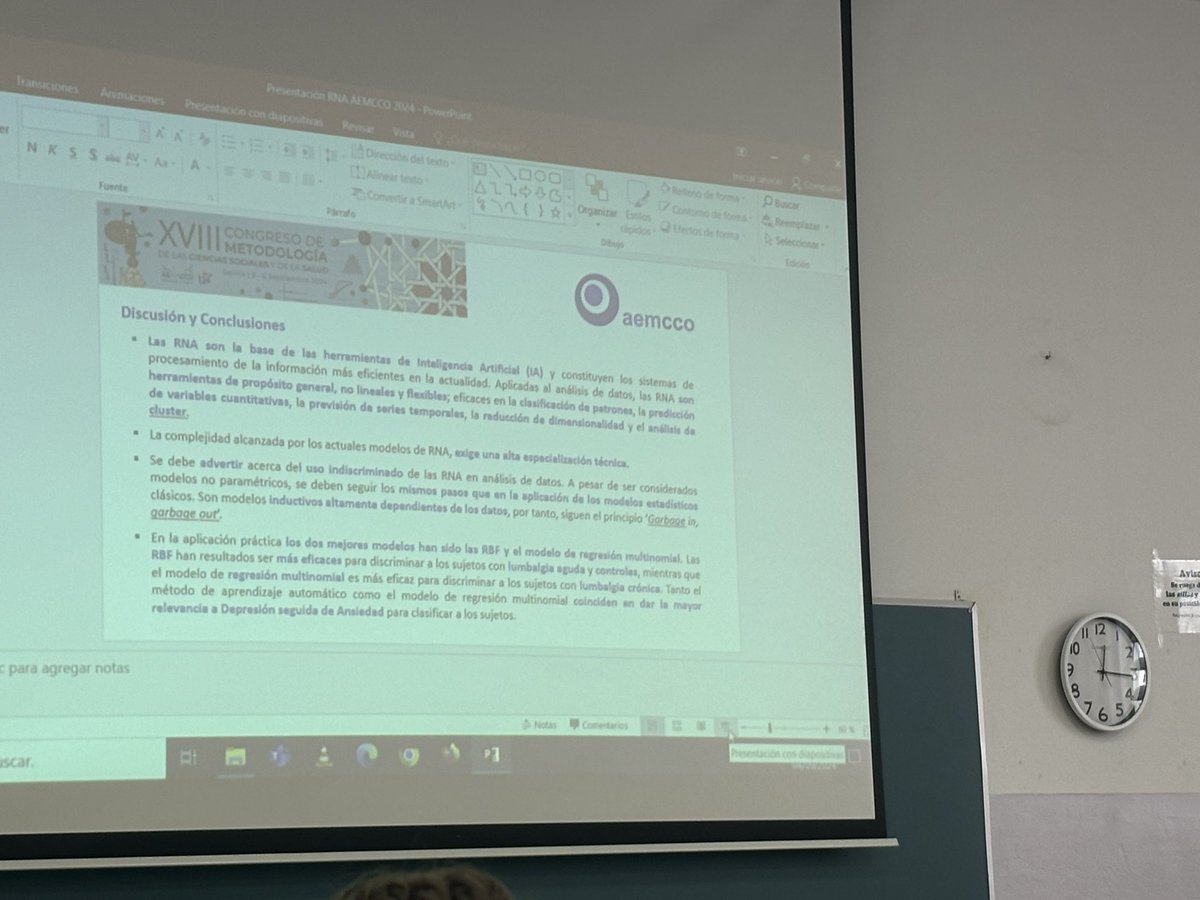
Disfrutando de la magnífica presentación del dr. Montaño “Redes Neuronales Artificiales aplicadas en Psicología en el contexto de la Minería de Datos”. Un trabajo muy interesante 🤩🤩 y un ponente que engancha y explica de manera realmente didáctica 👏👏. #AEMCCO_SEVILLA
Desayunad bien ☕️🥞🥣🥐, que hoy empezamos fuerte: 1️⃣ A las 9:30 conferencia inaugural impartida por nuestra querida compañera Teresa Anguera. 2️⃣ De 10:30 a 11:30 ☕️ + pósters. 3️⃣ Y de 11:30 a 13:00 primera sesión de simposios. ¡Empecemos! #AEMCCO_SEVILLA
Después de algunos contratiempos (cancelación de vuelos incluido), estamos por fin de camino a @_AEMCCO_ Sevilla! 🚌🚌✈️ . No llegaremos a la inauguración, a ver si llegamos a la copa.
CONCLUSION: The Spanish DIPB has the = internal structure as the original, and it's valid and reliable to measure psychological barriers to act pro-environmentally. It's important to take into account those barriers that interfere in pro-environmental behavior. #ITC2024
RESULTS: Both the 5-factor and 7-factor had CFI and TLI indices showing an acceptable fit. However, the 7-factor model had a very high RMSEA (>0.08), which questions its use. 7/8
AIM: to adapt the DIPB to Spanish. 1⃣: we translated the items, 2⃣: we analyze their equivalence with the original items 3⃣: We apply the questionnaire to a convenience sample. (N = 337; age = 18 to 77; M = 42.4; SD = 13.6; 53.1% men). 6/8
Gifford (2011) proposed 30 psychological barriers grouped in accordance with what he names as ‘dragons of inaction’. With the aim of systematising the assessment of these barriers, Lacroix et al. (2019) developed the Dragons of Inaction Psychological Barriers(DIPB) scale. 5/8
One of the explanations for this gap is related to ‘behavioural barriers’: people face different types of barriers (internal + external), when attempting to become more pro-environmental (Blake, 1999; Kollmuss & Agyeman, 2002; Lorenzoni et al., 2007). 4/8
Because of the GAP! There is a gap between attitudes and behaviour ➡️pro-environmental attitudes are fairly poor predictors of pro-environmental behaviour (Bravo & Farjam, 2022; Flynn et al., 2009; Peattie, 2010; Staats, 2017). And... what is this gap due to?? 3/8
INTRO: The majority of the population is concerned about climate change (Capstick et al., 2015).But we are not engaging in sufficient mitigation behaviours, even in the context of a growing climate emergency (IPCC, 2014, 2022). WHY?!?! 2/8