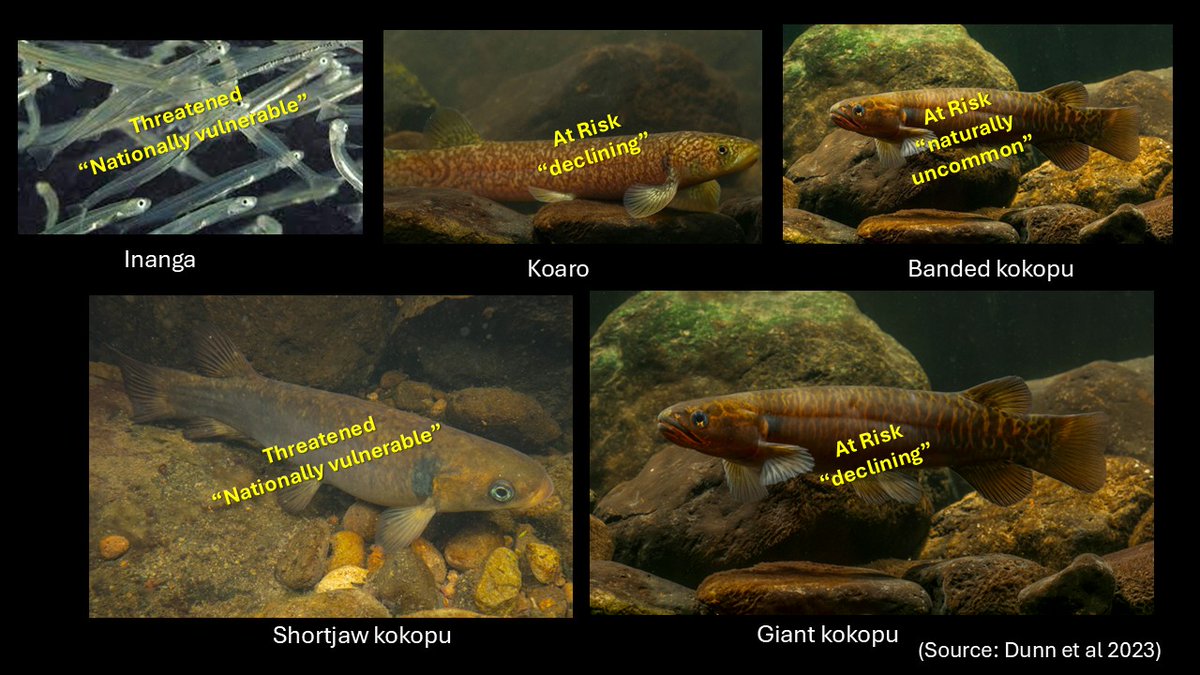
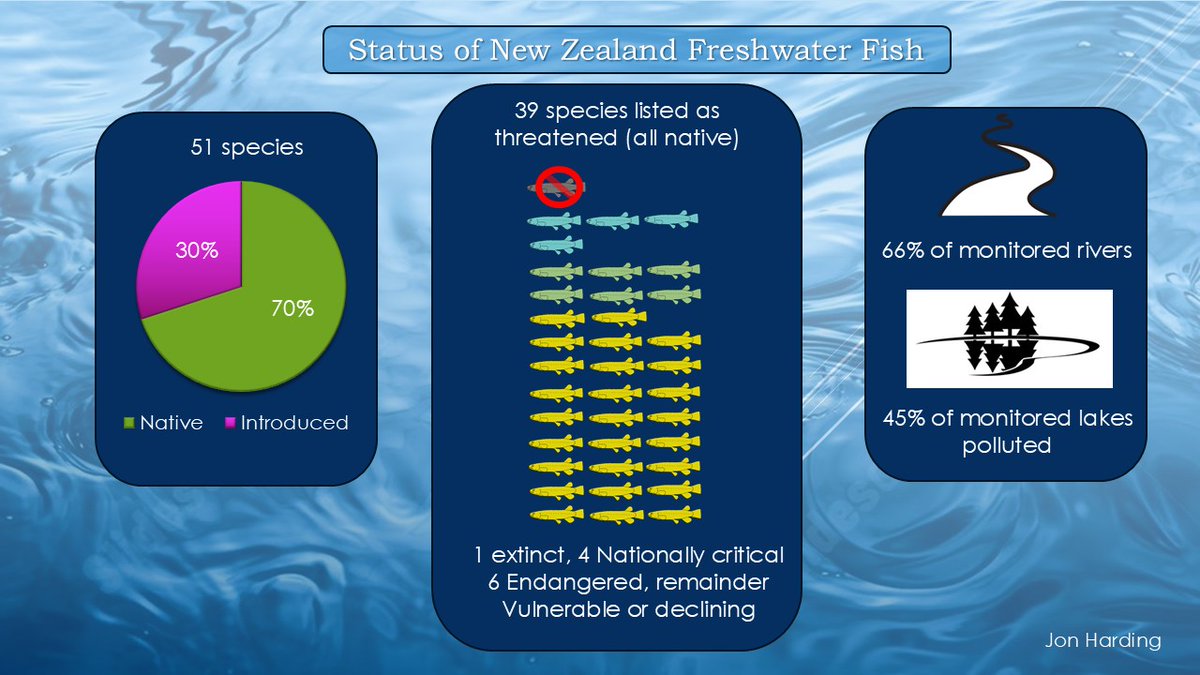
The NZ Conservation Status of the five species that make up our migratory whitebait.
Is this really what we want?
Is it time to review the Whitebaiting legislation? If only these species were "sports" fish they might have some level of protection.
So, its finally happened...Inanga (the commonest species in the NZ whitebait catch) has now been declared "Threatened - Nationally Vulnerable". What are Central and Local Government actions going to be?
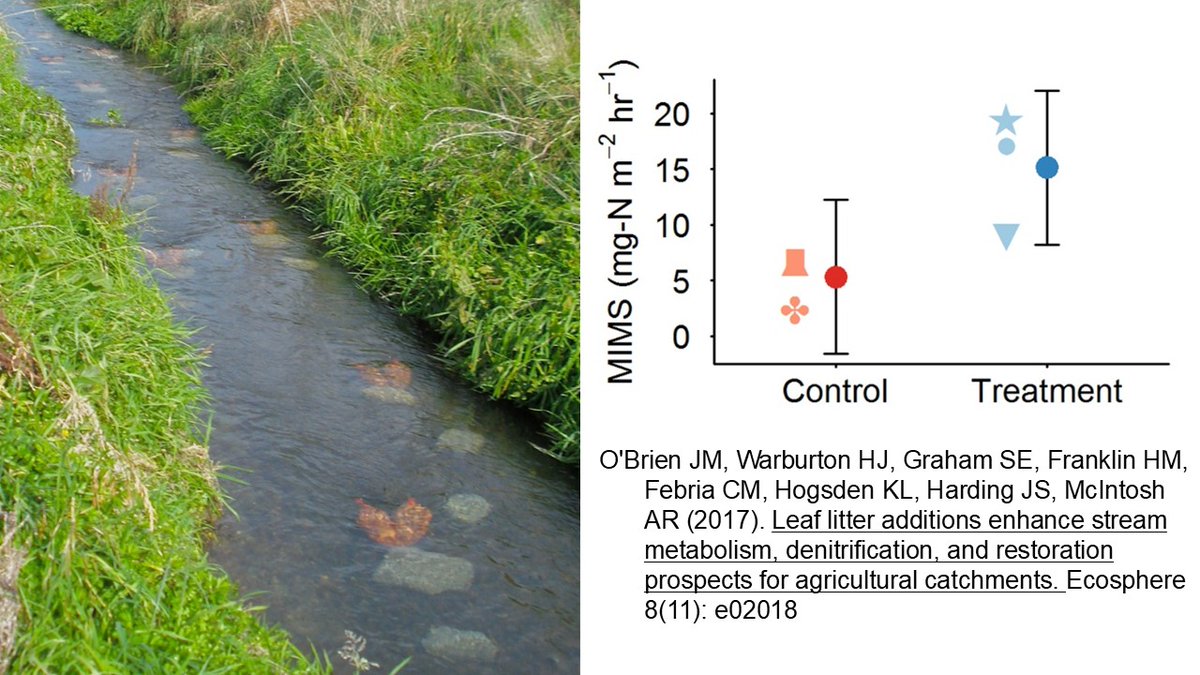
Solutions to reducing nitrate in waterways - We have shown that leaves and wood added to streams increases the natural process of denitrification, reducing nitrate concentrations. This study shows increased nitrate removal in three agricultural streams.
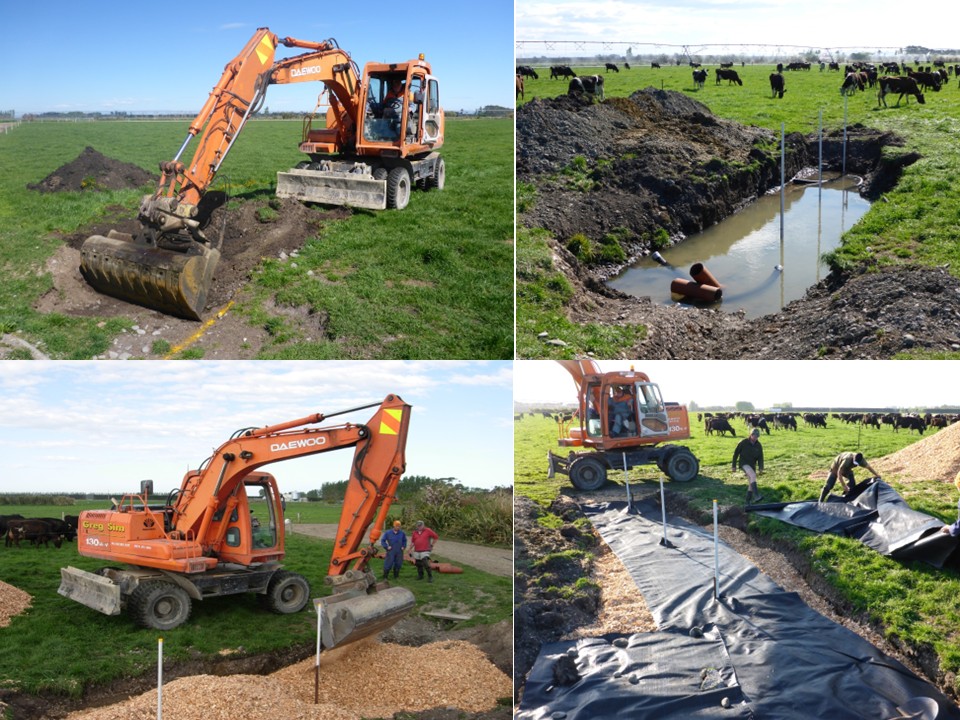
There is a lot of discussion about high Nitrates in waterways, but we need to be talking more about solutions! There are actions we can take to reduce nitrates in waterways e.g., building bioreactors, enhancing in-stream denitrification, two stage channels.
Its not very often you come across streams with very high acidity. Below is a West Coast stream and tribs with pH 12, no invertebrates or fish, flowing into pH 9.9 which had damselflies but nothing else. Several side tribs had neutral pH with big eels "trapped".
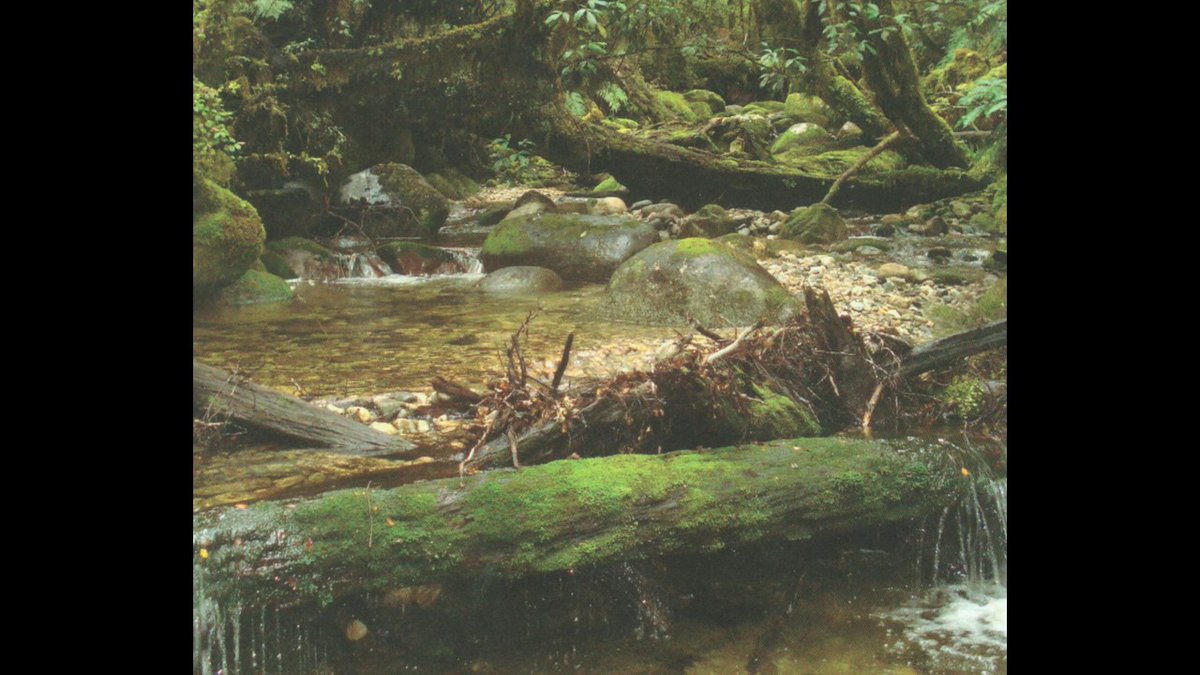
Wood is important for healthy streams. It provides shelter & refuges for invertebrates and fish, habitat for eggs, food for shredders, bed and bank stability, it creates velocity and depth variability, and sites for denitrification. Lots things concrete and steel doesnt!
Freshwater weeds like Monkey Musk & Watercress are major problems in farm and urban waterways. These plants grow from the banks out into the waterway and can be controlled by weed mats placed along the bank at the waters edge. No need for glyphosate!
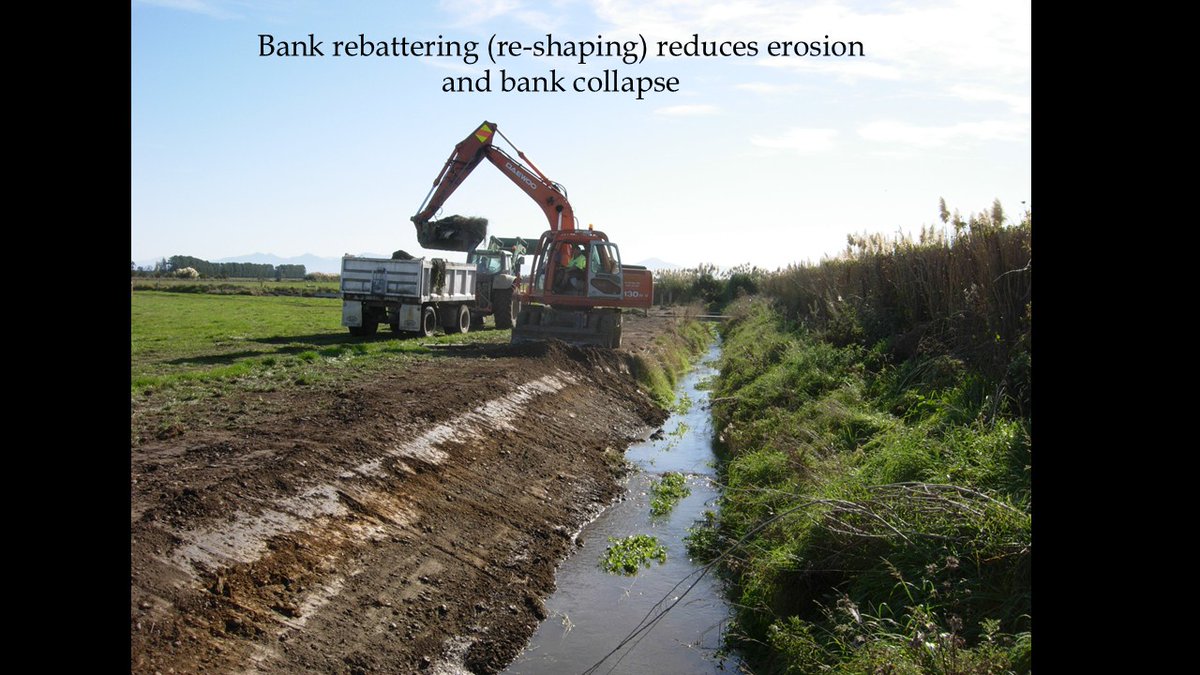
Its not uncommon to see riparian planting on collapsing and undercut banks. Bank re-battering BEFORE planting is essential to stabilise and stop bank erosion. Best practice is dealing with sources of sediment before they enter the waterway.
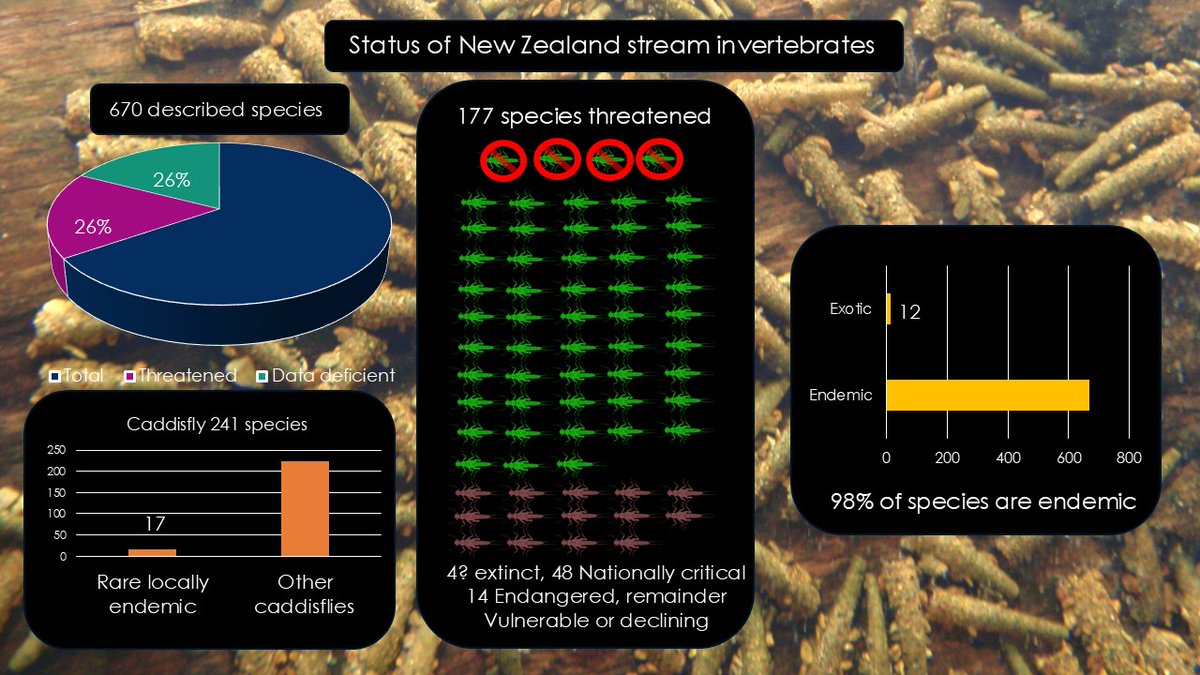
The last threatened species assessment for NZ freshwater invertebrates was conducted in 2018. Its difficult to imagine that the status of approx 177 species threatened 7 years ago have improved. If any anything its likely some "data deficient" have declined.
Why re-create Moa? For what purpose? To cage in a Zoo? To release in the wild with unknown ecological & environmental consequences? Where is the scientific discussion about ethics & consequences? Just because we can do something does not mean we should!
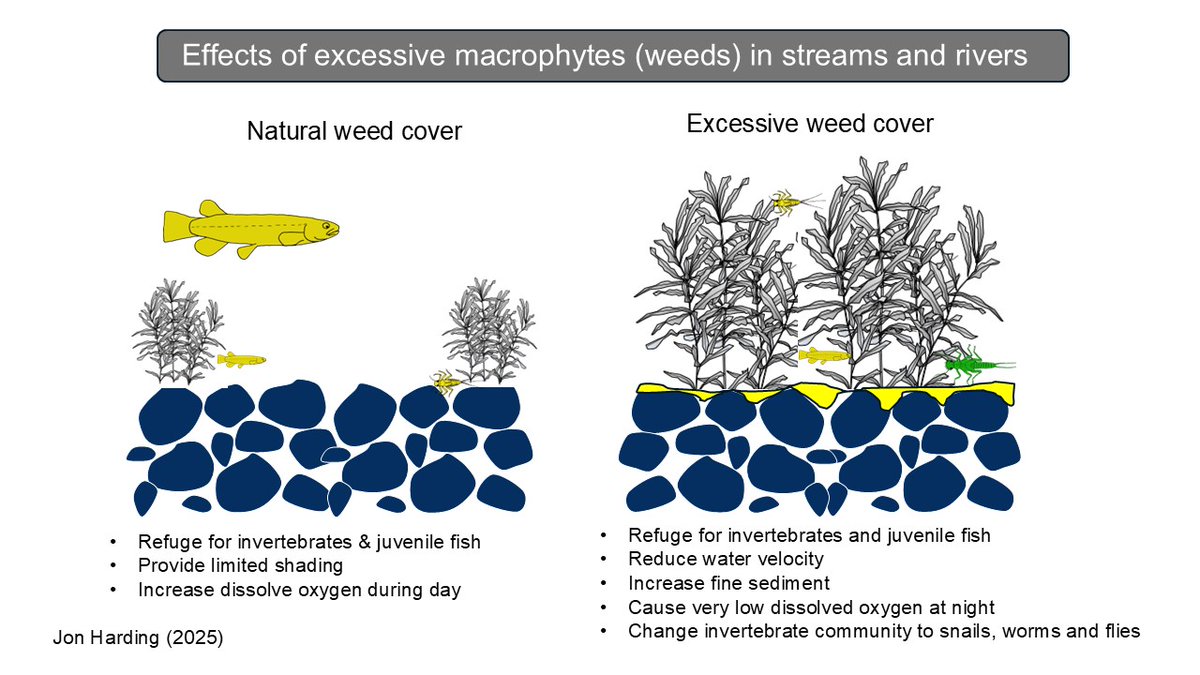
Introduced macrophytes (weeds) have become a major problem in many agricultural and urban waterways and lakes. The focus has tended to be on clogging of the waterways causing flooding, however excessive weeds cause several other significant problems. @UCNZscience@NZScienceLearn
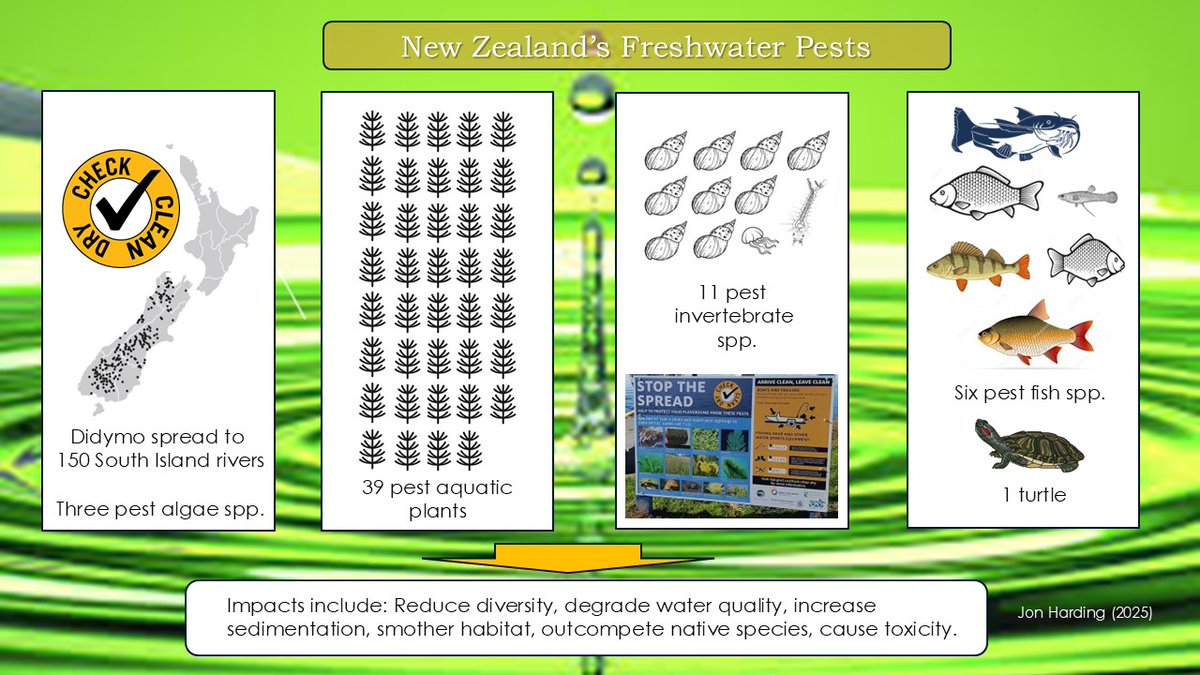
Pest species in New Zealand's freshwaters are becoming an increasing problem. We have over 200 introduced species in our rivers and lakes. Some are having significant impacts on native species and ecosystems. Are we doing enough to limit introduced species?
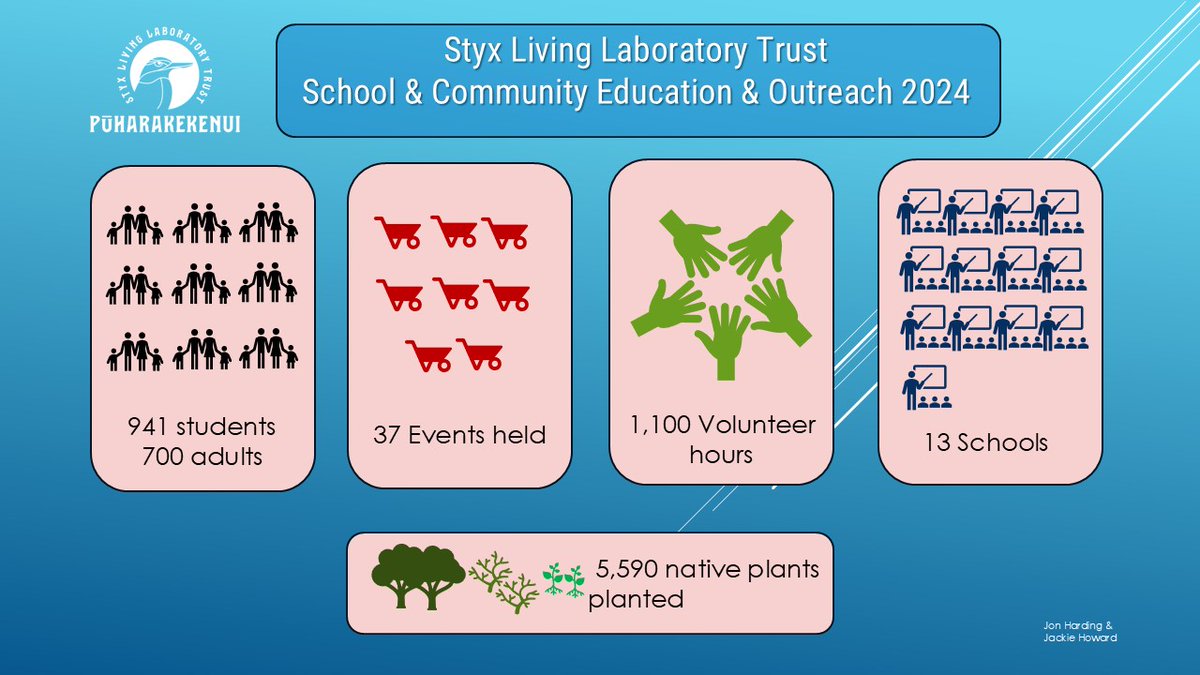
The Styx Living Laboratory Trust engages in environmental education for Primary & Secondary Schools (inc. NCEA unit standards) as well as Community Education Events. Over 1600 participants last year. Volunteers welcome!
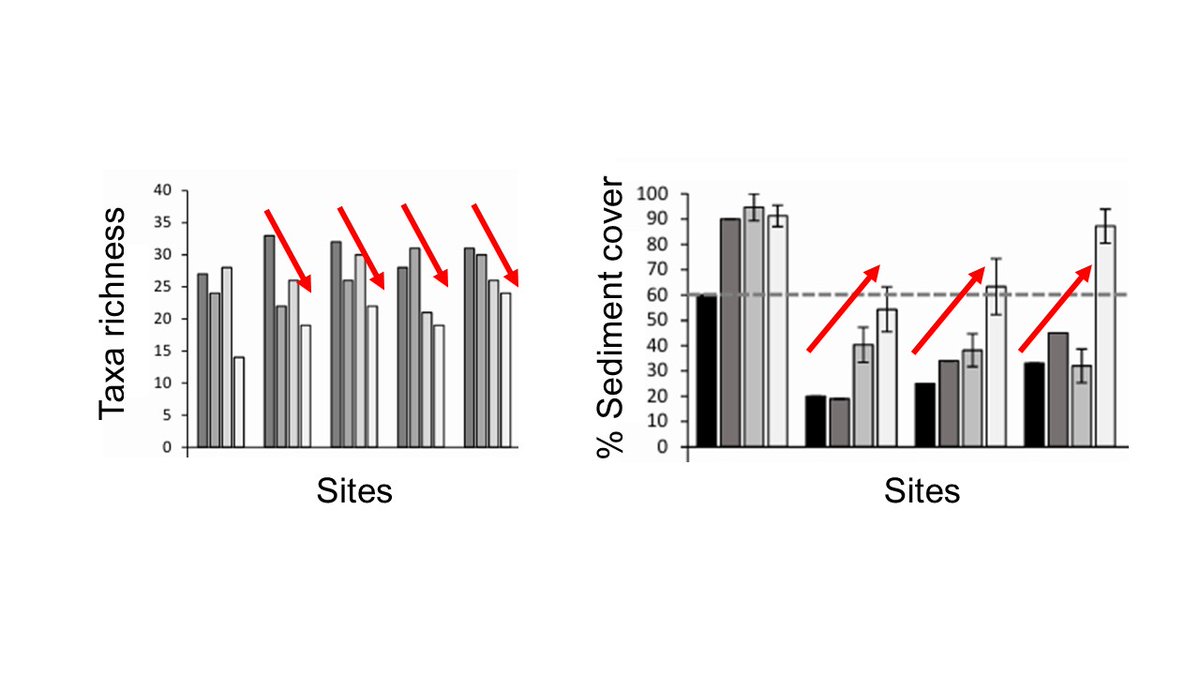
The Styx River (Christchurch,NZ) is slowly dying. Benthic invertebrate taxa richness has been steadily declining from 2005-2023, as seen below. The trend of decline is consistent across many sites. The loss of invertebrate taxa tracks a depressing increase in bed sediment cover.
The Styx Living Laboratory Trust (Christchurch, NZ) has significantly up-skilled its water quality monitoring program (inc E. coli, turbidity), and is now partnered with Rotary & UN with a 2yr Citizen Science monitoring program...collecting robust data.
Styx River Water Monitoring (Christchurch, NZ) group has just "raised the bar" of its Citizen Science monitoring by adding measurements of E. coli and Turbidity (NTUs) to its program. Well done team!
Just published a paper with Steve Pohe and Mike Winterbourn ("Insects" 2024, 15, 757) showing major differences in the distribution of NZ mayflies in North & South Islands. Fundamental data to understand climate change impacts on NZ stream communities.