GeniE, the genetic prevalence estimator, is now available! https://t.co/QHtuIvLrGt
This tool allows users to estimate the genetic prevalence of autosomal recessive diseases using #gnomAD allele frequency data & classifications from #ClinVar
Blog post: https://t.co/aSpUglRKVj
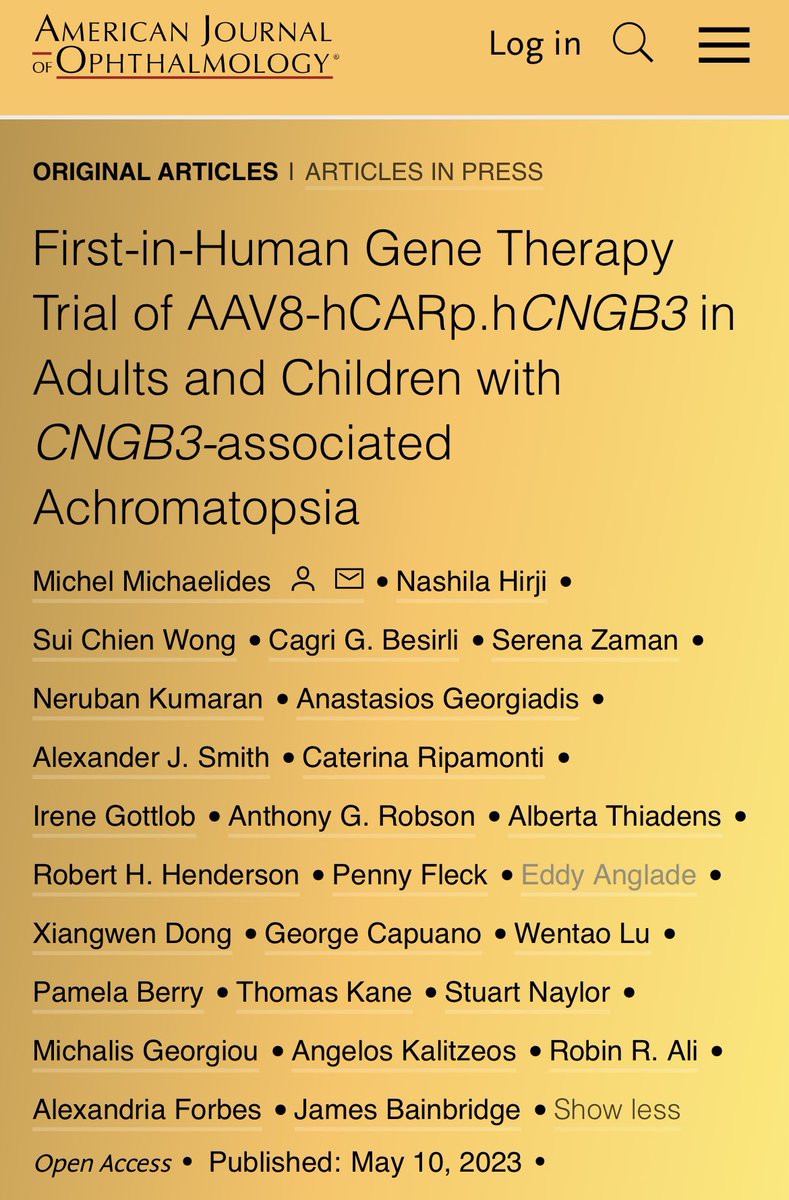
Hot off the press @AJOphthalmology : First peer reviewed results of gene therapy for CNGB3-Achromatopsia 👁️🧬 Pleasure to be part of the team from the early steps of this phase 1/2 trial @MichelMichaelid @retinology@MoorfieldsBRC@UCL_Retina@UCLeye
https://t.co/twJH9QhKxM
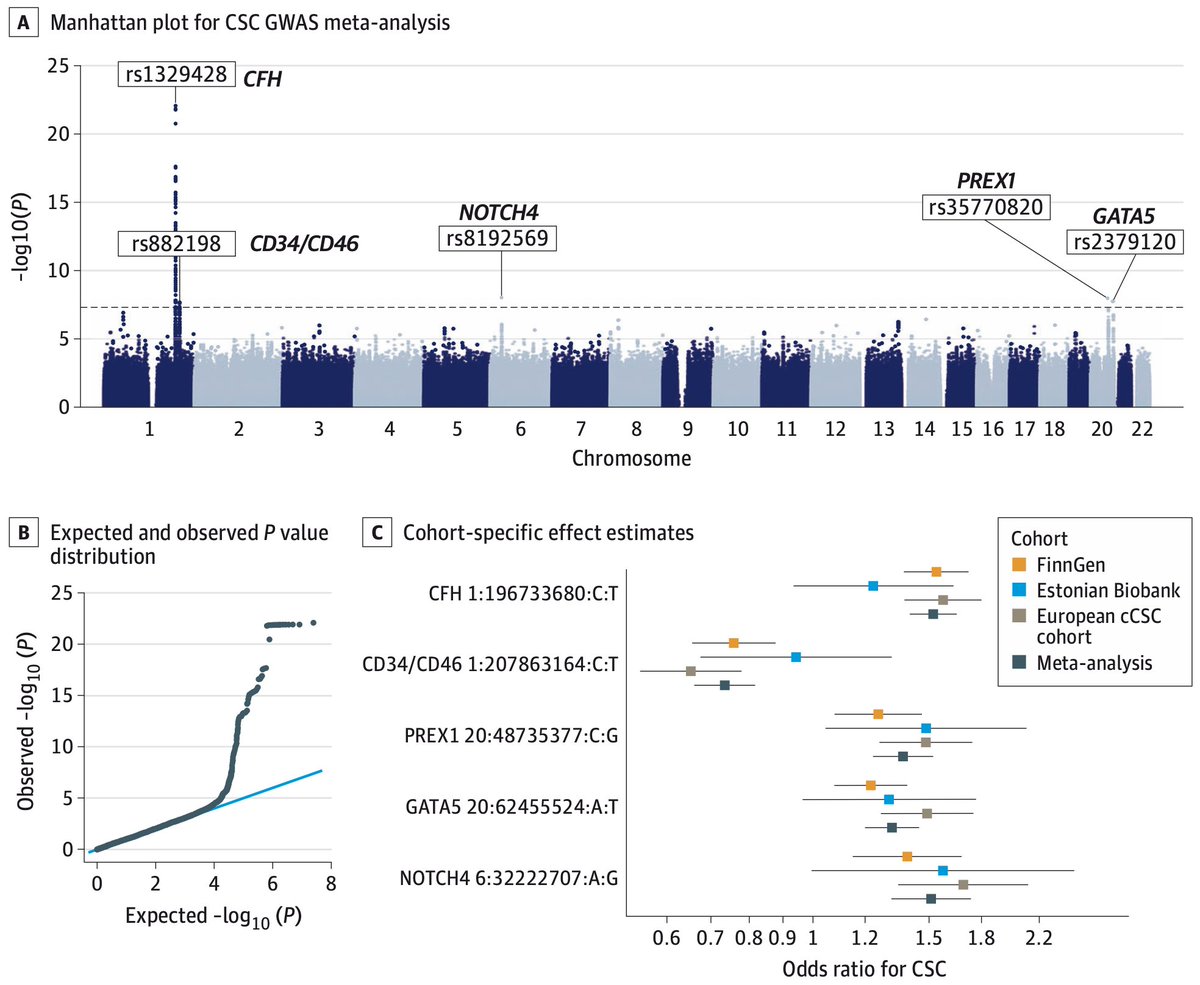
I’m excited to share our publication on the genetics🧬 of central serous chorioretinopathy, now out in @JAMAOphth. We identify overlap with age-related macular degeneration and support roles for the choroidal vasculature and the complement system.
https://t.co/iaJCYMzk9h
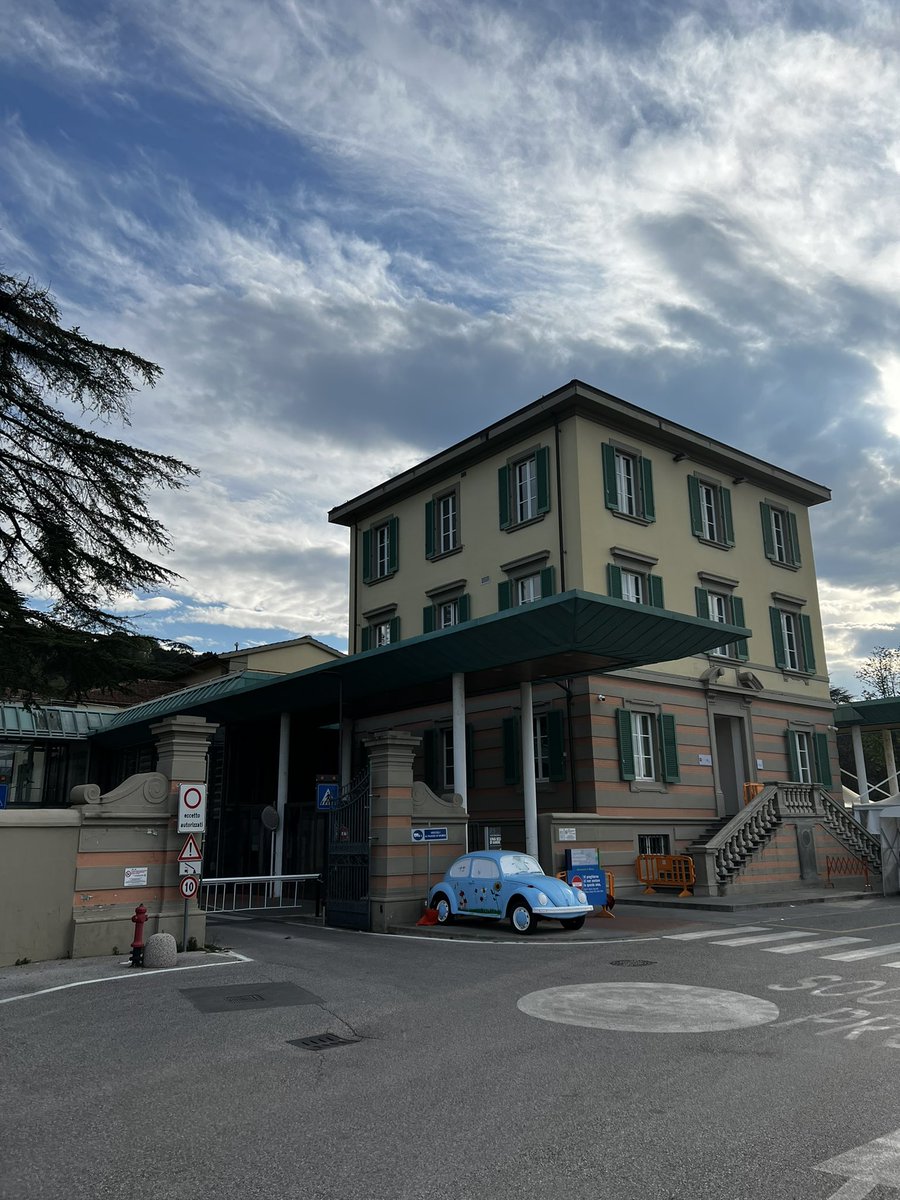
It has been an excellent observational exchange week focused on rare eye diseases at the Meyer University Hospital and at @AOUCareggi in #Florence@ErnEyeEU facilitates this opportunity!
Our article published today online in @ActaOphthalmol describes the genetic background of juvenile open-angle glaucoma in Finland. Gongrats @PerttuLiuska
https://t.co/R4gF3GCGGi
We propose that positive family history, elevated IOP, and age at onset 35 years or less could be considered supporting factors when referring a patient with early-onset glaucoma to genetic testing.
These criteria are in line with the classical definition of JOAG (European Glaucoma Society, 2017). Careful evaluation of the anterior segment is crucial because high-tension glaucoma may be a sign of a syndromic anterior segment anomaly.
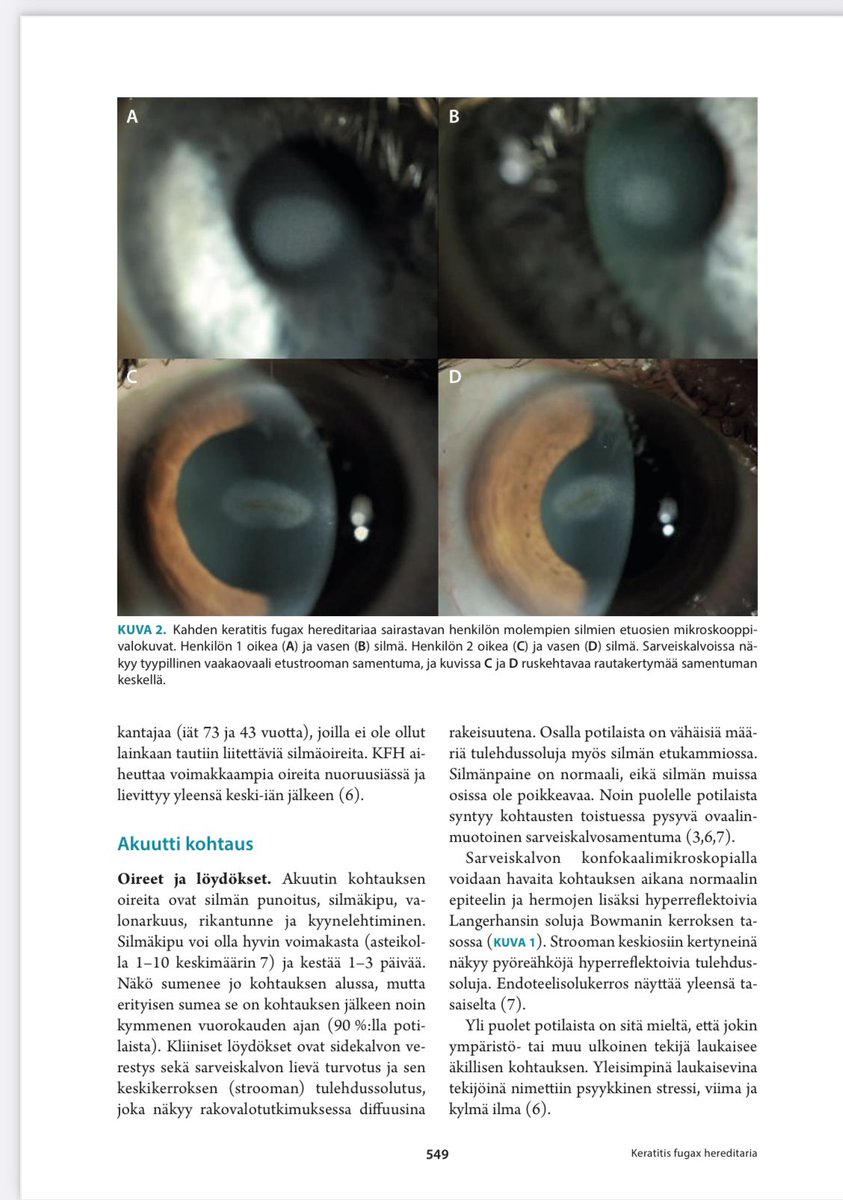
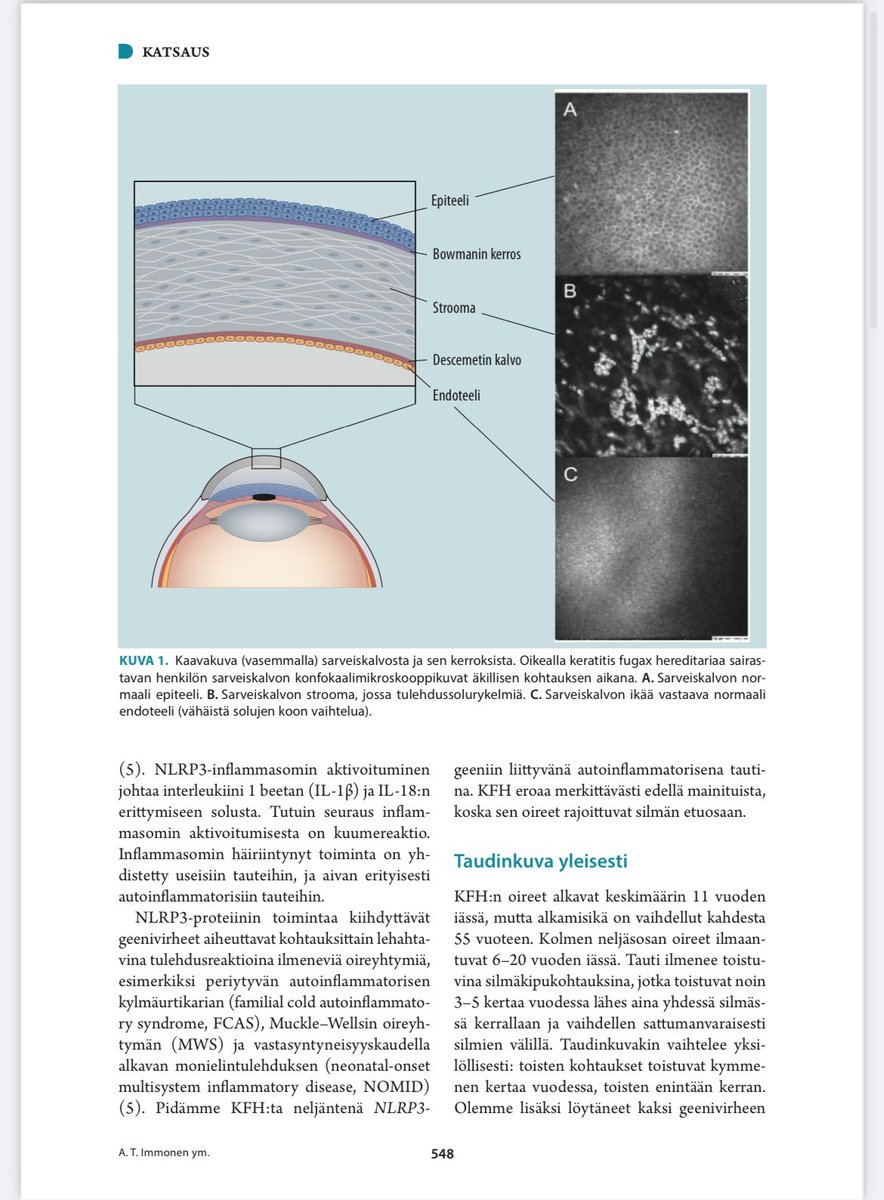
Tutkimusryhmämme kirjoittama katsaus perinnöllisestä sarveiskalvotulehduksesta (Keratis fugax hereditaria), joka edelleen tunnistetaan Suomessa (ja maailmalla) huonosti. @Duodecimlehti https://t.co/4B7tLmLCy0
In Ljubljana in the meeting of the ERN-EYE, the European network for improving care for rare eye diseases. Always good to meet brilliant minds from the same field!
Congratulation @FinnGen_FI! Great collection of articles in the @Nature family of journals utilizing Finnish biobanks. As a relatively isolated population, Finns have a more homogenous genetic makeup than others. https://t.co/zbFBCdtTsU
[🎥New video]
Discover the new video on our network!
Find out all about ERN-EYE in this video and on https://t.co/y28y59O9Sd (a written description is available on the home page of the website).
https://t.co/KhCXyubI75
Joulukalenterin luukusta löytyy tänään tunnettu glaukooman riskitekijä, MYOC-geenin Gln368Ter-mutaatio. Se on Suomessa yleisempi kuin muualla maailmassa, ja siksi täällä pystyttiin tutkimaan tarkemmin sen merkitystä eri tyyppisten glaukoomien riskiin. 🎁: https://t.co/QdyKs9hQdR
Our recent publication of the clinical spectrum of inherited periodic corneal inflammation, Keratitis fugax Hereditaria (KFH) in @AJOphthalmology 1/n
https://t.co/XFiW1X2mfa
KFH is only reported from Finland, but allele frequencies suggest (gnomad) that KFH goes unrecognized in Sweden and populations with Scandinavian heritage. 6/n