5 Rounds. No Equipment. Full Body Burn.
10 Push-ups
20 Air Squats
30 Sit-ups
20 Reverse Lunges (10/leg)
10 Burpees
Rest 1 minute between rounds.
Quick, effective, and doable anywhere. Save this for your next home workout! 💪
Chris Hemsworth did his first 4-day fast… and felt nothing until the afternoon of day 4.
He expected ketosis and mental sharpness by day 2 or 3. By day 4 he was thinking “nah, I’m not feeling any of the sharpness or alertness.” Then, while spearfishing that afternoon, it suddenly hit — everything “percolated” and mental clarity kicked in.
Around day 3–4 of water fasting, the body enters deeper ketosis. Ketone levels rise sharply, providing the brain with a cleaner, more efficient fuel than glucose. This often triggers the mental clarity, focus, and stable energy many report, while autophagy (cellular repair) also ramps up.
Real fasting timelines like this cut through the hype and show what most people actually experience.
Have you ever done a multi-day fast? When (if ever) did the clarity or benefits actually kick in for you?
A Biology Professor Said:
"Your belly is a storage of cortisol waste. Clear it with one routine before bed... and your life will change."
Here's the 9 Minute Fix He Provided 🧵:
I was in a bar when I met a father who had $10 million in his bank account.
He has 4 kids, and all of them are broke.
I asked him why he did not help his kids out in life with all this money.
But what he said will shock you…
My friend got a promotion in 4 days that he had been waiting 2 years for
Now he just sits and watches the agents do everything for him
A few days ago he called me
Complaining he was exhausted from work
He sells corporate HR software
Every day the same thing - searching for clients, researching companies, finding the HR director, calls and so on
An hour per lead. 8 leads a day - that was the ceiling
I told him to build a team of 4 agents in Claude
The agents scan 200 company websites every night, write letters based on each company's specific problem, analyze when the right person is online, and prepare a full brief before every call
Today he called again
In 4 days his conversion rate grew by 37%
His boss looked at the numbers in silence. Then looked up and said:
"What do you need to roll this out across the entire department?"
My friend is becoming head of the sales department and getting a percentage of the entire department's revenue
full guide on how to build your first agent team - in the article below
Some books from where I took ideas for this article:
- The Wealth of Nations
- Zen and the art of Motorcycle Maintenance.
- Jefferson’s bio & his writings.
- Jeff Bezos’s shareholder letters.
- The Origin of Species.
- Notes from Underground.
- Deep Simplicity.
- Conditioned Reflexes.
- Built from Scratch.
- Fingerprints of the Gods.
- Cicero’s speeches.
- Snowball, Buffett’s bio.
- Poor Charlie’s Almanack.
- Ice Age.
- The Principia.
- Newton’s correspondence.
- Darwin’s autobio.
- Scale.
- Michael Mauboussin’s articles.
- Buffett’s shareholder letters.
- Sam Walton’s autobio.
It's Kilifi Plantations Ltd, just at Mnarani before the bridge. The previous owners of Kilifi Gold Milk before the Gatundu Prince bought the brand. They now produce Kilifi Beef and a some milk.
They have a good herd but it is like they are not on X.
CHILLING
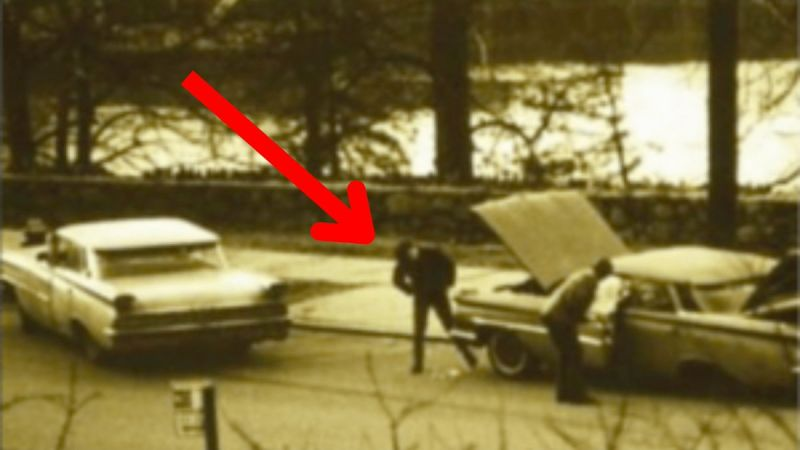
1969: A Psychologist Zimbardo left 2 identical cars abandoned on the street
One in wealthy Palo Alto
Other in criminal Bronx, NYC
Within hours, the Bronx car was stripped apart
But, the Palo Alto car sat untouched
The reason exposed the dark reality of our world🧵
Charlie Munger said your education made you dumber.
Here are the 13 Mental Models schools refuse to teach (because critical thinkers are harder to control) :
DID YOU KNOW?
After Sarah passed on, Abraham married another woman called Keturah, and they had children together (Genesis 25). But something very striking stands out — those children never became part of the covenant story the way Isaac did.
Why?
Because God had already established a covenant with Abraham through Sarah. That covenant was not random, and it was not transferable based on effort, desire, or even results. It was ordained by God Himself.
This reveals something deep and powerful:
God is a God of covenants.
There are things in your life that will only be sustained by the covenant that birthed them.
You can have many opportunities, many connections, even many results — but only what is tied to your covenant with God carries divine backing, preservation, and generational impact.
Let me break it down for you:
If you rose through prayers — it is prayers that will sustain you.
If you rose through giving — it is giving that will sustain you.
If you rose through consecration — it is consecration that will keep you.
The mistake many people make is this:
They see someone sustained by a certain grace and they try to copy the method without understanding the covenant behind it.
You cannot copy covenants.
What works for one man may not work for another — not because God is partial, but because covenants are personal.
Isaac didn’t struggle to become the child of promise — he aligned with what God had already spoken.
Listen carefully:
Your sustainability in life is tied to your alignment with your covenant.
Some people abandon the very thing that lifted them.
God helped you when you were fasting and praying, now you are too busy to pray.
God raised you when you were committed to giving, now you feel like you’ve “arrived.”
God preserved you when you were humble and yielded, now pride has taken over.
And you’re wondering why things are shaking…
It’s because you have stepped outside the covenant that was carrying you.
Don’t do that.
Go back to your altar.
Go back to your place of encounter.
Go back to the voice that started your journey.
Stop trying to live another man’s spiritual life.
Find your own covenant with God.
Walk in it.
Guard it.
Stay consistent in it.
Because at the end of the day,
It is not activity that sustains a man…
It is covenant.
Taiichi Ohno built Toyota’s production system. His training method was a literally chalk circle on the factory floor.
He’d put a new manager inside it and tell them to stand there and watch!
8 hours
No phone
No notebook
Just watch
After an hour they’d come back saying they’d figured out the problem. Ohno would send them back.
“Keep watching.”
By hour 3 they’d notice the worker reaching awkwardly for a part.
By hour 7, the pause before every weld because the operator was waiting on the guy behind him.
None of that shows up in a report. Reports compress 8 hours into just a number.
The number says output is 94% of target.
It doesn’t say why the guy is standing on his tiptoes.
Most executives have never watched their own operation for 8+ hours.
They’ve read a 1000+ dashboards. Those are not the same thing.
By the time it reaches you, it’s just a bar chart. On a bar chart, everything looks pretty fine.
The only way out is to go sit in the circle.
Sit there until you notice something that isn’t in the summary or bullet points.
Because the summary is always wrong in exactly the places that matter.
A new father became so terrified of never learning anything again that he accidentally dismantled the biggest lie in education.
His name is Josh Kaufman, and he wasn't a neuroscientist or a professor. He was an author working from home, running a business with his wife, with a newborn daughter who had just obliterated any concept of free time he thought he had.
Around week 8 of sleep deprivation, he had the thought every parent has.
I am never going to learn anything new ever again.
And because he was the kind of person who responds to panic with research, he went to the library and started reading everything he could find about how humans acquire skills. He read book after book, study after study.
Every single one said the same thing.
10,000 hours.
He had a full-body reaction to that number. 10,000 hours is a full-time job for five years. He didn't have five years. He didn't have five hours. He had a newborn and a business and a wife who was also building a business in the same house.
So he kept digging. And here is where it gets interesting.
The 10,000 hour rule came from a researcher named K. Anders Ericsson at Florida State University. What Ericsson actually studied was professional athletes, world-class musicians, chess grandmasters people at the absolute tip of ultra-competitive, ultra-high-performing fields. His finding was that the people at the very top of those narrow fields had put in around 10,000 hours of deliberate practice.
That is all the finding said.
Then Malcolm Gladwell wrote Outliers in 2007, and the message went through a game of telephone that destroyed its meaning entirely.
It takes 10,000 hours to reach the top of an ultra-competitive field became it takes 10,000 hours to become an expert, which became it takes 10,000 hours to become good at something, which became it takes 10,000 hours to learn something.
That last statement is completely false. And the actual research had been showing something different the entire time.
When cognitive psychologists study skill acquisition, they measure a graph that looks identical across every domain they have ever tested. At the start, performance is terrible. With a small amount of practice, it improves rapidly. Then it plateaus, and subsequent gains become much harder and slower to achieve.
The steep part of that curve the jump from knowing nothing to being reasonably good happens much faster than anyone tells you. Not 10,000 hours. Not 1,000 hours.
20 hours.
Kaufman tested this himself. He had always wanted to learn ukulele. He picked one up, put 20 hours of focused deliberate practice into it, and stood on a TEDx stage playing a medley of recognizable pop songs in front of a live audience. The crowd went wild. He then told them that performance was his 20th hour.
But 20 hours is not just a number. There is a method inside it.
The first step is to deconstruct the skill. Most things we think of as single skills are actually bundles of dozens of smaller skills. You do not need all of them. You need the ones that get you to your specific goal the fastest. In music, this means most songs use four or five chords. Learn those first. Ignore the rest until they matter.
The second step is to learn just enough to self-correct. Get three to five resources books, courses, videos but do not use them as a reason to delay practice. The point of learning is not to master theory first. It is to get good enough at noticing your own mistakes that you can adjust as you go.
The third step is to remove barriers to practice. Not through willpower. Through structure. If the instrument is in the case in the closet, you will not play it. If your phone is in the room, you will not focus. Kaufman was brutal about this. The environment does the work that discipline cannot sustain.
The fourth step is the one that actually makes the system work. Pre-commit to 20 hours before you start.
Here is why this matters. Every skill has what he called a frustration barrier. The early part of learning anything is genuinely terrible. You are incompetent and you know it. That feeling is so uncomfortable that most people quit before they ever cross to the other side of the curve. By pre-committing to 20 hours, you are making a contract with yourself to push through the frustration long enough to arrive at the part where things start clicking.
The barrier to learning something new is never intellectual. It is emotional. We are afraid of feeling stupid.
That fear costs most people everything they could have learned.
Kaufman figured this out while holding a baby and running out of time, which is the most human possible condition for having a breakthrough.
Most people are waiting for the perfect season to start. He just started.
20 hours is 45 minutes a day for a month. That is it. That is the price of going from knowing nothing to being genuinely capable at almost anything you can name.
The 10,000 hour rule was never about learning. It was about becoming the best in the world.
You probably do not need to be the best in the world.
You just need to start.