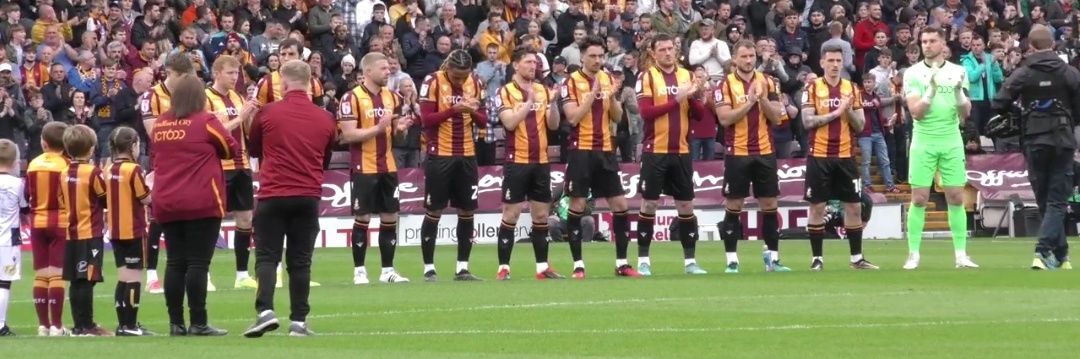
Anyone else in same situation, Got enough points for my Man City ticket tomorrow, need a seat for my daughter beside me. If I get mine tomorrow, hers Friday on her season ticket — do you think will be able to sit together? Can we sit were we want #bcafc
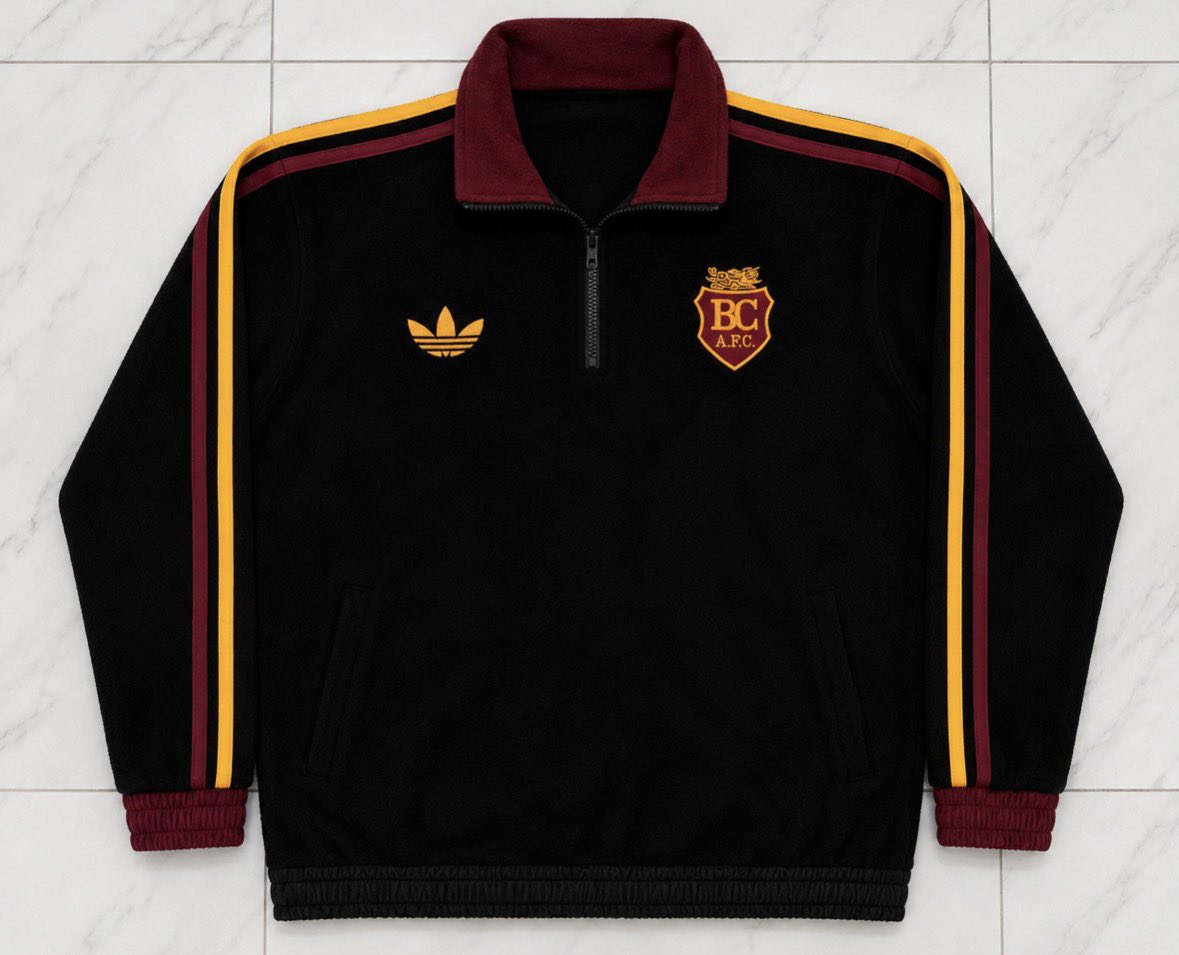
❗️AVAILABLE NOW ❗️
Order the black 1/2 Zip - https://t.co/LwJ3FdHOQ9
Order the BCAFC Windbreaker Jacket - https://t.co/rFvuA6qD1z
50 available to pre order ✅
To win one:
• Repost 🔄
• Follow ❤️
• Comment your size ⬇️
#BCAFC
🏴 He was supposed to be the next Wayne Rooney. Instead, his career became one of football's saddest cautionary tales.
George Green was just 15 when Everton beat Tottenham and Bayern Munich to his signature in a deal with Bradford City worth up to £2 million.
The teenager from a tough council estate in Dewsbury was tipped for greatness. He received a £45,000 signing-on fee, earned £4,000 a month and was labelled the "new Gazza" by the local press.
In October 2011, he had been travelling to London for a Tottenham trial when his agent called with the news that Everton had agreed a deal.
He signed a two-and-a-half-year contract and was quickly fast-tracked into Everton's under-21 team, playing alongside future England internationals John Stones and Ross Barkley.
But the money, attention and pressure soon became too much.
Green later admitted that he became arrogant, stopped taking training seriously and began wasting the money he had received.
"I wasn't going into training because I thought I was better than everyone else," he confessed.
"Being an idiot. Being an absolute idiot, if I'm honest."
Then came cocaine.
Introduced to the drug during a night out with friends, Green developed an addiction that eventually cost him more than £2,000 every month.
His life became a battle between the promising footballer everyone saw and the troubled teenager he was becoming.
Everton sent him to the Priory clinic for treatment, paying around £5,000 a week. But his problems continued.
In 2015, aged just 19, he was released by Everton without making a single senior appearance.
The fall was devastating.
He went on to play for Oldham, Burnley and Ossett Albion, where he earned just £75 a week.
His addiction, financial problems and depression pushed him towards the darkest moment of his life.
One afternoon, he stood on the platform at Mirfield railway station, contemplating suicide.
"I was in that much debt, I thought I'd lost my partner because of my drug use, and I didn't see a way back for me with football," he said.
Thankfully, he walked away from the platform.
He chose to fight, went into rehabilitation, got clean and began rebuilding his life.
He moved to Norway to play for Viking Stavanger before returning to England, where he represented Chester.
Today, George Green is 30. He works as a concrete panel fitter on building sites in Leeds, describing the job as a "long, hard, messy graft".
He still plays football, turning out for Liversedge FC in the Northern Premier League.
He may never fulfil the enormous expectations placed on him as a teenager, but he is alive, sober and still pursuing the game he loves.
And he hasn't completely given up on himself.
"I still believe I'll get another chance," he says. "I'm still hungry. I hope it's just a matter of when, not if. I'm ready."
George Green was once expected to become a superstar. Instead, his story became one of addiction, lost opportunities and the fight to rebuild a life.
**The £2 million wonderkid never became the next Wayne Rooney. But his survival is a victory worth telling
We can confirm that Kian Harratt has left the club by mutual consent.
WTFC would like to wish Kian and his family all the best for the future, and we thank him for his commitment during his time at the club 💛
#WeRoarTogether💛