How can the U.S. Department of Education evolve to meet modern challenges?
Join our webinar on January 21 to hear from former Secretaries of Education Arne Duncan, John King, and Margaret Spellings as they share their insights. RSVP here: https://t.co/bZ5bPtqYix
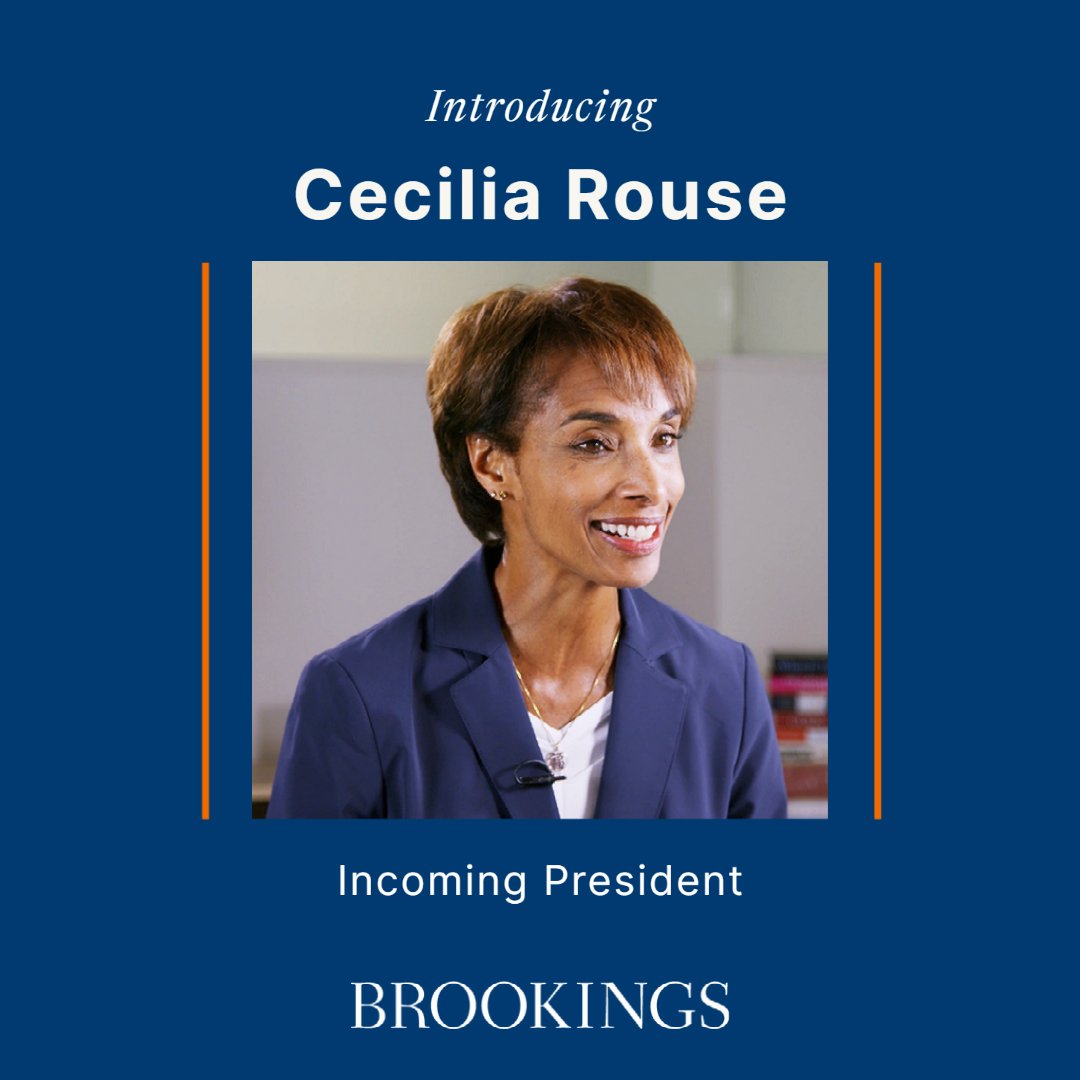
We are pleased to announce the next Brookings president, Cecilia Rouse! Dr. Rouse joins us from Princeton University and previously served in the White House as the Chair of the Council of Economic Advisers. We look forward to welcoming her in January. https://t.co/JxCEkazokj
📖 A new @BrookingsEd report reveals what the gender pay gap in teaching looks like & why it persists.
@DrMikeHansen, @Quintero05Diana, & Nicolas Zerbino explore policy solutions to curb this disparity, including paid family leave & salary history bans. https://t.co/GeKnTnzWTA
New report(!) & virtual event(!) on school finance. Event starts at 1:30 ET today w/ some of the most thoughtful voices out there on school finance: @econsarahreber@MargueriteRoza@DrMikeHansen & Richard Bowman.
Watch here -- https://t.co/zu81H92bwA
A new @BrookingsEd report examines how school resources are allocated locally & federally within districts in light of longstanding concerns about inequities embedded within U.S. school finance systems.
@JonValant, @DrMikeHansen, & Nicolas Zerbino:
https://t.co/JAOsM4eyYn
Hey supts- just a friendly reminder that it is DEFINITELY ALLOWED to use ARP funds to offer incentives to students (and their families!) to get the COVID-19 vaccine. Official text from ED here: https://t.co/QtruwxDv6Y
Job opening at @BrookingsInst! Fellow position (think asst prof) in Brown Center on Education Policy. Open to ECE, K-12 & higher ed. I’ve loved the work. Very excited to have someone join our (small) @BrookingsEd team in DC. Feel free to reach out with ?s.
https://t.co/FmC5hEENu5
@CEDR_US I'm sure the logistics are a mess, but I'd submit later start times for middle/high school students, even if it means earlier start times for elementary schoolers (for sharing buses). https://t.co/5CHC0baJKr
@JoshuaSGoodman Definitely true, but this non-relationship (or weak relationship) held up to including a bunch of those variables you'd think might matter. I alluded to it in that post and then Michael Hartney & Leslie Finger really dig into it here (Table 1) -- https://t.co/6lzgrWQ2tH
Agree, though I'd encourage you to read the blog post you cite, beginning with the first sentence: "One of the most enduring—and maddening—aspects of Betsy DeVos’s legacy as secretary of education will be the way she has politically charged complicated issues in education."
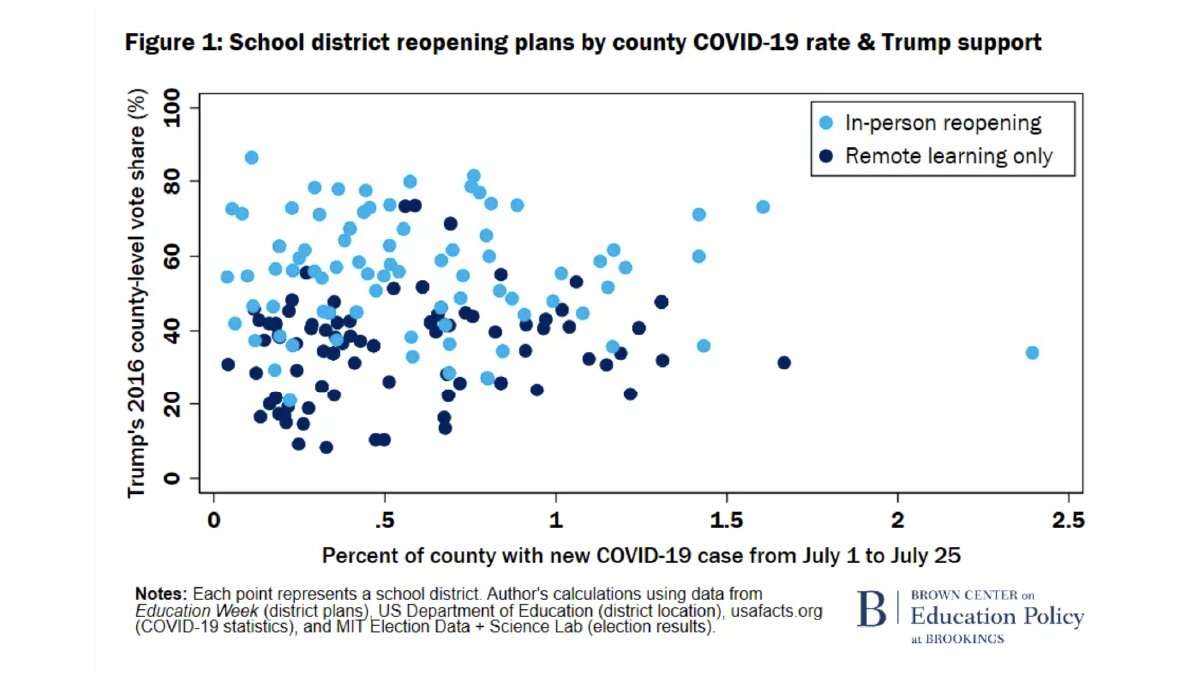
.@BrookingsInst: If public health were driving districts’ decisions, we might expect to see districts with relatively high COVID-19 rates opting for distance learning. In reality, there is no relationship between reopening decisions and cases. https://t.co/SzgvQJAWE2
Nice piece (and study) here by Mike Gilraine. Always so struck by the magnitude and range of positive effects from (low-cost!) efforts to reduce kids' exposure to pollutants. Low-hanging fruit for policymakers looking to improve health + educational outcomes.
Low-cost interventions, like plug-in air filters, may be able to deliver the promised health and academic benefits of cleaner air in classrooms. https://t.co/6srNPXZp1p