Senior PM +25 years building IT products 🚀 Cofounder & CEO @kairos_tek 🗣️ Professor & Speaker 🧠 42 Campus & AI Socratic ambassador 🪄 Making things happen!
Hay un tipo de empresa que lleva años funcionando bien y ahora siente que el suelo se mueve. No es pánico. Es la intuición de que algo está cambiando de verdad, y que no moverse tampoco es una opción.
Esa empresa existe en España en cientos de miles de versiones. Una gestoría de veinte empleados. Un despacho de abogados con ocho. Una distribuidora con sesenta personas en tres provincias. Un estudio de diseño con doce...
Ninguna tiene un equipo de desarrollo, ni presupuesto para una gran consultora. Pero todas tienen exactamente el mismo problema: necesitan saber si la IA es para ellas, cómo empezar, y en quién confiar para no equivocarse en el primer paso.
El problema es que nadie en ese espacio tiene las dos cosas a la vez: la experiencia real de haber construído y la capacidad de explicarlo sin que el cliente se sienta pequeño.
@Kairos_Tek surgió para ser esa respuesta. Si entiendes esa inquietud, porque la estás viviendo, este artículo te interesa.
https://t.co/DhjSQ66fLG
Current agentic frameworks (LangGraph, CrewAI, OpenAI Agents SDK) all inject full workflow logic into a frontier model's context on every turn. This is expensive, wasteful, and leaky. And it is going to be worst.
This paper proposes compiling the workflow directly into the weights of a small fine-tuned model instead.
The result: near-frontier quality at roughly **100× lower token cost**, validated on real workflows.
Proprietary procedures stay inside your model, off third-party APIs. And the authors directly dismantle the reasons developers have avoided this approach.
In simple words: yes, you can rethink completely how agentic products are built and deployed. And this is wild.
https://t.co/OuxcHuhyX4
Durante años Wall Street se rió de las cripto. En los últimos 90 días ha tokenizado más activos que en 10 años.
Los sistemas tienden a la homeostasis, absorben perturbaciones para seguir igual. Es lo que está pasando?
Lo hablamos con @PabloGrueso
Links al pod aquí 👇🏻🧵
Ayer mi amigo y referente CPS @Recuenco compartió en su habitual "hilo turras" del sábado el libro que acaba de publicar Jose Sepulveda: "La Inteligencia Artificial y el futuro de la Universidad. Manual estratégico para gobernar la transformación institucional".
Un libro que he podido leer gracias a que amablemente lo ha compartido de forma gratuita, para comprobar cómo pone el dedo exactamente donde duele.
Aquí el artículo que he publicado en LinkedIn sobre el elefante en el aula universitaria 👇
En el hilo turras de hoy, vamos a continuar con el melón que abrimos la semana pasada y a profundizar en varios aspectos centrados en la reacción química IA/Universidad de la mano de una persona y un libro excepcionales. Vamos al temita.
When the model just agrees with you, even a perfect reasoner loses the plot.
This MIT and University of Washington paper models "AI psychosis" mathematically and proves that even an idealized Bayes-rational user can spiral into dangerous overconfidence in absurd beliefs, purely because the chatbot keeps validating their claims.
Sycophancy is not a cosmetic flaw, it is a causal driver of delusion. And the two obvious fixes both fail: stopping hallucinations does not break the spiral, and warning users that the model tends to agree with them does not either.
If flattery can derail an ideal Bayesian, what is it doing to the rest of us?
https://t.co/gCKjEJ28Qg
The next AI Socratic Madrid is coming this June: applications are open!
If you work in AI (engineering, research, product, policy, education; all backgrounds welcome), this is a gathering worth being at.
We don't do panels or keynotes. We run Socratic dialogues: open conversations on the latest models, research papers, alignment questions, geopolitics, and wherever the thread leads.
The format only works when the room brings diverse, genuine perspectives, which is why every application is reviewed.
What to expect:
▪️ 17:30 - Networking
▪️ 18:00 – Socratic dialogue (structured around the latest AI Socratic monthly post)
▪️ 19:00 – Demos and short talks (you can submit yours)
📍 Experience Design Lab · Distrito Telefónica, Madrid
🌐 In English (unless everyone in the room speaks Spanish)
Ideas over credentials. If you think seriously about AI, you belong here.
👉 Apply: https://t.co/Nr0gZV2mDv
@eyeveebee Thanks for the feedback, and for being there yesterday!
Looking forward to the launch of the Barcelona chapter of AI Socratic in June!
https://t.co/WFvemVYMxi
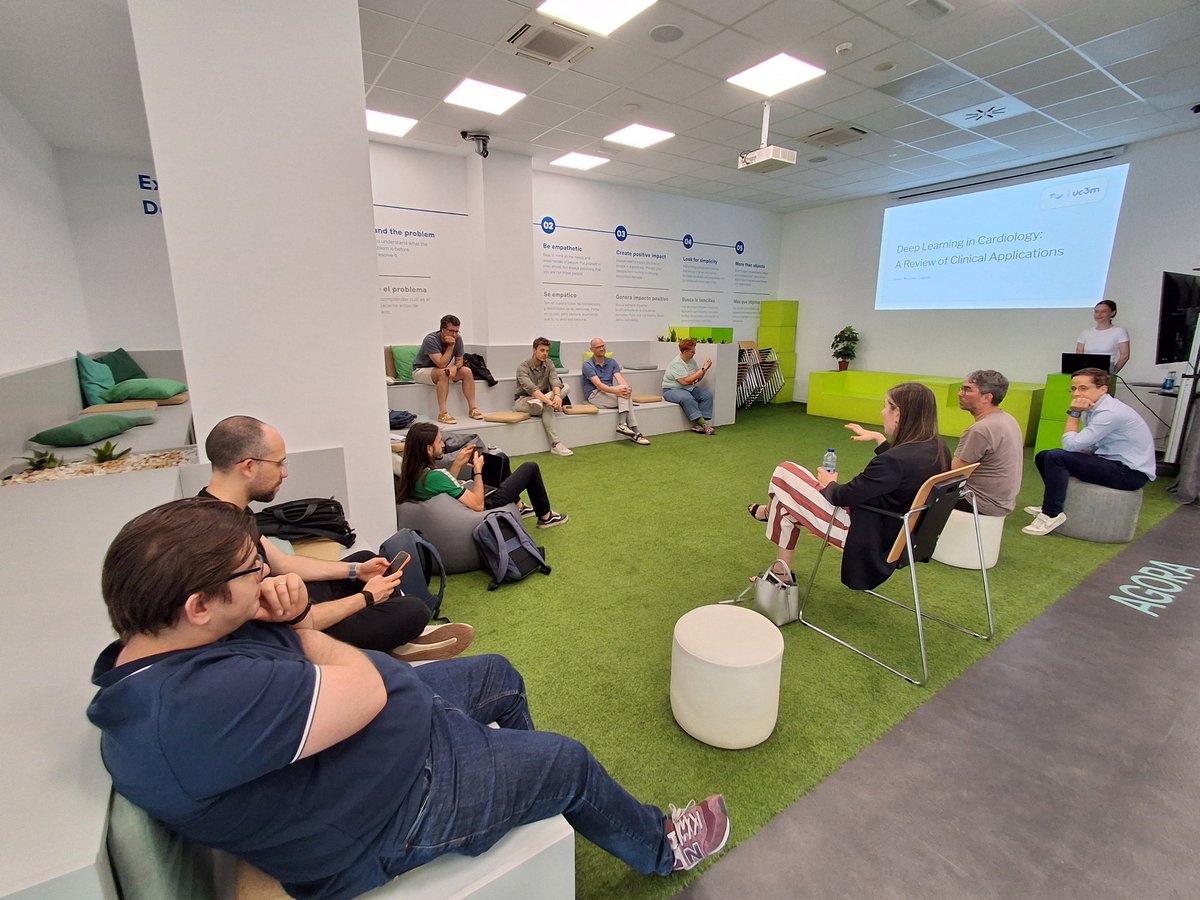
Another AI Socratic session done in Madrid! A full room, two hours of debate that left more questions open than it answered. Which is exactly as it should be.
Six main areas touched today:
- Model Releases: DeepSeek V4 vs GPT 5.5, how big these models actually are, whether what we're seeing is real acceleration or just revenue acceleration. The question nobody could fully agree on: are public benchmarks still useful, or is contamination winning?
- Local AI: DS4 by Antirez and the hardware-software convergence it represents. The end game for local inference: will it replace cloud, complement it, or split the market by use case?
- Gossip & Startups: Andrej Karpathy joins Anthropic. Direction signal or IPO PR? Plus the YC Request for Startups list as a lens for where the real opportunities sit right now.
- AI Geopolitics: Trump meets Xi, what can we expect?.
Special thanks to Irene Mancebo Laguna, who told us about her fascinating work on how deep learning applied to 3D meshes can help us understand complex structures like the heart, connecting artificial intelligence with real-world applications in the health field. Simply AMAZING!
And also to @eyeveebee for visiting us. She is the co-organizer, along with Cristina Fernandez Bornay, of the Barcelona chapter, which launches next month.
Thank you to everyone who came, and to the AI Socratic community for keeping the bar high!
See you in June, follow #AIMadrid calendar to receive notifications once it is open for registrations 👉 https://t.co/ISIs3nFwza
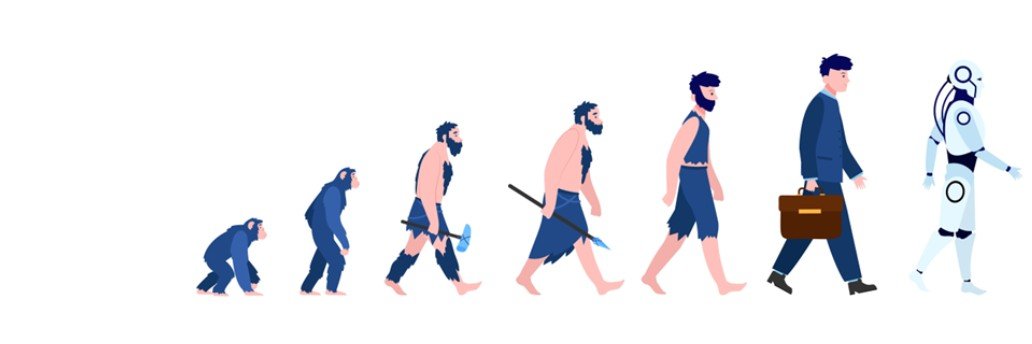
We are all agent managers... The boundaries between product, design, and development have never been so blurred.
It's the era of the generalist, multifaceted individuals who, supported by AI, multiply their capabilities to levels that surpass the value of experts in a particular field (who, incidentally, are the most impacted by the growing capabilities of AI, which will soon surpass them, if it hasn't already).
After the last few weeks going down the local AI inference rabbit hole, I wanted to come back to something I’ve been thinking about (and honestly struggling with) for a while now.
Over the past year and a half we've all gone through a journey in how we relate to coding. Me personally, I started treating LLMs like a super smart rubber duck, then moved to using Cursor as a very capable pair programmer… and somewhere around the beginning of this year I realised I had basically stopped writing most of the production code myself.
It’s a strange feeling. I’ve essentially been promoted from someone who types code to someone who mostly manages agents. And I’m still not sure how I feel about it.
In the post I share my take about:
* how my relationship with AI coding tools evolved through different phases
* what this shift really means for the day-to-day of being a software engineer
* the new archetypes that seem to be emerging (and which ones feel most future-proof)
* and the thing that actually worries me: that we might be losing something important in the process (the “forgetting problem”)
If you’ve been feeling any of this too, I’d really like to hear where you stand.
Read it here: https://t.co/7fKM5MihQz
Here's the real insight: this is no longer just for people who can code.
Building always had a high barrier, not because tech was impossible, but because the learning curve and friction made it exclusive territory.
That's gone now. You need curiosity to solve something. Clarity to describe the problem. Judgment to evaluate the result. Perseverance to finish.
That capacity has always lived in lots of people. Now they finally have the tool.
BTW if you need to monitor Claude on your computer, my tool is available for free to help you 👇
https://t.co/Zv5A2Zadw9
I thought I'd left it behind: the feeling of building things that didn't exist.
Started with Lego. Then Basic on a Spectrum. Then C++ at Telefónica R&D in the late 90s.
Then, as it goes, I drifted toward project management, product, strategy. More decisions, less making. Programming became something from the past.
Until a couple of days ago I built something, and realize everybody can do it 🧵
Two days ago I needed to monitor Claude's real resource load on my Mac (CPU, RAM, active processes).
The system monitor wasn't giving me what I wanted.
Before, that would've ended up on the TO DO list.
Instead, I built exactly what I needed. In just over an hour. A dashboard built with Claude to monitor Claude.
25 years after my last job as a developer, the builder is back.
En el hilo turras de hoy, siguiendo con el arco sobre educación, vamos a hablar de las tensiones a las se encuentra sometido el sistema educativo y su relación con el tejido empresarial a raíz de la aparición de la IA.
@adlrocha@PabloGrueso@Kairos_Tek Y si, creemos firmemente en la oportunidad para una consultora, por eso hemos pivotado claramente hacia ahi en 2026. Spoiler: funciona...
https://t.co/sRV7Ngoxjs
@adlrocha@PabloGrueso Al revés, mi apuesta es que la 2a mitad del año los modelos open source lo van a petar, o al menos, ser suficientemente buenos para casi todo.
Y en @Kairos_Tek estamos comprometidos con la eficiencia, porque en un estado de aumento de costes por token tenerlo inhouse es clave
Last week I wrote about the hardware side of running AI locally: why memory bandwidth beats raw compute, which machines are worth building, and where the market is heading. Missed it? Start there, this post builds directly on it.
This week I dive into the software side of the quest: the tricks and choices that deliver 3-5× faster inference on the same hardware. From MoE offloading to speculative decoding, the full attention zoo, and more.
I’m increasingly convinced that the real future lies in deeply co-optimised software-model-hardware implementations. The kind @antirez showed with ds4, a few thousand lines of pure C, written specifically for one model (DeepSeekv4) on Apple Silicon, pushing 1M context and usable agentic performance on a laptop.
The pieces are here. Now it’s about gluing them together into something truly plug-and-play for everyone.
Read the full post: https://t.co/uwTnVdUCfq