A security guard walking down US Highway 101 where there are towering stacks of hollow iron floats from which the iron antisubmarine nets were suspended to protect the US ports during WWII
😮Increïble!
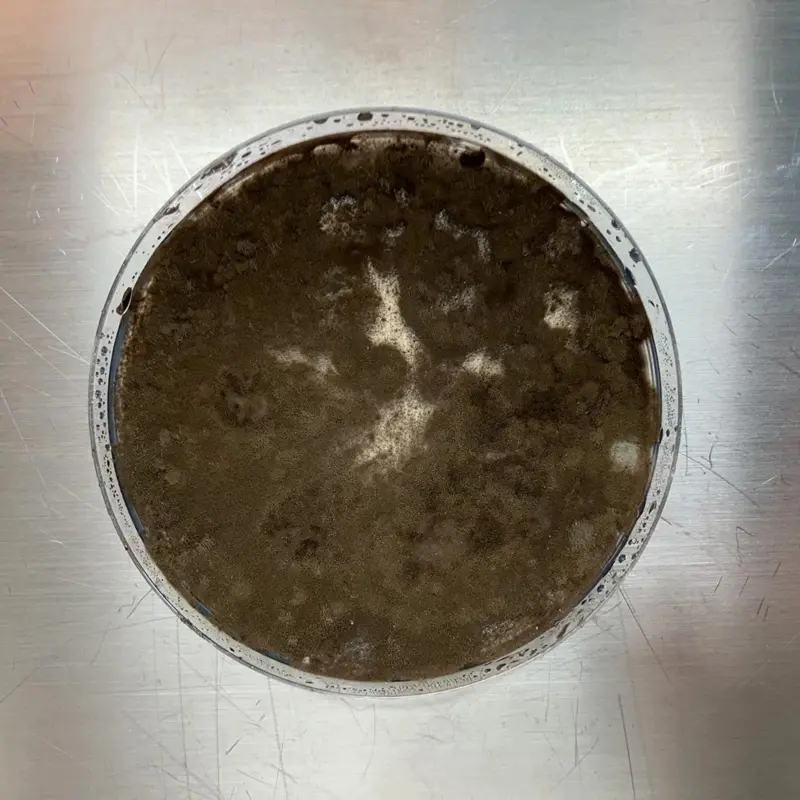
El fong Cladosporium sphaerospermum creix, alimentat per la radiació, a les parts més perilloses de Txernòbil.
El fong fa un procés anomenat radiosíntesi per absorbir radiació i emprar-la per alimentar el seu cicle metabòlic.
S'han fet proves a l'Estació Espacial Internacional i absorbeix perfectament la radiació de l'espai.
De manera que alguns científics es plantegen si podria ser un efectiu escut per protegir-nos. Un escut que, a diferència dels sintètics, es regenera i creix.
La vida és fascinant!
A distant giant, almost invisible — until you look closer.
At the top, the Hubble Space Telescope shows Neptune in visible light: a deep blue world, calm and minimal, with only faint clouds drifting through its atmosphere. From this view, it appears simple — almost featureless.
Below, the James Webb Space Telescope reveals a completely different Neptune. In infrared light, the planet brightens dramatically, its rings emerging in stunning clarity. High-altitude clouds glow, and its largest moon, Triton, shines like a distant star.
What once seemed like a quiet, distant sphere is suddenly rich with structure and detail.
Neptune reminds us that even the most hidden worlds have stories to tell — you just need the right way to see them.
Same planet. Different light. A deeper perspective.
Image Credit: NASA, ESA, CSA, STScI
In the last 20 years, extreme poverty has been cut by more than half worldwide.
More than 1.2 billion people have escaped extreme poverty since 2000 — mostly in Asia and parts of Africa. Child mortality rates have dropped dramatically, more girls are going to school than ever before, and access to clean water and electricity has improved for hundreds of millions.
We hear nonstop about problems, but humanity has made incredible progress in lifting people out of poverty — quietly and steadily.
It’s not perfect, and there’s still a long way to go, but this kind of progress deserves more attention.
@prinkasusa Child deaths from measles have plummeted.
Global measles deaths dropped dramatically due to vaccination campaigns supported by groups like Gavi, the Vaccine Alliance, saving tens of millions of lives since 2000.
@prinkasusa We are quietly winning the war against cervical cancer. In countries with high HPV vaccination rates, like Scotland and Australia, cases have been nearly eliminated in young women. We're literally watching a cancer disappear in real-time and it barely makes the evening news.
Polio is on the brink of eradication thanks to global vaccination efforts led by the World Health Organization and partners. Several regions have already been declared polio-free.
The Collapse of Trachoma
As of January 2026, the World Health Organization (WHO) reported that the global burden of Trachoma, the world’s leading infectious cause of blindness, has fallen below 100 million people for the first time in history.
To understand the scale of this victory, look at the numbers:
2002: 1.5 billion people were at risk.
2026: Fewer than 97 million people require intervention.
This is a 94% reduction in just over two decades. Like the Guinea worm, this wasn't solved by a single miracle pill. It was achieved through the SAFE strategy: Surgery, Antibiotics, Facial cleanliness, and Environmental improvement. We are watching a disease that has blinded humans since the Neolithic era simply evaporate because of better plumbing and dedicated local health workers.
A parasite that has been eating people for 3,500 years is about to be wiped off the planet. It infected 3.5 million people in 1986. Last year, it infected 10. And I have not seen it make a single front page.
It is called Guinea worm. You drink contaminated water from a pond in a poor village. A year later, a worm up to three feet long starts coming out of your leg through a burning blister. There is no pill that stops it and no surgery that works. You wrap the worm around a stick and pull it out slowly, over days or weeks, inch by inch. If you rush, the worm breaks inside you and causes a fresh infection.
Guinea worm is ancient. Preserved worms have been pulled out of Egyptian mummies from around 1000 BCE. The Ebers Papyrus, an Egyptian medical scroll from 1550 BCE, describes pulling the worm out with a stick. For three and a half thousand years, that was the best humans could do.
Then in 1986, public health workers decided to kill the parasite off. They had no vaccine and no drug. What they had was cheap cloth water filters and a small army of volunteers willing to walk from village to village for decades.
The plan was simple. Give everyone who drinks from a pond a cloth filter to strain out the tiny water fleas that spread the parasite. Then send volunteers walking house to house, year after year, teaching people how to use the filters and keeping anyone with an emerging worm out of the water.
It worked. From 3.5 million cases a year to 10. Four were in Chad, four in Ethiopia, two in South Sudan. The other four countries where the worm used to be common, Angola, Cameroon, the Central African Republic, and Mali, had zero human cases for the second year in a row. The World Health Organization has already certified 200 countries as Guinea worm free. Six are left.
The last hurdle is dogs. Cameroon had 445 infected animals last year and Chad had 147, so a lot of the remaining work is on animals, not humans. Strays get leashed, and crews treat ponds to kill any remaining worms. The campaign keeps watching until the number hits zero.
When Guinea worm hits zero, it becomes the second human disease ever erased from the planet. The first was smallpox. It will also be the first parasite humans have ever wiped out, and the first disease ever ended without a single dose of medicine. Volunteers walked village to village with cloth filters for 40 years. Now a plague from the age of the pharaohs is about to be gone.
Delta Force in the 1980's, when Tier 1 guys were indistinguishable from suburban dads.
No tattoo sleeves or PED enhanced muscles. They could literally blend in anywhere.
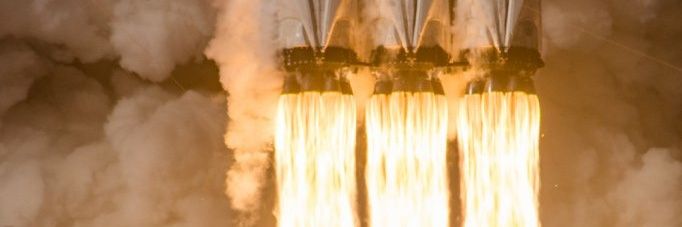
SLS vs. Saturn V, a real time comparison.
Saw a comparison yesterday using my video on the left at 50% speed. Here's a proper comparison with both rockets launching at their real speeds.
You'll notice SLS is significantly faster off the pad because of the dual massive SRBs!
We live on a planet with 1.3 billion habitable years left. We've had rockets for 69 of those years. In that time, the cost of reaching orbit dropped from $54,500 per kilogram to $2,720, and SpaceX is targeting under $100 with Starship. If they hit that number, getting to space becomes 545 times cheaper in a single lifetime.
329 orbital launches happened in 2025. Almost one a day. The space economy crossed $626 billion last year and should hit a trillion by 2034. SpaceX just filed for an IPO targeting a $2 trillion valuation, worth more than every airline on Earth combined. Starship, their fully reusable rocket (both stages fly back and land), can lift 150 tons to orbit. The entire International Space Station weighs 420 tons. Three flights could put the whole thing up there.
The engineering side of this is solved. What remains is a survival problem. Researchers published a paper in Scientific Reports calculating the natural extinction rate for humans, how often we'd get wiped out by asteroid strikes, supervolcanoes, the stuff we can't control. Less than a 1-in-14,000 chance in any given year. At that rate, we'd survive millions of years, more than enough to spread across the solar system.
Toby Ord, a philosopher at Oxford who spent a decade studying how civilizations end, puts the odds of a civilization-ending catastrophe before 2100 at 1-in-6. The threats aren't from space. Nuclear war. Viruses engineered in labs that could spread before anyone understands what hit them. AI systems are smart enough to act on goals we never gave them. All things we built ourselves.
A 2017 NASA paper made this case: we have a roughly 50-year window to lock in spacefaring infrastructure before resources run thin and energy costs make a restart nearly impossible. We're 9 years into that window. Given enough time, the math takes this to 100%. The only question that matters is whether we make it through the next few decades without blowing our shot.
Hace unos cinco millones de años, el mar Mediterráneo no existía. Lo que había entre Europa y África era un desierto de sal abrasador con cañones de kilómetros de profundidad.
Entonces ocurrió la mayor inundación de la historia de nuestro planeta. 🧵👇
[Imagen: YouTube/@Educaixa ]
El astrofísico Neil deGrasse Tyson lo resume con datos que no admiten mucha discusión:
En la época de las cavernas, un ser humano vivía en promedio 30 años. Para 1840, la esperanza de vida apenas había subido a 35. Y eso que todo era “orgánico”: aire puro, agua sin procesar y animales de libre pastoreo.
Aun así, la gente moría joven.
Lo que realmente disparó la expectativa de vida no fue la “vida natural”, sino la ciencia: vacunas, antibióticos, saneamiento, tecnología médica y conocimiento acumulado.
Por eso las expectativas razonables deben alinearse con lo que muestra la evidencia científica.
Y si algo enseña la historia es esto: cada vez que confiamos en la evidencia, avanzamos; cada vez que la ignoramos, retrocedemos.
Un efecto colateral de la administración Trump es que deja sin trabajo a los guionistas de los programas de comedia. Literalmente te dan el sketch ya hecho para que lo comente el presentador.






![HdAnchiano's tweet photo. Hace unos cinco millones de años, el mar Mediterráneo no existía. Lo que había entre Europa y África era un desierto de sal abrasador con cañones de kilómetros de profundidad.
Entonces ocurrió la mayor inundación de la historia de nuestro planeta. 🧵👇
[Imagen: YouTube/@Educaixa ]](https://pbs.twimg.com/media/HFe8k4RWEAAsx8H.jpg)


