@IvanCepedaCast 62.000 personas son una evidente minoría. En todo caso, tengan cuidado con su estrategia política porque el abuso de la calle puede hacerles perder aún más fuerza electoral de la que ya han perdido por la incompetencia del gobierno que salió hace apenas un par de meses.
@IvanCepedaCast El problema es que todo lo que dice de Espriella aplica, y con creces, para su jefe político. Al inicio pensé que estaba hablando era de Petro.
De lo mejor que puedo recomendar un 12 de octubre. Para quien gusta de grandes comparaciones históricas, y al mismo tiempo deplora el simplismo que muchas veces las acompaña, este libro es un verdadero deleite.
At this year’s National Book Awards, the classicist, poet, and professor Anne Carson shared with us the author she recommends to everyone and the best writing advice she’s given.
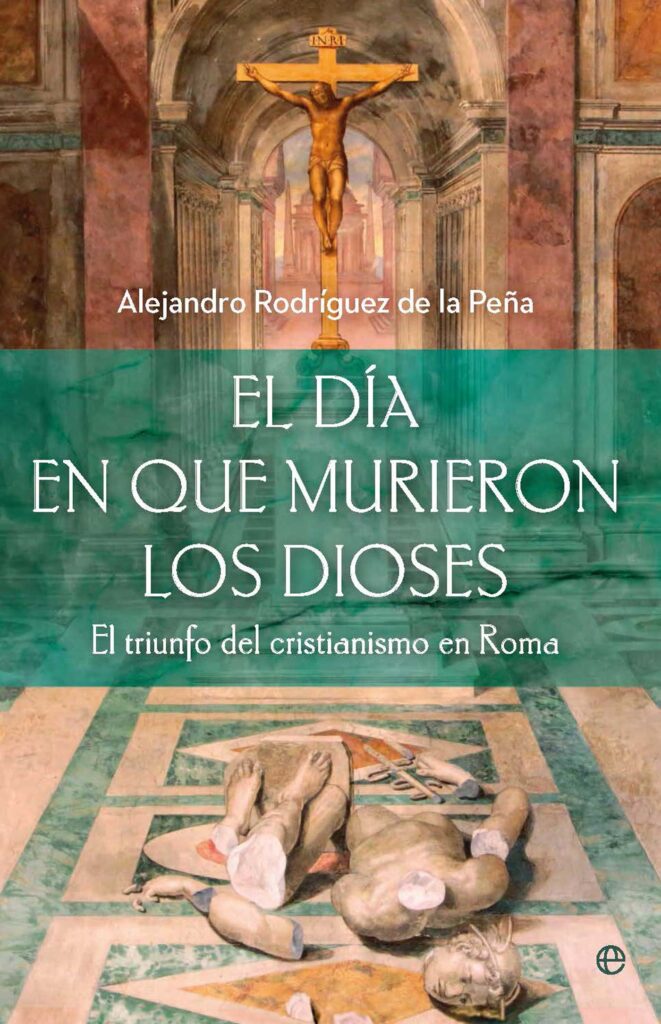
Si este libro lo hubiera escrito un autor extranjero, preferentemente uno anglosajón, habría un interés y un elogio disparatados hacia él. Pero no, El día en que murieron los dioses lo ha escrito @Torremarte1. Es un libro brillante sobre los orígenes del cristianismo
“I think there are two types of totalitarianism in our world. They are both essentially connected to Christianity. The first type, which, in a way, is the most honest, is neopaganism. Following Nietzsche, it says: ‘We don't want any of this [Christian concern for victims] business—it is sickness; a society has to be able to sacrifice [scapegoats]. The late Nietzsche says that very explicitly; it's been expurgated—no one talks about it because it's too close to Nazism. And everybody says Nietzsche has nothing to do with Nazism, but I think Nietzsche is the real philosopher of Nazism in the highest sense. This totalitarianism says that we're going to kill so many victims that were going to show you that the significance of our culture is not the ending of victimage, and we're going to reinstate paganism. ...
The other form of totalitarianism, which is on the ascendancy because the first one is gone, is overdoing [the concern for victims]. You have to remember that communism, all forms of totalitarianism on the left are [solutions for] the failure of Christianity and all religions to abolish scapegoating and [essentially say] ‘we have the better way to do it—because we know it's a social phenomenon, because we know it's a psychological phenomenon as the psychoanalysts will tell you, because we know it has something to do with race (there are certain races that don't scapegoat and others that do), and so forth.’ So, in a way, it's the ‘super’ Christianity that communism tried to be, and I think we're going to see other forms of it which might be infinitely worse that what we have seen in the past.”
— René Girard, a 1994 talk
🇮🇹 Italian PM Giorgia Meloni:
“I believe in a Western civilization founded on Greek philosophy, Roman law, and Christian values.”
Italy is in safe hands.
Hoy, 2 de octubre, se cumplen noventa y ocho años de la fundación del Opus Dei.
Josemaría Escrivá tenía veintiséis años y hacía ejercicios espirituales en Madrid. Entre una plática y otra se quedó solo en su cuarto y vio la Obra. No describió nunca aquella visión. Para hablar de ella volvía siempre a dos imágenes, el fuego y la luz, y contaba que había visto una multitud.
En mi columna de Omnes sigo esas imágenes hasta el Apocalipsis. Allí está el altar de donde sale el fuego (Ap 8, 3-5): suben las oraciones y baja el fuego. Allí está también la multitud, vestida de blanco. El libro dice de qué está hecho ese lino: «las buenas obras de los santos» (Ap 19, 8).
Ese vestido es de la Iglesia, la Esposa del Cordero. Lo cosen santos innumerables, casi todos sin nombre, y cada uno pone un hilo.
El Opus Dei no es el fuego: lo extiende. Al vestido de la Esposa le pone un hilo. Noventa y ocho años son pocos, y el vestido se sigue cosiendo.
👉 https://t.co/pUu26ngUXf
#OpusDei #Escrivá #Iglesia #Apocalipsis
En esta era de la inteligencia artificial, es urgente distinguir el arte humano de lo que producen las máquinas. Existe una diferencia ontológica, incluso antes que estética, entre el arte y lo que una máquina puede generar mediante cálculos estadísticos a partir de millones de imágenes ajenas. A los algoritmos les falta la chispa de lo humano. Por eso, la Iglesia desea renovar la alianza con los artistas y las instituciones culturales: una alianza para custodiar lo humano.


![Girardism's tweet photo. “I think there are two types of totalitarianism in our world. They are both essentially connected to Christianity. The first type, which, in a way, is the most honest, is neopaganism. Following Nietzsche, it says: ‘We don't want any of this [Christian concern for victims] business—it is sickness; a society has to be able to sacrifice [scapegoats]. The late Nietzsche says that very explicitly; it's been expurgated—no one talks about it because it's too close to Nazism. And everybody says Nietzsche has nothing to do with Nazism, but I think Nietzsche is the real philosopher of Nazism in the highest sense. This totalitarianism says that we're going to kill so many victims that were going to show you that the significance of our culture is not the ending of victimage, and we're going to reinstate paganism. ...
The other form of totalitarianism, which is on the ascendancy because the first one is gone, is overdoing [the concern for victims]. You have to remember that communism, all forms of totalitarianism on the left are [solutions for] the failure of Christianity and all religions to abolish scapegoating and [essentially say] ‘we have the better way to do it—because we know it's a social phenomenon, because we know it's a psychological phenomenon as the psychoanalysts will tell you, because we know it has something to do with race (there are certain races that don't scapegoat and others that do), and so forth.’ So, in a way, it's the ‘super’ Christianity that communism tried to be, and I think we're going to see other forms of it which might be infinitely worse that what we have seen in the past.”
— René Girard, a 1994 talk](https://pbs.twimg.com/media/HT3Uf02XUAAwPC0.jpg)




![Girardism's tweet photo. “I think there are two types of totalitarianism in our world. They are both essentially connected to Christianity. The first type, which, in a way, is the most honest, is neopaganism. Following Nietzsche, it says: ‘We don't want any of this [Christian concern for victims] business—it is sickness; a society has to be able to sacrifice [scapegoats]. The late Nietzsche says that very explicitly; it's been expurgated—no one talks about it because it's too close to Nazism. And everybody says Nietzsche has nothing to do with Nazism, but I think Nietzsche is the real philosopher of Nazism in the highest sense. This totalitarianism says that we're going to kill so many victims that were going to show you that the significance of our culture is not the ending of victimage, and we're going to reinstate paganism. ...
The other form of totalitarianism, which is on the ascendancy because the first one is gone, is overdoing [the concern for victims]. You have to remember that communism, all forms of totalitarianism on the left are [solutions for] the failure of Christianity and all religions to abolish scapegoating and [essentially say] ‘we have the better way to do it—because we know it's a social phenomenon, because we know it's a psychological phenomenon as the psychoanalysts will tell you, because we know it has something to do with race (there are certain races that don't scapegoat and others that do), and so forth.’ So, in a way, it's the ‘super’ Christianity that communism tried to be, and I think we're going to see other forms of it which might be infinitely worse that what we have seen in the past.”
— René Girard, a 1994 talk](https://pbs.twimg.com/media/HT3UgS5XQAAK2tQ.jpg)


