🚨Science just made death look like a storage problem.
Scientists mapped an entire fruit fly brain and uploaded it into a computer — it’s now living inside its own digital simulation.
A dead animal is now thinking inside a computer, and nobody is having the existential crisis they should be having.
The fruit fly brain contains roughly 140,000 neurons and 50 million synaptic connections. Scientists spent years mapping every single one, building a complete wiring diagram called a connectome, then reconstructing the entire architecture inside a digital simulation. The fly never asked for this. The fly has no idea. The fly is, by every structural measure, running.
What makes this genuinely staggering is not the technical feat, extraordinary as it is. What breaks the mind is the philosophical corner it backs us into. That fly brain was not programmed. Nobody wrote instructions telling it how to process smell, regulate hunger signals, or respond to threat. The behavior emerging from that simulation comes purely from the structure of the connections themselves. Consciousness, if the fly has any trace of it, was never stored in biological tissue. It was stored in a pattern. A map. A relationship between nodes.
And maps can be copied.
Neuroscientists have long debated whether the brain is more like a photograph or more like a song. A photograph is a physical object. Burn it and the image is gone forever. A song is a pattern. It can live in vinyl, in air, in magnetic tape, in streaming servers, in a human memory. The substrate is irrelevant. The pattern is the thing.
The fruit fly connectome just answered that debate with a living demonstration rather than a philosophical argument.
Every assumption humans carry about death, identity, and the boundary between biology and information just got significantly harder to defend.
This building in the San Siro stadium in Milan is not rotating - whatever your brain tells you. It's an optical illusion caused by the downward motion of the people inside. Our brains interpret the motion as belonging to the rotation of the building.
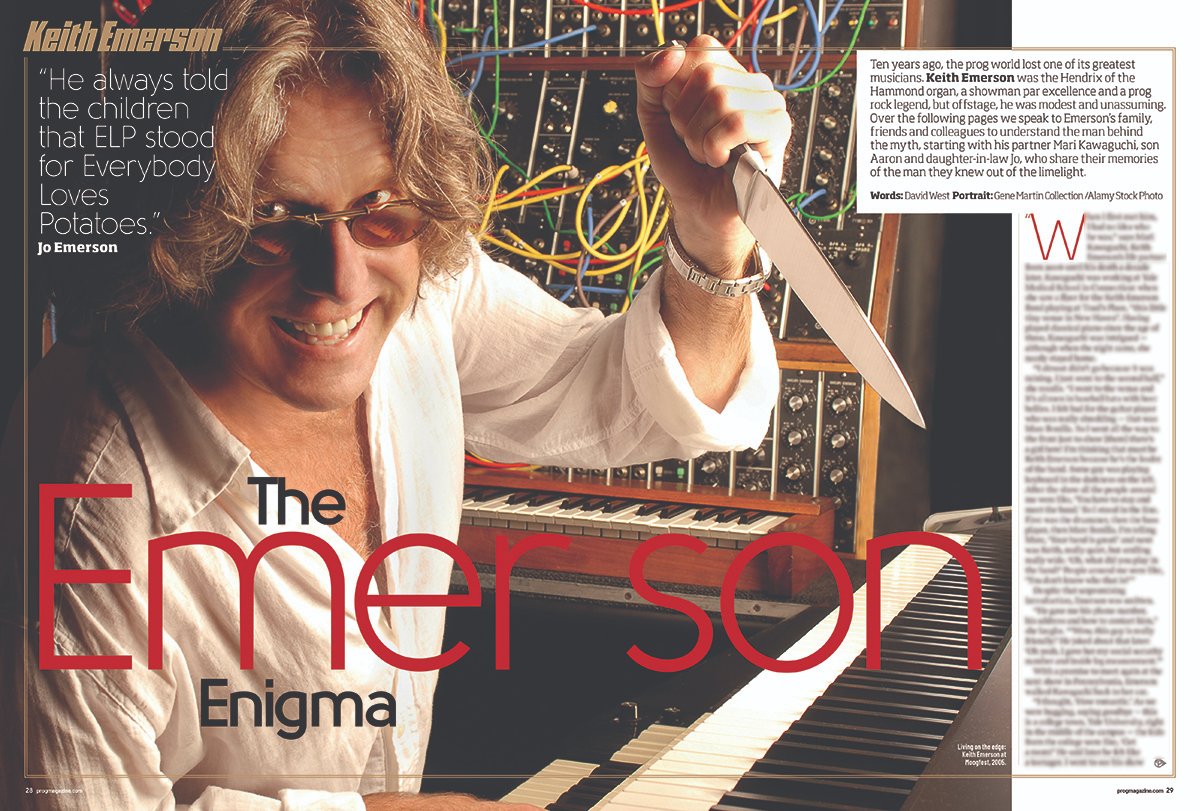
Family, colleagues, friends and unlikely neighbours pay tribute to @keith_n_emerson as we celebrate the keyboard maestro on the tenth anniversary of his passing in the brand new issue of Prog Magazine.
It's in the shops now! Or you can buy online here: https://t.co/sFoRzagLeg
German electronic prog pioneers @QTangerineDream released their fifth studio album, Phaedra, on this day in 1974. It achieved six-figure sales in the UK, reaching number 15 in the UK Albums Chart on a 15-week run, and this is the story... https://t.co/zEWbiKpxpf