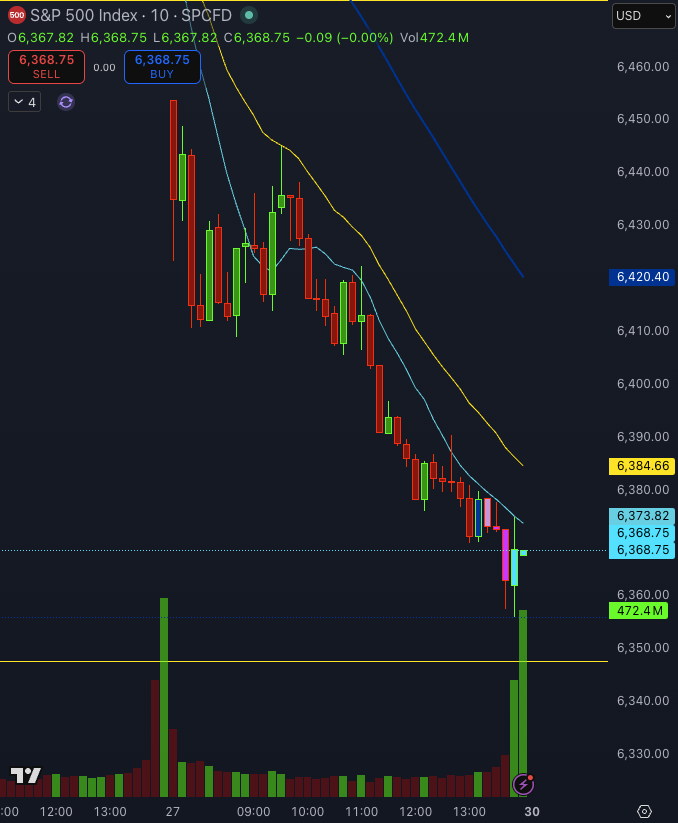
My default answer if anyone asks me about a stock pick:
“If you’re asking me about this now, it means you’re too late.”
I get asked about $BTC at $120k, $HIMS at $65, or $BE at $300. Stock hype reaches the masses, by definition, at the worst possible time.
AVOIDING CRITICISM HARMS YOU & THEM
Early on in my work with SMB Capital, there was a trainee that was not meeting the standards of the firm. As a result, during a meeting, Bella chewed out this trainee regarding the quality of his work. Feeling bad for the trainee, I softened the blow by telling him it would be okay and that he's working hard and all these other platitudes at the end of the call.
After the meeting, Bella told me to never do that again because I was softening his message to the trader and ultimately hurting the trader's and the firm's long-term prospects, because if he does not learn that lesson, he will not be at the job in another few months.
As most humans do, I initially got defensive, but then the more I thought about it, I realized how right he was. If this message was not hammered into the trainee, he actually would be gone and his dreams would be broken. The trainee still had the possibility for change, but only if the emotional drive was strong enough to create new behavior.
So often in life, we avoid giving feedback because we don't want to hurt the other person's feelings. Yes, there absolutely is a productive and an unproductive way to give feedback. One of the most important skills in life is being able to give feedback in the most productive manner possible. Too soft and they don't listen. Too harsh and they get defensive and unresponsive.
Similarly, in life, it is just as important to be able to learn to receive feedback. We all get defensive. It is our ego and human nature, but with time we learn to tone that response down and objectively listen to the feedback to find out whether it is true and whether it is actionable. There is tons of feedback that isn't true and can be dismissed, and there's tons of feedback that isn't actionable and ultimately we can't change. The feedback that comes from a position of caring to help us be better is the feedback we must take.
Almost comically, what inspired me to write this post is that a local small business bagel shop opened up by me. Many in the area love to see small local businesses thrive. The truth is, though, that the bagels were not good and barely edible because of how crispy and chewy they were.
Despite this, many of the reviews gush about how important it is to have small local businesses but avoid giving the hard feedback that is necessary for this business to thrive in the long run.
If you do not give the necessary feedback, counterintuitively, the business will actually fail, and your actions are counterproductive to what your goals are. Sometimes in life, the nicest thing you can ever do for someone or something is to give the hard feedback to help them be better.
Additionally, avoiding feedback also hurts you. Not only are you suppressing your own thoughts and feelings, but if you care about something or you care about an outcome, good feedback helps you make sure your needs are met and the outcome you hope for occurs.
If you care about the prospects of a trainee or a business or a person, you end up harming yourself AND them by not giving them the feedback to succeed and grow. You’re avoiding short-term discomfort at the cost of long-term success.
it looks like an AI alliance is gradually forming between SpaceXAI, anthropic, tesla, google and cursor.
its incredibly beneficial to all parties involved:
> google gets cheap access to space + infinite energy
> anthropic gets 300MW of inference compute
> spaceX gets $5-10B between anthropic and cursor deals
> cursor gets a leading coding model from the compute
both google and anthropic have now publicly announced intentions to use SpaceX to launch ai data centers into space in the last week
Google owns 7% of spaceX and 14% of anthropic so it makes sense
People keep confusing a bubble with “stocks go up and get overvalued”. A bubble is when when a prevailing trend and a prevailing misconception about that trend interact reflexively, each reinforcing the other until the gap between perception and reality becomes unsustainable.
A bubble is not when everyone realizes that right now every iota of AI demand eventually, at some point upstream, must move through memory OEMs. Nor is it when estimates continue rising because things are better than expected. And it’s not just when stocks trade expensive to historical valuations.
The reason behind the moves in the AI infrastructure layer so far have been simply that we don’t have enough. They’ve been driven by the fundamental reality more than the perception of the future. It’s why the bulk of the most bullish parts of this cycle have been lumpy and centered around earnings season when companies uniformly come out and confirm there’s still not enough. In the bubble, the reality is driven by the market - not the other way around.
Everyone keeps saying “people are gonna freak out if it’s not a bubble!”. I think that’s silly, we have a transformative new technology that needs crazy capital to fuel it coming to fruition, that has and always will result in a bubble as long as we have financial markets.
But if you want to call the top in a bubble, you need a much stronger view on what the misconception is and what negative catalyst forces broad perception to align with realizing it than you do on valuation.
You want to know a secret that changed my mentality around money?
Scenario: April 1st your portfolio was 100k and we went on this magical run where it climbed up to 140k as of yesterdays close. Then a day like today comes along and you happened to get stopped on all your positions and you are now sitting at 130k. Did you lose 7.14% today or is your portfolio up 30% in a month?
Unrealized gains ARE NOT YOURS. They belong to the market! If you want to mitigate volatility, trim into extensions. But if you are going to stress out about every down day as if the money was yours on an open position, you'll never truly be able to scale up comfortably.
Treat every new buy or sell based on it's individual price action. And stop looking at your portfolio value every evening as if the money on open positions belongs to you. Checking portfolio value every 10min only leads to emotional and sloppy execution when you look at the whole and not the individual parts.
If stock A is still acting great then it shouldn't be sold just because you took a small loss on stock B. Exit stock B and continue to let stock A work for its own merits. The minute you start to make emotional decisions because of money is when you ruin your chances at real growth.
Antrophic revela el modelo Mythos, dice que hará partnership con las mejores empresas del mundo para protegerlas antes de que salga una inteligencia de ese calibre a la luz.
Fast forward 2 semanas:
Amazon y Google invierten decenas de billones de dólares en Antrophic… vieron algo en lo que no podían quedarse fuera.
If something “makes no sense” in markets.
It probably mean your view of that security, commodity, or thematic is wrong.
And you should look hard in the mirror and adjust accordingly.
Hoy fue uno de esos viernes...
...uno de esos viernes de pánico que se ven en correcciones importantes, cuando el mercado no se quiere ir largo el fin de semana, es momento de ser cautelosos.