BREAKING NEWS
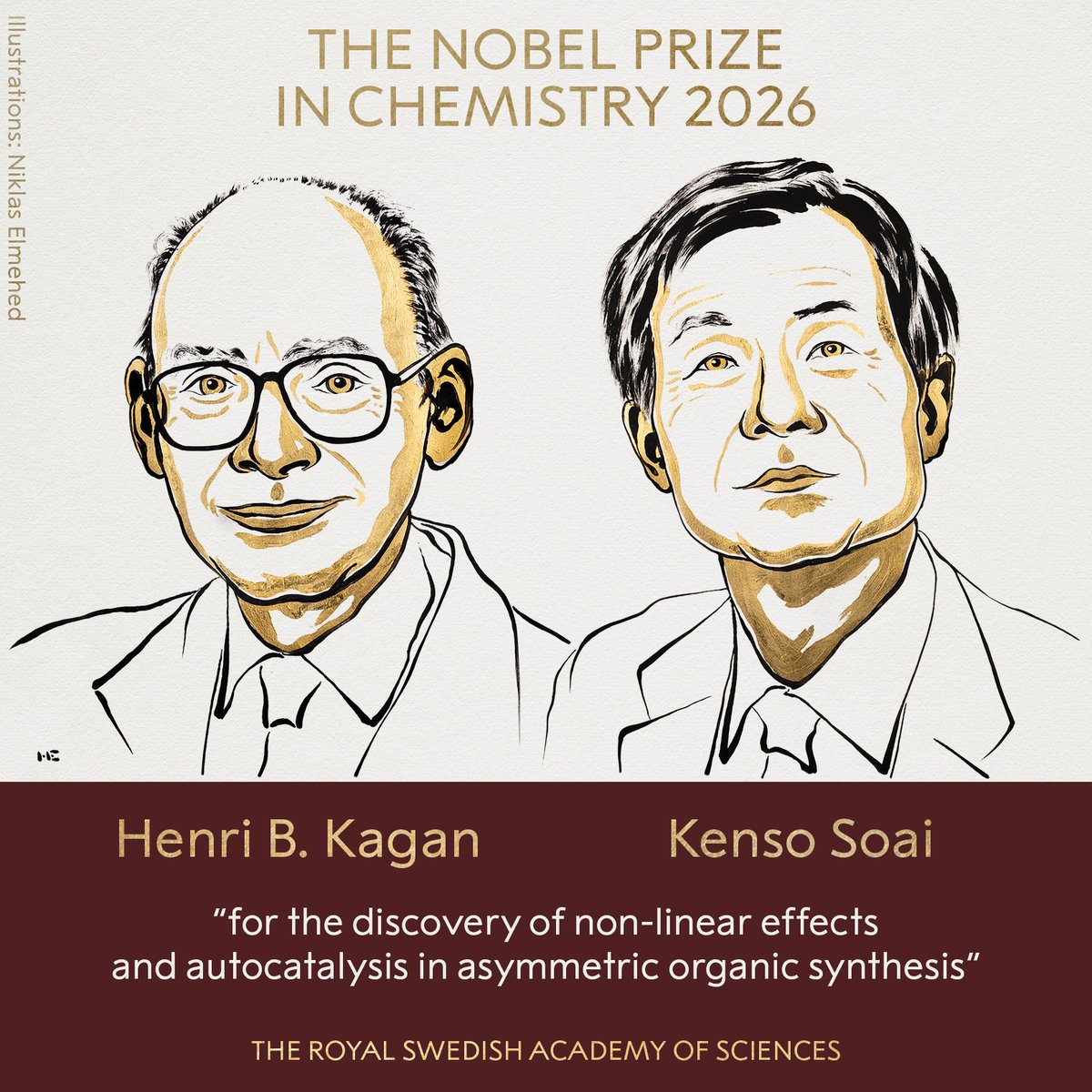
The Royal Swedish Academy of Sciences has decided to award the 2026 #NobelPrize in Chemistry to Henri B. Kagan and Kenso Soai “for the discovery of non-linear effects and autocatalysis in asymmetric organic synthesis.”
“Our prime minister wants to call me…”
2026 chemistry laureate Kenso Soai needed to cut short our interview when he learnt that the Japanese prime minister was trying to reach him. Before then, the new laureate spoke to us about his excitement on being awarded the #NobelPrize.
Soai also explained how it feels to have researchers all over the world studying his famous Soai reaction – one of the most spectacular chemical experiments ever conducted.
“Estamos pensando en regalar el dinero”, ha declarado la ganadora del Premio Nobel de Literatura 2026, Anne Carson, sobre la suma de 12 millones de coronas suecas (cerca de 1,21 millones de dólares) que recibirá como parte del galardón. Asegura que como celebración saldrá a caminar al bosque “para no tener que contestar el teléfono”
“It seems a little insane”
Anne Carson was sweeping the kitchen floor at her home in Reykjavík, Iceland, when the phone rang and she learnt that she had been awarded the 2026 Nobel Prize in Literature.
In this conversation with the Nobel Prize just moments after the announcement, Carson shares her advice for aspiring writers and reveals that she has already started planning how to give away the prize money.
El 7 de octubre de 2010, la Academia Sueca anunció la concesión del Premio Nobel de Literatura a Mario Vargas Llosa. El jurado distinguió al escritor peruano por su representación de las estructuras de poder y por los conflictos de individuos que enfrentan la resistencia, la revuelta y la derrota.
¿Qué obras de Mario Vargas Llosa llegaron a leer?
BREAKING NEWS
The 2026 #NobelPrize in Literature is awarded to the Canadian author Anne Carson, “for her bold and inventive oeuvre that, in playful dialogue with the classical tradition, has created new forms for contemporary literature.”
2026 #NobelPrize laureate in physiology or medicine Karl Deisseroth was born in 1971.
He received his Ph.D. and MD from @Stanford University, USA. He is currently D.H. Chen Professor, Professor of Bioengineering and of Psychiatry and Behavioral Sciences, at the Howard Hughes Medical Institute and Stanford University, USA.
https://t.co/Fii0dKuG26
#NobelPrize
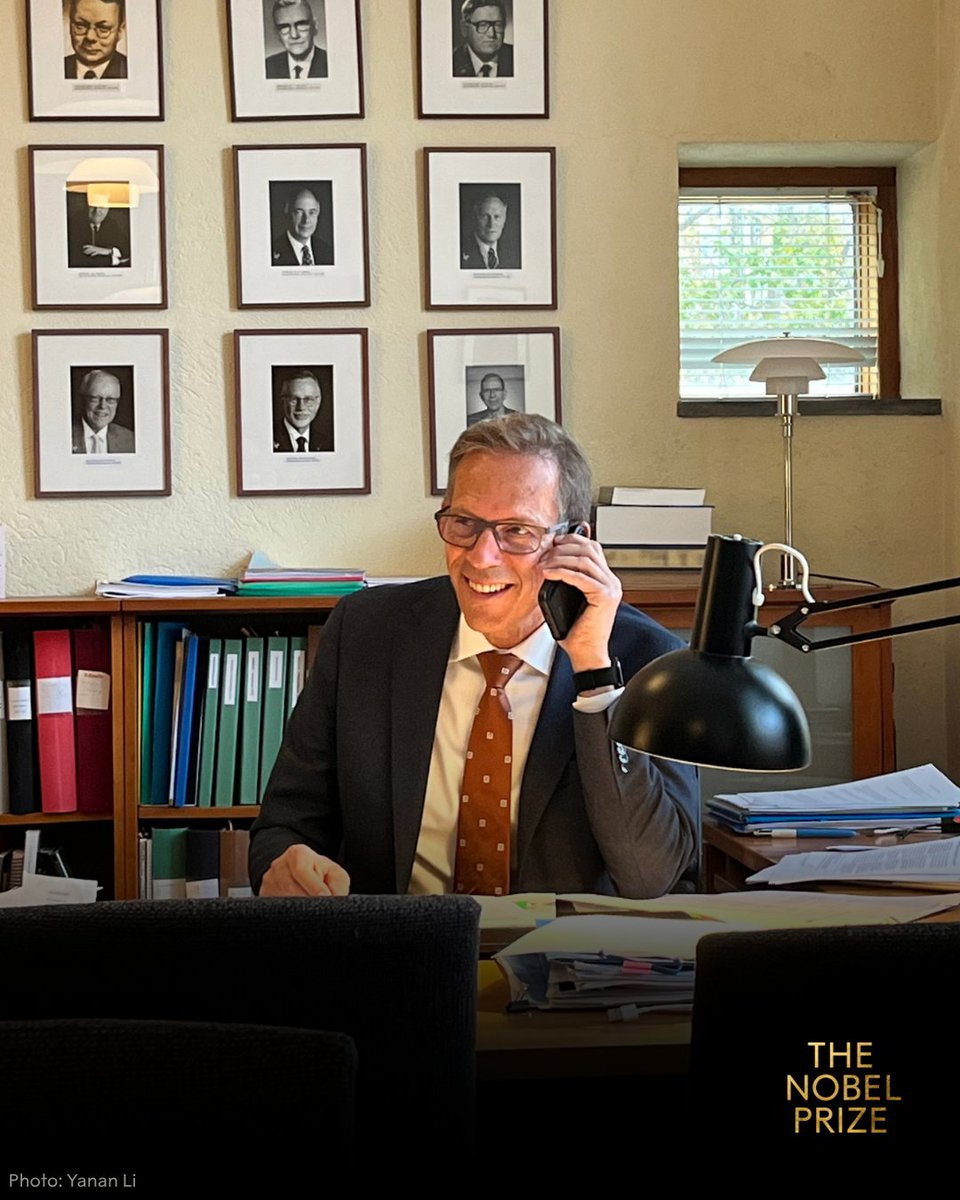
Who is receiving exciting news from Thomas Perlmann, the secretary of the medicine committee?
Find out who will be awarded this year’s #NobelPrize in Physiology or Medicine – we’re moments away from breaking the news.
WATCH LIVE: Join us for the announcement of the 2026 Nobel Prize in Physiology or Medicine.
Hear the breaking news first.
Where are you watching from?
#NobelPrize https://t.co/epIMr3uiSH
BREAKING NEWS
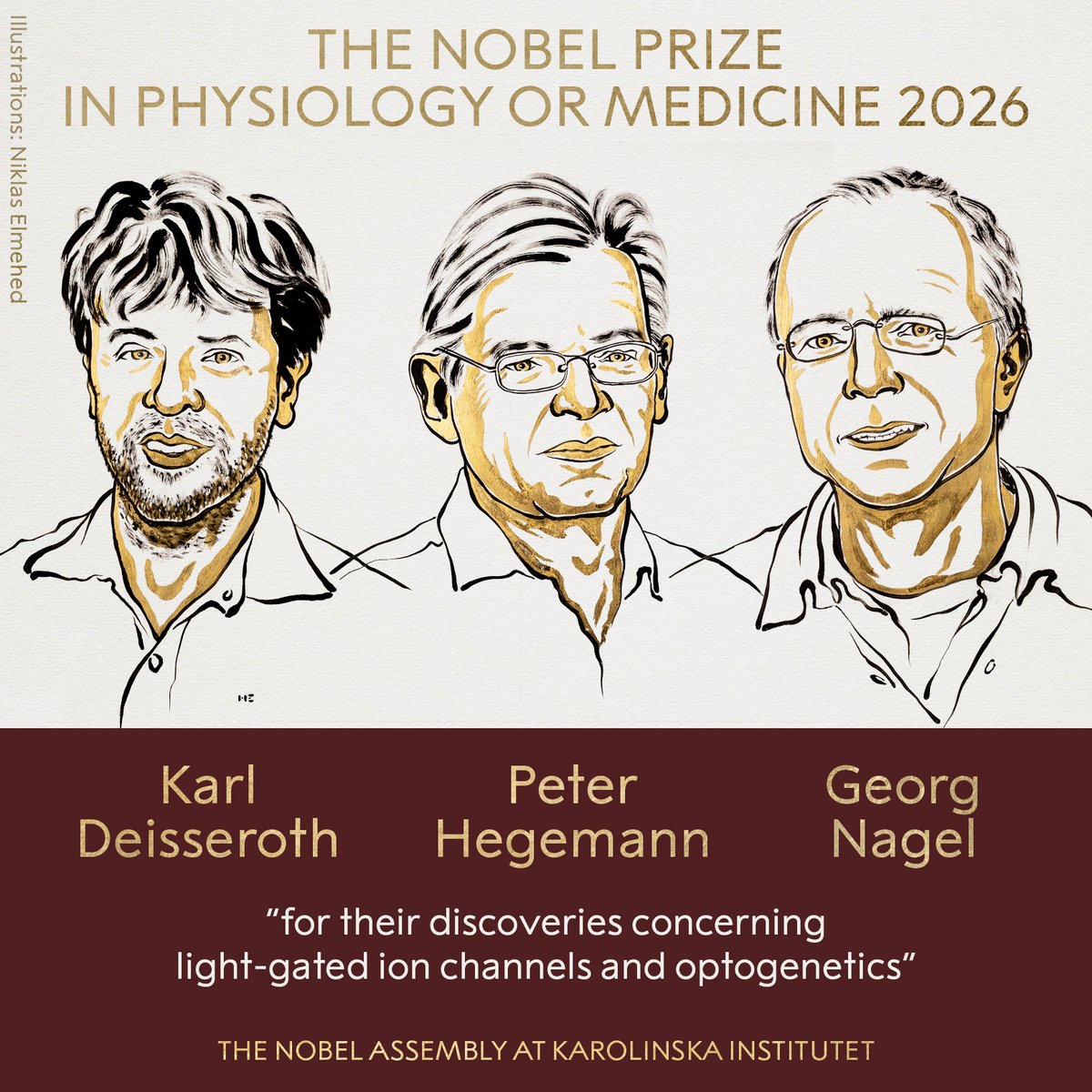
The 2026 #NobelPrize in Physiology or Medicine has been awarded to Karl Deisseroth, Peter Hegemann and Georg Nagel “for their discoveries concerning light-gated ion channels and optogenetics.”
To understand how the brain forms memories, feelings and behaviours has long been a dream for researchers.
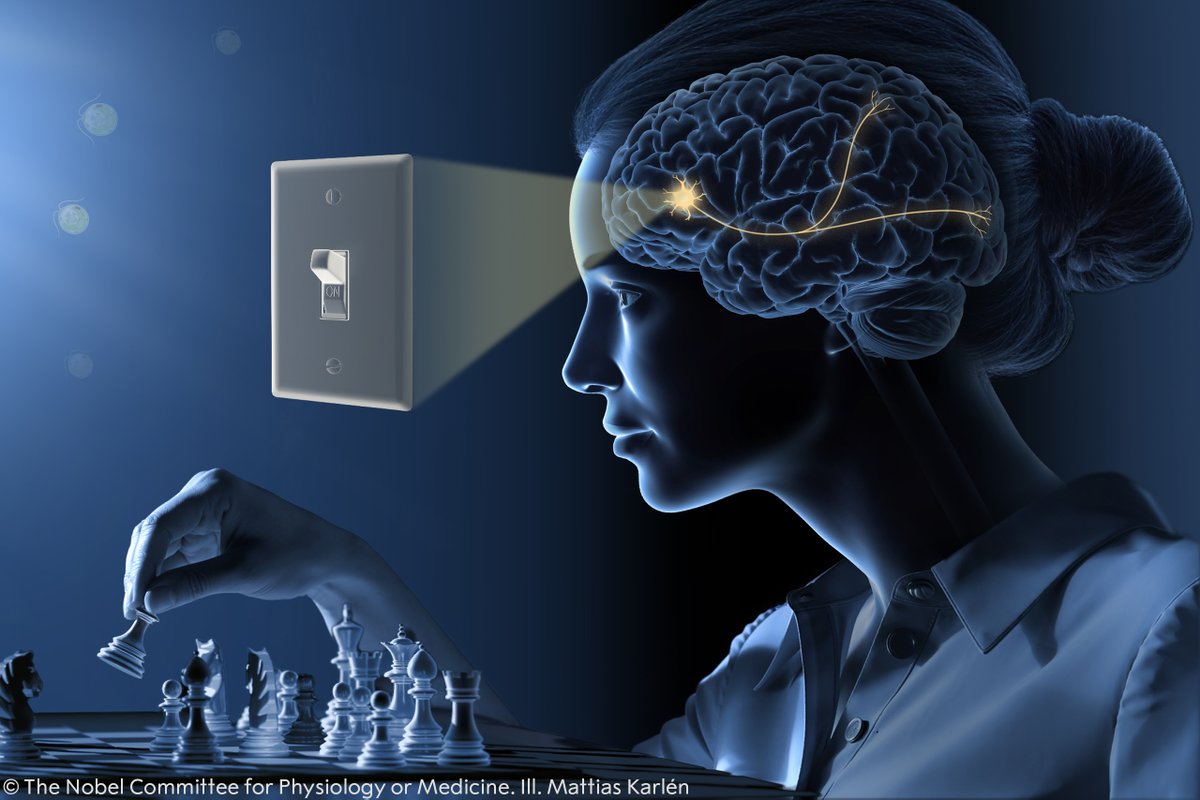
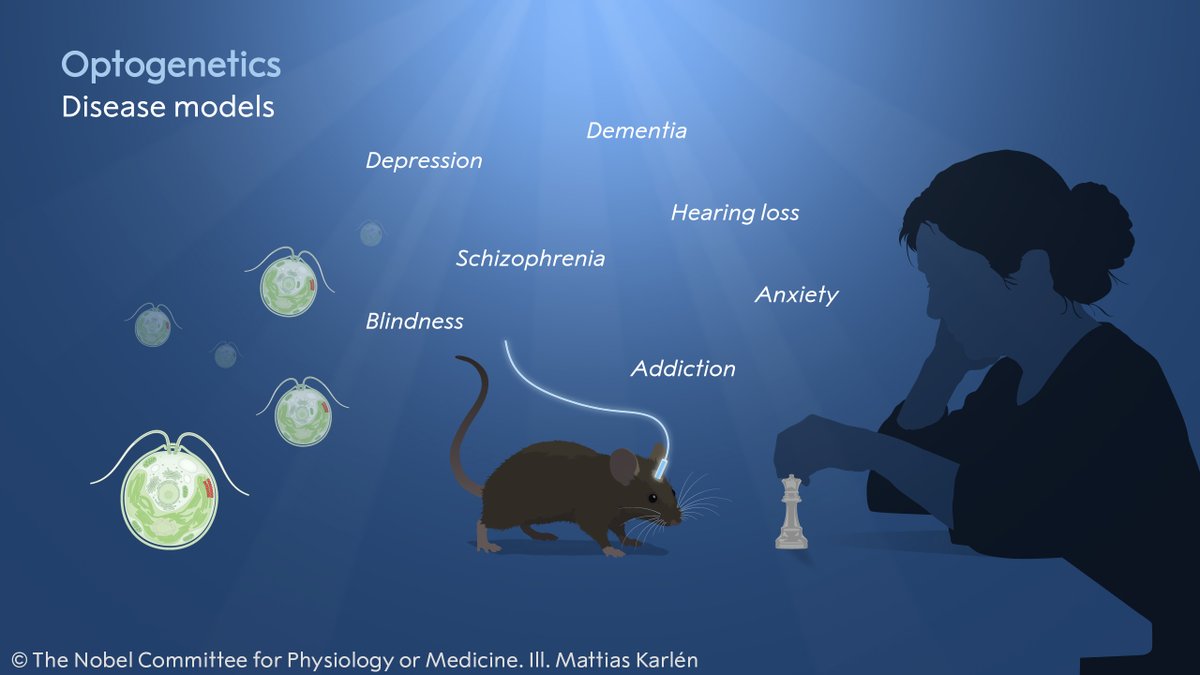
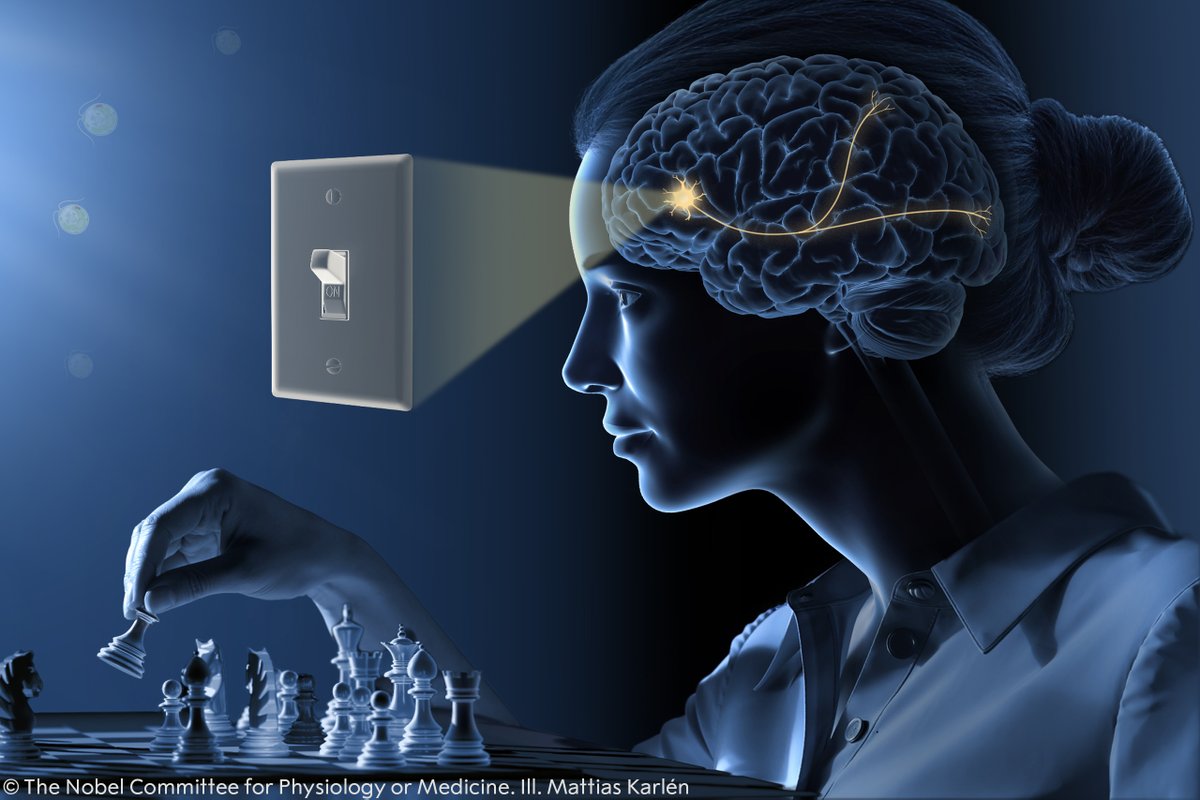
Karl Deisseroth, Peter Hegemann and Georg Nagel have been awarded the 2026 #NobelPrize in Physiology or Medicine for discoveries leading to optogenetics, which makes it possible to switch on, or off, the activity of individual nerve cells in a living brain.
This method is now being used in laboratories around the world to reveal the brain’s mysteries.
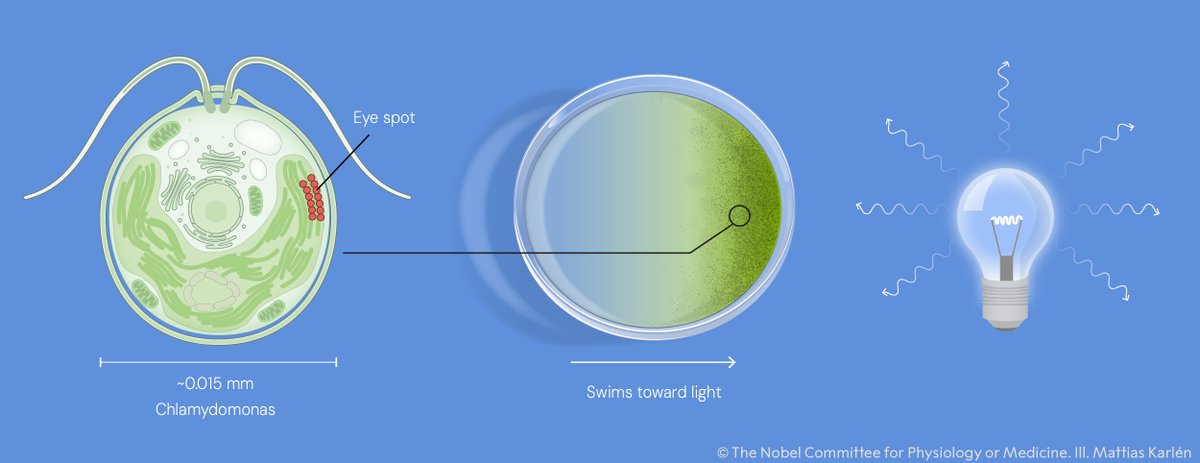
Peter Hegemann and Georg Nagel – awarded the 2026 medicine prize – discovered a remarkable protein, channelrhodopsin, in a single-celled alga.
Hegemann wondered how Chlamydomonas, a single-celled alga, is able to swim towards a light source. In the early 2000s, he and Georg Nagel discovered channelrhodopsin, an algal protein with unique properties, found on the surface of the cell. When it is illuminated by blue light, a channel opens through the protein. Charged ions then flow into the cell, creating an electrical impulse. They found that regardless of which cell they put the protein in, those cells became light sensitive.
#NobelPrize
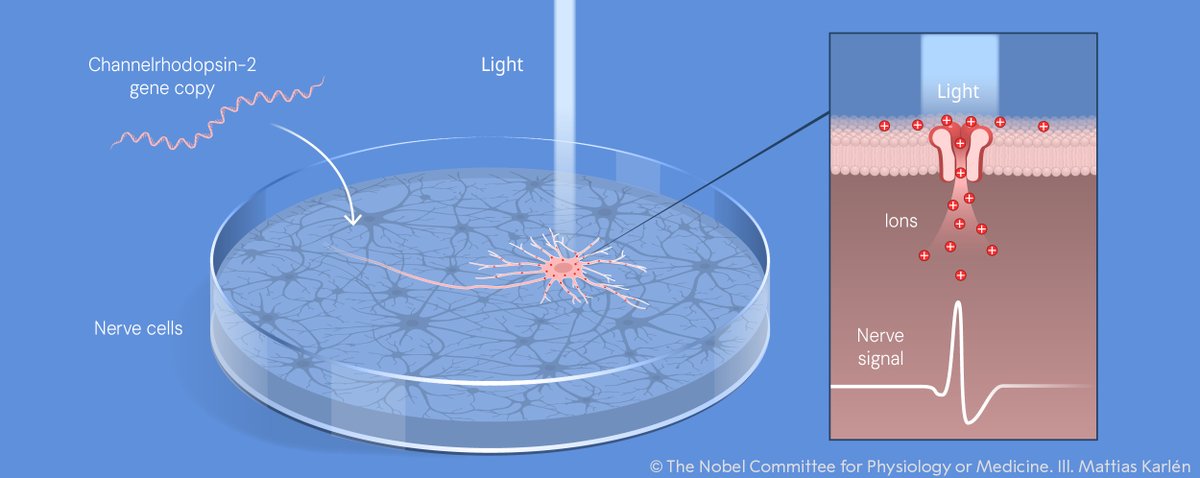
This year’s medicine laureate Karl Deisseroth transformed the protein channelrhodopsin into a light-controlled switch for nerve cells.
Deisseroth introduced the gene for channelrhodopsin into nerve cells from rats. By illuminating the cells with blue light, he was able to trigger a nerve signal. He published this breakthrough in 2005. Two years later, he made this light-controlled switch for nerve cells work in the brains of living mice.
#NobelPrize
The 2026 #NobelPrize laureates in physiology or medicine have laid the foundation of a new era in neuroscience.
Using optogenetics, researchers have been able to reveal neural circuits governing specific memories, feelings, and behaviours relevant for neurological and psychiatric disorders. In clinical medicine, researchers are using the method in attempts to restore sight in people with visual impairment.
Optogenetics has fundamentally altered our understanding of the brain. Every day brings new discoveries, helping to solve one of humanity’s great mysteries: how our incredible brain works.
Learn more about the 2026 #NobelPrize in Physiology or Medicine
Press release: https://t.co/KXRC5GPzfO
Popular information: https://t.co/W0NGwOBIuA
Advanced information: https://t.co/NwQTZddNGj
Congratulations to our first #NobelPrize laureate of 2026 🎉
Early this morning Karl Deisseroth found out he was awarded this year's Nobel Prize in Physiology or Medicine.
He seems very happy with the news!
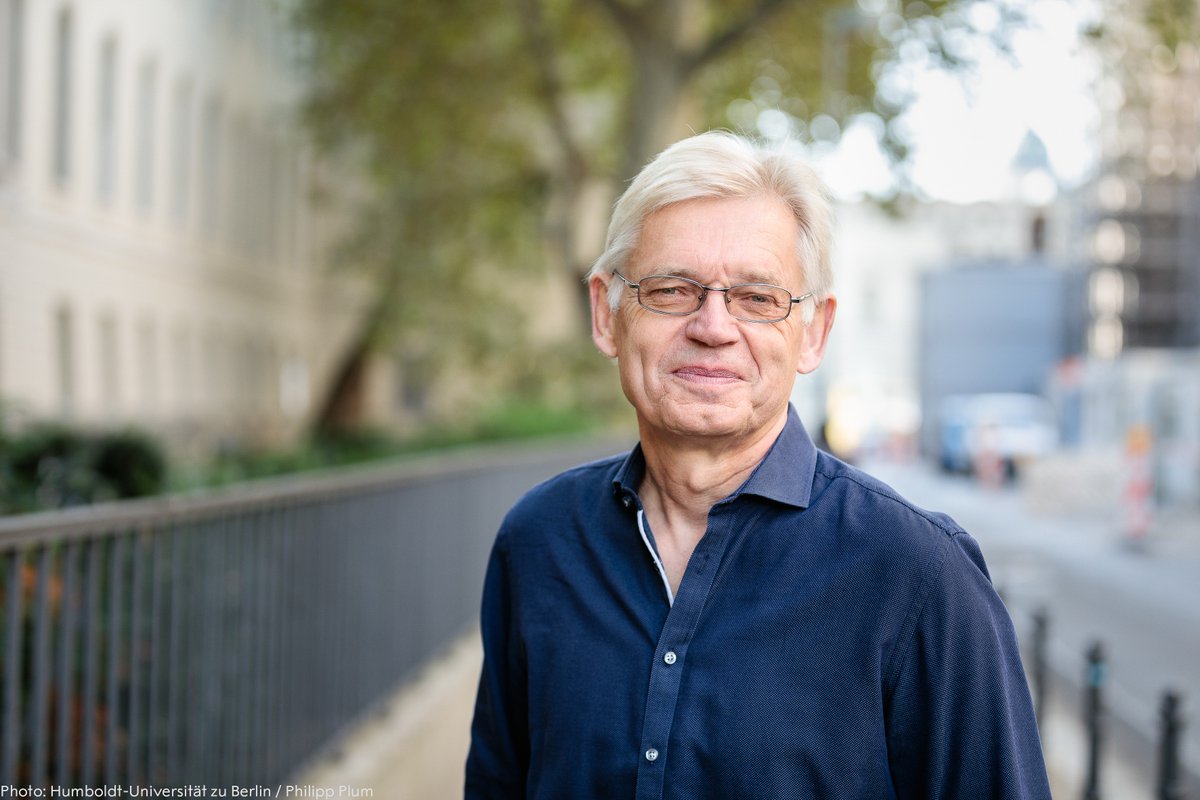
This year’s medicine laureate Peter Hegemann was born in 1954.
He received his Ph.D. from the Max-Planck-Institute for Biochemistry, Martinsried, Germany (@MPI_Biochem). He is currently Hertie Senior Professor of Neuroscience at the Humboldt University of Berlin, Germany.
https://t.co/txQyntzsEp
#NobelPrize