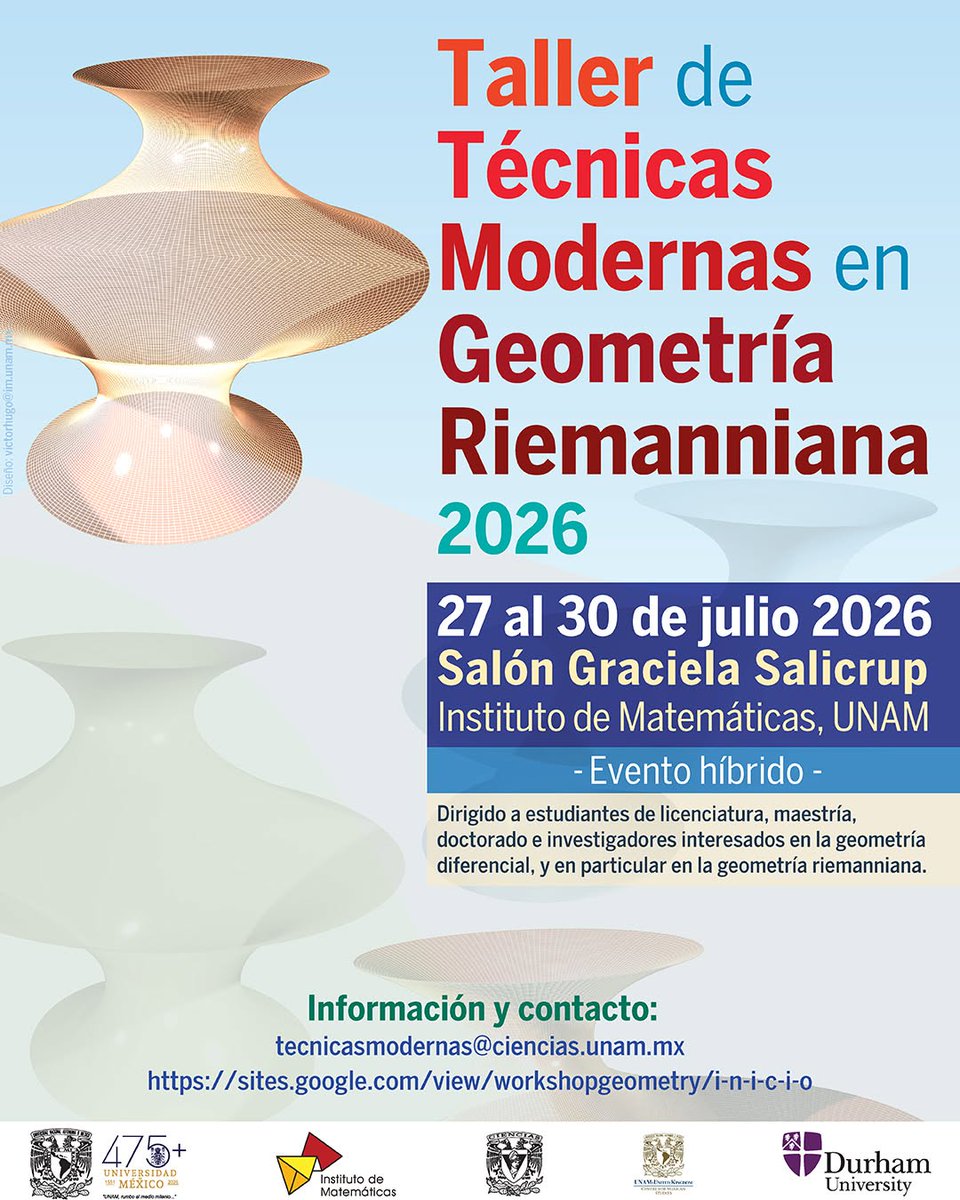
Estimados estan cordialmente invitados al taller de cierre Genómica y Bioinformatica.
Mostraremos nuestro computador de Alta performance que esta al servicio de la comunidad cientifica.
Si no pueden venir a @BioUNMSM entonces conectense al Facebook: https://t.co/1ZWllcRVeq
👀 🗣 Karina Pacheco: “La memoria hoy es más importante que nunca”
Karina Pacheco es una de las primeras voces de la narrativa peruana contemporánea e hispanoamericana. La República conversó con ella sobre su novela más ambiciosa: El bosque de tu nombre. “El arte, la cultura, la música, el baile, los múltiples ejercicios de memoria permiten que tengamos una posibilidad de seguir siendo humanidad”.
✍ @gabrielruizort2
https://t.co/y6jWT35c0s
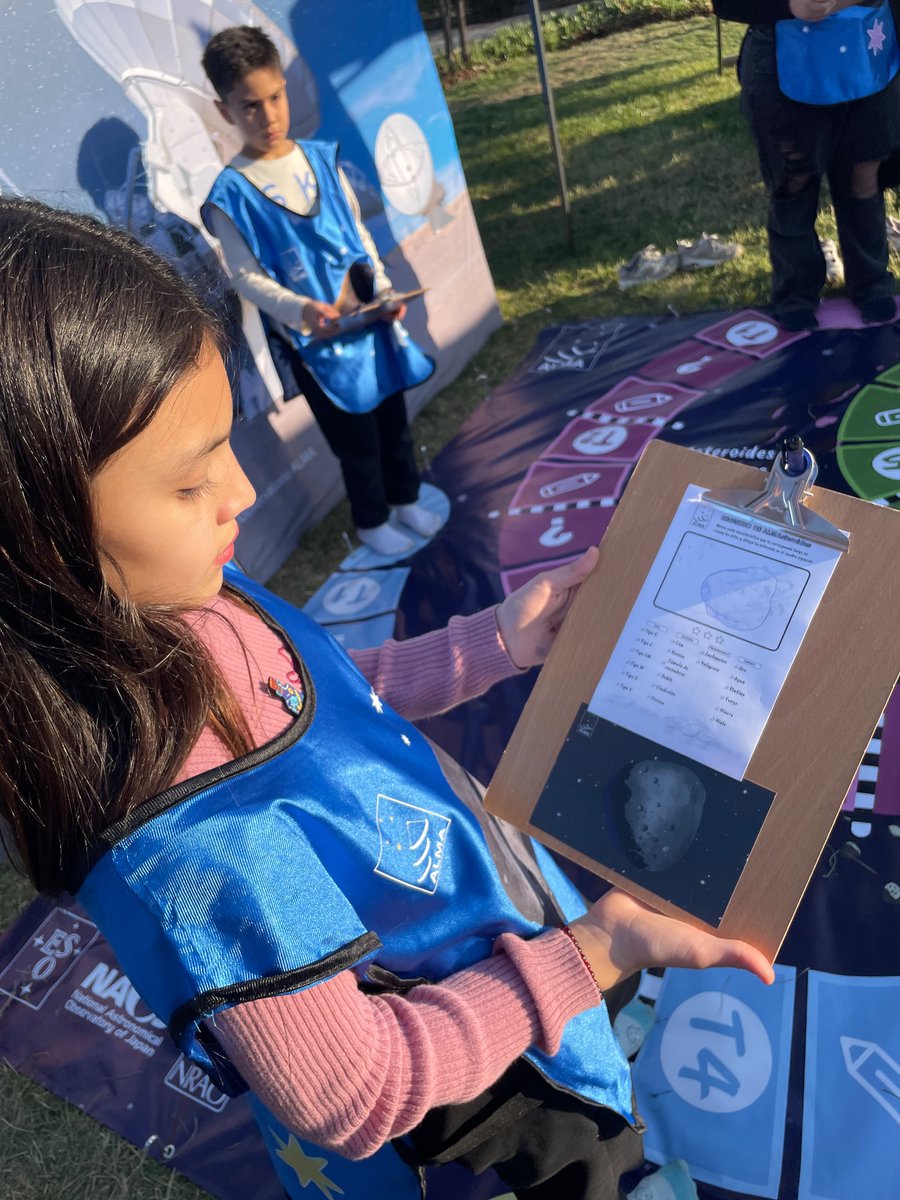
☄️What amazing cosmic moments we had on "Asteroid Day" in Pueblito de las Vizcachas, Chile, with @AuiNrao!
And we launched our immersive game, "ALMAsteroids." 🪨Studying these space rocks is crucial for understanding our cosmic origins☄️
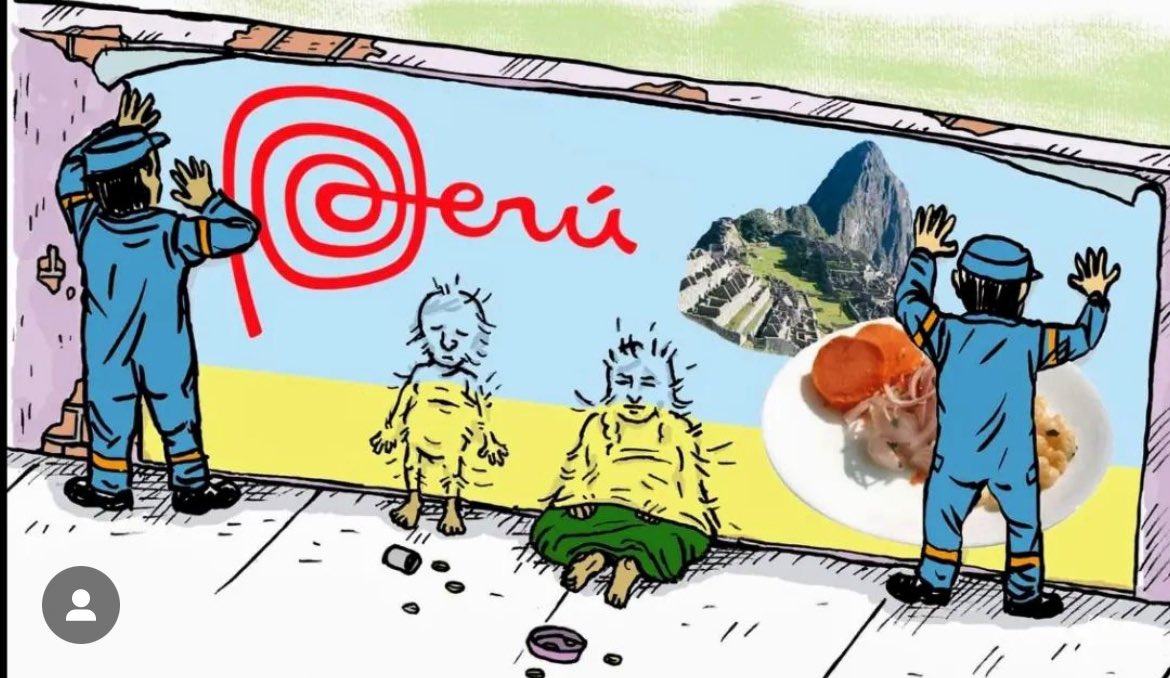
Hoy: el gobierno reprime en Buenos Aires a científicos y trabajadores del Consejo Nacional de Investigaciones Científicas y Técnicas (CONICET) de Argentina. Otra crónica de la barbarie.
Foto, via @PedrAlbanese
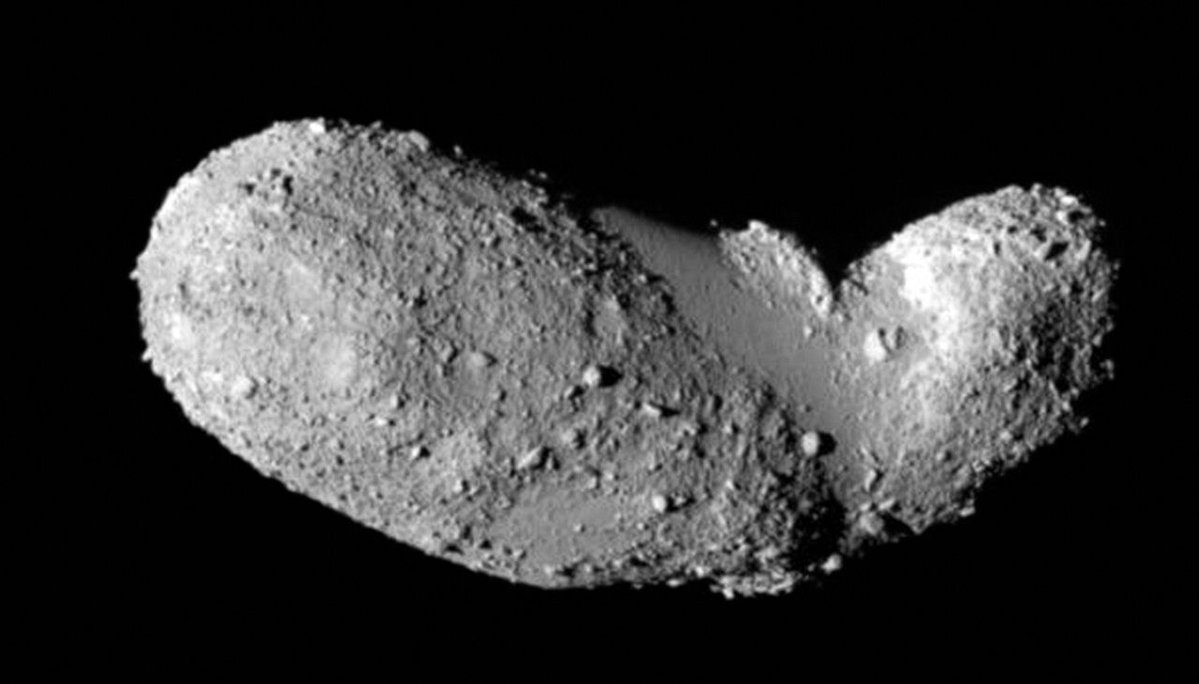
#PPOD: Asteroid (25143) Itokawa 🥜
Taken by the Japanese spacecraft Hayabusa during its close approach in 2005, this very detailed view shows the strange peanut-shaped asteroid Itokawa. The 500-meter "rubble pile" asteroid features distinct smooth surface regions, such as the MUSES Sea. These areas are formed by seismic jostling that causes size segregation and erodes impact craters. By making exquisitely precise timing measurements using ESO’s New Technology Telescope, a team of astronomers has found that different parts of this asteroid have different densities.
Credit: @JAXA_en
#planetaryscience
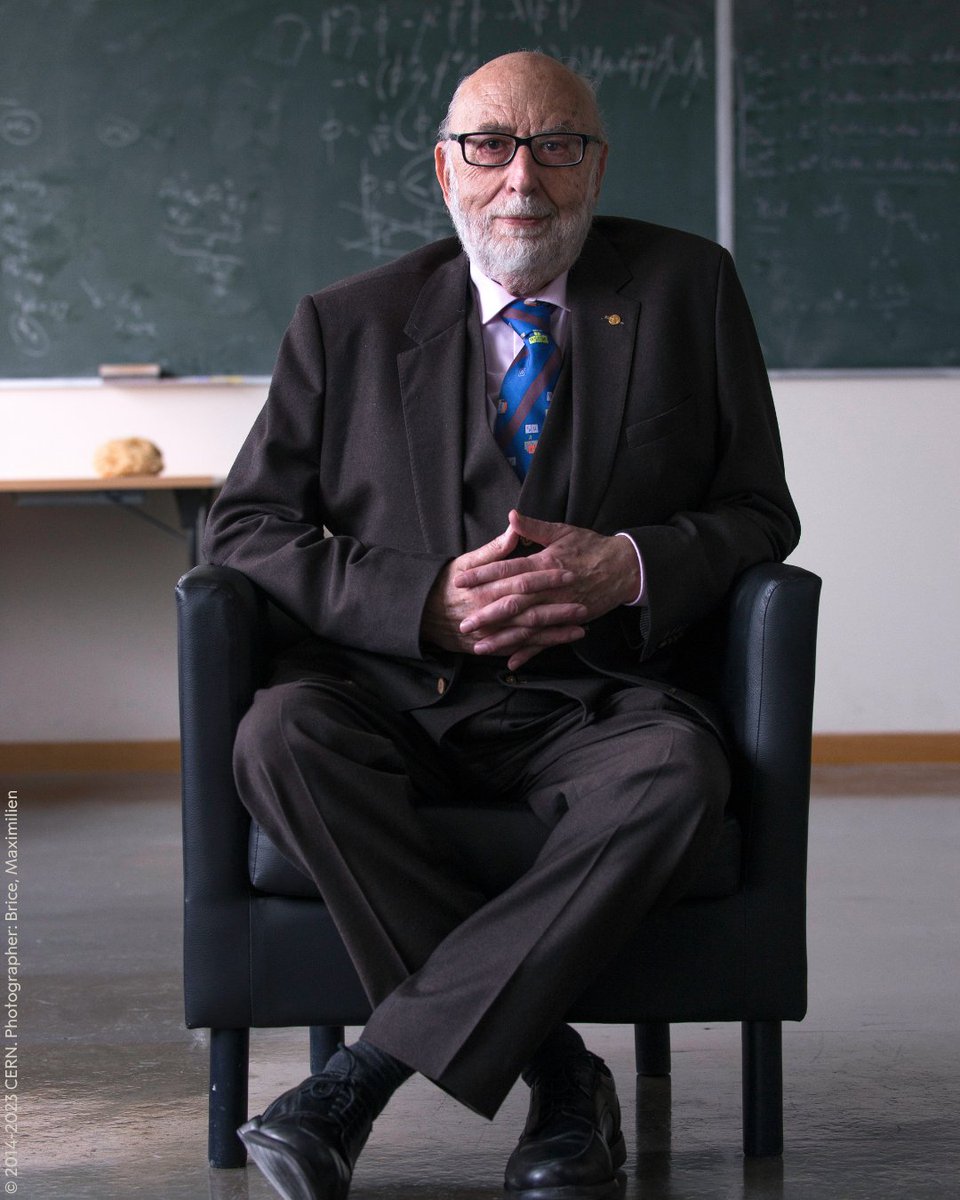
Today we remember physics laureate François Englert, whose groundbreaking work revealed that everything around us is composed of just a few fundamental components.
In 1964, independently of one another, Englert's team and Peter Higgs proposed a theory about the presence of a particle that explains why other particles have a mass.
The entire Standard Model – which demonstrates how the world is constructed – rests on the existence of this special kind of particle: the Higgs particle. It originates from an invisible field that fills up all space. Even when the universe seems empty this field is there. Without it, we would not exist, because from contact with this field that particles acquire mass. The theory proposed by Englert and Higgs describes this process.
The Higgs particle was finally discovered in 2012, confirming their prediction. Englert and Higgs were awarded the 2013 Nobel Prize in Physics.
Learn more about the life of François Englert: https://t.co/gkqxI4Ojec
Photo credit: CERN
¿Cómo "pesamos" las estrellas? 🤔 La masa de las estrellas es su propiedad fundamental. Checa cómo lo hicieron Sergio Dzib y Jazmín Ordóñez Toro, egresados del IRyA, y su grupo de trabjo que incluye a Laurent Loinard y Luis Felipe Rodríguez, para medirla👇
https://t.co/HsQH057W7B
Les agradezco a Juan Mendoza y a Cristian Turdera por acompañarme en la presentación de mi libro sobre "Agujeros Negros", https://t.co/oLVQkmLTc5 Muchas gracias a Mariana y la Librería Hernández por la hospitalidad, y a Rosario y la editorial Salta el Pez por la confianza.
Right now, one of the largest sunspot groups in recent history is crossing the Sun. Active Region 4478 is not only big -- it's violent, showing tangled magnetic fields capable of throwing off huge clouds of particles into the Solar System. Some of these CMEs might impact the Earth. At the extreme, these solar storms could cause some Earth-orbiting satellites to malfunction, the Earth's atmosphere to slightly distort, and electrical power grids to surge. When impacting Earth's upper atmosphere, these particles can produce beautiful auroras. Pictured here, AR 4478 and its dark sunspots were captured in visible light a few days ago from Barcelona, Spain. Almost as large as AR 3664 was in 2024, the AR 4478 sunspot group is so big that it is visible just with glasses specially designed to view solar eclipses. This week, skygazing enthusiasts all over the globe will not only be tracking AR 4478 during the day -- but keenly watching night skies for its corresponding bright auroras.
Image Credit & Copyright: Alfredo Vidal Pérez
"Toda revolución en física, aun cuando implica una ruptura de algún viejo paradigma, está apuntalada en el acto de conservar otra cosa de la física anterior. Por ejemplo, la teoría de la relatividad de Einstein rompe con la física newtoniana, pero en parte porque Einstein era
Sophie Germain's identity factors x⁴ + 4y⁴ as a product of two quadratic polynomials.
It reads
x⁴ + 4y⁴ = ((x + y)² + y²)((x - y)² + y²) = (x² + 2xy + 2y²)(x² - 2xy + 2y²).
It is named after the French mathematician, physicist, and philosopher (1776-1831) featured in the portrait with the formula.
It is used to factor quartic polynomials in algebraic number theory and to facilitate solutions in Diophantine equations.
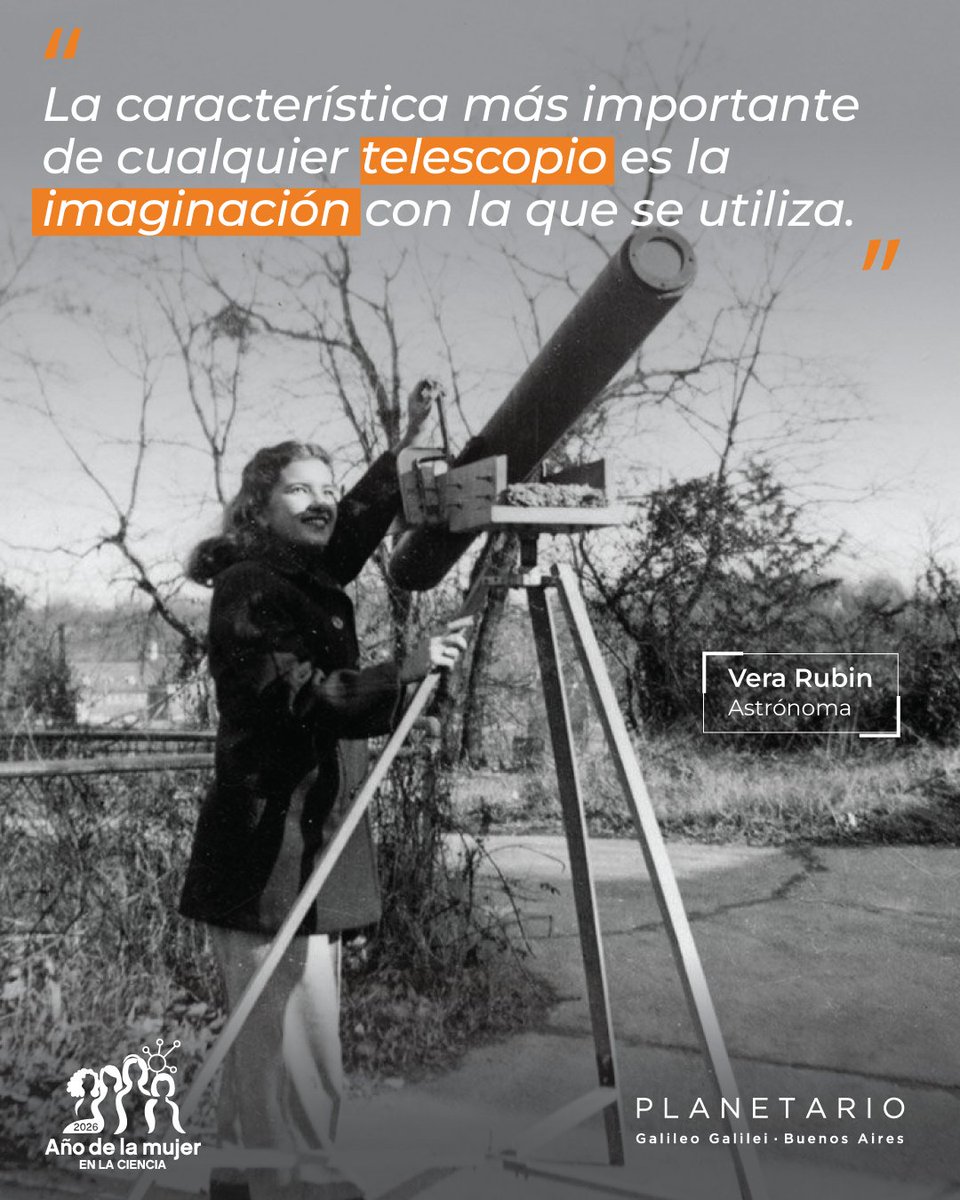
🌌 Vera Rubin descubrió que algo invisible gravitaba sobre las galaxias.
Su trabajo en rotación galáctica aportó evidencias clave de la materia oscura y transformó la astronomía ✨🔭
¿A qué científica/o le dedicamos el próximo post? 💬
#VeraRubin#MujeresEnLaCiencia
Happy to announce my new book, with Alex Townsend. It's about the math behind enormous systems (medical scans, AI, etc.) and what happens when they outgrow our ability to understand them. More info (and pre-order for 25% off) at:
https://t.co/lOXl2Mivkh @littlebrown@BNBuzz





![almaobs's tweet photo. 🧵[1/5]📡We’ve reached 5,000 scientific publications!🎊 https://t.co/2Pd7VHu0ea https://t.co/IjxHzmkNoL](https://pbs.twimg.com/media/HMo--v6WwAAqAQb.jpg)