Excited to share my review “Advanced modeling methodologies for anisotropic magnetic colloids” in COCIS! I discuss particle-based simulations of magnetic colloids, their strengths/limitations, and future routes including ML.
#SoftMatter#MagneticColloids
https://t.co/Uez2zhEXPD
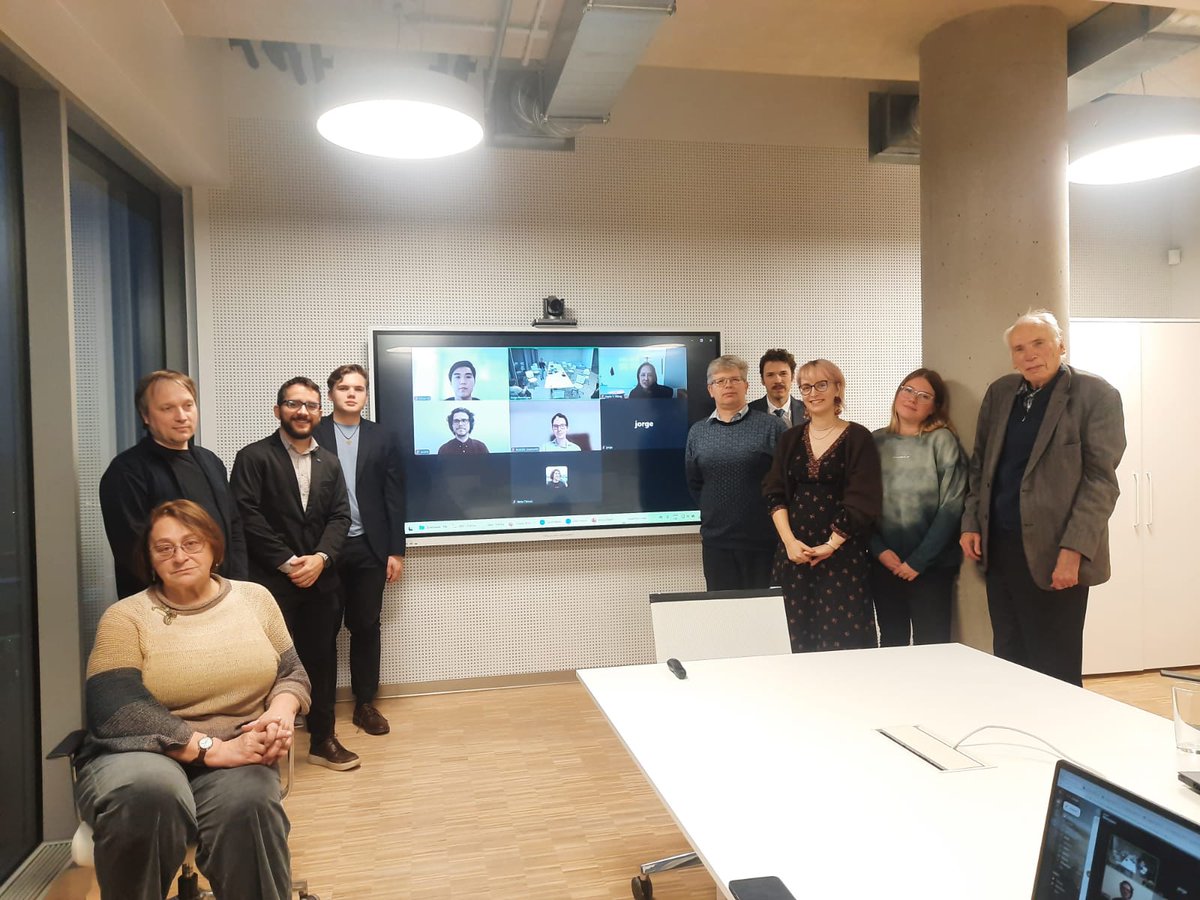
As a current ERA Fellow in University of Latvia, I recently shared my experience with potential applicants of the Marie Skłodowska-Curie Postdoctoral Fellowship (MSCA PF) during an info session.
Wishing all applicants good luck with their proposals!
#MSCA#MarieCurieFellowship
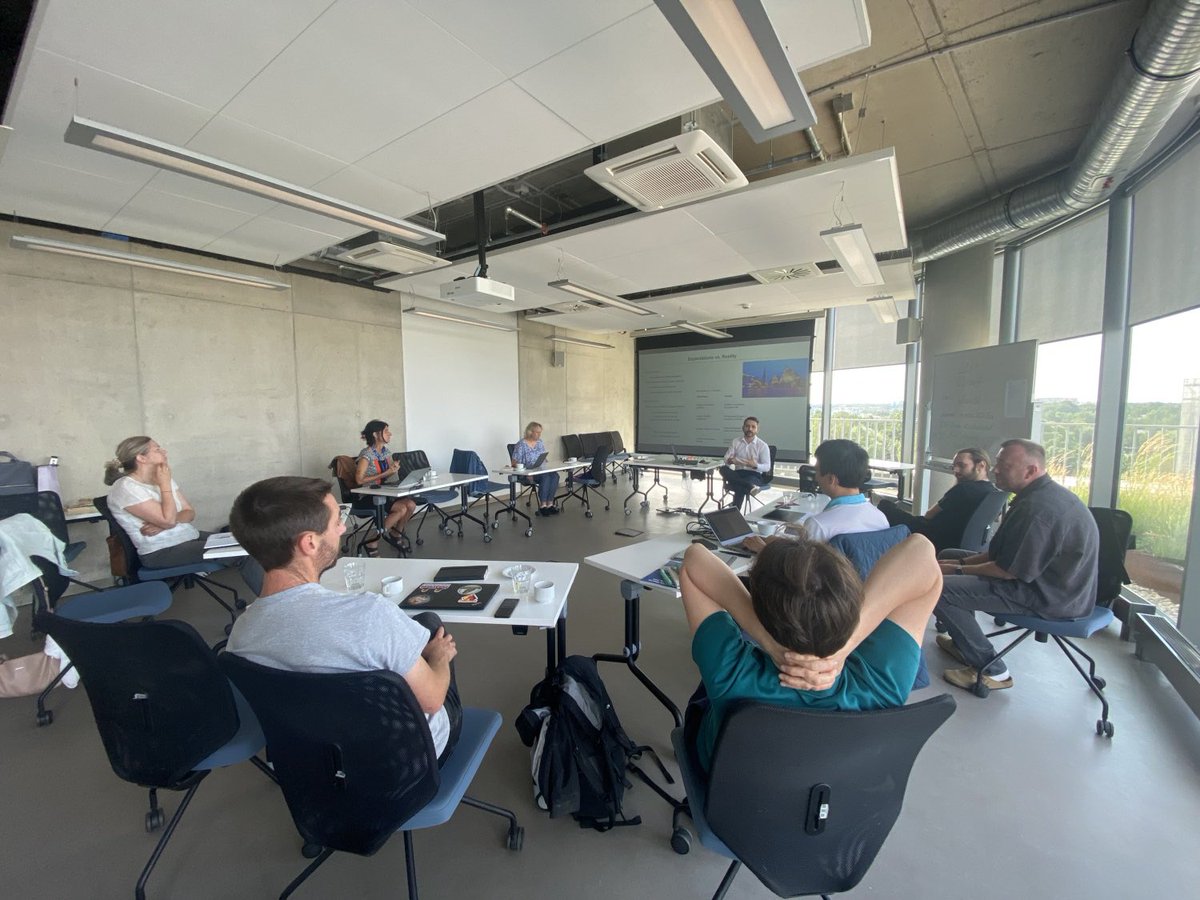
A proud moment: my first PhD student successfully defended his thesis!
It was a great experience to be a co-advisor throughout this journey. Congratulations on this achievement, Everton, and best of luck in the next steps!
#PhDDefense#AcademicMentorship#Physics#SoftMatter
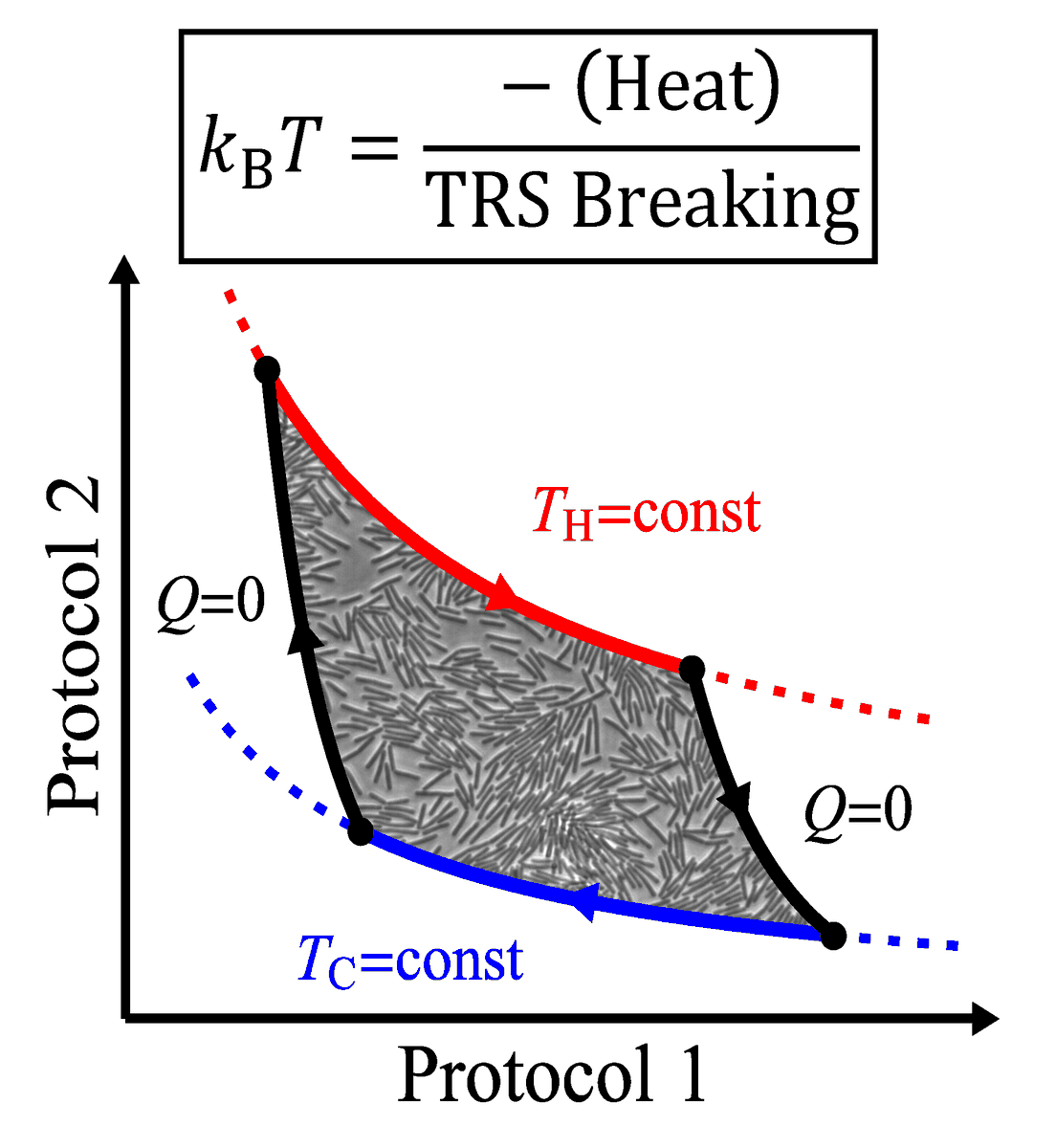
Research in @PhysRevLett proposes a temperature-like variable that resolves the breakdown of the second law of thermodynamics in nonequilibrium systems like chemical reactions. The authors hope it could overcome the limits of the #Einstein relation.
🔗 https://t.co/w3PjP2qS4P
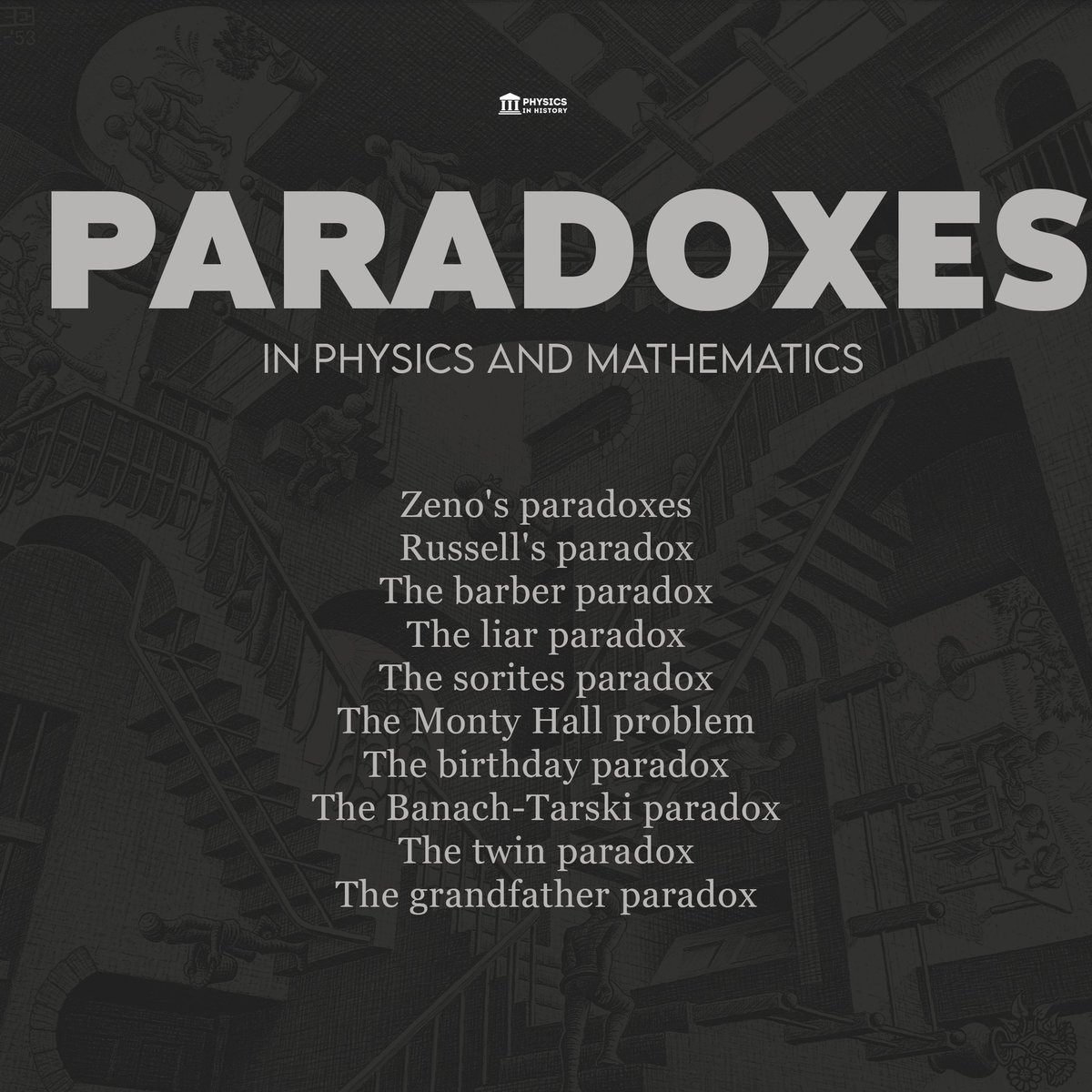
10 Brilliant paradoxes from the history of Physics and Mathematics ✍️
Zeno’s paradoxes: A series of paradoxes that challenge the notions of motion, space, and time. One of them is the dichotomy paradox, which states that in order to reach a destination, one must first reach the halfway point, then the halfway point of the remaining distance, and so on, implying that motion is impossible.
Russell’s paradox: A paradox that arises from the naive set theory, which allows the construction of a set of all sets that do not contain themselves. The paradox is whether this set contains itself or not. If it does, then it does not belong to the set by definition. If it does not, then it belongs to the set by definition.
The barber paradox: A variation of Russell’s paradox, which involves a male barber who shaves all and only those men who do not shave themselves. The paradox is whether the barber shaves himself or not. If he does, then he does not belong to the group of men he shaves. If he does not, then he belongs to the group of men he shaves.
The liar paradox: A paradox that involves a statement that contradicts itself, such as “This sentence is false”. The paradox is whether the statement is true or false. If it is true, then it is false by its own assertion. If it is false, then it is true by its own negation.
The sorites paradox: A paradox that involves the vagueness of predicates and the problem of drawing a sharp boundary between two categories. For example, if one grain of sand is not a heap, and adding one grain of sand to a non-heap does not make it a heap, then how many grains of sand are required to make a heap? The paradox is that there seems to be no clear answer to this question.
The Monty Hall problem: Though not exactly a paradox it is a mathematical problem, rather an interesting one, that involves a game show scenario, where a contestant is given a choice of three doors, behind one of which is a prize and behind the other two are goats. After the contestant picks a door, the host opens one of the other doors that reveals a goat and offers the contestant a chance to switch to the remaining door. The point is that the contestant should always switch, as this doubles their probability of winning the prize from 1/3 to 2/32.
The birthday paradox: Another one from mathematics that seems a little counter-intuitive. It involves the probability of finding two people with the same birthday in a given group. The point is that this probability is much higher than one might expect. For example, in a group of 23 people, there is a 50% chance that two people share a birthday.
The Banach-Tarski paradox: A paradox that involves the axiom of choice and the concept of non-measurable sets in mathematics. The paradox states that it is possible to decompose a solid sphere into a finite number of pieces and reassemble them into two solid spheres of the same size and volume as the original one.
The twin paradox: A paradox that involves the special theory of relativity and the phenomenon of time dilation. The paradox states that if one twin travels at a high speed in a spaceship and returns to Earth, they will find that their sibling has aged more than them. However, from the perspective of the traveling twin, it is their sibling who has traveled at a high speed and should have aged less.
The grandfather paradox: A paradox that involves the concept of time travel and its implications for causality. The paradox states that if one travels back in time and kills their own grandfather before their father or mother is born, then they will prevent their own existence. However, if they do not exist, then they cannot travel back in time and kill their grandfather.
Excited to share my latest article on Emergence of Synchronization-Induced Patterns in Two-dimensional Magnetic Rod Systems under Rotating Magnetic Fields - now published in Soft Matter!
Read the Accepted Manuscript here: https://t.co/I7BMAkoCPu
#SoftMatter#MagneticSystems