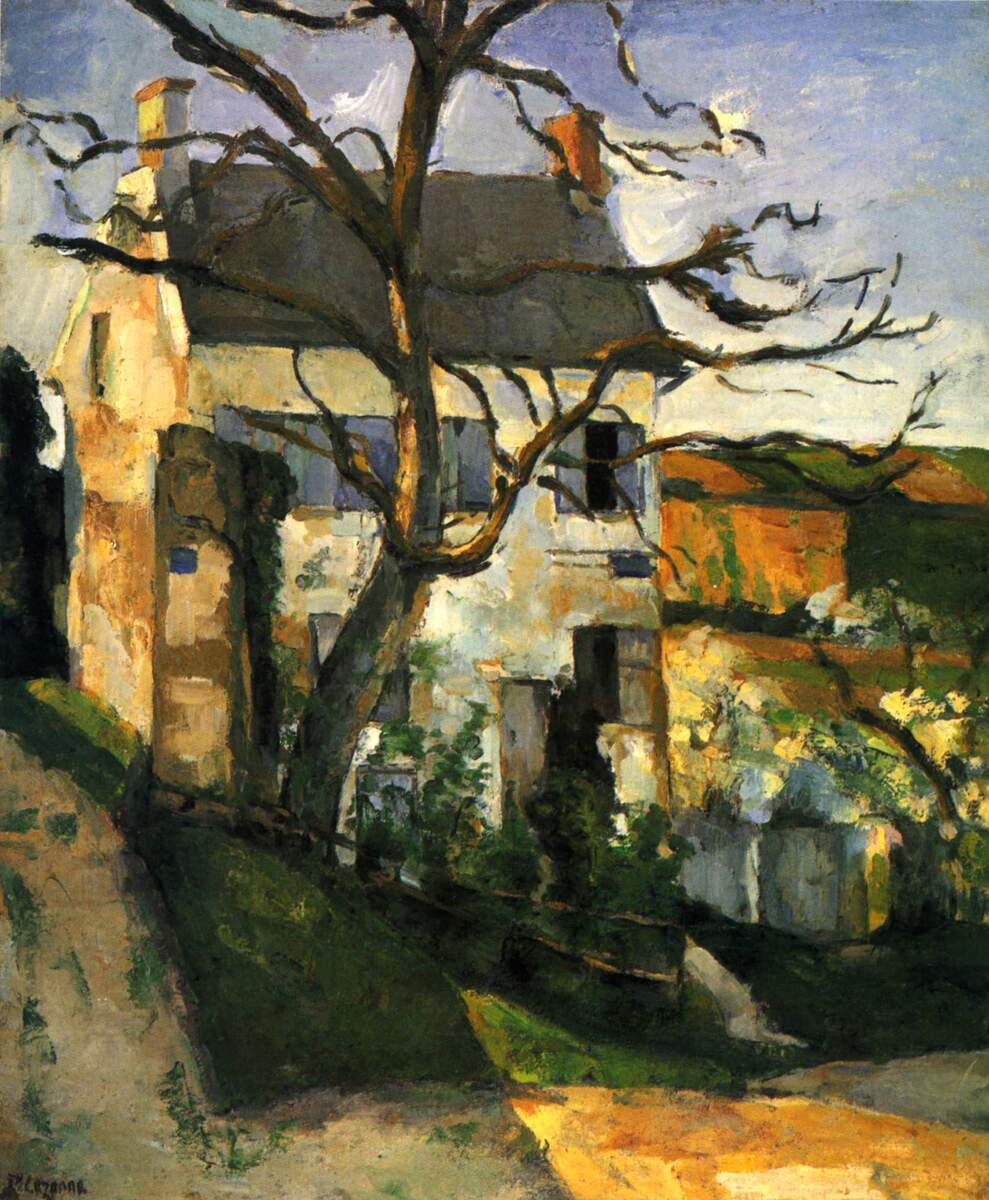
Attending art school at eleven, by his twenties Diego Rivera was counted among the most influential figures of the Parisian art scene of the early 20thC including Picasso, Modigliani and Braque. This work was painted in 1904 when he was 18 and at the San Carlos Academy, Mexico.
On this day in 1971, Borys Mozolevsky, a Ukrainian Soviet archeologist, found the largest-in-history golden treasure while digging into the ancient Scythian hill called the "Fat Grave" on the western bank of the Dnipro River in central Ukraine. He recovered a massive 1,15-kilogram gold necklace designed in Athens, Greece, and delivered as a gift to the wife of the Scythian tribal King (a ruler of ancient Iranian nomadic people).
To save the treasure from being stolen, Mozolevsky wore the golden necklace under his raincoat and embarked alone on a risky night tour by multiple trains to Kyiv. Upon arrival, he presented the treasure to the special government commission comprised of the highest Communist/scientific elites of the Soviet Ukrainian Republic.
Moscow demanded that this treasure be transferred to a museum in Russia, but the Soviet Ukrainian leadership somehow managed to ensure it stayed in Kyiv.
'Two Women,' (1914) is an early Diego Rivera masterpiece. The picture depicts his first wife Angelina Belloff and the painter Alma Dolores Bastian. The year he made this painting, Rivera began a new phase in his life, focusing on landscapes and rediscovering colour.
En el año 1200, en algún taller de Irán, un artesano construyó una caja que nadie podría abrir sin la combinación exacta. Y diseñó esa combinación con tantas variables que probarlas todas habría llevado más tiempo del que cualquier ladrón podría dedicarle.
La caja selyúcida del año 1200-1201 es uno de los ejemplos más sofisticados de mecánica de seguridad medieval que se conoce. Fabricada en latón fundido y martillado, con incrustaciones de plata y cobre formando patrones geométricos y caligrafía árabe, incorpora un sistema de cerradura de combinación con discos rotatorios que generan aproximadamente cuatro mil millones de combinaciones posibles.
Para ponerlo en perspectiva: un ladrón que probara una combinación por segundo, sin descanso, tardaría más de 126 años en agotarlas todas.
Los Selyúcidas gobernaron un imperio que se extendía desde Anatolia hasta Asia Central entre los siglos XI y XIII. Durante ese período, el mundo islámico atravesaba lo que los historiadores llaman la Edad de Oro de la ciencia árabe: álgebra, óptica, astronomía, medicina y mecánica avanzaban a un ritmo que Europa tardaría siglos en alcanzar. La sofisticación de esta caja no es una excepción. Es un ejemplo más de una tradición técnica que consideraba la belleza y la función como inseparables.
La cerradura de combinación de cuatro dígitos que usamos hoy en candados y maletines sigue el mismo principio que este artesano dominaba hace 825 años.
La caja se conserva en el Museo Benaki de Atenas.
The breathtaking nave of the Siena Cathedral (Duomo di Siena) in Tuscany, Italy 🇮🇹. It is famous for its striking black-and-white striped marble pillars and its magnificent, intricate inlaid marble mosaic floor.
Duomo di Siena was built between 12th-14th Centuries AD, as the principal church of Siena and remains one of the finest achievements of Italian Gothic architecture. Construction began around 1196 AD, on the site of an earlier church, reflecting Siena’s growing wealth and influence during the medieval period.
The cathedral was dedicated to the Assumption of the Virgin Mary, who became the patron saint of the city and a central figure in Sienese religious life. During 13th Century AD, renowned architects and sculptors transformed the building into a masterpiece distinguished by its black-and-white marble façade and richly decorated interior.
In the early 1300s, Siena launched an ambitious expansion project known as the “Duomo Nuovo,” intending to create the largest cathedral in Christendom. The expansion was abruptly halted after the devastating Black Death of 1348, which killed much of Siena’s population and weakened the city’s economy. Although the grand enlargement was never completed, the surviving unfinished walls remain a striking reminder of Siena’s medieval aspirations.
The cathedral became a showcase for the work of celebrated artists, including Nicola Pisano, Giovanni Pisano, and Donatello. Its remarkable interior features intricate marble floors, elaborate sculptures, and the magnificent Piccolomini Library adorned with frescoes by Pinturicchio.
Today, the Duomo di Siena stands as one of Italy’s most treasured medieval monuments, preserving the artistic, religious, and political history of Siena across more than eight centuries.
#archaeohistories
How?
In 1878 group of nuns in Santa Fe New Mexico prayed a novena to St. Joseph for a staircase.
A mysterious carpenter showed up alone, built a 33-step spiral staircase with no visible support, no nails, refused payment, and then disappeared.
Engineers are still baffled by it.
Rationalism, not wealth, killed the birth rates. It is the enemy of vitality.
"Children do not happen, ... principally because intelligence at the peak of intensity, can no longer find any reason for their existence."
As Spengler said, when having children becomes a question of weighing the pros and cons, it's over...
"For Nature knows nothing of pro and con."
🇮🇹⛪️✝️
La cathédrale de Milan est, pour les italiens, la plus belle cathédrale du monde.
C'est vrai qu'elle est magnifique.🤩
Et vous, qu'en pensez-vous ?
The New York Café in Budapest 🇭🇺, often regarded as one of the most beautiful coffeehouses in the world, is a true architectural gem. Opening its doors in 1894, this luxurious café showcases a captivating blend of Renaissance, Baroque, and Art Nouveau styles. Its opulent design features lavish chandeliers, intricate frescoes, towering marble columns, and golden accents, creating an atmosphere of grandeur and sophistication that transports visitors to a bygone era of elegance.
For over a century, the New York Café has served as a cultural hub, attracting writers, artists, and intellectuals who sought both inspiration and conversation in its refined surroundings. Its rich history is woven into the very fabric of Budapest’s artistic and literary scene, with countless creative minds having walked through its doors, drawn by the café’s enchanting ambiance and exceptional offerings.
Today, part of the Anantara New York Palace Hotel, serving Hungarian and international cuisine. Known for its opulent decor and live Gypsy music. The New York Café remains a must-visit destination for both locals and tourists alike, offering a luxurious setting to savor coffee, pastries, and traditional Hungarian cuisine. Its breathtaking décor and cultural significance make it more than just a café—it’s a living piece of history that continues to capture the imagination of those who visit.
#archaeohistories