Você quer apoiar ações de soberania da Teia dos Povos?
Nós temos um fundo 100% gerido por lideranças mulheres pretas e indígenas para construir ações que gerem soberanias nos territórios.
Associação Cabruca
C/C: 30598-7
Ag. 0837-0
Banco do Brasil
PIX: [email protected]
IN PRAISE OF FRANCESCA ALBANESE
There is a question that visits me in the small hours, when sleep will not come and the mind turns over old stones. The question is this: “What would I have done in the 1930s, on the morning after Kristallnacht?"
Not what I say I would have done. Not what I hope I would have done. But what would I actually have done—when the trains began to run, when the neighbours grew quiet, when the cost of decency became the loss of everything?
Most of us, I think, would have done little. Not from malice. From fear. From the soft, creeping conviction that someone else will speak, that the situation is complex, that we must be 'reasonable'. Lest we forget, the ordinary is the extraordinary's alibi. And how we have clung to that alibi! How we still cling to it!
And then, every once in a terrible while, someone appears who does not cling. Someone who steps forward when others step back. Someone who speaks the name of the thing when everyone else is busy naming something else.
Francesca Albanese is that someone.
She stands before the world—alone, unarmed, armed only with law and language and a rare courage—and she says what the centrists will not say, what the foreign ministries will not say, what the editorial boards will not say. She says: "This is a genocide. And we are watching it happen."
Do not tell me that is hyperbole. Do not tell me the term is contested. She has not used it lightly. She has used it as a physician arrives scientifically at a diagnosis—not to wound, but to warn. Not to inflame, but to name.
And for that, they have come for her. Oh, how they have come for her. Smears. Investigations. Vicious editorials. Frozen bank accounts. Dispossession of the only apartment she had ever owned. The machinery of the respectable turned to crush her. Because the respectable cannot abide what she represents: a mirror held up to their complicity.
Let us, once again, travel back to the 1930s. Back to the few who stood up when the trains began to run laden with Jewish people.
There was Aristides de Sousa Mendes, a Portuguese consul in Bordeaux. He defied his own government. He signed thousands of visas, by hand, for hours, until his fingers bled. He saved more lives than Schindler. And he died penniless, disgraced, erased.
There was a German officer in Warsaw named Wilm Hosenfeld. He hid a Jewish pianist in the rubble. He did not save thousands. He saved one. But that one—Władysław Szpilman—carried the memory. And memory is "the only haven from which we cannot be expelled."
There was Raoul Wallenberg. There were the villagers of Le Chambon. There were the anonymous, the quiet, the furious few who said: “Not on my watch.”
Francesca Albanese is their heir. Not because she carries a gun. Not because she hides refugees in her basement. But because she does something equally dangerous in a world that has perfected the art of not seeing. She sees. And she speaks.
She does not speak as a diplomat. Thank Goodness she doesn't! Diplomats have given us the language of "there are arguments on both sides" and "restraint" and "proportionality." Diplomatic language is the perfumed grave of moral clarity. No, she speaks as a jurist. As a human being. As a woman who has looked into the abyss and refused to call it a "complex geopolitical landscape".
Edna O'Brien once described a character who "had the recklessness of those who have already lost everything worth losing." Francesca Albanese has not lost everything. She has her dignity, her office, her voice, her family. But she has calculated the cost of speaking truth to power. And she has decided that that cost is infinitely less than the cost of silence.
What is that cost? Let us name it. She has been called antisemitic—she, who stands on the ground of international law forged in the ashes of Auschwitz and the fires of Nuremberg. She has been called a conspiracy theorist—she, who cites every source, every footnote, every UN resolution. She has been called naive—she, who understands better than most the machinery of realpolitik.
These accusations are not arguments. They are the spittle of the threatened. Because Francesca Albanese threatens something very precious to the powerful: the right to commit atrocity without being named.
Friends, the 1930s did not arrive with jackboots and pogroms on day one. They arrived in small increments. With "reasonable" restrictions. With "proportional" measures. With the silence of the respectable.
We tell ourselves that we would have been different. That we would have been Sousa Mendes. That we would have been Wallenberg. But most of us, I fear, would have been the neighbours who later said, "I didn't know."
Francesca Albanese knows. And she refuses to pretend otherwise.
So let us praise her. Not with statues or awards she does not seek. But with something harder: with our own refusal to look away. With our own voices, raised in places that are safe for us but dangerous for her. With our own bodies, if it comes to that.
A brave woman, who was injured while demonstrating outside a US nuclear military base in 1982, the infamous Greenham Common, had told me that "the heart is a hunter for what it cannot have." But I say the heart is a hunter for what it will not lose. And what we will not lose is the memory of those who stood up when standing up cost everything.
Francesca Albanese is standing up now. In our time. In our name. Under our indifferent sky.
Let us stand with her.
Not tomorrow. Not when it is safe. Now.
[Extract from a speech in Athens on Sunday 3rd May 2026]
@ThiagoSussekind Mas o próprio Eduardo Leite produz a mistureba. Ja fizeram quantos eventos juntos desde que foi anunciado esse trio e pelo menos nunca vi divulgado nessas ocasiões nenhuma fala dele riscando uma delimitação frente aos demais
Jonas perturbou-se na presença do Deus misericordioso (Jn. 4.1-3), mas dormiu tranquilo na presença de um Deus irado (Jn. 1.5). Quem está cheio de ódio não suporta um Deus q perdoa seus inimigos, mas fica tranquilo na figura de um Deus furioso.
[Parte da pregação de ontem]
Manu Ginobili hit this off balance game winner against Serbia in the 2004 Olympics in Athens 20 years ago today 🚨
He would lead Argentina to the gold medal that summer 🥇
(via @Olympics)
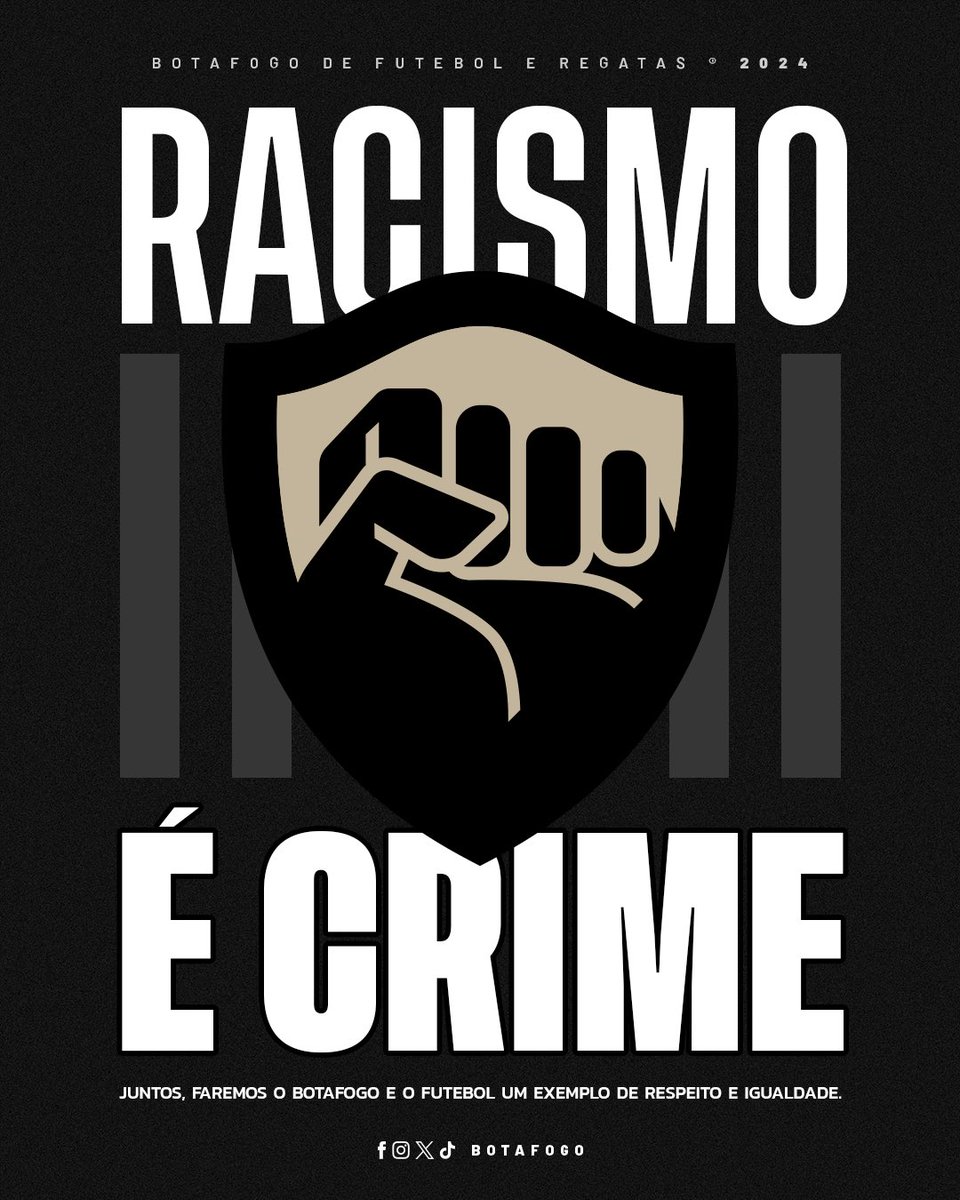
Não será apenas uma Nota Oficial protocolar de repúdio e com frases enérgicas de ações futuras contra atos racistas. O "torcedor" que não representa os milhões que constituem o Botafogo foi identificado na manhã desta quinta (15) e será banido do Estádio Nilton Santos. A vergonha que ocorreu na partida de ontem precisa ser exemplarmente punida, motivo pelo qual as autoridades policiais estão sendo informadas com todos os recursos disponíveis.
Racismo é crime -- e um crime sem perdão. O Botafogo está comprometido em combater de forma ativa este mal e não medirá esforços para garantir que tais atos não tenham lugar no esporte e na sociedade como um todo. O futebol tem um papel muito importante na construção social e influencia a vida de muita gente. Que os outros Clubes e entidades esportivas sigam o mesmo caminho e que esta mensagem de conscientização surta efeito.
Juntos, faremos o Botafogo e o Futebol um exemplo de respeito e igualdade.
A @agrazioliveira traz um debate fundamental: a importância do financiamento coletivo das candidaturas negras e de mulheres.
Em 2020 e 2022, foi o financiamento coletivo e milhares de apoiadores que contribuíram com as nossas vitórias.
Agora, não será diferente. Se liguem👇🏾
Se o macronismo fosse hegemônico, essa turma estaria apontando a RN como de extrema direita.
Se o tucanismo fosse hegemônico no BR, o bolsonarismo em todas as suas vertentes seria chamada pelo que é: extrema direita.
São viúvos de um suposto centro acima das paixões políticas.
Fio com o ontem e hoje dos cinemas de rua da cidade de São Paulo. É natural que, com as mudanças do setor e da sociedade ao longo das décadas, os espaços se transformem. Porém, em alguns casos, devemos ter uma preocupação arquitetônica, cultural e urbana com o espaço, mesmo que ele se transforme.
A vida urbana é a rua, o espaço público, o comércio, é o cinema, é o teatro, é a convivência. Quanto mais desertificada a rua, maior o risco de ser assaltado. Uma rua ocupada é o que Jane Jacobs chamava de "os olhos da cidade". Cine Yara - Penha >
O que será que vamos deixando de nomear quando tudo vai se tornando uma questão psiquiátrica? Quais os problemas políticos não são apontados? Quantas violências socais vão se naturalizando? Com tanto "problema individual de transtorno mental" há espaço pras questões coletivas?





![yanisvaroufakis's tweet photo. IN PRAISE OF FRANCESCA ALBANESE
There is a question that visits me in the small hours, when sleep will not come and the mind turns over old stones. The question is this: “What would I have done in the 1930s, on the morning after Kristallnacht?"
Not what I say I would have done. Not what I hope I would have done. But what would I actually have done—when the trains began to run, when the neighbours grew quiet, when the cost of decency became the loss of everything?
Most of us, I think, would have done little. Not from malice. From fear. From the soft, creeping conviction that someone else will speak, that the situation is complex, that we must be 'reasonable'. Lest we forget, the ordinary is the extraordinary's alibi. And how we have clung to that alibi! How we still cling to it!
And then, every once in a terrible while, someone appears who does not cling. Someone who steps forward when others step back. Someone who speaks the name of the thing when everyone else is busy naming something else.
Francesca Albanese is that someone.
She stands before the world—alone, unarmed, armed only with law and language and a rare courage—and she says what the centrists will not say, what the foreign ministries will not say, what the editorial boards will not say. She says: "This is a genocide. And we are watching it happen."
Do not tell me that is hyperbole. Do not tell me the term is contested. She has not used it lightly. She has used it as a physician arrives scientifically at a diagnosis—not to wound, but to warn. Not to inflame, but to name.
And for that, they have come for her. Oh, how they have come for her. Smears. Investigations. Vicious editorials. Frozen bank accounts. Dispossession of the only apartment she had ever owned. The machinery of the respectable turned to crush her. Because the respectable cannot abide what she represents: a mirror held up to their complicity.
Let us, once again, travel back to the 1930s. Back to the few who stood up when the trains began to run laden with Jewish people.
There was Aristides de Sousa Mendes, a Portuguese consul in Bordeaux. He defied his own government. He signed thousands of visas, by hand, for hours, until his fingers bled. He saved more lives than Schindler. And he died penniless, disgraced, erased.
There was a German officer in Warsaw named Wilm Hosenfeld. He hid a Jewish pianist in the rubble. He did not save thousands. He saved one. But that one—Władysław Szpilman—carried the memory. And memory is "the only haven from which we cannot be expelled."
There was Raoul Wallenberg. There were the villagers of Le Chambon. There were the anonymous, the quiet, the furious few who said: “Not on my watch.”
Francesca Albanese is their heir. Not because she carries a gun. Not because she hides refugees in her basement. But because she does something equally dangerous in a world that has perfected the art of not seeing. She sees. And she speaks.
She does not speak as a diplomat. Thank Goodness she doesn't! Diplomats have given us the language of "there are arguments on both sides" and "restraint" and "proportionality." Diplomatic language is the perfumed grave of moral clarity. No, she speaks as a jurist. As a human being. As a woman who has looked into the abyss and refused to call it a "complex geopolitical landscape".
Edna O'Brien once described a character who "had the recklessness of those who have already lost everything worth losing." Francesca Albanese has not lost everything. She has her dignity, her office, her voice, her family. But she has calculated the cost of speaking truth to power. And she has decided that that cost is infinitely less than the cost of silence.
What is that cost? Let us name it. She has been called antisemitic—she, who stands on the ground of international law forged in the ashes of Auschwitz and the fires of Nuremberg. She has been called a conspiracy theorist—she, who cites every source, every footnote, every UN resolution. She has been called naive—she, who understands better than most the machinery of realpolitik.
These accusations are not arguments. They are the spittle of the threatened. Because Francesca Albanese threatens something very precious to the powerful: the right to commit atrocity without being named.
Friends, the 1930s did not arrive with jackboots and pogroms on day one. They arrived in small increments. With "reasonable" restrictions. With "proportional" measures. With the silence of the respectable.
We tell ourselves that we would have been different. That we would have been Sousa Mendes. That we would have been Wallenberg. But most of us, I fear, would have been the neighbours who later said, "I didn't know."
Francesca Albanese knows. And she refuses to pretend otherwise.
So let us praise her. Not with statues or awards she does not seek. But with something harder: with our own refusal to look away. With our own voices, raised in places that are safe for us but dangerous for her. With our own bodies, if it comes to that.
A brave woman, who was injured while demonstrating outside a US nuclear military base in 1982, the infamous Greenham Common, had told me that "the heart is a hunter for what it cannot have." But I say the heart is a hunter for what it will not lose. And what we will not lose is the memory of those who stood up when standing up cost everything.
Francesca Albanese is standing up now. In our time. In our name. Under our indifferent sky.
Let us stand with her.
Not tomorrow. Not when it is safe. Now.
[Extract from a speech in Athens on Sunday 3rd May 2026]](https://pbs.twimg.com/media/HHsnlr9WIAEr4Cw.jpg)