A community college professor taught the same study skills lecture for 30 years, and the video quietly became one of the most watched educational recordings on the internet.
His name is Marty Lobdell. He spent his career as a psychology professor watching students fail not because they were lazy, but because nobody had ever taught them how their brain actually works under the pressure of learning something hard.
The lecture is called "Study Less Study Smart." Over 10 million views. Passed around in Reddit threads, Discord servers, and university study groups for over a decade. And the core insight buried inside it has been sitting in cognitive psychology research for years, waiting for someone to explain it in plain language.
Here is the framework that completely changed how I think about effort.
Your brain does not sustain focus the way you think it does. Studies tracking real students found that the average learner hits a wall somewhere between 25 and 30 minutes.
After that, efficiency doesn't just decline. It collapses. You're still sitting at your desk, still looking at the page, but almost nothing is going in.
Lobdell illustrated this with a student he knew personally. She set a goal of studying 6 hours a night, 5 nights a week, to pull herself out of academic probation. Thirty hours of studying per week. She failed every single class that quarter.
She wasn't failing because she lacked effort. She was failing because she had confused time spent near books with time spent actually learning. The 25-minute crash hit her at 6:30pm every night. She spent the next five and a half hours sitting in the wreckage of her own focus and calling it studying.
The fix sounds almost too simple. The moment you feel the slide, stop. Take five minutes. Do something that actually gives you a small reward. Then go back. That five-minute reset returns you to near full efficiency. Across a six-hour window, the difference is not marginal. It is the difference between thirty minutes of real learning and five and a half hours of it.
The second thing he taught destroyed something I had believed about how memory actually works.
Highlighting feels productive. Going back over your notes and recognizing everything feels like knowing. But recognition and recollection are two completely different cognitive processes, and your brain is very good at making you confuse them.
You can see something you've read before and feel completely certain you understand it, even when you couldn't reconstruct a single sentence from memory if the page were blank.
He proved this live in the room. He read 13 random letters to his audience. Almost nobody could recall them. Then he rearranged the same 13 letters into two words: Happy Thursday. The whole room got all 13 without effort.
Same letters. Same count. The only thing that changed was meaning.
The brain stores meaning. Not repetition. The moment new information connects to something you already understand, the retention changes entirely.
This is what the cognitive psychology literature calls elaborative encoding, and it is the mechanism underneath every effective study technique.
The third principle was the one that hit me hardest, and the one almost nobody applies.
Lobdell cited research showing that 80 percent of your study time should be spent in active recitation, not passive reading. Close the material. Say it back in your own words.
Teach it to someone else, or to an empty chair if no one is around. The struggle of retrieval is where the actual learning happens. Reading your notes again is watching someone else do the work.
His parting line has stayed with me longer than almost anything else I have read about learning.
He told the room that if what he shared didn't change their behavior, they hadn't actually learned it. It would just live in their heads as something they had heard once and felt good about.
He was right. And most people leave every lecture exactly like that.
The students who remember everything aren't putting in more hours.
They stopped confusing the feeling of studying with the fact of it.
En lugar de ver Netflix este domingo, dedica 1 hora a esto.
Un CURSO COMPLETO de Claude que te enseña a automatizar lo que te roba 3 horas al día.
El lunes lo agradecerás.
En 2013, el profesor de Yale Ben Polak dio una clase legendaria de 1h sobre Teoría de Juegos.
Puede cambiar cómo tomas decisiones en negocios y en la vida.
Sus frameworks:
· Dominancia
· Inducción hacia atrás
· Sesgo proactivo
12 lecciones para tomar mejores decisiones:
@Isabelgadea Bravísimo, Isabel. El único gobierno que invierte en Molina de Segura es el PSOE de Pedro Sánchez. Una realidad que muchos quieren tapar, pero que no se puede esconder.
Ver el mundo con una intensidad diferente merece más comprensión y menos juicios.
En el Día de la Sensibilización sobre el TDAH, nuestro compromiso es claro: luchar por una educación y una sanidad que incluyan y apoyen de verdad a todos y todas.
Gracias @adahi_es porque sois un pilar para esta lucha.
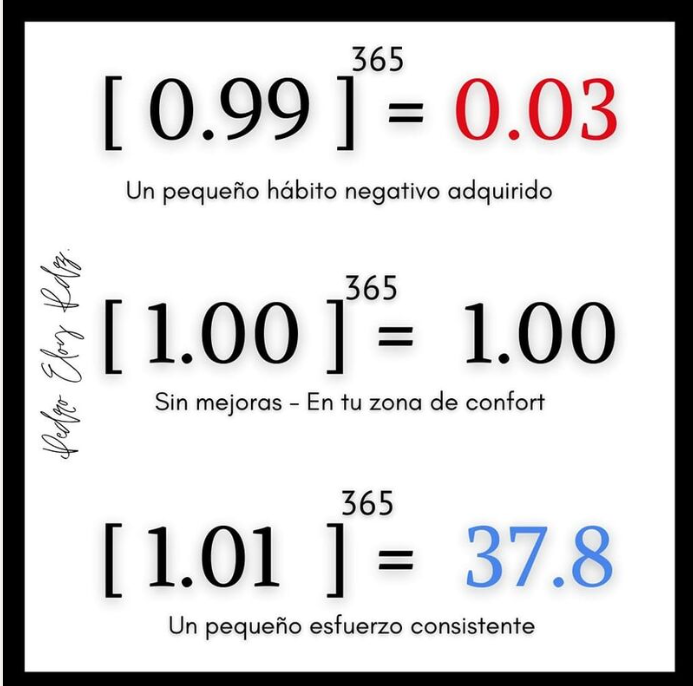
Bueno es recordar estos días, que aprovechemos el tiempo para mejorar, y ver el resultado en 1 año, porque un pequeño cambio diario, acumula y mucho al final cuenta.
Sometimes the best ideas start with a sketch. ✍️
Here are 6 quick demos we vibe coded with simple drawings and a little help from Gemini 2.5 Pro. Try it yourself by going to https://t.co/7b09Llhqrz, select 2.5 Pro, tap Canvas, upload an image of your sketch, and ask, “Can you code this app?”
First up: recreate something nostalgic.
Prompt: create this app with HTML, CSS and javascript
@psoemolina Que no se les olvide a los miles de vecin@s que circulan por el P.I. La Serreta y a los trabajadore/s y empresas de la zona, quienes se han preocupado y han resuelto un grave problema de nuestro municipio. Una mejora que disfrutaremos tod@s.
¡CAMPEONAS! 🏆 Las jugadoras del @ClubMolinaVoley han hecho un torneo impecable. Y en la final ni un solo set en contra. Trabajo, talento y entrega para llevar el nombre de Molina de Segura a lo más alto. ¡Orgullo máximo!
Ocurrió así: Joaquín Rodrigo y su esposa Victoria pasaron su luna de miel en Aranjuez. En 1939 esperaban su primer hijo, que nació muerto, y ella estuvo a punto de morir. El Concierto de Aranjuez expresa todo ese dolor ante la fatalidad.