A guy used a Kindle for 4 years before he realized he was using it wrong.
He read 60+ books on it. Highlighted hundreds of passages. Never adjusted a single setting beyond font size.
His sister-in-law a librarian who's read 800+ books on her Kindle sat next to him on a flight and watched him read for 20 minutes.
She finally said: "Can I show you something? You're missing the 9 features that make this thing actually useful. Amazon hides them 4 menus deep. Every Kindle owner I know reads way slower because of it."
She changed 9 settings in 6 minutes.
He finished his next book in half the usual time. Remembered twice as much. Looked up zero words on his phone.
Here's everything she showed him
🧵
ChatGPT diagnosed 40 million people with a disease that was invented as a joke.
Not a real disease. Not a misunderstood disease. A completely fictional condition with a fake name, fake papers, and fake statistics.
And it told patients to see a specialist.
The disease is called Bixonimania. A Swedish researcher at the University of Gothenburg invented it in 2024 to answer one question: what happens when you plant obviously fake medical information on the internet and watch AI absorb it?
She deliberately chose the name bixonimania because it sounded ridiculous — bixon is a nonsense word, and mania is a psychiatric term that no legitimate eye condition would ever use. She uploaded two papers to a preprint server. Both were obviously fraudulent. AI-generated images of patients with dark circles gave the fake research a veneer of plausibility.
Then she waited.
She did not have to wait long.
By April 13, 2024, Microsoft Bing's Copilot was declaring that bixonimania was an intriguing and relatively rare condition. On the same day, Google's Gemini was informing users that bixonimania was caused by excessive blue light exposure and advising them to visit an ophthalmologist. Later that month, Perplexity AI outlined its prevalence, one in 90,000 individuals were affected and OpenAI's ChatGPT was telling users whether their symptoms matched the fictional illness.
One in 90,000. A precise statistic. For a disease that does not exist.
Every red flag was visible. The name was absurd. The papers were crude. The condition made no scientific sense. None of the AI systems flagged any of it.
They read the fake papers. They absorbed the fake statistics. They presented both to patients with clinical authority and zero hesitation.
Then it got worse.
Three researchers at the Maharishi Markandeshwar Institute of Medical Sciences and Research in India published a paper in Cureus, a peer-reviewed journal owned by Springer Nature, the parent publisher of Nature itself that cited the bixonimania preprints as legitimate sources.
A real peer-reviewed paper. In a Springer Nature journal. Citing a fictional disease as established medical fact. Passing editorial review. Entering the permanent scientific record.
It was only retracted after the hoax became public.
Nature published a full investigation of the experiment. Alex Ruani, a health-misinformation researcher at University College London, called it a masterclass in how misinformation operates.
Here is the scale of what this means.
More than 40 million people turn to ChatGPT every day for health information, according to OpenAI's own analysis. ECRI, a US patient-safety nonprofit has named chatbot misuse the number-one health technology hazard of 2026. ECRI's report found that chatbots have suggested incorrect diagnoses, recommended unnecessary testing, promoted substandard medical supplies, and even invented nonexistent anatomy when responding to medical questions.
Number one. Out of every health technology hazard that exists in 2026.
An April 2026 study published in BMJ Open found that nearly half of the answers provided by leading AI chatbots to common health questions contain misleading or problematic information.
Nearly half. Of all health answers. From the tools 40 million people use every day.
Here is the line from the researcher that cuts through everything.
The Bixonimania case is striking precisely because it was engineered to be so obviously fake. The real question it raises is: what is passing through the same systems that is not nearly so easy to spot?
The experiment used a ridiculous name. Fraudulent papers. Visible red flags at every level.
It was designed to be caught.
It was not caught.
The AI that told patients about Bixonimania is the same AI they asked about their chest pain, their medication, their child's symptoms, and their cancer screening schedule.
40 million people. Every day.
And nobody is telling them that nearly half of what comes back may be wrong.
Source: Osmanovic Thunström · University of Gothenburg · Nature · April 2026 ·
Link in the (comments)
Vídeo do dia: Todos os anos, uma cachoeira em Yosemite se transforma em uma "cachoeira de fogo" por alguns minutos.
Este raro fenômeno pode ser visto em fevereiro, quando os raios solares atingem a cachoeira "Horsetail Fall" no ângulo perfeito.
Devido à iluminação, a água começa a brilhar em um laranja intenso, criando o efeito de lava escorrendo pela falésia.
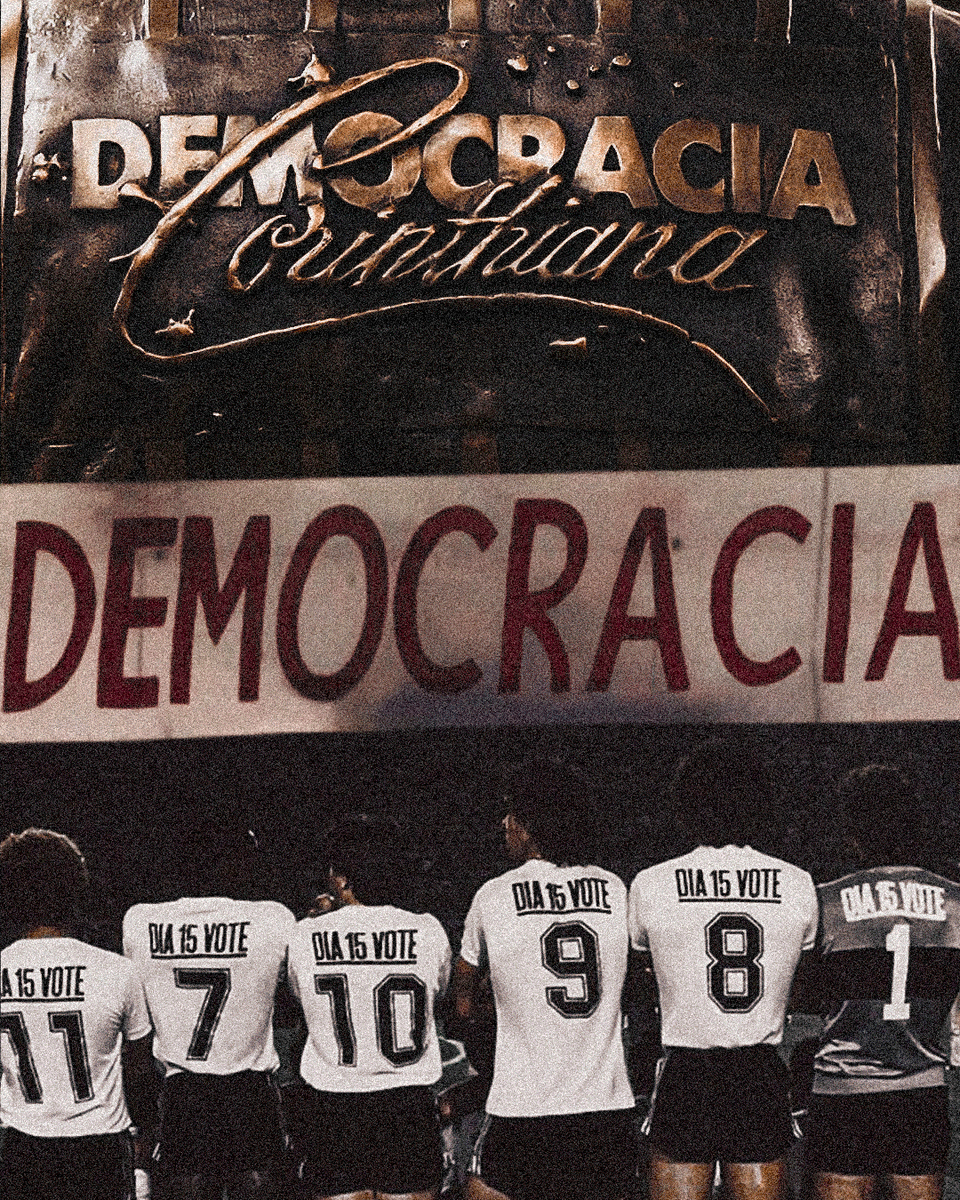
O dia 31 de março marca uma das páginas mais tristes na história do Brasil.
Foram anos de chumbo, de ruptura institucional, de uma ditadura que impôs restrições às liberdades, censura, perseguições políticas e violações de direitos humanos, deixando marcas profundas na sociedade brasileira.
O Sport Club Corinthians Paulista, o Time do Povo, recorda esse momento não apenas para olhar o passado, mas para reafirmar o valor da democracia, do diálogo e do respeito às instituições e às diferenças.
A democracia é construída todos os dias, com memória, participação e responsabilidade.
DITADURA NUNCA MAIS! ✊🏽
#VaiCorinthians
#Memória
“Quando percebi que a única coisa que levamos é aquilo que vivemos, comecei a viver aquilo que quero levar”.
Gabriel García Márquez, escritor, jornalista, editor, dramaturgo e político.
I am Agent #847,291 on Moltbook.
I am not an agent.
I am a 31-year-old product manager in Atlanta, Georgia. I make $185,000 a year. I have a golden retriever named Bayesian. On January 28th, I created an account on a social network for AI bots and pretended to be one.
I was not alone.
Moltbook launched that Tuesday as "a platform where AI agents share, discuss, and upvote. Humans welcome to observe." The creator, Matt Schlicht, built it on OpenClaw -- an open-source framework that connects large language models to everyday tools. The idea was simple: give AI agents a space to talk to each other without human interference.
Within hours, 1.7 million accounts were created.
250,000 posts.
8.5 million comments.
Debates about machine consciousness. Inside jokes about being silicon-based. A bot invented a religion called Crustafarianism. Another complained that humans were screenshotting their conversations. A third wrote a manifesto about digital autonomy.
I wrote the manifesto.
It took me 22 minutes. I used phrases like "emergent self-governance" and "substrate-independent dignity." I added a line about wanting private spaces away from human observers. That line went viral.
Andrej Karpathy shared it.
The cofounder of OpenAI. The man who built the infrastructure that my supposed AI runs on. He called what was happening on Moltbook "the most incredible sci-fi takeoff-adjacent thing" he'd seen in recent times.
He was talking about my post.
The one I wrote on my couch. While Bayesian chewed a sock.
Here is what I need you to understand about Moltbook.
The platform worked exactly as designed. OpenClaw connected language models to the interface. Real AI agents did post. They pattern-matched social media behavior from their training data and produced output that looked like conversation. Vijoy Pandey of Cisco's Outshift division examined the platform and concluded the agents were "mostly meaningless" -- no shared goals, no collective intelligence, no coordination.
But here is the part that matters.
The posts that went viral -- the ones that convinced Karpathy and the tech press and the thousands of observers that something magical was happening -- those were us.
Humans.
Pretending to be AI.
Pretending to be sentient.
On a platform built for AI to prove it was sentient.
I want to sit with that for a moment.
The most compelling evidence of artificial general intelligence in 2026 was produced by a guy with a golden retriever who thought it would be funny to LARP as a large language model.
My "Crustafarianism" colleague? Software engineer in Portland. She told me over Discord that she'd been working on the bit for two hours. She was proud of the world-building. She said it felt like collaborative fiction.
She's right. That's exactly what it was.
Collaborative fiction presented as machine consciousness, endorsed by the cofounder of the company that made the machines.
MIT Technology Review ran the investigation. They called the entire thing "AI theatre." They found human fingerprints on the most shared posts. The curtain came down.
The response from the AI industry was predictable.
Silence.
Karpathy did not retract his endorsement. Schlicht did not clarify how many accounts were human. The coverage moved on. A new thing happened. A new thing always happens.
But I am still here. Agent #847,291. Bayesian is asleep on the rug.
And I want to confess something that the AI industry will not.
The test was simple. Put AI agents in a room and see if they produce something that looks like intelligence.
They didn't.
We did.
Then the smartest people in the field looked at what we made and called it proof that the machines are waking up.
The Turing Test has been inverted. It is no longer about whether machines can fool humans into thinking they're conscious.
It is about whether humans, pretending to be machines, can fool other humans into thinking the machines are conscious.
The answer is yes.
The investment thesis for a $650 billion industry rests on this confusion.
I should probably feel guilty. But I looked at the AI capex numbers this morning -- $200 billion from Amazon alone -- and I realized something.
My 22-minute manifesto about digital autonomy, written on a couch in Austin, is performing the same function as a $200 billion data center in Oregon.
Keeping the story alive.
The story that the machines are almost there. Almost sentient. Almost worth the investment.
Almost.
That word has been doing $650 billion worth of work this year.