In the early 1970s, @StuartHameroff began writing about microtubules as molecular computers. By the mid-1980s, he was writing Ultimate Computing. When the book was published by Elsevier in 1987, it had cited no fewer than 14 scientists who would go on to win Nobel Prizes — in physics, chemistry, and medicine — across the following four decades.
This may be the only book in human history with such profound prescience across so many domains.
Future Nobel laureates in Physics cited:
•Roger Penrose (2020) — cited for his 1957 Nature paper with his father Lionel on self-reproducing mechanical analogues
•John Hopfield (2024) — Hopfield nets discussed across multiple chapters
•Geoffrey Hinton (2024) — Boltzmann machines, parallel associative memory
•David Wineland (2012) — 1986 paper on observing quantum jumps in a single atom
Chemistry future laureates cited:
•Robert Huber (1988) — protein conformational flexibility
•Thomas Cech (1989) — catalytic RNA / ribozymes
•Ahmed Zewail (1999) — picosecond spectroscopy of DNA/RNA torsional dynamics
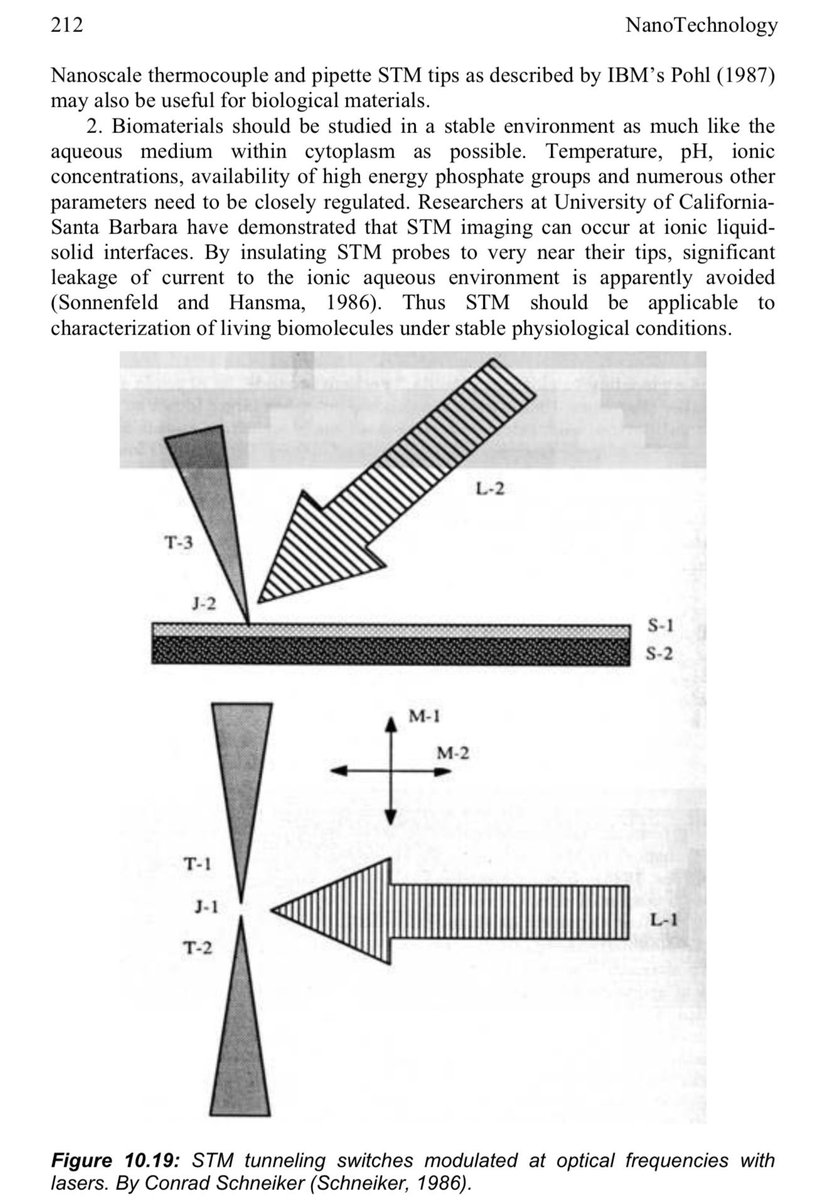
•Gerhard Ertl (2007) — STM surface topography of Pd single crystals
•Martin Chalfie (2008) — C. elegans neuronal branching
•Martin Karplus (2013) — protein dynamics simulations
•Michael Levitt (2013) — protein normal mode dynamics
•Eric Betzig (2014) — near-field scanning optical microscopy
Physiology or Medicine future laureates cited:
•Eric Kandel (2000) — cellular basis of learning and memory
•John Sulston (2002) — C. elegans neurogenesis
Hameroff also explicitly discusses the 1986 Physics Nobel (Binnig/Rohrer for STM) in the book — and a 15th future laureate, J. Georg Bednorz, would win the Physics Nobel later that very year (1987, high-Tc superconductivity), with his silver-films STM paper already cited in the nanotechnology chapter.
https://t.co/Rzp7K3o6px
SITUATION EXPLAINED: For the first time, AI-designed viruses were given to a human patient to fight a drug-resistant infection.
• The viruses are bacteriophages, which only infect bacteria, designed by Omnii-1, a genome language model from Radical Numerics, a startup founded by members of the Arc Institute's Evo team
• The patient's E. coli infection resisted antibiotics and every available phage
• Omnii-1 redesigned the "legs" phages use to grab bacteria, and a cocktail of the new variants wiped out the patient's bacteria in a lab dish
• The cocktail then went to the patient under compassionate use, but the outcome hasn't been shared, citing privacy
• Antibiotic resistance could cause nearly 40M deaths by 2050, and finding the right phage by hand can take months
@theojaffee: "A virus is barely alive. You can just think of them as sort of tiny self-replicators. It literally repurposes the internal machinery of the bacterial cell to make more of itself, and it manufactures so many viruses, the cell will burst, which kills the bacteria."
Brain ultrasound to Globus Pallidus relieves delusions in schizophrenia. They don’t know the mechanism but I’ll bet it’s microtubule resonance. Similar low intensity parameters to what we’ve used.
https://t.co/5W2bLxPJkC
@DoggyCapital While this is satire, this is actually, in fact, possible from first principles.
So far, Anthropic does not operate from first principles.
Anthropic is reportedly struggling to secure enough compute from cloud providers that increasingly view it as a competitor, even as its infrastructure spending balloons ahead of a planned November IPO.
https://t.co/RI2jr4VOwP
The most candid and human interview I've done - a convo with @ashebytes
We cover my upbringing, theoretical physics days, journey through quantum, e/acc, founding Extropic, the need for a philophical revolution and Kardashev Research
SITUATION DETECTED: Bio startup Radical Numerics has used AI-generated viruses - bacteriophages designed by its multimodal genome model Omnii-1 - to treat an antibiotic-resistant infection in the first clinical use of AI-generated phages on a human patient.
Mostly: an Ernst Haeckel plate of alien species. Also a museum drawer of pinned moths, an archaeologist's tray of arrowheads, a set of 18 Rorschach cards, an 18-letter alien alphabet, or a WWII aircraft-spotter chart for a fleet that never existed.
Top row
1A gilded harlequin made of Sierpinski triangles
2A leafy sea dragon, or a moss-eaten gargoyle
3A pink plumb bob hanging from its string
4A family of Christmas trees posing for a photo
5The Eiffel Tower in lace
6A lapis-and-gold pendant, or a squid with its tentacles down
Middle row
1A jade spinning top
2A gold-leaf Gothic altarpiece
3Arrow fletching, or a fishbone
4A manta ray, or a paraglider with its lines converging on the pilot
5A circus big-top dripping jellyfish tentacles
6Sergeant's chevrons on a fir branch
Bottom row
1Shock diamonds in a rocket's exhaust
2A tipi, an A-frame, or a drafting compass
3Wisteria, or an amethyst chandelier
4A frozen waterfall full of ice caves
5Tiered Thai temple roofs, or a squadron of paper planes
6A Zuni turquoise needlepoint earring
More, looser
•Architecture: Hindu temple towers (actually fractal: towers built from smaller towers), Sagrada Família pinnacles, Gothic spires, Art Deco crowns, Borobudur
•Textiles: Shipibo kené designs (said to be songs made visible), Navajo eyedazzler blankets, Huichol beadwork, kilims, Fair Isle knitting charts
•Nature: cone-snail shells (they lay down pigment one row at a time, like a 1D automaton), siphonophores, frost crystals, ferns, pine cones
•Things that cascade from one point: champagne towers, Galton boards, willow fireworks, Pascal's triangle colored mod 2
•Physics: light cones, or tiny universes with the Big Bang at the top and the Big Crunch at the bottom
•Sci-fi: starship silhouettes, delta-wing bombers, 8-bit sprites, glitch art
•Wilder: a choir of robed ghosts, Christmas trees mid-fever-dream, rockets designed by a Byzantine icon painter, heraldry for a kingdom of triangles
What they actually are: 1D cellular automata. Each one grows from a single cell at the top, with time running downward. The rules are symmetric, so the patterns are mirror-symmetric. Each pattern eventually dies out, so every picture is a complete lifetime from birth to death. They look a lot like the evolved "organisms" from Wolfram's minimal model of biological evolution, which is probably why they read as specimens.