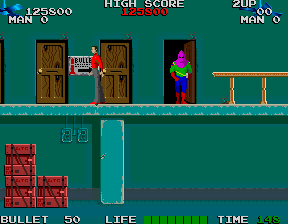
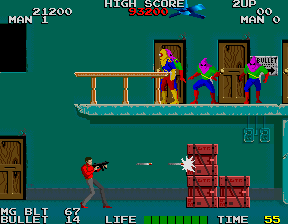
Scene simulation is what helped us to finally clock, understand and fix the problems within the core regarding Laser Ghost, so it could be included in the latest Release.
However, over the past months we have doubled down in our commitment by looking for ways for this core to move forward, and we can now celebrate a major breakthrough in this process: working scene simulation in jts18.
This way, every single pixel in the final picture has to undergo a priority check to decide which video output is seen and when. The logic behind this check is still unclear, especially on which signals are used to make this decision.
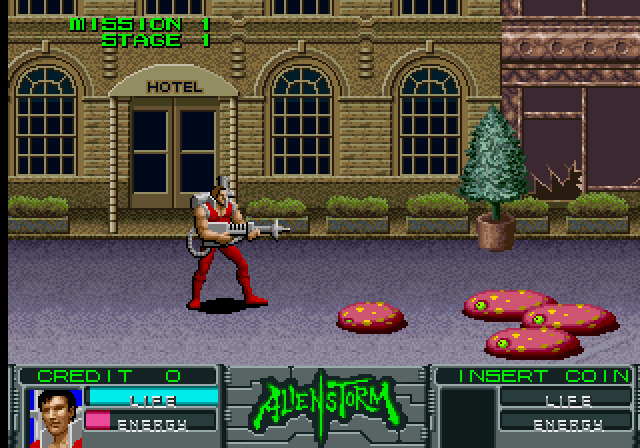
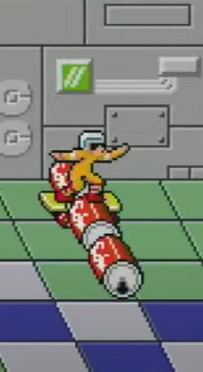
As a rule of thumb, compared to the heavier weight of the S16B, VDP is used in a minor role (pink flat aliens in Alien Storm, children in Moonwalker...), but without it, the final picture is incomplete and some key points are unseen.
One of the features that makes this system so particular is the coexistence of two video outputs generated simultaneously: one coming from an enhanced version of the S16B, and the other from a Megadrive VDP chip.
It’s been a year since the first beta for the jts18 compatible with SEGA System 18 came out, and it has seen some developments since, increasing compatibility for other games.
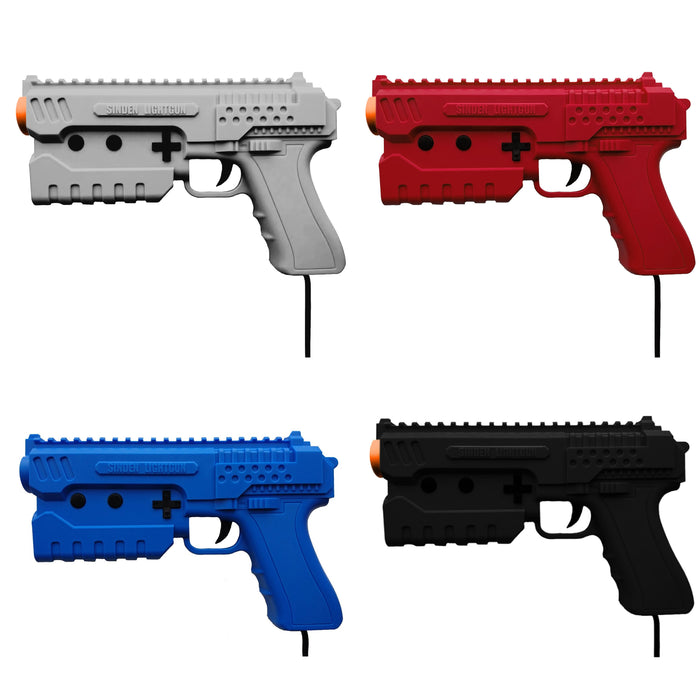
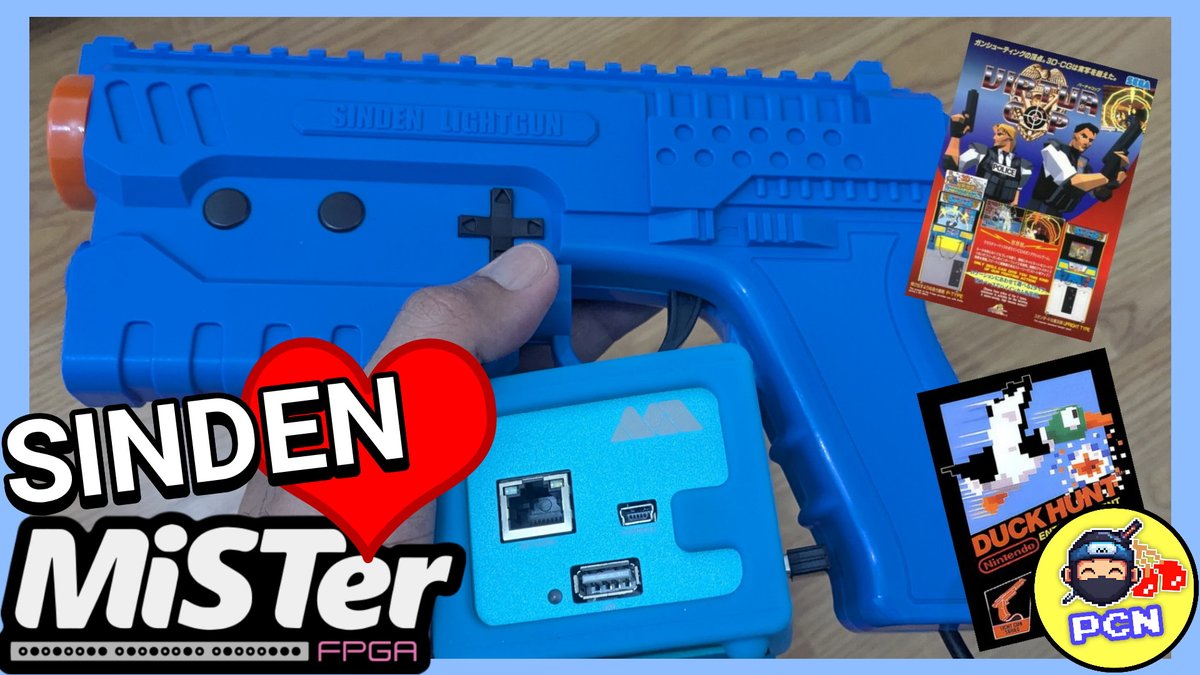
I've been playing with my recently acquired @SindenLightgun
I enjoyed my experience with the #MiSTerFPGA, but I gotta say this thing really comes alive with software emulation. I'm very impressed with the accuracy I got with Dreamcast/NAOMI earlier today.
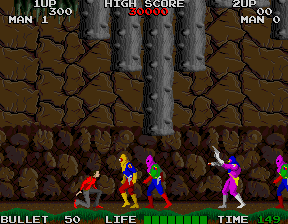
Rolling Thunder is the next arcade game visiting #MiSTerFPGA/#PocketFPGA as part of JTCORES. The core is designed, all the devices are hooked up and I have entered the test and debug phase.
8-bit arcade systems tend to be more complex than 16-bit ones. Namco's Rolling Thunder sports four interconnected processors that share access to multiple subsystems. The era of parallel computing started in the mid 2000's for home computers, in the 80's for arcade games!