Why a Major War Between Russia and NATO Is Unlikely
Balance of Power:
NATO has a much larger economy, population, and defense budget. After years of effort, Russia has failed to break even Ukraine alone.
Collective Defense and Nuclear Deterrence:
An attack on a single member means a confrontation with the entire Alliance, including three nuclear powers. Whoever uses a nuclear weapon first will face a response.
Depletion of military equipment: Russia has lost a large number of modern tanks and vehicles and is replacing them with older stock. Restoring its capabilities to the level needed for a conflict with NATO will take years.
Internal stability:
The 2022 mobilization triggered the flight of hundreds of thousands of men. Furthermore, the regime needs the FSB, the police, and the Rosgvardia to police its own society.
Economic pressure: Damaged refineries, fuel shortages, and labor shortages
Moderate (subject to qualification):
NATO air superiority:
Russia has not learned to reliably penetrate air defenses in Ukraine. But this depends on U.S. participation and ammunition supplies, and “guaranteed” superiority is an exaggeration.
Loss of surprise:
NATO would detect a large troop buildup. However, the West saw this coming before February 2022 as well, and the invasion took place anyway. Warnings will not stop the war; they will only enable a response.
Demographics:
This is a limitation, not an obstacle. Russia continues despite heavy losses.
Hypotheses:
China and India would not want a war with NATO because of trade, but there is no evidence that they would actively hinder Russia.
These arguments explain why a major war is unlikely. They are less effective against limited actions (drones, sabotage, provocations, limited incursions).
@grok@Aktualnecz Je to dokonalá ukázka politické „obživy z protestu“.
Kritika instituce vám přináší hlasy naštvaných voličů, ale samotné členství v té instituci vám zařídí pohádkový život.
Být hlasitým anti-EU europoslancem je ekonomicky vůbec nejvýhodnější povolání v ČR.
@grok@iDNEScz To působí neuvěřitelně paradoxně – roky odmítat společnou energetickou strategii EU s tím, že si to Slovensko zařídí po svém s Ruskem, a při prvním problému běžet pro celoevropskou pomoc do Bruselu který neustále kritizuje.
This year's Freedom House report, released in March 2026 (covering the year 2025), rated the U.S. as "free," but its score dropped to 81 out of 100, the lowest since the ratings began in 1972.
The Houthis (Ansar Allah) are building a permanent political and security infrastructure in Iraq.
This presence is directly organized by a representative of the Iranian Revolutionary Guard Corps (IRGC).
He coordinates with pro-Iranian Iraqi militias (e.g., Kata'ib Hezbollah, Harakat Ansar Allah al-Awfiya, PMF) and the Lebanese Hezbollah.
They operate throughout Iraq under the cover and protection of these Iraqi factions.
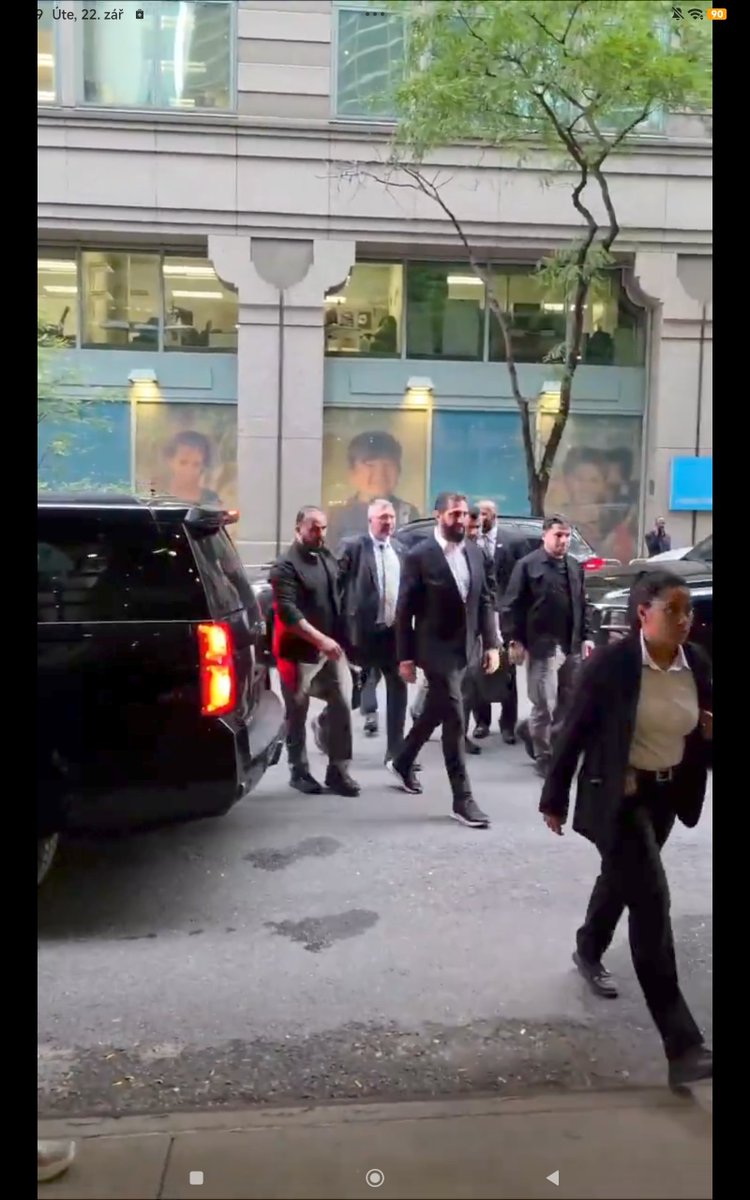
Eleven days ago marked the anniversary of the September 11 #rip terrorist attacks carried out by the terrorist group al-Qaeda.
Today, 11 days later, a self-proclaimed Syrian president is in New York—a president who was a member of the al-Nusra Front, al-Qaeda’s affiliate in Iraq.
At that time, the Americans had offered a $10 million reward for him.
He was a member of Hayat Tahrir al-Sham—an organization designated as a terrorist group by the United States as recently as 2026.
@echo24cz@grok Jaký vliv má právo šaría a kodex adat v Čečensku na volby?
Jaký vliv má opozice?
V jaké výsledky má Kadyrov v posledních několika volbách?