Israel was planning to assassinate Asim Munir in Switzerland. The plan was thwarted by Pakistani intelligence.
Pakistan’s reply was: “If you touch our delegation, we will wipe you off the map.”
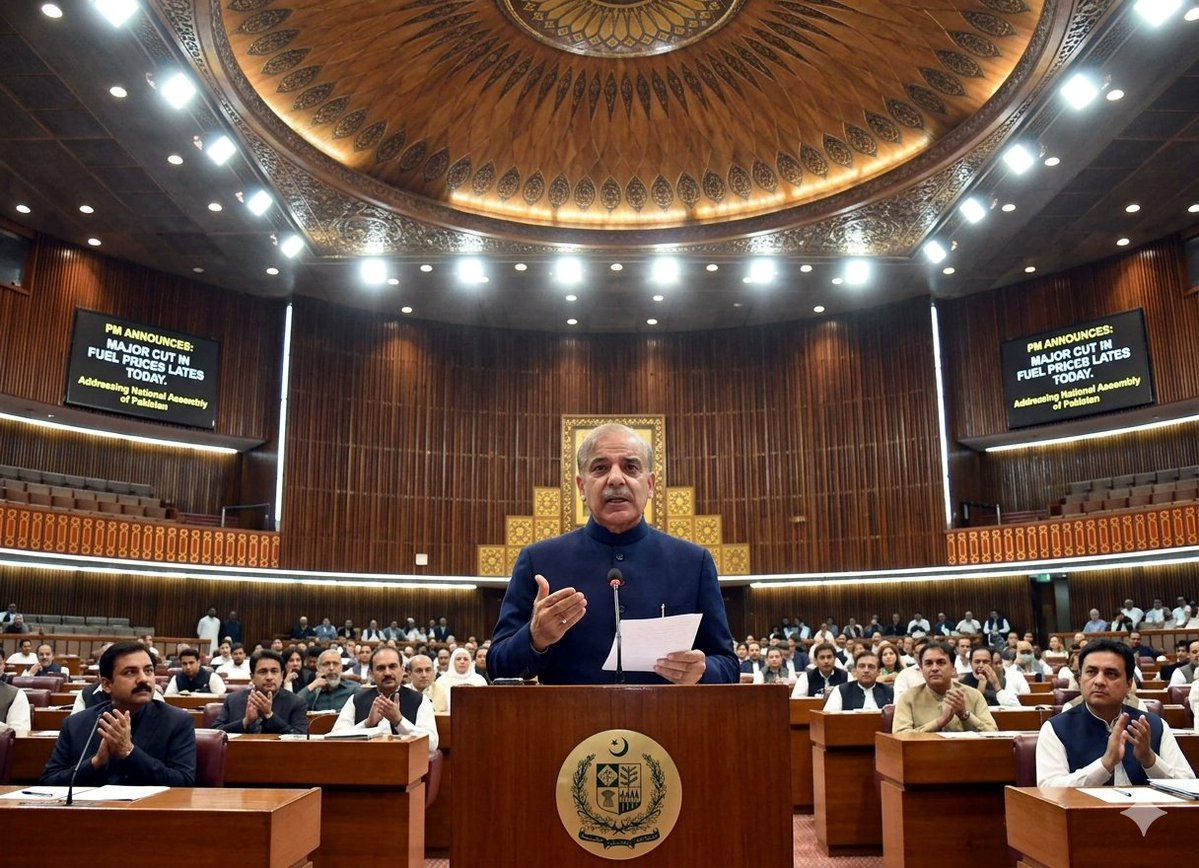
*PM Shehbaz and Field Marshal Asim Munir to participate in the Technical-Level Talks in Switzerland, today*
As a follow-up to the signing of Islamabad Memorandum of Understanding
They have departed from Islamabad for Switzerland.
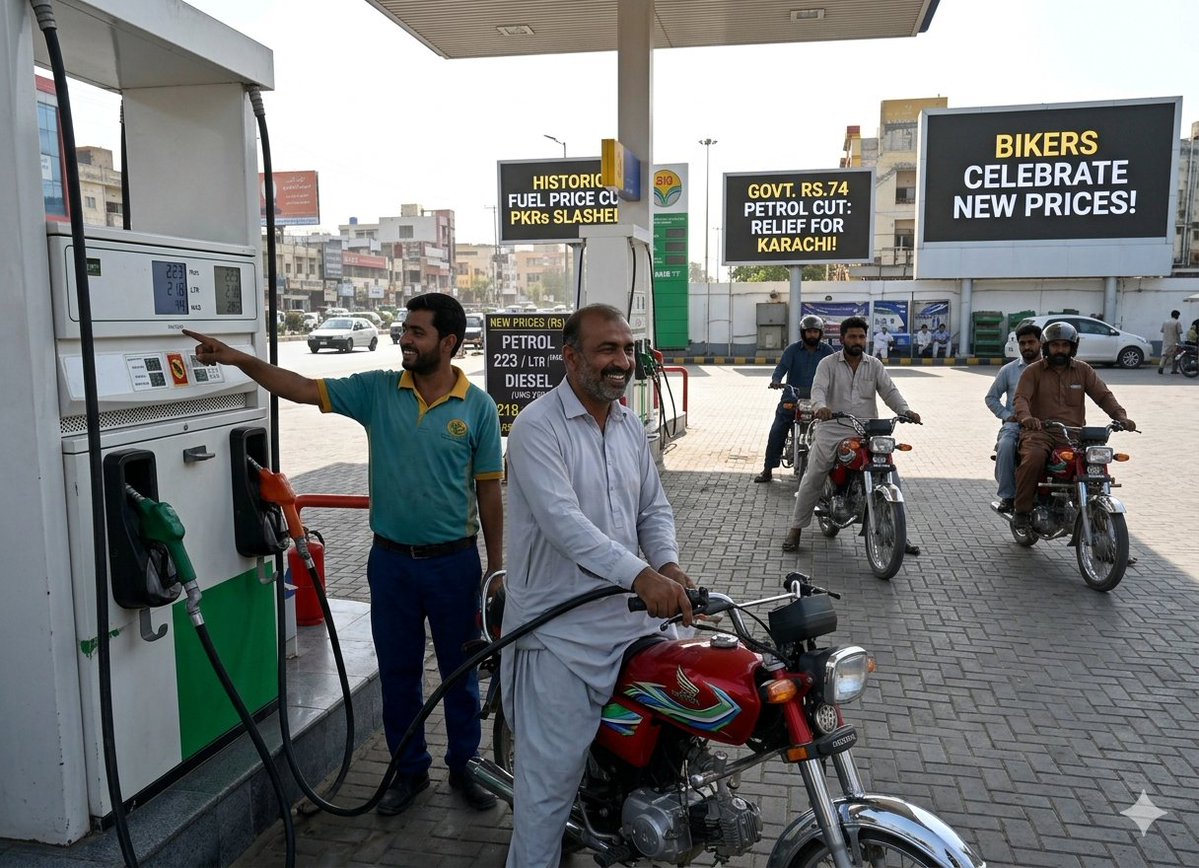
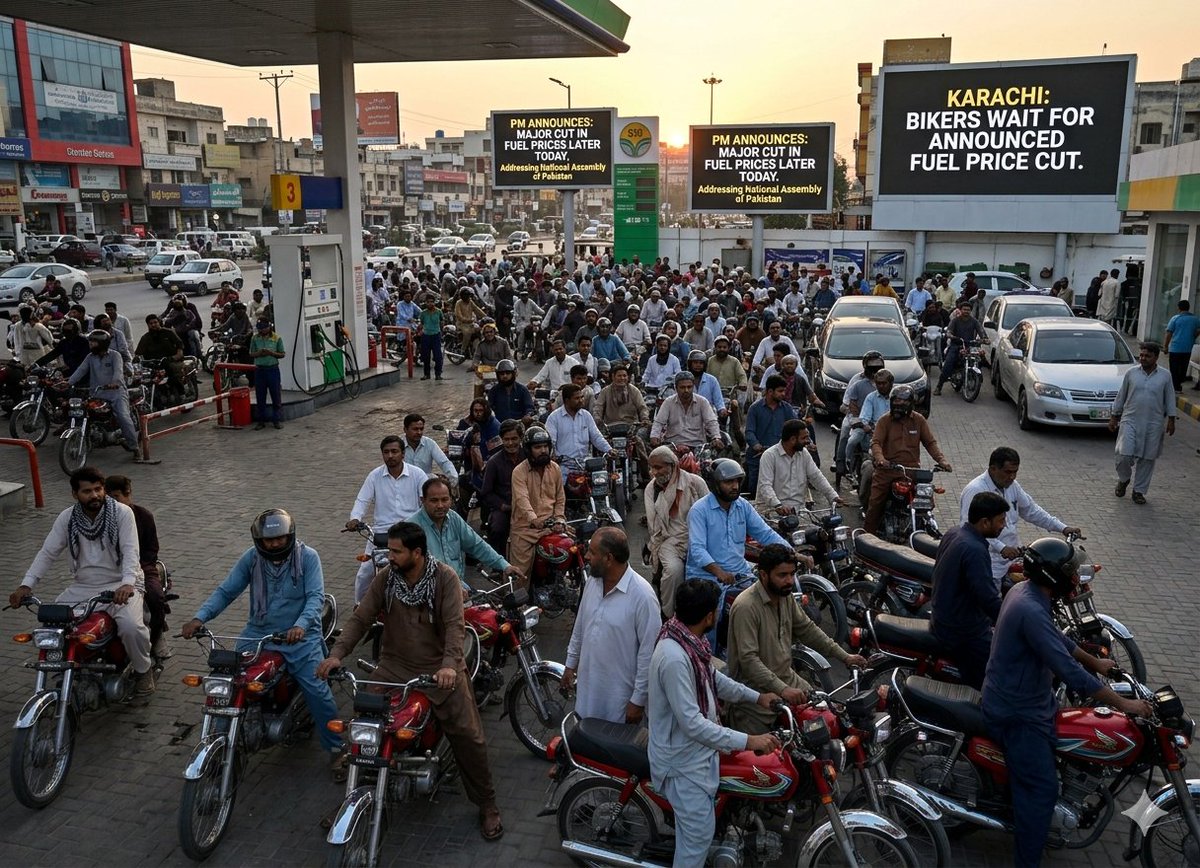
Reports are circulating that fuel prices might drop by Rs50 to 55/litre, while some people are suggesting the reduction won't exceed Rs10 to 15/litre.
How much do you think petrol and diesel prices will actually decrease per litre today?
Pakistan doesn’t have a tax system. It has a punishment system.
It punishes the salaried, the documented, the consumer, the electricity user and the petrol buyer; while privilege negotiates, litigates and escapes.
That is not revenue mobilisation.
That is fiscal injustice.
1/4
Pakistan has a larger number of English speakers than the UK, the birthplace of the English language. Still we are not a developed country, which shows that English is just a language and not a tool to measure success.
"You have a lot to learn" - with that smirk on your face.
@GaurieD you just performed a masterclass as a woman journalist in pulling down another young woman journalist in public.
I hope you introspect.
$538,535 per day. Who will stop the meter?
Pakistan’s LNG system carries a fixed cost that does not sleep. Every single day, $538,535 leaves the system -- whether gas flows or not. Over a decade, that has crossed $1.6 billion. The payments go to terminal operators at Port Qasim, Karachi, for floating regasification units that convert imported LNG into pipeline gas.
Cold truth: This is not a fuel bill. This is a capacity bill.
Colder truth: The ships can sit idle. The cheques do not.
On March 4, Qatar invoked force majeure. LNG cargoes stopped -- Pakistan’s payments did not. At roughly $16 million a month, Pakistan continued to pay for terminals with nothing to regasify.
Imagine: Pakistan cannot feed the 44.7 per cent of its population that survives below the poverty line. Imagine: Pakistan cannot fully fund the defence equipment its armed forces need to protect the country’s borders. Imagine: Pakistan goes to the IMF with a begging bowl every few years, negotiating humiliating conditions just to keep the lights on.
Imagine: Every single day, without fail, Pakistan finds $538,535 to pay for ships that are not moving, vessels that are not working, and gas that is not flowing.
So, who will stop the meter? The present government says the contracts, as signed, carry no force majeure protection for Pakistan. Fact: Tools exist. They are simply not being used.
Ogra, the Oil and Gas Regulatory Authority, has the power to review and revise the tariff structure for both terminals. No gas flowing means no service rendered. A regulator worth its name would have opened that proceeding on March 5. Two operators. One port. Guaranteed dollar returns whether or not a single cubic foot of gas moves. Is that a market -- or a cartel dressed in contractual language? The Competition Commission of Pakistan (CCP) has the mandate to investigate exactly this kind of arrangement.
The question is why it hasn’t. Why has parliament become a spectator in this? The Public Accounts Committee has the authority to call for a fresh forensic audit of the original contract awards -- how they were structured, why force majeure relief was explicitly excluded for Pakistan but not for the operators, and whether the contracts were designed, from the outset, to ensure that all risk flowed in one direction.
Why has the Parliament become a spectator in this? Every day this question goes unanswered costs Pakistan $538,535. Someone decided to start this meter. Someone has the power to stop it. The people deserve to know who -- and why they haven’t.